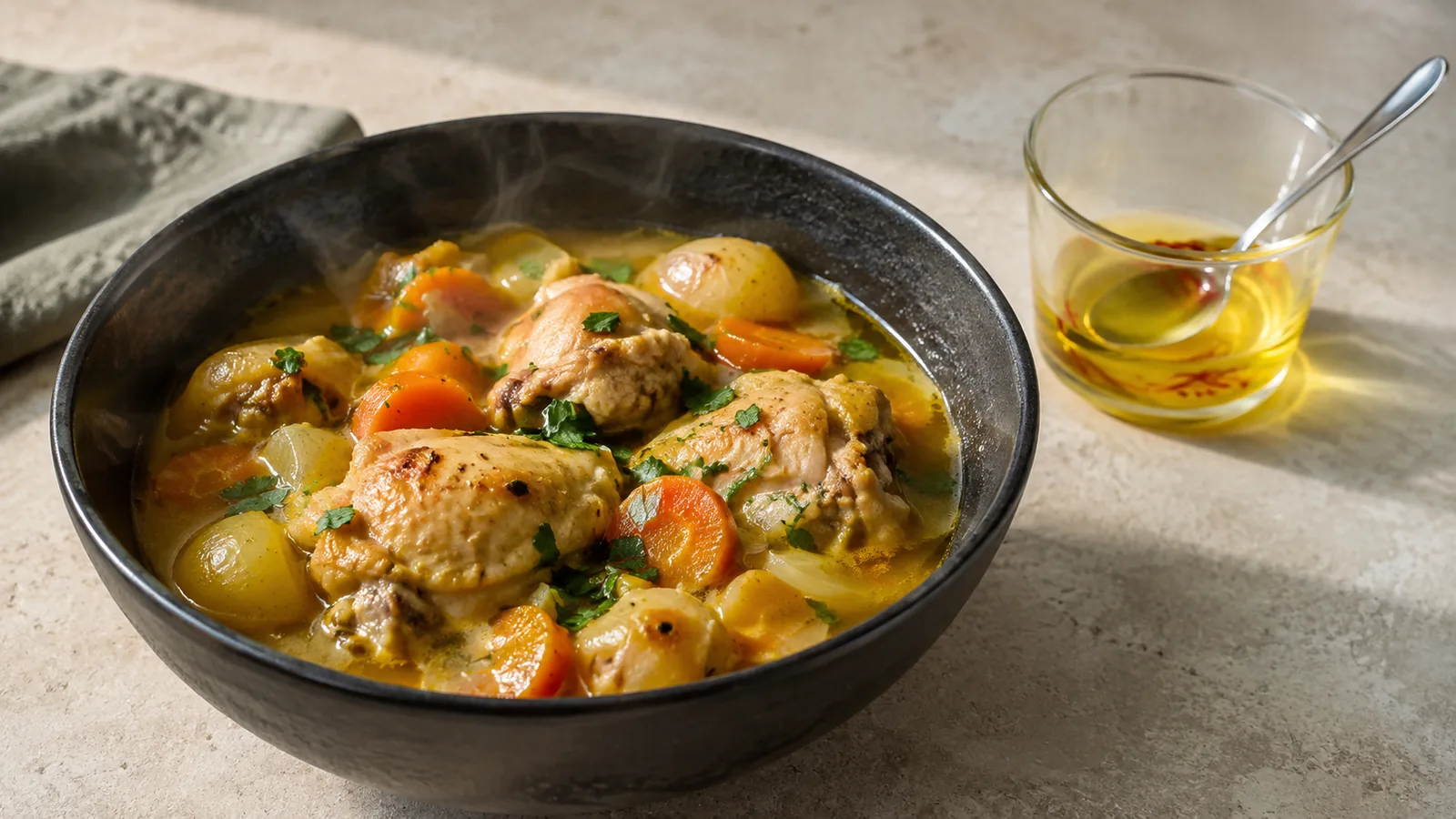
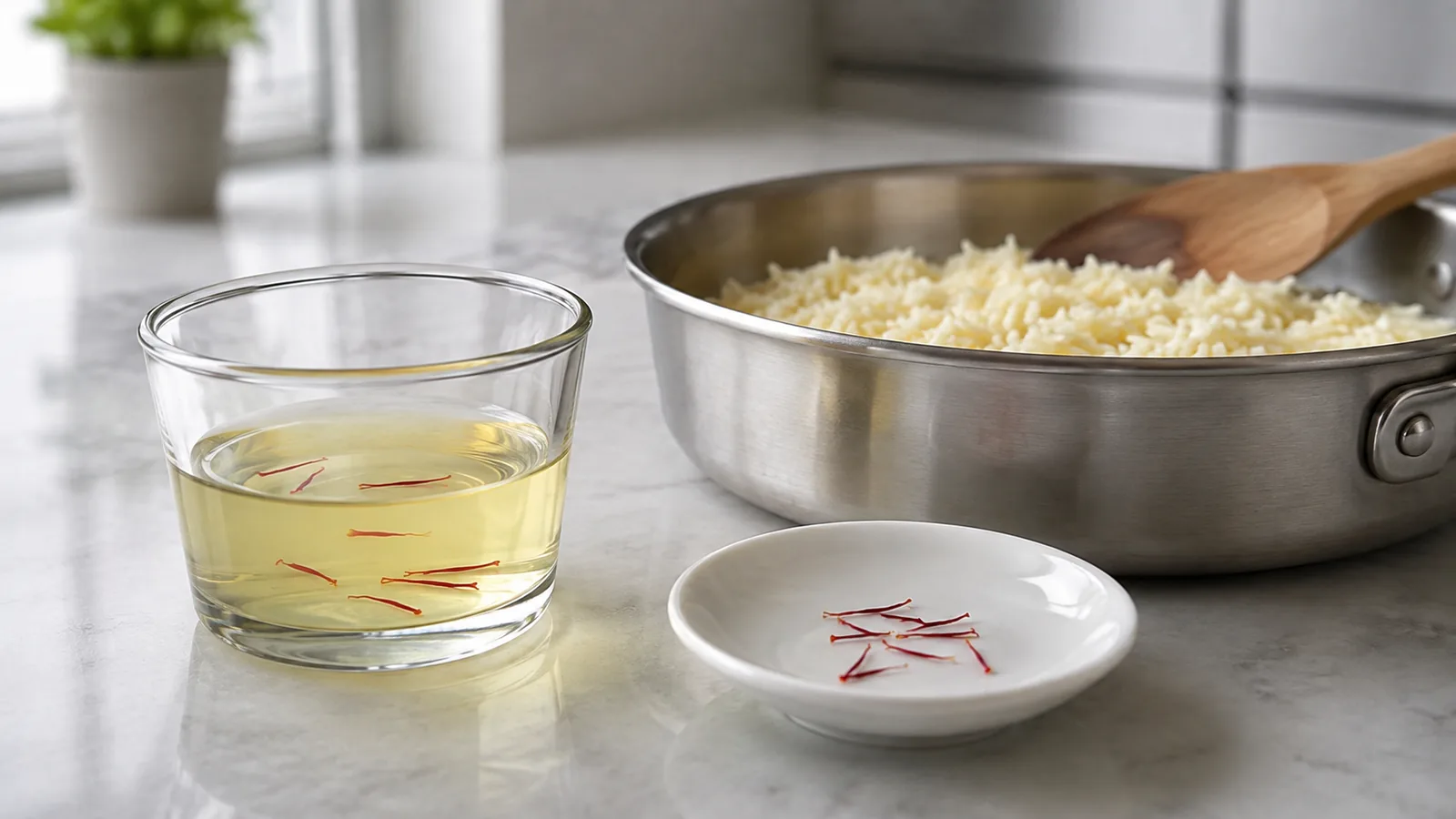
This recipe for cooking sweet saffron with fruit marmalade and Iranian saffron makes delicate thumbprint cookies with a buttery crumb and a bright spoonful of fruit in the centre.
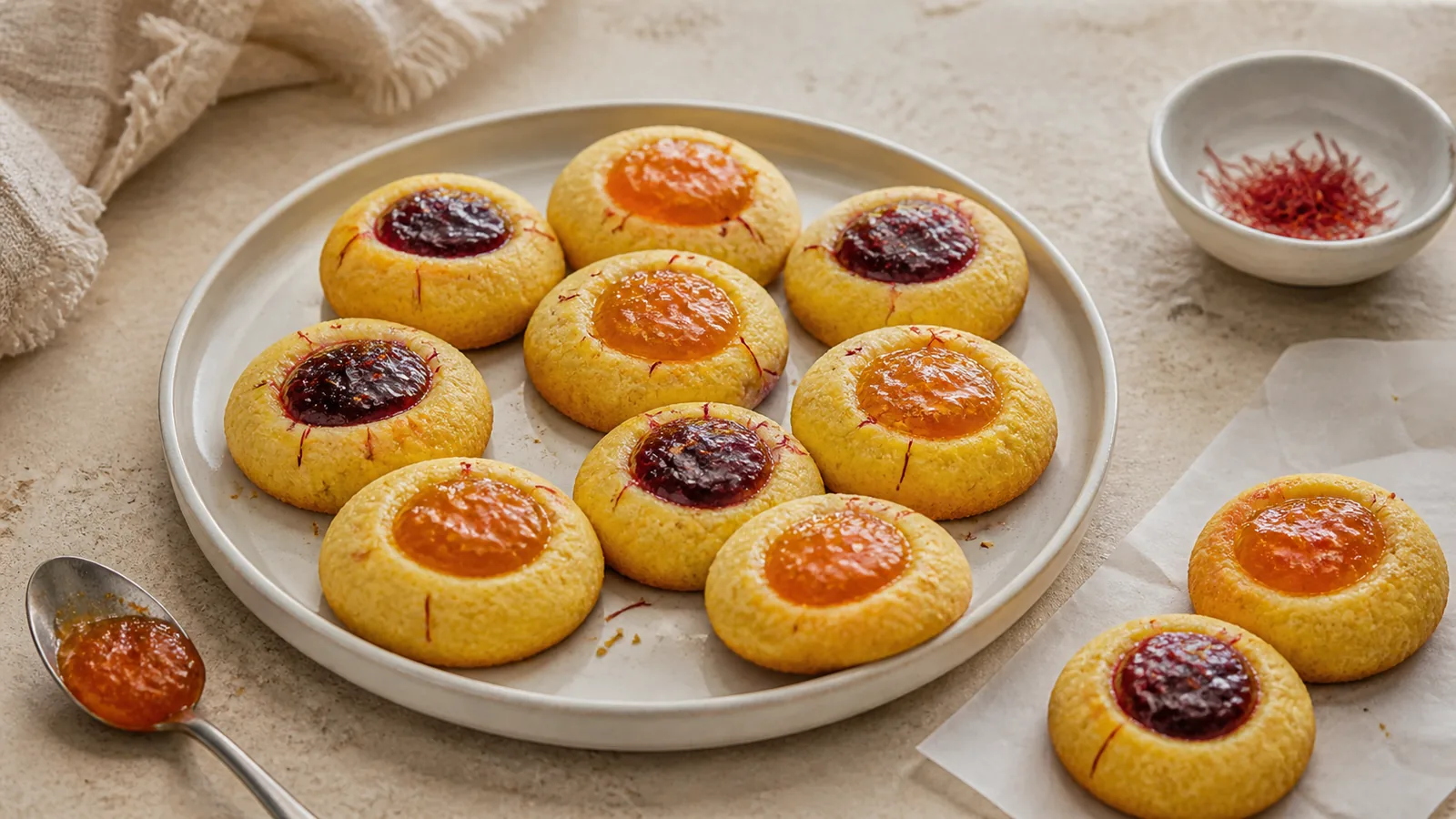
These small saffron fruit marmalade cookies are simple, but the order matters. Cream the butter well, add the flour gently, shape the dough while it is soft, and wait until the baked cookies are cool before filling them.
Ingredients for saffron marmalade cookies
- Butter: 80 grams, softened
- Powdered sugar: 100 grams
- Vanilla: 1/4 teaspoon
- Egg: 1
- Brewed saffron: 1/2 tablespoon
- Plain flour: 200 grams
- Baking powder: 1 teaspoon
- Fruit marmalade or thick jam: as needed
The earlier recipe also described 80 grams of butter as half a cup, 100 grams of powdered sugar as three-quarters of a cup, and 200 grams of flour as 2 cups. Cup measures vary and those conversions are not exact, so use the gram weights when possible.
Choose the fruit filling
Use a marmalade or jam that is thick enough to stay in the hollow of each cookie. Apricot, orange, sour cherry, raspberry and mixed-berry fillings all work with saffron. A loose preserve can soak into the cookie, so strain off excess syrup or simmer it briefly and let it cool before using.
For a neat tray, choose one or two colours rather than a different filling for every cookie. Orange marmalade gives a pleasantly bittersweet edge; apricot is softer and lets the saffron remain more prominent.
Prepare the saffron cookie dough
Heat the oven to 160°C (320°F). Line a flat baking tray with parchment paper and leave the butter at room temperature until it yields when pressed but is not oily or melted.
Beat the 80 grams of softened butter with the powdered sugar and vanilla. Continue until the mixture looks pale and smooth, scraping the sides of the bowl once or twice so no dense streaks remain.
Add the egg and beat just until it is fully incorporated. Stir in the 1/2 tablespoon of brewed saffron. If you need to prepare it first, our guide to the best way to brew saffron covers the hot-water method and how to avoid diluting a small recipe.
Add the flour without toughening the dough
Sift the 200 grams of plain flour with the baking powder in a separate bowl. Add it to the butter mixture in two or three portions, folding with a spoon or flexible spatula after each addition.
Stop mixing as soon as the dough is smooth, soft and no longer sticky. It should hold a small round without cracking. Flour absorbs moisture differently from one kitchen to another; if the dough feels very soft, chill it for 10 to 15 minutes rather than adding a large unmeasured amount of flour.
Shape the thumbprint cookies
Pinch off pieces about the size of a small walnut and roll them lightly between your palms. Arrange the rounds on the lined tray with room between them because the baking powder will make them spread and rise a little.
Press a shallow hollow into the top of each round with a fingertip or the rounded end of a small utensil. Do not push all the way to the tray. Make the hollow broad enough for marmalade, but leave a sound base underneath it.
Bake at 160°C
Place the tray on the middle shelf of the preheated oven and bake for about 10 minutes. The cookies are ready when they look set and the underside is only lightly coloured; the tops do not need to turn brown.
Leave them in place on the hot tray for a few minutes. Freshly baked saffron cookies are fragile and may break if lifted immediately. Transfer them to a wire rack once they are firm enough to move, then let them cool completely.
Fill with marmalade after cooling
Spoon a small amount of fruit marmalade into each hollow. Adding the filling after baking keeps its colour fresh and follows the original method. If a hollow has risen in the oven, press it very gently while the cookie is still warm, then allow it to cool before filling.
Let the filled cookies stand until the marmalade settles. Store them in a single layer, or place parchment between layers so the fruit centres do not stick to the cookies above.
Small details that improve the result
- Softened butter should be pliable, not melted. Liquid butter can make the rounds spread too far.
- Measure the saffron liquid carefully; too much water changes the texture of this small dough.
- Use the 200-gram flour weight as the starting point and avoid kneading after it is added.
- Keep the rounds similar in size so their 10-minute baking time is consistent.
- Cool the cookies fully before adding marmalade, especially if the filling is soft.
The result is a restrained sweet saffron cookie rather than a heavily flavoured biscuit. Butter and vanilla form the base, Iranian saffron adds its colour and aroma, and the fruit marmalade supplies the sharper finish in each bite.