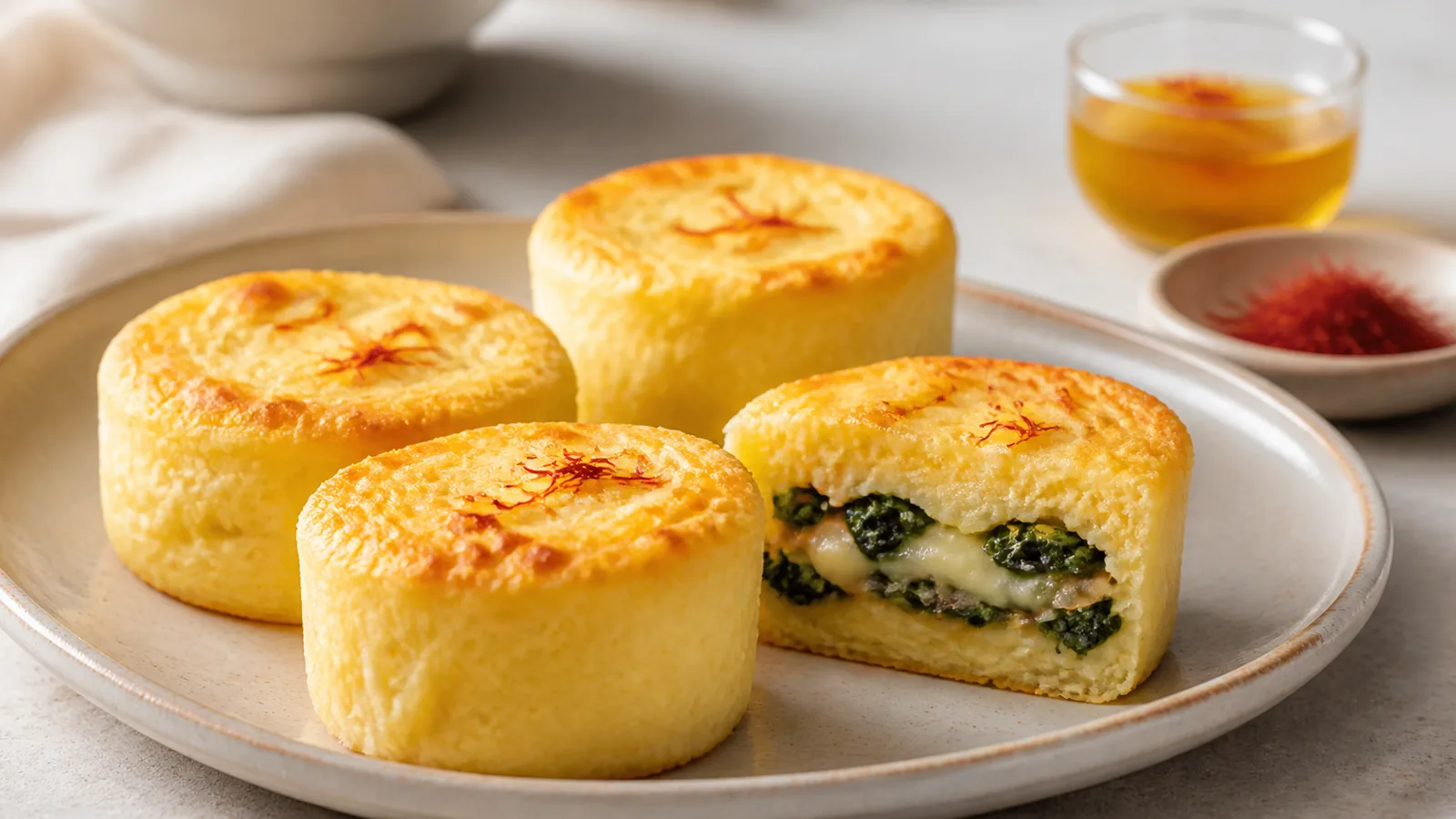
This recipe for cooking spinach and potato paste with Iranian saffron makes four small layered bakes with a golden potato shell and a buttery spinach-and-Gouda center.
“Paste” is the name carried by the original English recipe, but the finished dish is closer to a soft potato mold or individual casserole. Eggs and potato starch bind the outer layers, while saffron, orange, onion and nutmeg keep the filling from tasting flat.
Ingredients for spinach and potato paste
- 3 medium potatoes
- 2 eggs
- 1 onion, fried until golden
- 50 g butter, divided
- 500 g fresh spinach
- 100 g Gouda cheese, grated
- 1 tablespoon potato flour or potato starch
- 1 tablespoon bloomed Iranian saffron
- 1 tablespoon orange juice
- 1/8 teaspoon ground nutmeg
- Salt, black pepper and red pepper, as needed
- A little neutral oil for the molds
You will also need four oven-safe ramekins or small molds. Choose shapes with simple sides if you intend to turn the bakes out; decorative grooves make the soft potato mixture harder to release.
Boil and grate the potatoes
Put the three potatoes in a saucepan, cover them with cold water and add a little salt. Bring the water to a boil, then lower it to a steady simmer and cook until a knife passes through the center without resistance.
Drain the potatoes and let them cool just enough to handle. Peel them while warm, then grate them into a wide bowl. A ricer can be used instead, but avoid a food processor, which can turn cooked potato gluey.
Make the saffron potato mixture
Melt about one tablespoon of the 50 g butter and fold it into the warm grated potato. Add the tablespoon of potato flour, salt, black pepper and red pepper.
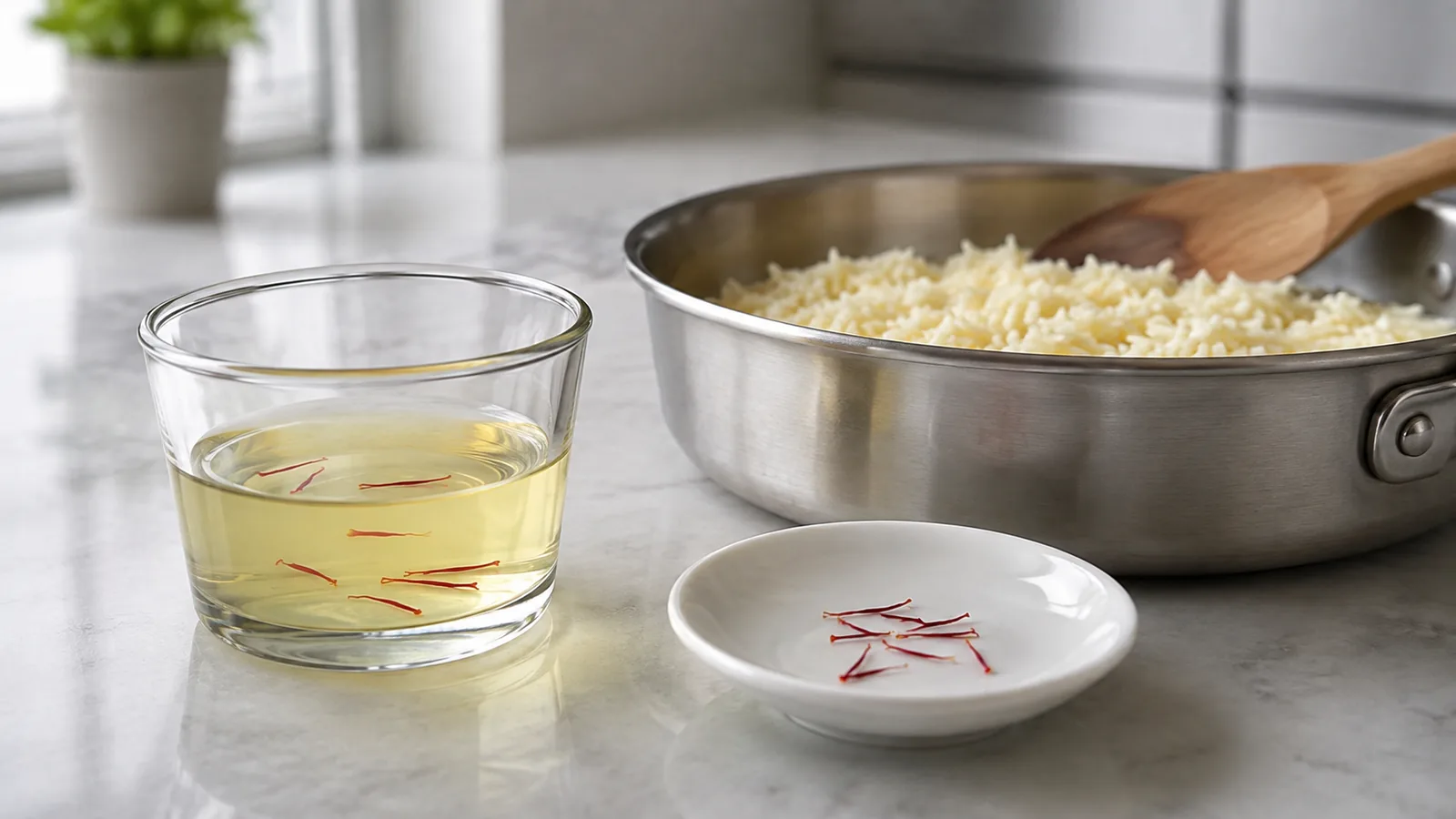
Let the mixture cool for a few minutes before adding the two eggs. Stir in the tablespoon of bloomed saffron and mix until the color is even. If you are starting with whole threads, prepare a concentrated infusion using this guide to brewing Iranian saffron.
The potato mixture should be soft enough to spread but firm enough to hold a shallow indentation. If the potatoes were unusually watery, let the mixture stand for five minutes so the starch can absorb moisture.
Blanch the spinach for two minutes
Bring a separate saucepan of lightly salted water to a boil. Add the 500 g spinach and cook it for two minutes, pushing the leaves beneath the water as they wilt.
Drain immediately and rinse under cold water to stop the cooking. Once cool, squeeze out as much water as you can, then chop the spinach. This drying step matters: wet spinach can make the center loose and prevent the potato layers from setting.
Cook the spinach and Gouda filling
Melt the remaining butter in a wide pan over medium-low heat. Add the drained spinach and the golden fried onion, then cook for a few minutes until no liquid collects in the bottom.
Stir in the 1/8 teaspoon nutmeg, one tablespoon orange juice, salt, black pepper and red pepper. Add the 100 g grated Gouda and mix just until it begins to melt through the spinach.
Remove the pan from the heat. Taste carefully before adding more salt because Gouda and the fried onion may already provide enough seasoning.
Layer the four potato molds
Heat the oven to 180°C (350°F). The temperature was missing from the old translated instruction; a moderate oven lets the egg-bound potato set during the stated 30-minute bake without scorching the saffron surface.
Lightly grease the base and sides of four ramekins with neutral oil. Divide half of the potato mixture among them and press it into an even bottom layer, bringing a little up the sides.
Spoon the spinach mixture into the centers and spread it level, leaving a narrow potato border. Cover with the remaining potato mixture and smooth the tops with the back of a damp spoon.
Do not compress the layers too firmly. Gentle pressure is enough to remove large air gaps while keeping the finished bake tender.
Bake for 30 minutes
Set the four molds on a baking tray and bake for 30 minutes, until the tops are set and lightly golden at the edges. Rotate the tray once if the oven colors one side faster than the other.
Because the potato mixture contains egg, the center should reach 160°F (71°C). A thin knife inserted into the potato layer should come out hot and without wet egg mixture.
If the tops are fully set but still pale, move the tray briefly beneath the broiler, watching continuously. Saffron and cheese can darken quickly, so this finishing step should take only a moment.
Rest and serve the spinach potato molds
Leave the molds on the tray for 10 minutes after baking. Run a thin knife around each edge, place a small plate over the mold and turn it over carefully. You can also serve the dish directly in its ramekin.
Cutting reveals the green spinach-and-cheese center between two warm saffron potato layers. Serve it as a vegetarian lunch, a side dish or part of a shared dinner while the Gouda is still soft.
The finished spinach and potato paste should hold its shape without becoming dense. The potato stays tender, the spinach filling is moist rather than watery, and the small amount of orange juice brightens the butter, onion and nutmeg.
Fixing texture and release problems
If the mixture sticks to the mold, it either needed more grease or more resting time. Serving it in the ramekin is better than forcing out a hot, soft bake.
If the center releases water, squeeze the blanched spinach more thoroughly and cook it in the butter until the pan is dry. If the potato layer is loose, make sure the potatoes were drained well and the full tablespoon of potato starch was included.