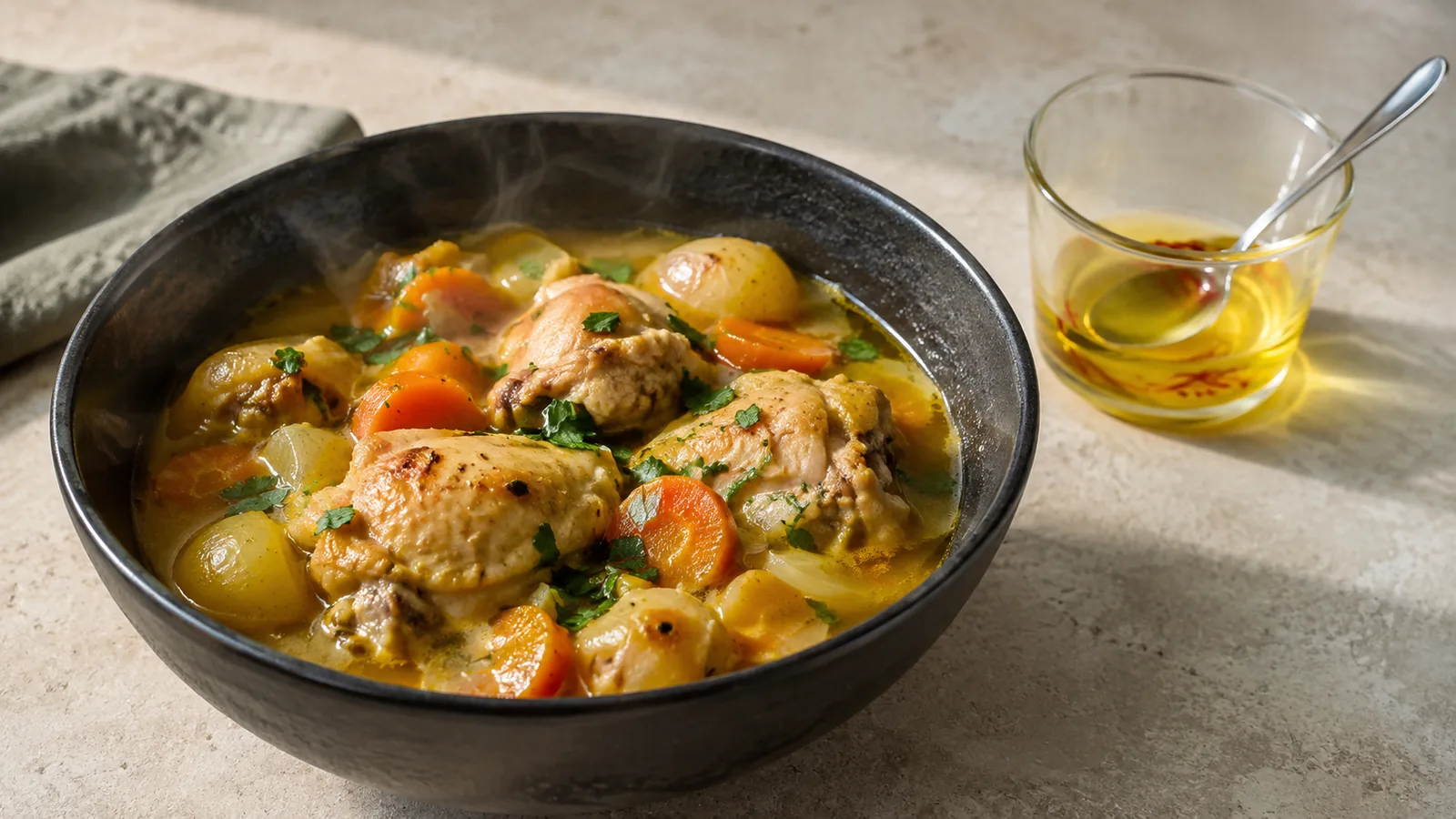
Marjo stew is a traditional lentil stew from Taleghan, made with mutton, Bukhara plums, potato, tomato, verjuice and saffron. It is filling without being heavy: the lentils soften the broth, while sour plum and verjuice keep the flavour bright.
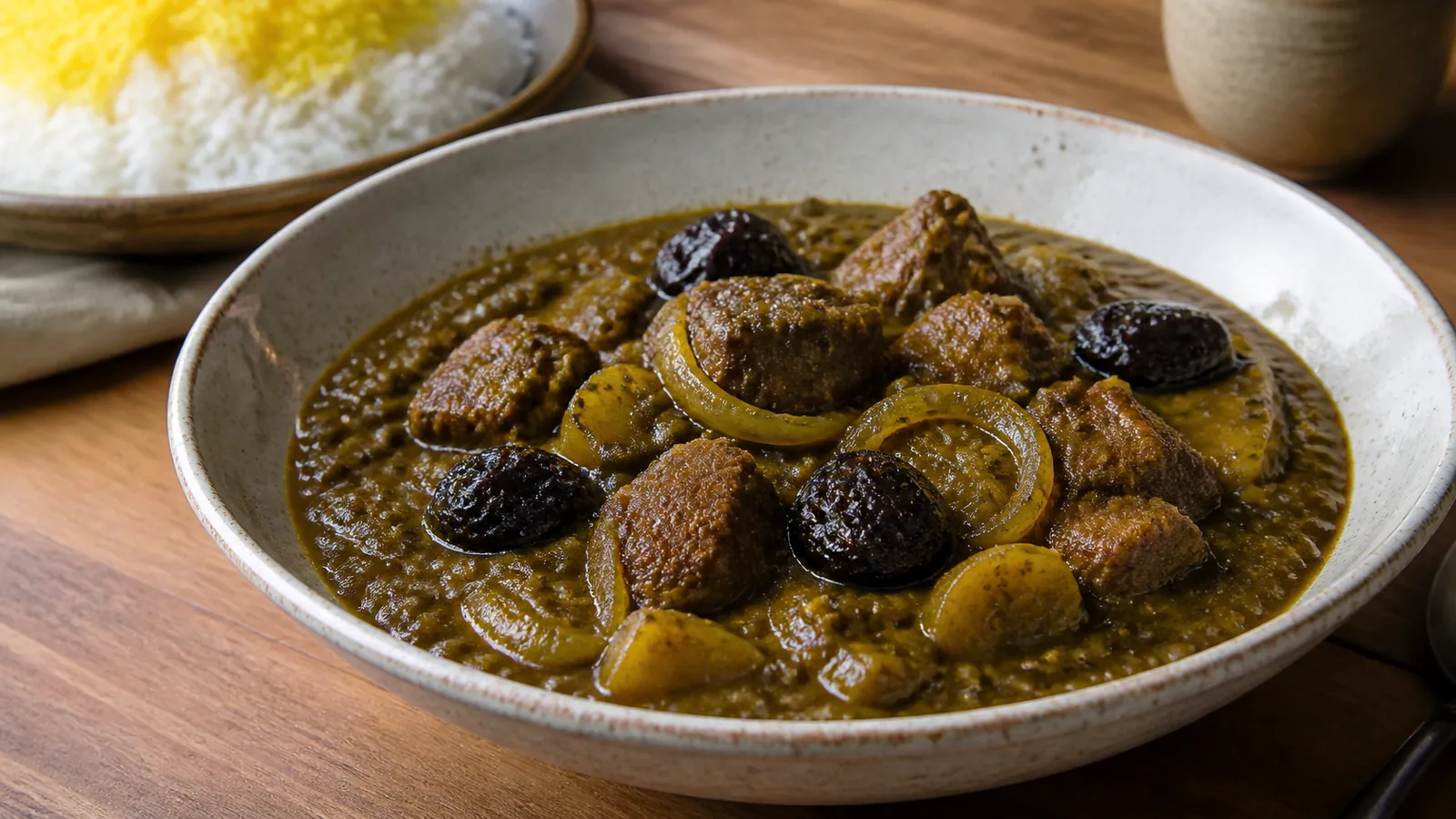
The name is sometimes translated badly as “marjoram stew,” but marjo refers to the local lentil dish, not the herb. A good pot has tender meat and lentils, whole pieces of plum and a sauce that is thick enough to cling to the rice without becoming dry.
Ingredients for Marjo stew
- 1 cup brown or green lentils
- 400 g mutton or lamb, cut into stew-sized cubes
- 2 medium onions, finely chopped
- 1 medium potato, peeled and cut into bite-sized pieces
- 10 Bukhara plums
- 2 tablespoons tomato paste, or 2 grated ripe tomatoes
- 1 to 2 tablespoons verjuice, adjusted to taste
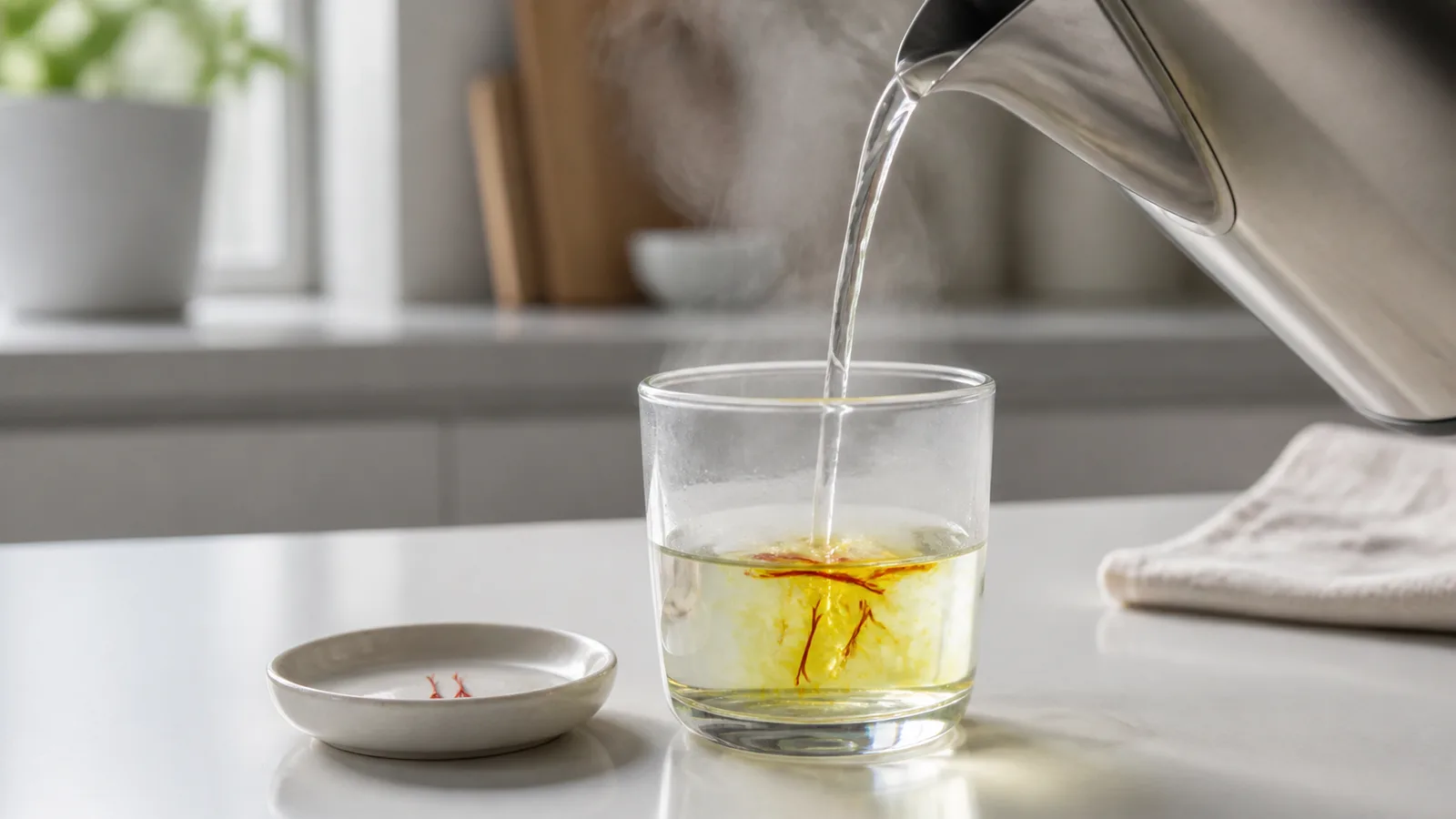
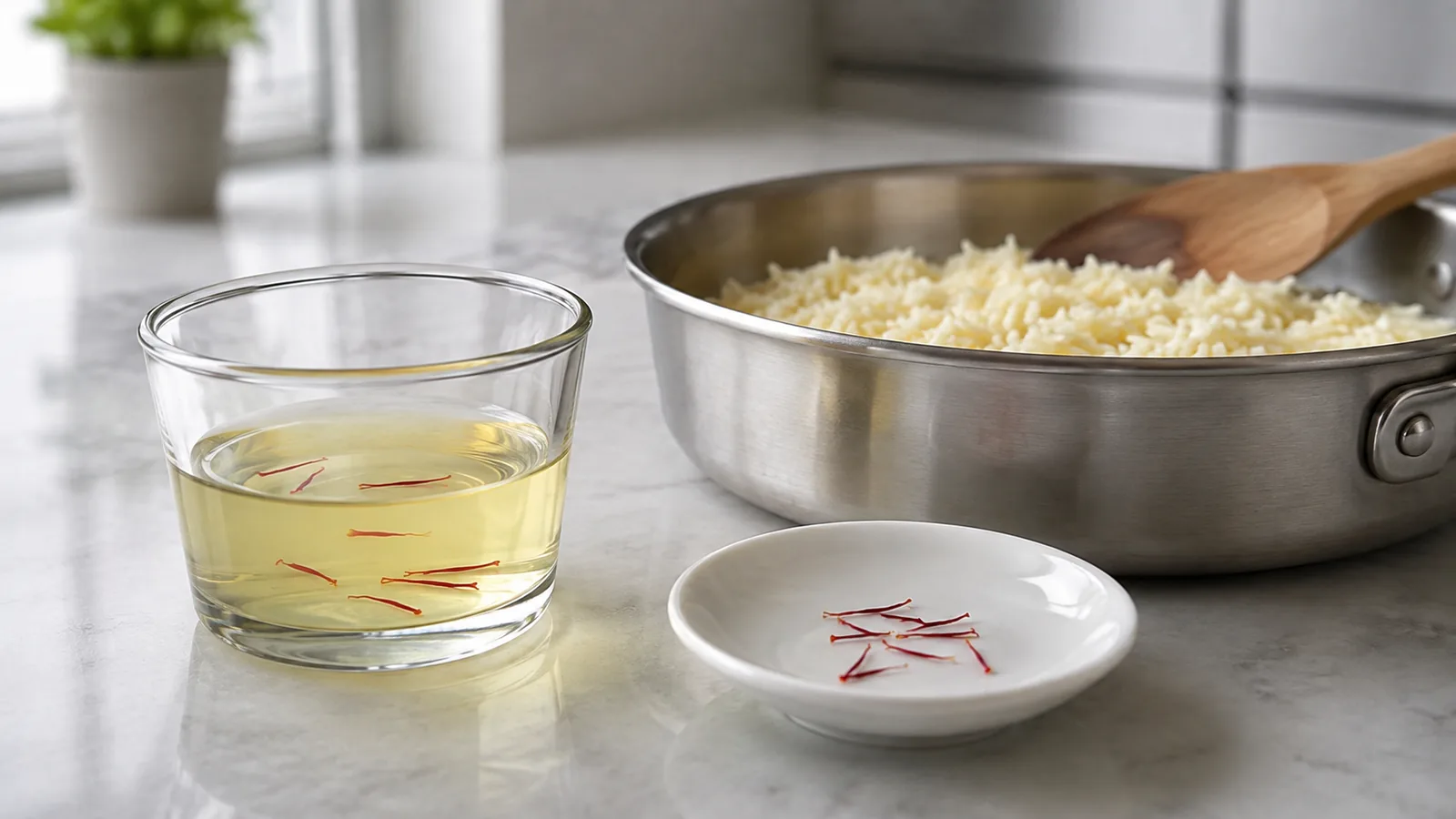
- 2 tablespoons brewed saffron
- ½ teaspoon turmeric
- A small pinch of cinnamon
- Salt and black pepper
- 2 tablespoons neutral oil
- Hot water, as needed
Bukhara plums vary in sweetness and acidity. Taste one before deciding how much verjuice to add. If the plums are very tart, the stew may need only a small splash at the end.
Soak the lentils and plums
Rinse the lentils and soak them in cool water for 30 minutes. Rinse the plums separately and soak them for 15 to 20 minutes, just long enough to soften any dry edges. Drain both before cooking.
Older lentils can take much longer than a fresh packet, so it is useful to cook a spoonful first if you are unsure. They should become tender without collapsing into a purée.
Brown the onion and mutton
Heat the oil in a heavy saucepan over medium heat. Add the onions and cook until soft and pale gold. Stir in the turmeric for 30 seconds, then add the mutton.
Brown the meat on several sides. Make a space in the middle of the pot and fry the tomato paste there for 1 to 2 minutes, until its raw smell fades and the colour deepens. If using grated tomatoes, cook them until most of their loose water has evaporated.
Simmer the meat first
Add enough hot water to cover the meat by about 2 cm. Bring it to a gentle boil, skim if necessary, then lower the heat and cover partly. Simmer for 45 to 60 minutes before adding the lentils.
This head start matters. Mutton usually needs longer than lentils, and putting everything in at once can leave either tough meat or broken-down pulses.
Add the lentils, potato and plums
Add the drained lentils and simmer for 15 minutes. Stir in the potato pieces, plums, black pepper and cinnamon. Continue cooking gently until the meat, potato and lentils are tender, usually another 20 to 30 minutes.
Check the pot from time to time and add a little hot water only if needed. Marjo stew should finish with a concentrated sauce rather than a bowlful of thin broth. Stir carefully so the potato and plums retain their shape.
Finish with verjuice and saffron
When the meat and lentils are ready, add one tablespoon of verjuice and the brewed saffron. Simmer uncovered for 5 to 10 minutes, then taste. Add more verjuice if the stew needs a sharper finish, and adjust the salt.
Adding the verjuice late preserves its fresh acidity. The saffron also needs only a brief final simmer; prolonged boiling can flatten its aroma.
Serving and practical adjustments
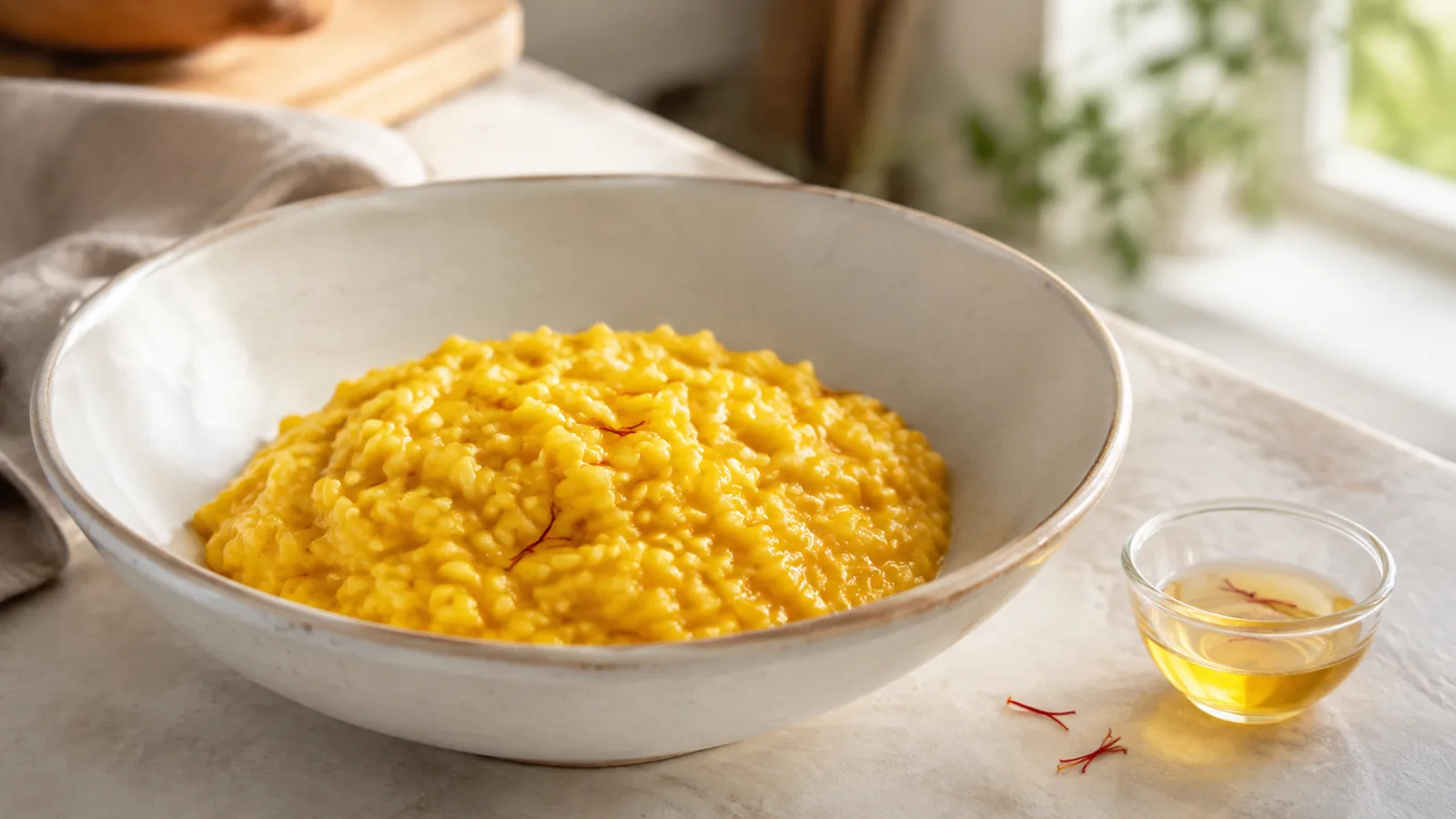
Serve Taleghan Marjo stew with plain Persian rice or saffron rice. Spoon some sauce over the rice and keep the plums visible on top, rather than stirring the entire pot until the fruit disappears.
- For a vegetarian Marjo stew, omit the meat, use water or mild vegetable stock, and begin cooking the lentils immediately after frying the onions and tomato.
- If the lentils soften quickly, add them later so they do not split before the mutton is tender.
- If the sauce is too sour, a small pinch of sugar can round it out; add it only after tasting.
- If it is too thin, simmer uncovered rather than adding flour or crushing all the lentils.
The character of this local food comes from restraint. Saffron should perfume the stew, not cover the lentils; verjuice should lift the fruit, not dominate it; and the final consistency should feel generous over rice while still holding together on the spoon.