This recipe for cooking shole Zard mold with Iranian saffron turns the familiar saffron rice dessert into a firm, chilled centrepiece that can be released cleanly onto a serving plate.
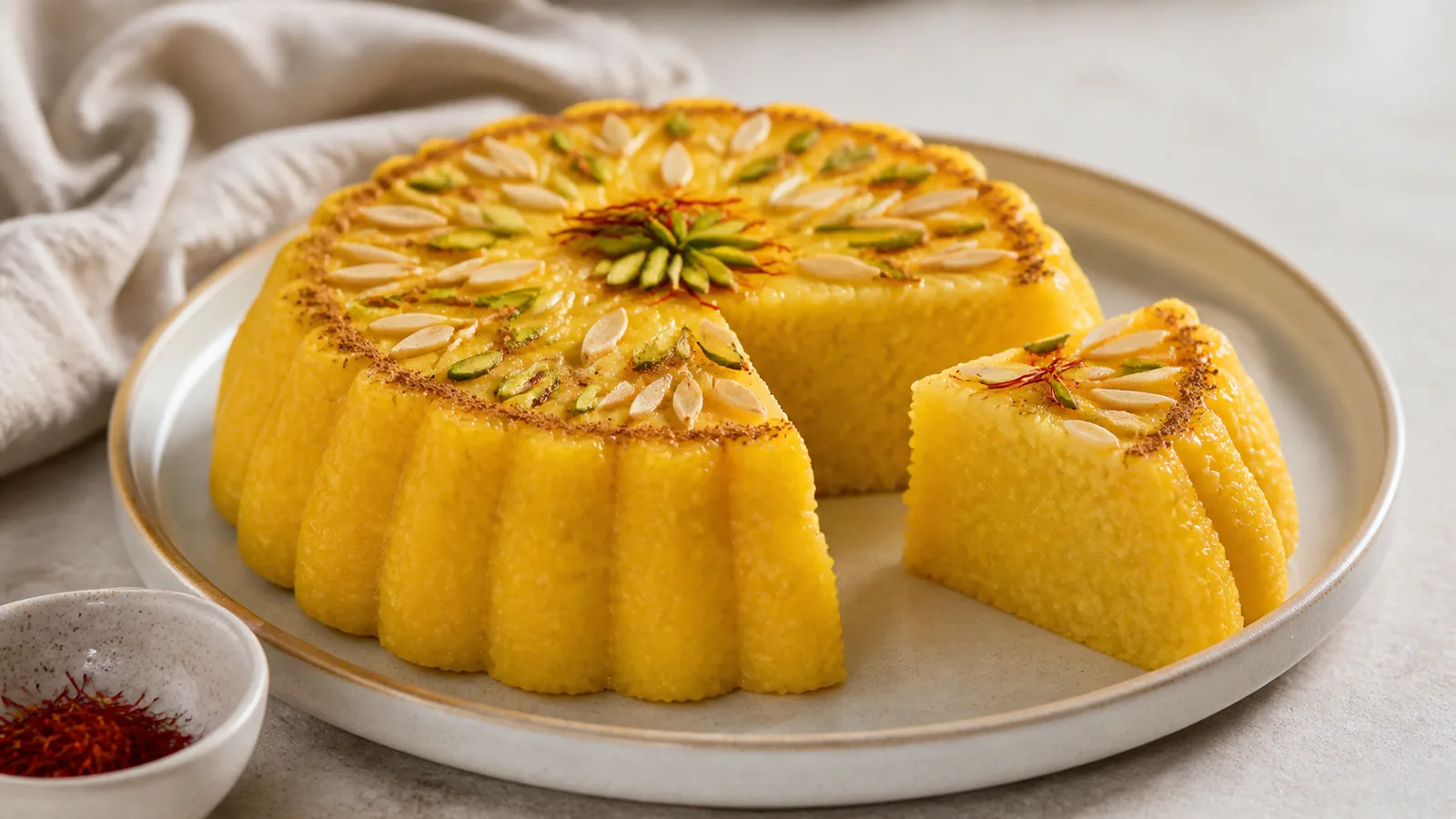
Traditional shole zard is spooned into bowls, but this moulded version adds gelatin so it holds a defined shape. The flavour remains recognisable: Iranian saffron, rosewater, cardamom, rice, almonds, pistachios and cinnamon.
Ingredients for moulded shole zard
- 1 cup Iranian rice
- 2 cups sugar
- 5 cups water, plus water for blooming the gelatin and brewing the saffron
- 2 tablespoons gelatin powder
- 1/2 cup mixed sliced almonds and pistachios
- 1/2 cup rosewater
- 1 tablespoon ground cardamom
- 2 tablespoons butter
- Concentrated brewed saffron, as needed
- Cinnamon, as needed
- Optional: 1 teaspoon cinnamon to stir into the dessert
One tablespoon cardamom gives a pronounced flavour, so measure it carefully and use a finely ground, fresh spice. The saffron quantity is intentionally flexible; make a concentrated infusion rather than adding a large volume of coloured water.
Soak the rice
Rinse the rice until the water is less cloudy, then soak it overnight or for at least a few hours. The long soak helps the grains break down into the soft texture expected in shole zard.
Choose a pot with plenty of headroom. Rice starch can rise as it boils, and a crowded pot is harder to stir without spilling.
Cook the rice until it breaks down
Drain the soaked rice and add it to the pot with the 5 cups water. Bring to a boil, then reduce the heat and let it cook gently, partly covered.
Stir occasionally at first and more frequently as the mixture thickens, scraping the base so the rice does not settle and scorch. A wooden spoon laid across the open pot may help interrupt rising foam, but it is not a substitute for watching the heat.
Continue until the grains are very soft and begin to lose their separate shape. There is no need to strain away the starchy cooking water; that starch gives the dessert its body.
Brew the saffron and cardamom
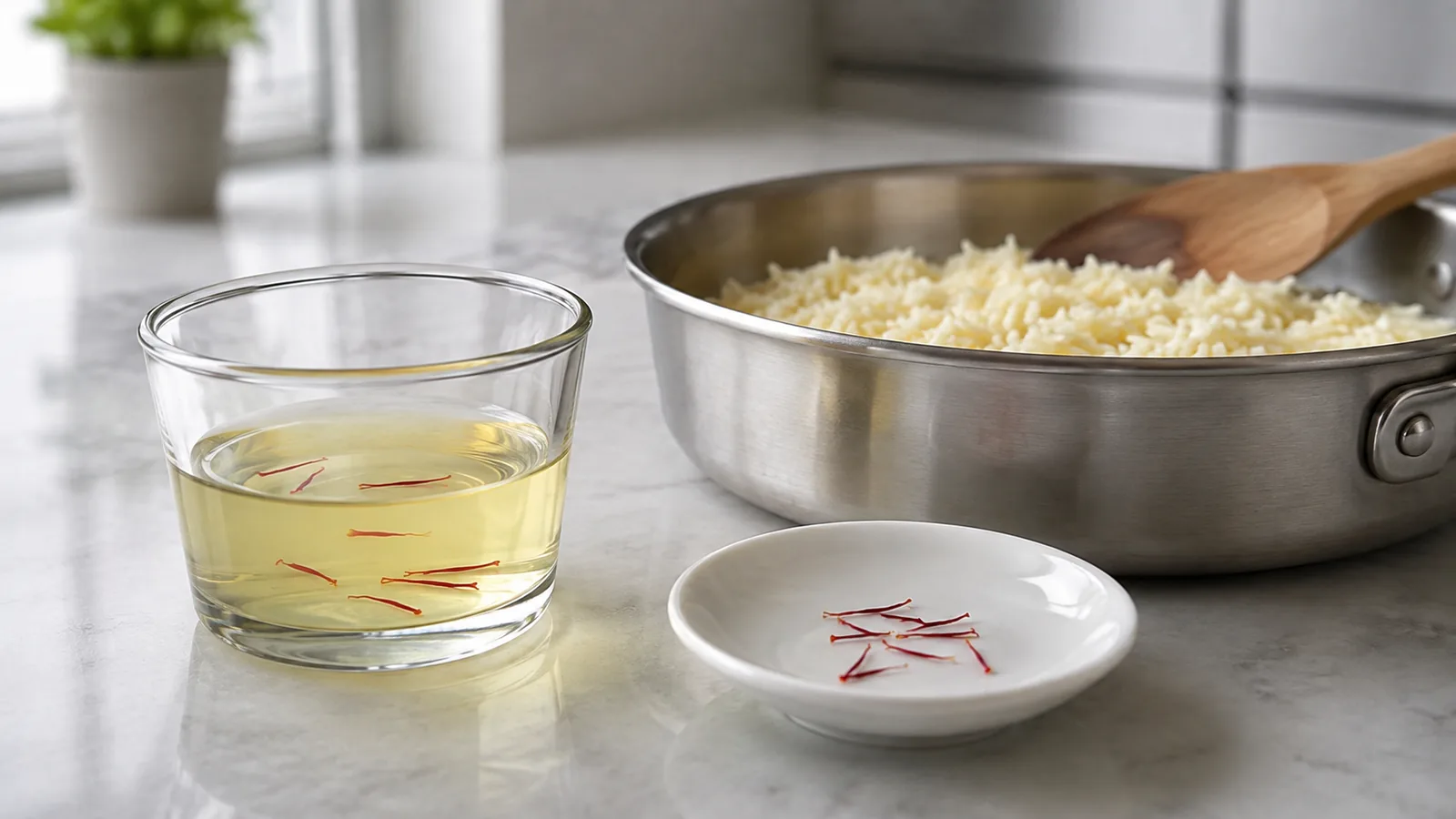
Put the ground saffron and cardamom in a heatproof glass with a small amount of boiling water. Set the glass over gentle steam from a kettle or small saucepan and allow the colour and aroma to develop.
Keep this infusion strong. The rice already contains its measured cooking water, and a thin infusion would make the mould slower to set.
Add sugar, nuts and saffron
Once the rice is completely soft, add the 2 cups sugar. The mixture will loosen as the sugar dissolves; this is normal. Stir over low heat until no grainy sugar remains.
Add the 1/2 cup sliced almonds and pistachios, followed by the saffron-cardamom infusion. Cook gently until the mixture thickens again. Keep stirring around the base and sides, where sweet rice is most likely to catch.
If you want cinnamon throughout the dessert, add the optional teaspoon at this stage. Leaving it out keeps the saffron colour clearer; cinnamon can instead be reserved for the surface.
Bloom and dissolve the gelatin
The older instruction describes the gelatin water as both “2 tablespoons” and “half a glass,” which are not the same measure. Follow the liquid ratio on your gelatin package for 2 tablespoons powder. Use only enough water to hydrate it fully without making the shole zard loose.
Sprinkle the gelatin evenly over cool water and leave it until hydrated. Then place the bowl over gentle steam and stir until the mixture is completely clear and fluid. Do not let it boil.
Finish with butter and rosewater
For a firmer result, let the cooked shole zard rest over the lowest heat for up to 30 minutes before adding the rosewater, stirring regularly and keeping it from sticking. This preserves the original suggestion to “brew” the dessert before its final flavouring.
Remove the pot from the heat. Stir in the 2 tablespoons butter and 1/2 cup rosewater until the butter disappears. Add the dissolved gelatin and mix thoroughly, reaching the bottom of the pot so no clear gelatin pockets remain.
Fill and chill the mould
- Lightly grease a clean mould with a neutral oil, wiping away any visible excess.
- Pour in the warm shole zard and tap the mould gently on the counter to release trapped air.
- Leave it at room temperature only until the strong heat has gone.
- Transfer it to the refrigerator on a level shelf.
- Leave it undisturbed until completely cold and firmly set.
The exact setting time depends on the mould depth and gelatin, so check the centre rather than relying on a fixed number of hours. It should feel firm across the surface and pull very slightly from the edge.
Release the shole Zard mold cleanly
Take the mould from the refrigerator and let it stand briefly. Moisten a thin knife, then run it carefully around the wall without cutting deeply into the dessert.
Dampen a serving plate and shake off every visible drop; it should be barely moist, not wet. Place it over the mould, hold both firmly and invert in one controlled movement. Lift the mould slowly.
Decorate with cinnamon, sliced pistachios, almonds or a few saffron threads. Keep the finished dessert refrigerated until shortly before serving, and return leftovers to the refrigerator promptly.
What makes a stable moulded shole zard?
- Fully softened rice: the broken-down starch supports a cohesive texture.
- Concentrated saffron: strong colour and aroma arrive without excess water.
- Properly hydrated gelatin: undissolved granules cause weak or rubbery patches.
- Complete chilling: turning out the mould too soon can split the dessert.