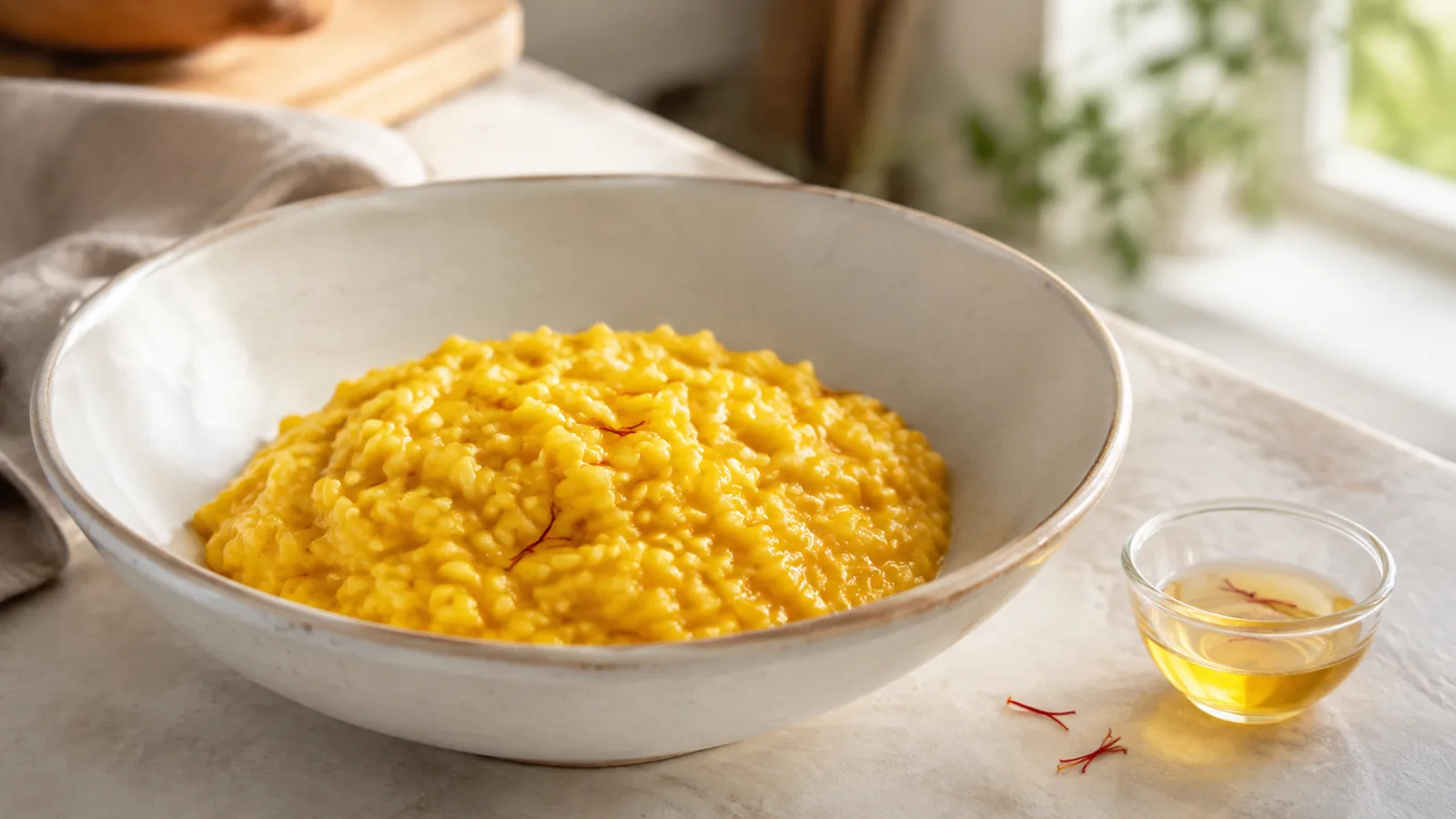
This recipe for cooking coconut halva with Iranian saffron makes a soft, moulded sweet with toasted flour, coconut, rosewater and a warm saffron aroma.
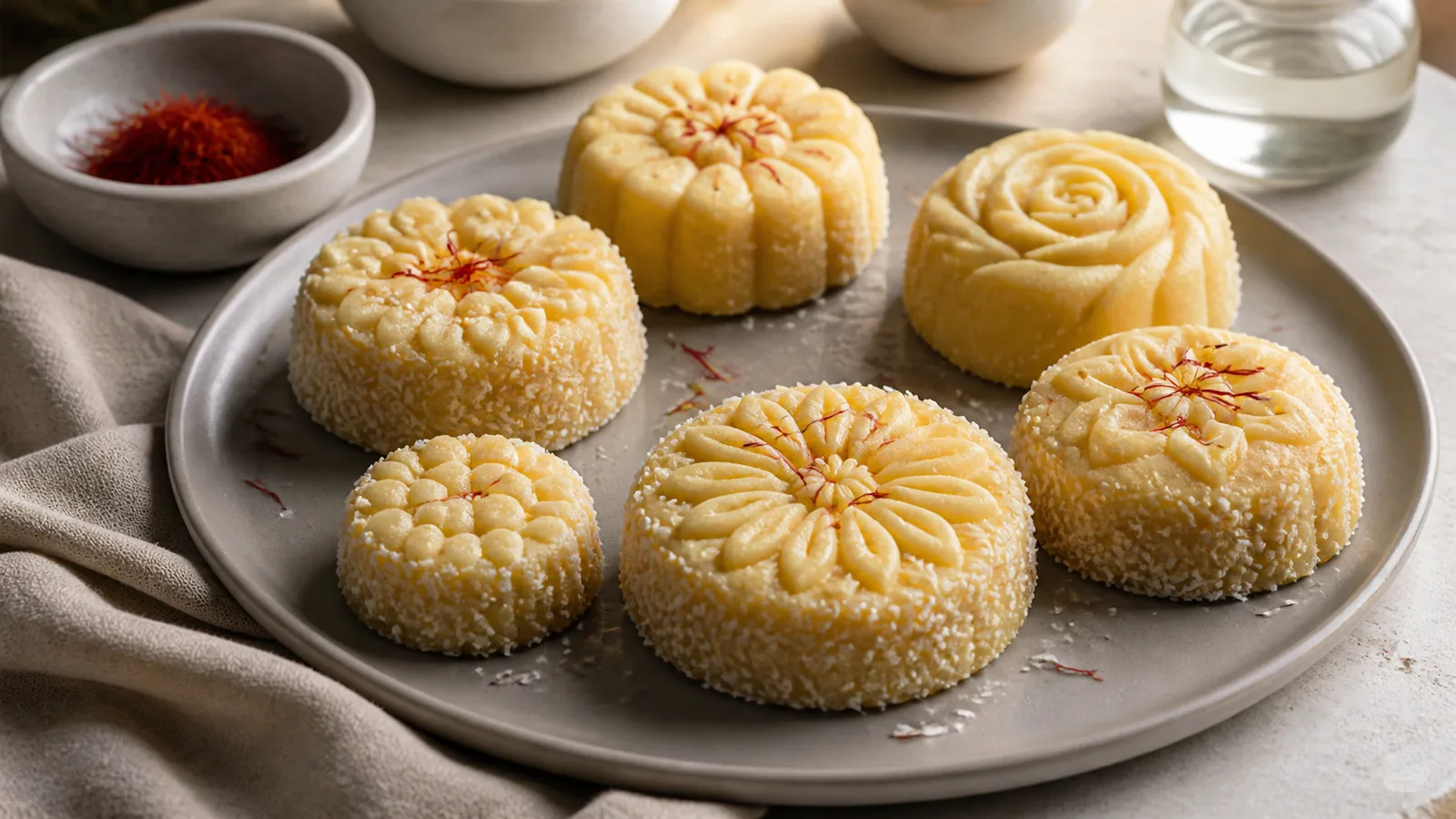
It is a stovetop halva rather than a baked dessert. The flour is toasted very gently so it loses its raw taste without becoming brown; that keeps the finished coconut halva pale enough for the saffron colour and coconut to show.
Coconut halva ingredients
- 1 cup plain flour, using the same cup for all volume measurements
- 1/2 cup desiccated coconut or fine unsweetened coconut powder
- 70 g unsalted butter, softened to room temperature
- 2 tablespoons neutral liquid oil
- 1/2 cup powdered sugar
- 1 tablespoon concentrated brewed saffron
- 3 tablespoons rosewater
The older ingredient list gives the flour as “1 measure.” Using one consistent measuring cup preserves that proportion alongside the half-cup quantities. Choose fine coconut rather than long shreds if you want a smooth halva that releases neatly from small moulds.
Prepare the ingredients
Sift the flour before it goes into the pan. Sift the powdered sugar separately and keep it ready for the final mixing stage. Break up any coconut lumps with your fingertips.
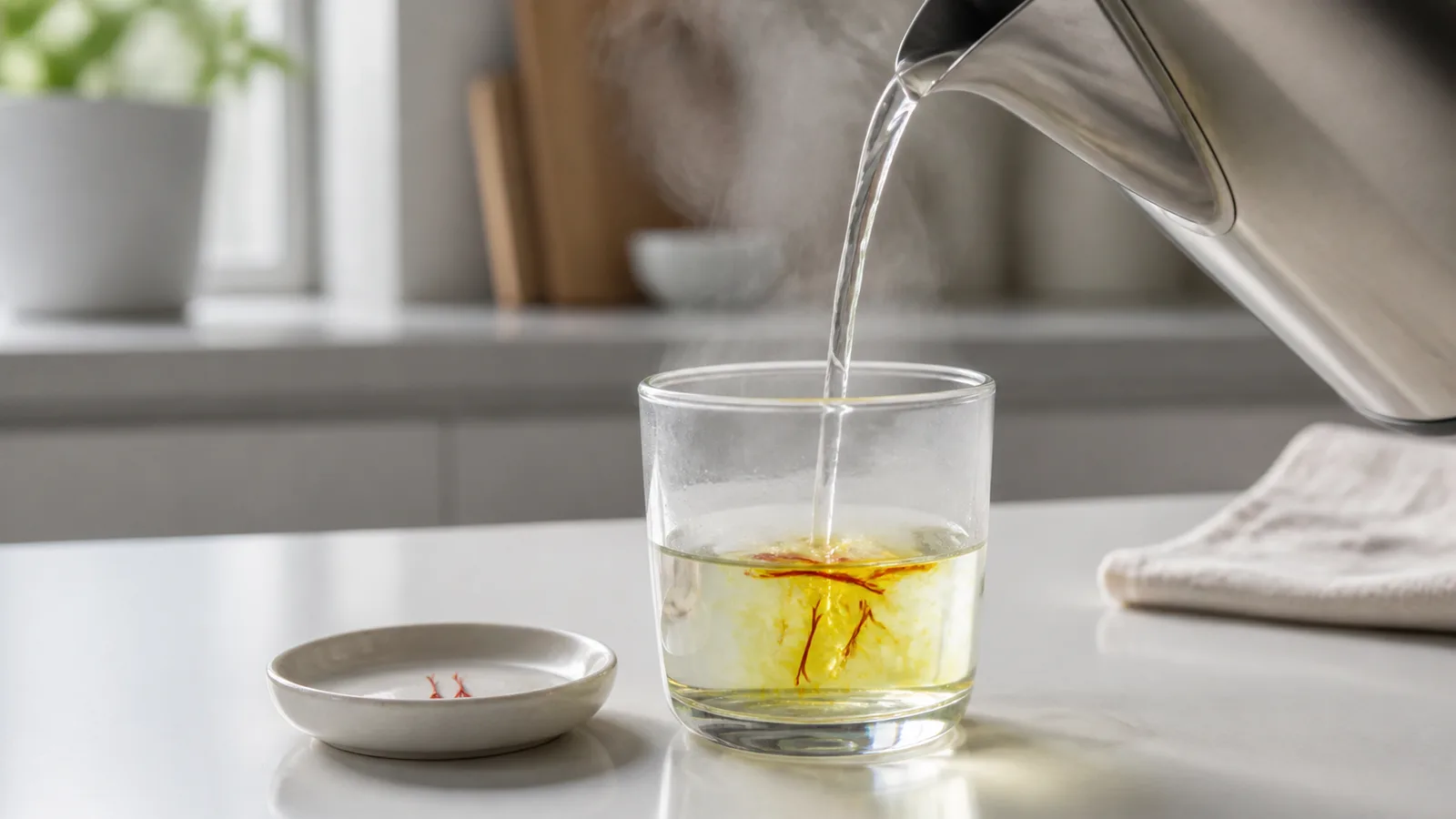
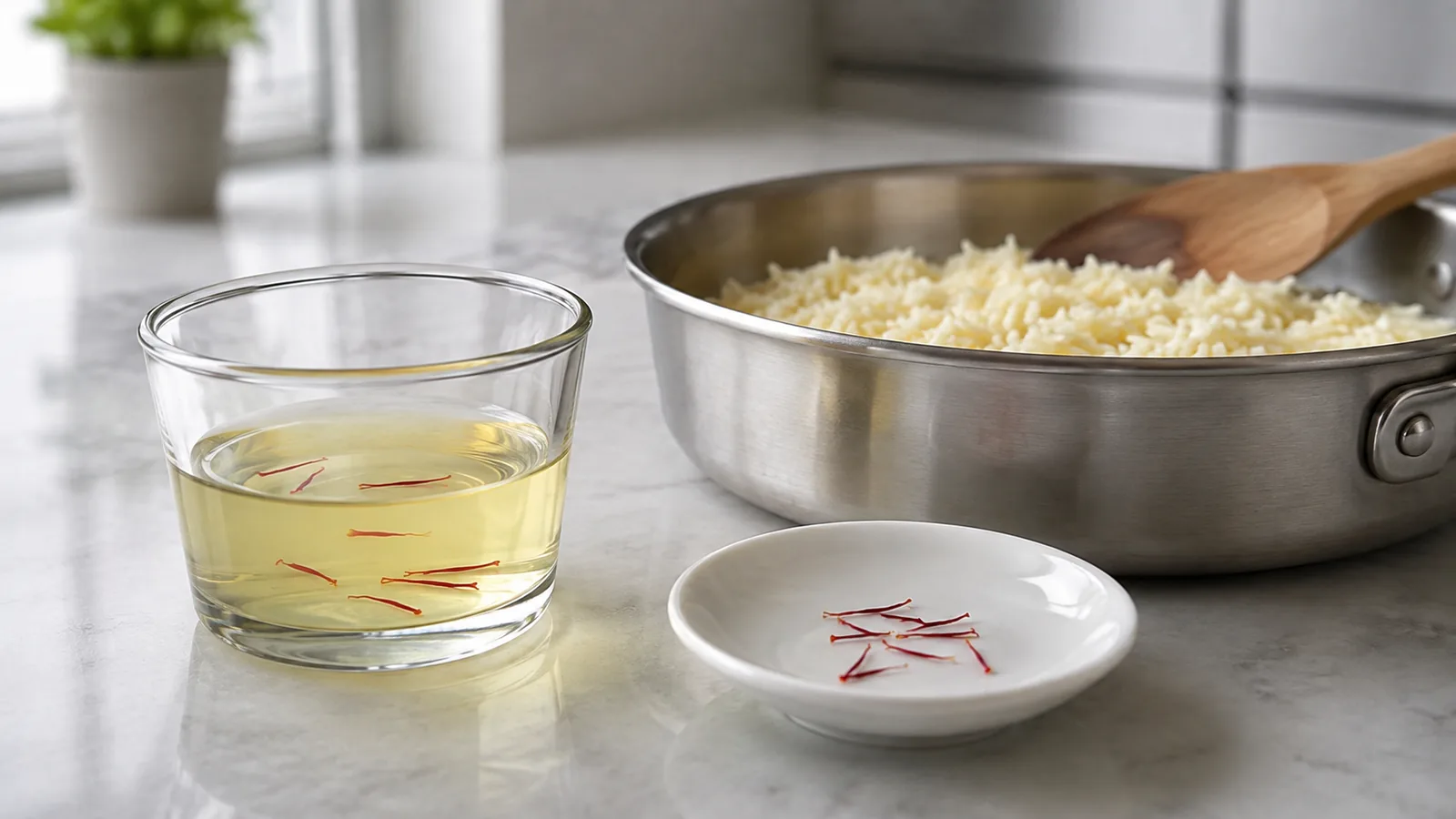
Bloom finely ground saffron in a very small amount of hot water and let it stand until deeply coloured. Measure one concentrated tablespoon. A thin infusion adds unnecessary water and can make the halva difficult to shape.
Toast the flour without browning it
Place a dry, wide frying pan over low heat. Add the sifted flour and stir constantly, reaching into the corners of the pan so none of it sits against the hot surface for too long.
Continue until the raw flour smell has disappeared, but stop before the flour changes colour. This is the main difference between this pale coconut halva and darker styles that deliberately toast flour until golden or brown.
Remove the pan from the heat briefly and sift the warm flour a second time. Return it to the pan. The second sifting breaks up toasted flour lumps and gives the finished sweet a finer texture.
Add the butter and oil
Add the softened 70 g butter and 2 tablespoons oil to the warm flour. Return the pan to low heat and stir continuously for about 5 minutes, until the fat is evenly absorbed and the mixture looks smooth.
Do not raise the heat to speed this stage. Browning the flour now will mute the coconut and change the intended appearance.
Add rosewater and Iranian saffron
Pour in the 3 tablespoons rosewater first, followed by the tablespoon of concentrated saffron. Stir steadily as the mixture thickens and comes together.
Remove the pan from the heat. Let the mixture cool slightly so it is warm rather than fiercely hot, but do not wait until the butter sets. This short pause makes it easier to add the powdered sugar without leaving hard sweet pockets.
Mix in the sugar and coconut
Add the sifted powdered sugar in two or three portions, mixing thoroughly after each addition. Add the 1/2 cup coconut powder and fold until it is distributed evenly.
The coconut halva is ready when it is cohesive, smooth and gathers into one mass in the pan. If the mixture looks loose, give the coconut a moment to absorb moisture before changing the proportions. If it is already crumbly, press a small piece between your fingers before adding anything: warmth and firm mixing may be all it needs.
Mould and chill the coconut halva
- Choose clean, dry silicone moulds and place them on a firm tray.
- While the halva is still pliable, press it into each cavity, working into the edges so no air pockets remain.
- Level the backs with a spoon or small spatula.
- Refrigerate for 1 hour.
- Flex the silicone away from the edges and turn each piece out gently.
A single larger silicone mould also works, although small portions release more easily and are simpler to serve. If you do not have a mould, press the warm halva into a shallow lined dish, chill it, then cut it into neat pieces.
Serving and storage
Let the chilled pieces stand for a few minutes before serving so the butter softens slightly and the rosewater aroma opens. A restrained sprinkle of coconut or a few saffron threads is enough for decoration.
Store the halva covered in the refrigerator so it does not absorb other food aromas. Its best texture is soft and cohesive: firm enough to hold the moulded detail, but not dry or sandy.
Three details that make the texture smoother
- Keep the flour pale. Low heat removes the raw taste without changing the intended coconut flavour.
- Sift twice. Sifting before and after toasting prevents small flour lumps from remaining in the halva.
- Add powdered sugar off the heat. Mix it into a warm, not scorching, base for a finer result.