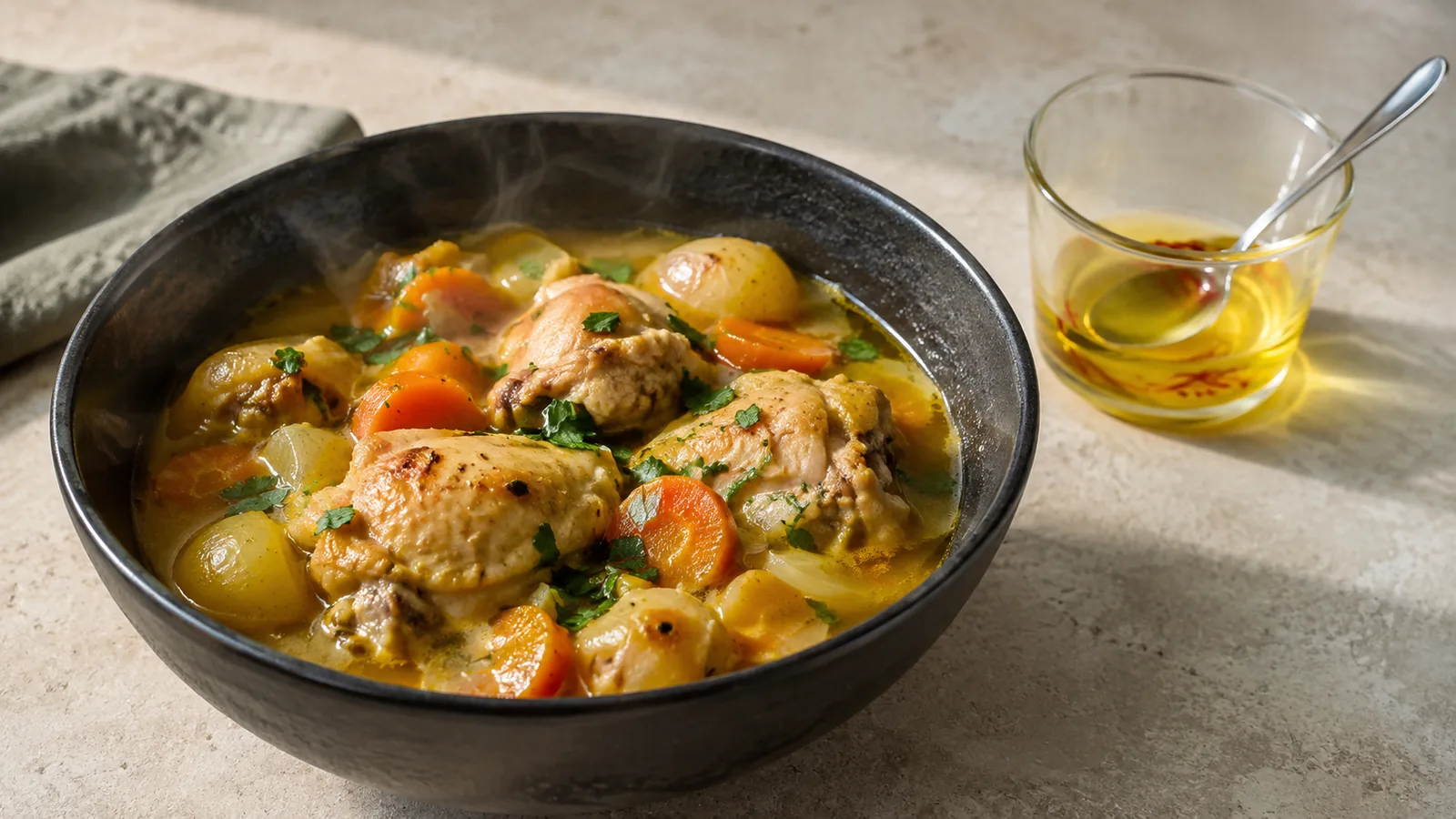
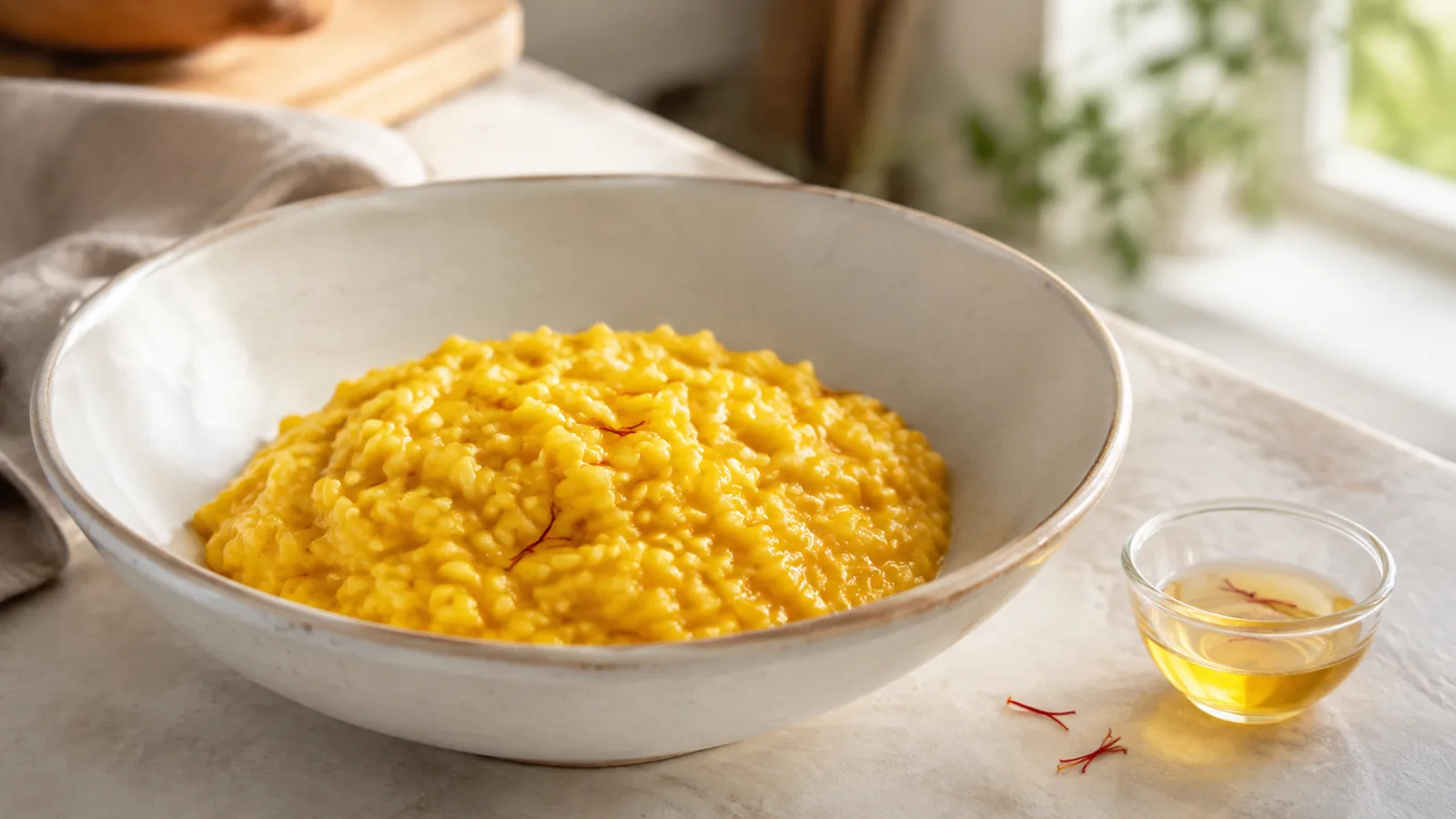
This saffron rice with vegetables pairs Iranian herb rice with tender muscle meat, then finishes the platter with a bright layer of bloomed-saffron rice.
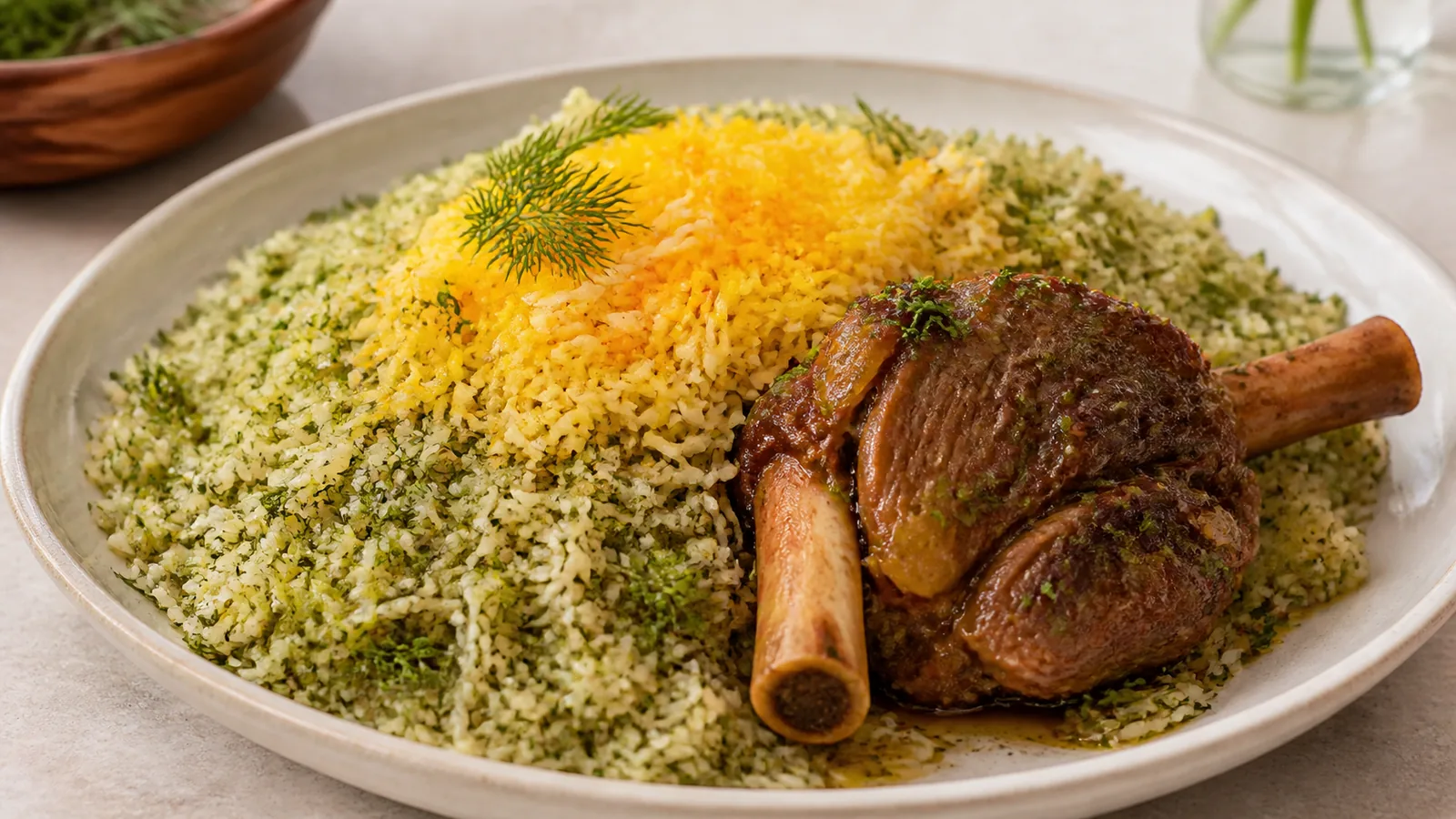
“Muscle” in the original title refers to a hard-working, slow-cooking cut such as lamb shank, often called mahicheh in this style of meal. The rice is mixed with leek, parsley, dill, coriander and a little fenugreek, while the meat cooks separately with onion until it is tender and leaves a concentrated broth.
Ingredients for herb rice with muscle meat
- 1 kg rice
- 1 large onion
- 1.5 kg mixed fresh vegetables and herbs: leek, parsley, dill, coriander and a little fenugreek
- 750 g muscle meat or bone-in lamb shank
- 8 tablespoons oil, divided
- 1 dessertspoon ground saffron
- Boiling water for blooming the saffron
- Salt and black pepper, to taste
- 3 glasses water for cooking the meat
- 1/2 glass water for starting the rice steam
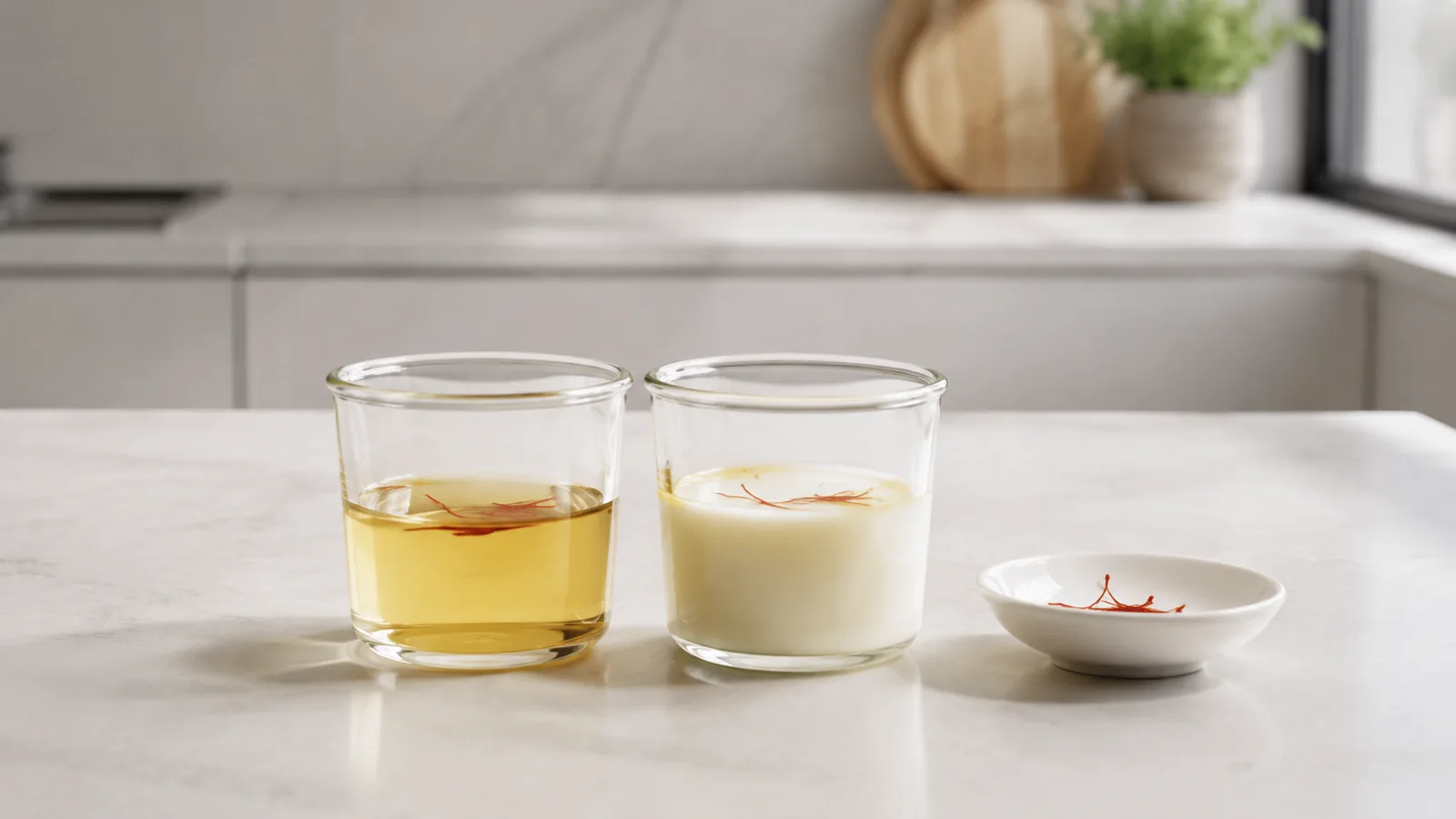
The original measure described the saffron as a “jam spoon,” which is treated here as a dessertspoon. Bloom the ground saffron in a modest amount of boiling water so it can coat the reserved rice evenly rather than leaving dry, concentrated patches.
Prepare the saffron and vegetables
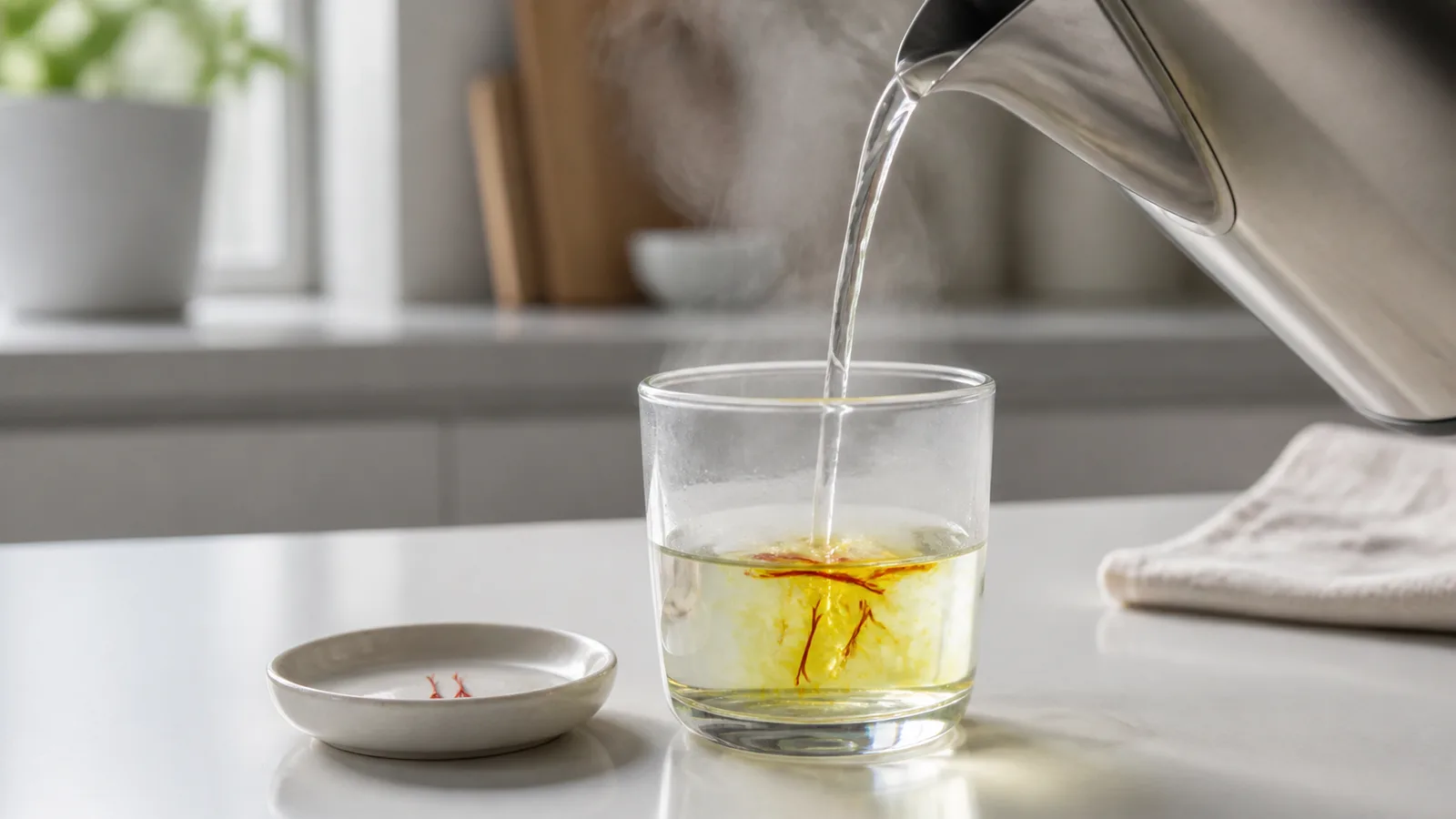
- Grind the saffron, put it in a small heatproof bowl and add enough boiling water to make a strong infusion. Cover and leave it while the rest of the meal cooks.
- Pick through the leek, parsley, dill, coriander and fenugreek. Wash them thoroughly and dry them before chopping; excess wash water can make the rice heavy.
- Chop the herbs evenly. Keep the fenugreek portion small because it can become bitter and dominate the other greens.
The listed 1.5 kg is the original quantity for a large, herb-forward pot made with 1 kg rice. Add the chopped mixture evenly rather than letting one dense layer form. The aim is herb rice with a clear green distribution, not wet rice compressed by vegetables.
Cook the muscle meat
Peel the onion and put it in the pressure cooker with the 750 g muscle meat. Add salt, black pepper and 3 glasses of water. Lock and use the cooker according to its manufacturer’s instructions, since pressure settings and timing vary between appliances.
Cook until the meat is tender enough to pull easily but still holds together for serving. The original method specifies that about one ladle of cooking liquid should remain. If there is much more, reduce it briefly after the pressure has been released safely and the lid removed. That broth will season the rice.
A shank can be safely cooked before its connective tissue has softened, so tenderness and minimum temperature are not the same test. For a whole cut of lamb or beef, the official FoodSafety.gov temperature chart gives 145°F (63°C) with a three-minute rest. This dish normally cooks the shank beyond that point to achieve its characteristic tender texture.
Soak, blanch and drain the rice
- Rinse the rice gently, then soak it in salted water for 30 minutes.
- Bring a large pot of water to the boil. Drain the soaked rice and add it to the pot.
- Cook until the outside of a grain is soft but the centre still has a slight bite. The old instruction to drain the rice while it is “wetter” means it should be slightly underdone, not waterlogged.
- Drain immediately and rinse only if that is part of your usual Iranian rice method. Let excess water run off.
Layer the rice and herbs
Pour 3 tablespoons of oil and 1/2 glass water into the clean rice pot. An earlier version of this recipe mistranslated that half-glass measure as “beer”; the steaming step requires water, not beer.
Add the drained rice and chopped herb mixture in alternating handfuls, distributing the greens from the base to the top. Do not press down. Make a few steam channels with the handle of a spoon, then pour the remaining 5 tablespoons oil and the reserved ladle of meat broth over the rice.
Cover the lid with a clean cloth, close the pot and let the rice steam gently. Start with enough heat to build steam, then reduce it. Timing depends on the pot and rice variety; the grains should finish tender and separate while the herbs remain fragrant.
Finish with Iranian saffron rice
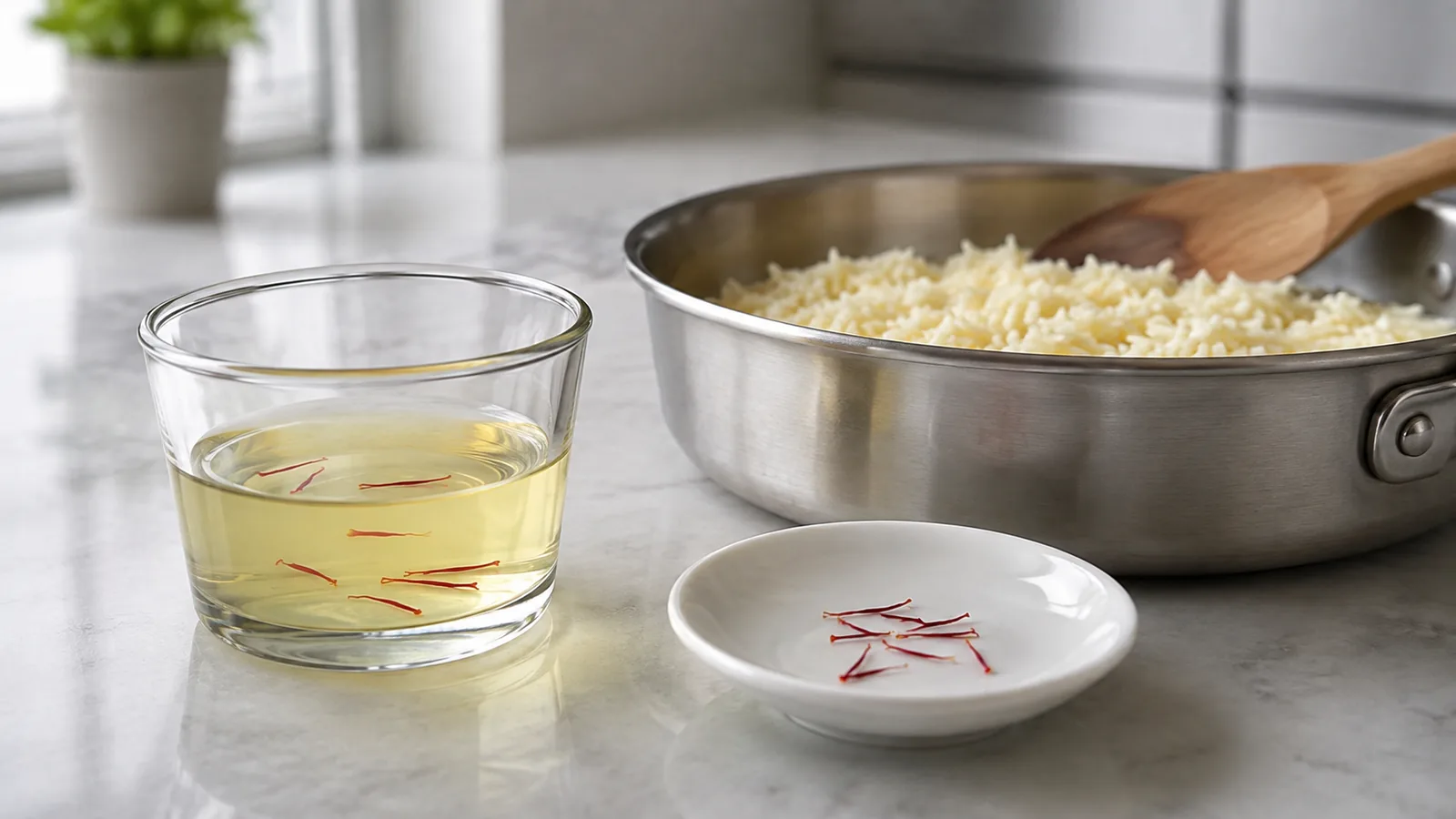
When the herb rice is ready, move 1–2 scoops to a bowl. Pour in the bloomed saffron and fold gently until the grains are evenly golden. If the infusion is very concentrated, add it gradually so the rice stays separate.
Spoon the herb rice onto a large dish. Set the cooked muscle meat on top or beside it, then place the saffron rice over the centre as a bright finish. A little of the remaining meat broth can be served separately rather than flooding the platter.
How saffron and vegetables stay balanced
The saffron belongs mainly in the reserved finishing rice. That keeps its aroma distinct from the dill, coriander and fenugreek instead of asking every ingredient to compete in one mixture. The meat broth supplies savoury depth to the main pot, while the saffron grains mark the final layer.
- Dry the washed herbs before chopping.
- Use only a little fenugreek.
- Drain the rice while its centre is still slightly firm.
- Distribute the herbs in stages and never pack the rice tightly.
- Keep enough meat broth to flavour the pot without making it soggy.
- Add the saffron infusion to reserved cooked rice, not directly to one spot in the full pot.
The finished meal should give three clear elements on one plate: tender onion-cooked shank, loose green herb rice and fragrant saffron rice. Preserving those distinctions is what makes this recipe more than rice with saffron vegetables stirred through it.