


The 1,200 hectares of Baladeh aqueduct lands under saffron cultivation were reported during a 2021 ministerial visit to the Baladeh Ferdows aqueduct in South Khorasan.
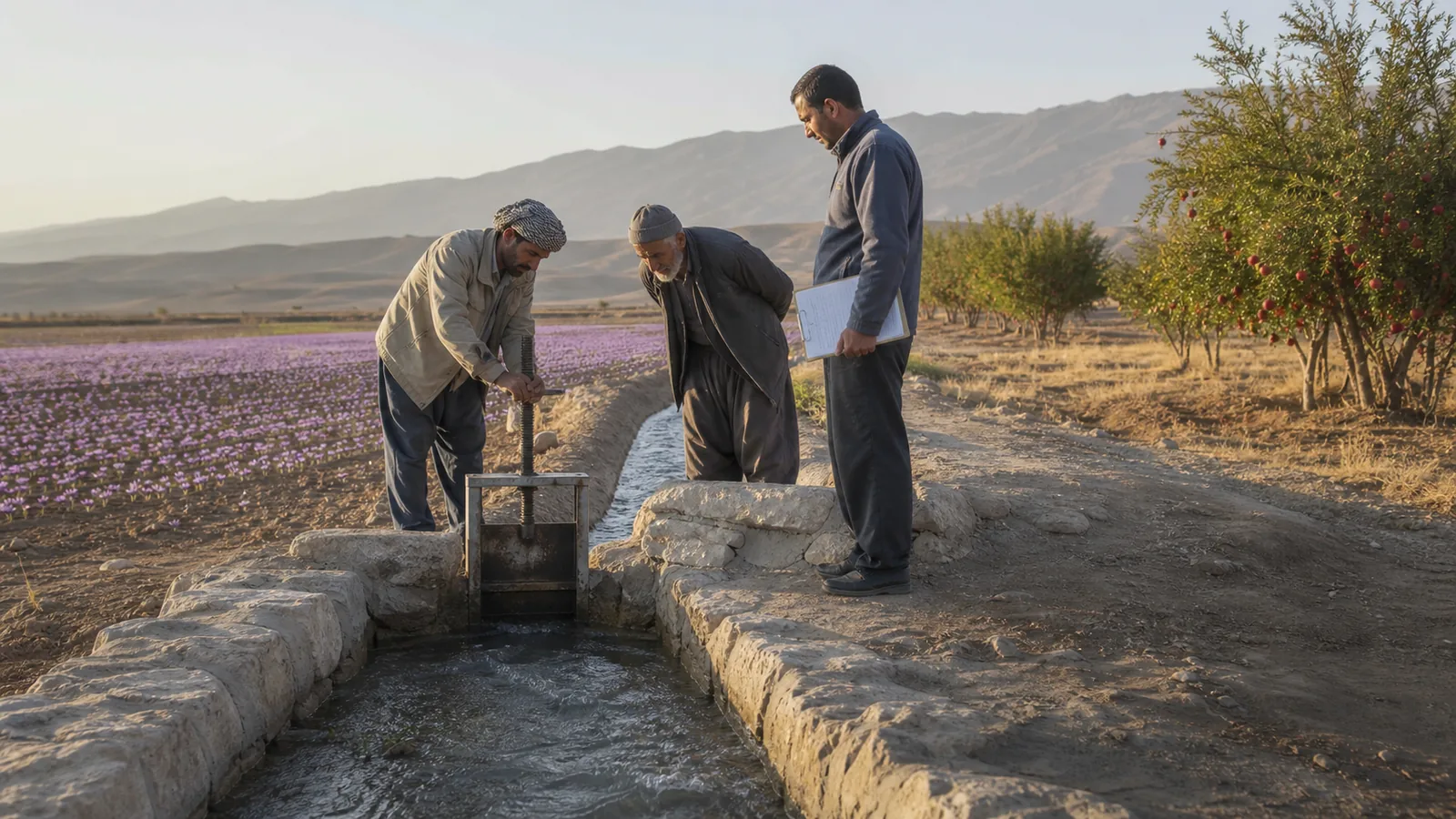
Gholamreza Ghousi, then head of the South Khorasan Agricultural Jihad organization, described how the Baladeh aqueduct—or qanat—supported both saffron farms and pomegranate orchards. He also recorded the number of surviving channels, seasonal water discharge and concerns raised by local residents.
How much Baladeh land was under saffron
Ghousi placed 1,200 hectares of the Baladeh cultivation area under saffron. He said about 3,000 people worked in those saffron farms.
A further 400 hectares were pomegranate orchards, associated with 1,550 workers. Together, the two crop areas totalled 1,600 hectares in the account, with saffron covering three-quarters of that stated land.
From 26 water channels to 14 active ones
According to Ghousi, the Baladeh system had once included 26 aqueduct channels. Sixteen remained at the time of the visit, and 14 of those were active.
These numbers describe the component channels reported within the system, not 26 separate modern irrigation projects. The article does not explain when the other channels stopped operating or what work would have been required to restore them.
Water discharge in wet and dry years
Ghousi said the channels’ water was gathered at a common point. Depending on whether the year was wet or dry, the combined discharge ranged from 80 to 250 litres per second.
The breadth of that range shows why annual conditions mattered to Baladeh agriculture. The report did not provide a monthly series or divide the flow among crops, so it cannot be used to calculate the exact irrigation received by a hectare of saffron or pomegranate trees.
Saffron and pomegranates shared the system
The Baladeh account is not solely about saffron. Its 1,200 hectares of saffron farms and 400 hectares of pomegranate orchards depended on the same wider water-management setting.
Ghousi called the aqueduct one of the most advanced operating systems. That description remains attributed to him because the article did not publish a technical comparison, engineering specification or efficiency measurement.
The people connected to Baladeh agriculture
- 3,000 saffron workers were associated with the reported 1,200 hectares of saffron farms.
- 1,550 pomegranate workers were associated with the reported 400 hectares of orchards.
- 4,550 people in total were therefore linked to the two crop sectors in Ghousi’s figures.
The article used worker counts, not a census of landowners or permanent full-time jobs. The figures should be read in that stated context.
Concerns residents raised during the visit
Residents of Baladeh village used the minister’s visit to describe problems that went beyond water flow. They raised disputes involving agricultural land and the natural-resources authorities.
They also referred to the pomegranate purchase price set by the Economic Council and the absence of an advanced irrigation system. The account records these concerns but does not report the minister’s response or a completed remedy.
What the 1,200-hectare figure means
The headline refers specifically to saffron farms within the Baladeh aqueduct cultivation area. It should not be confused with the additional 400 hectares of pomegranate orchards or treated as a current land survey.
The report ties that saffron area to a working water network whose active-channel count and discharge changed with condition and season. The cultivated hectares, workforce and water figures are therefore parts of one agricultural snapshot.
A dated record of the Baladeh aqueduct economy
This 2021 account preserves the scale reported during the visit: 1,200 hectares of saffron, 400 hectares of pomegranates, 14 active channels and a combined water discharge of 80 to 250 litres per second.
It also preserves the unresolved questions voiced locally. Any current assessment would need newer evidence on active channels, water flow, cultivated area, employment and the irrigation and land issues residents identified.

![Exporting Saffron to Turkey + Price Guide [Complete 0 to 100]](https://img.rowhanisaffron.com/20260827003933/saffron-export-turkey-quality-inspection.webp)



