


This archived report examines a plan to connect Iranian saffron processing centres with a more direct exchange between growers and buyers.
The original headline described a “$500 million” currency opportunity, while the report itself focused on comments by Ali Hosseini, then identified as secretary of the National Saffron Council. It did not provide the date, calculation or currency methodology behind that figure. The amount should therefore be read as the historical headline claim, not as a current export value or exchange rate.
What the Iranian saffron exchange proposal involved
Hosseini made the comments while visiting two saffron processing centres in Gonabad. He said a project using newer processing models, designed around the needs of domestic consumers, was being implemented for a third year.
According to the report, 30 processing centres had been established in Khorasan Razavi at that point, with an aim of increasing the number to 45. It also placed 70,000 hectares of saffron cultivation across Khorasan Razavi and South Khorasan, and said new processing stations were intended to reach another 20% of that area each year. These are preserved as dated statements from the original report; they are not presented as current acreage or infrastructure totals.
The plan described three additional stations for Gonabad: one in the central district, one in Kakh and one in Sano village. The report said processed saffron from those stations would receive a health certificate and a National Saffron Council code.
From a processing station to an exchange centre
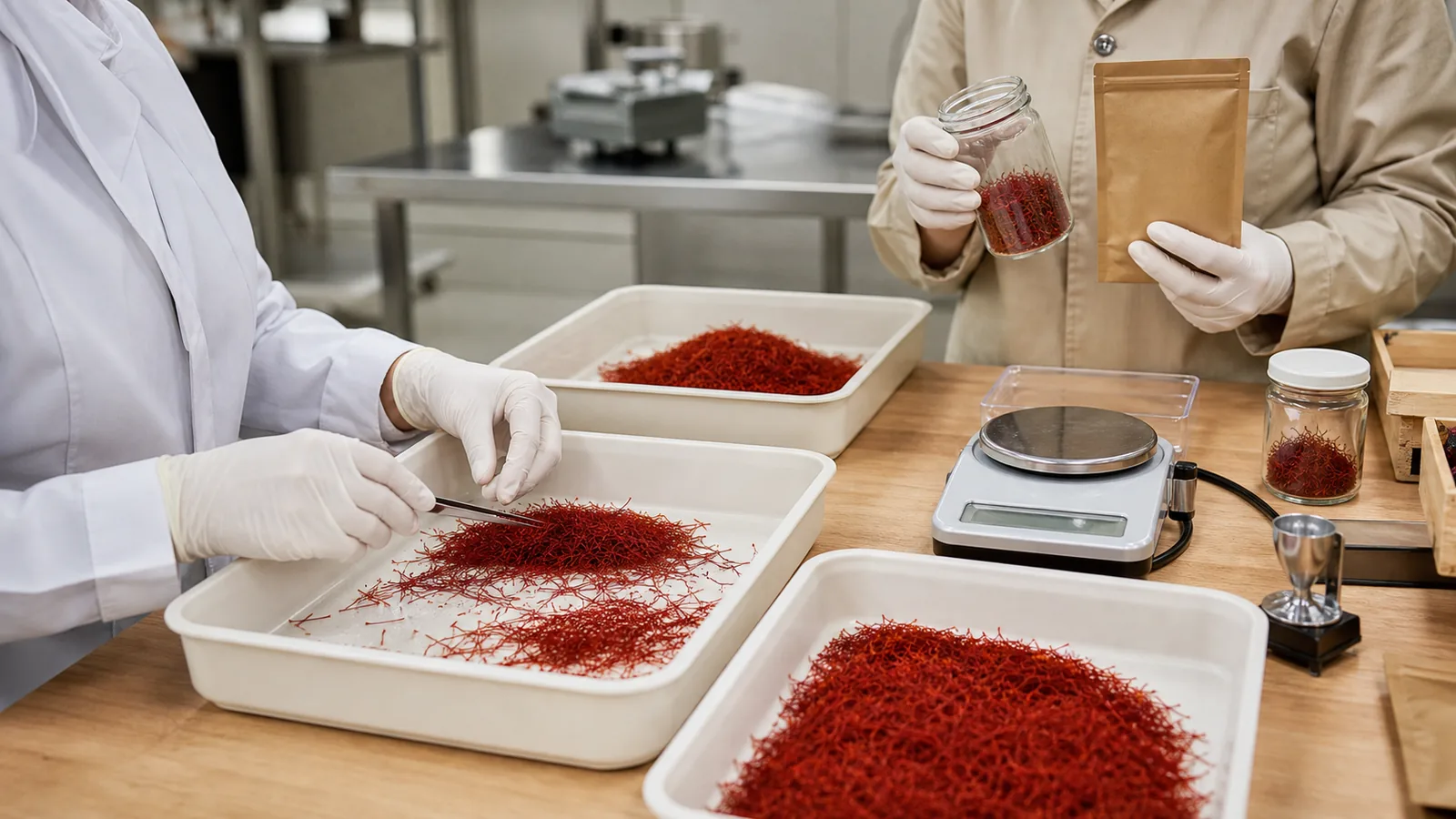
The most distinctive part of the proposal was seasonal. Saffron processing at a station was expected to last about 30–40 days. Once that work ended, the same facility could function as a saffron exchange centre, giving growers and buyers a place to meet rather than leaving the building idle for the rest of the year.
In this context, “exchange” did not mean a live foreign-currency conversion service. It referred to an organised place or mechanism for selling the crop. The proposed model had two related parts:
- processing and packaging saffron in a more consistent form;
- creating a direct point of contact between producers and buyers.
The report also mentioned a saffron commodity bank. Under that proposal, a farmer could sell saffron to the bank, which would supply it when market conditions were more suitable and allow the farmer to share in the resulting gain. The archive gives the concept, but not the bank’s legal structure, storage rules, fees or risk arrangements.
Was there a single saffron exchange owner?
No owner is named in the original material. Hosseini is the quoted council official explaining the plan; that does not establish that he personally owned an exchange, processing station or commodity bank. The report refers to several centres and a proposed national mechanism, not one privately identified marketplace.
That distinction matters for readers searching for a saffron exchange owner. A current business name, licence or ownership record cannot safely be inferred from this historical report. Those details would need to be checked against current corporate or regulatory records for the particular organisation in question.
Why processing was expected to improve producer returns
Hosseini argued that saffron sold after newer processing could earn at least 10–20% more, allowing the producer to retain more value. The proposed centres were also meant to replace parts of the traditional processing and packaging model.
The economic logic is understandable. Careful separation, drying, grading, traceability and packaging can make quality easier to assess and help a product reach buyers in a usable form. Direct contact may also make prices and specifications clearer. However, the 10–20% figure is an attributed estimate from the report, not a guaranteed return. Actual proceeds depend on saffron grade, moisture, authenticity, packaging, contract terms, market conditions and the costs charged along the route.
What “removing intermediaries” meant
The report said arrangements at processing stations would bring buyers and producers face to face so intermediaries could be removed. A more precise reading of its discussion of saffron intermediaries is that the model sought to reduce unnecessary layers between those parties.
Some supply-chain work still has to happen. Saffron must be tested, stored securely, packed, transported, documented and sold. A processor, cooperative, warehouse or exporter can perform a necessary service rather than merely take a margin. The useful question is whether each step protects quality and adds enough value to justify its cost.
This is also why the processing side of the old proposal remains relevant. In November 2025, the FAO and Iran workshop on saffron quality and value-chain development brought together farmers, processors, cooperatives, traders and experts around post-harvest handling, safety, traceability, marketing and authenticity. It does not validate every older projection, but it confirms that these practical parts of the value chain still matter.
How to read the $500 million figure today
The archived text does not show whether $500 million referred to expected exports, total market turnover, foreign-currency earnings or a longer-term opportunity. It also lacks a base year. Treating it as a current statistic would give the number more certainty than the source supports.
Current trade data should be kept separate from that headline. The World Bank WITS page for reported 2024 saffron imports from Iran lists values and quantities by importing market under product code 091020. Those are importer-reported gross trade flows. They are useful context, but they are not the same as farm income, domestic turnover or the original $500 million claim.
What the historical proposal was trying to solve
At its core, the plan linked three problems: uneven post-harvest processing, weak access to buyers and a producer’s limited ability to choose when and how to sell. Processing centres were intended to improve presentation and certification. Exchange centres were intended to improve market access. The commodity-bank idea was intended to reduce the pressure to sell immediately.
Whether a particular centre achieved those goals requires later operational evidence that this archive does not contain. What can be retained with confidence is the proposal itself: 30 centres with an ambition for 45, 70,000 hectares cited across the two Khorasan provinces, 20% annual coverage, three Gonabad locations, a 30–40 day processing season and an expected 10–20% price improvement.
Read this way, the story is not a live currency quote. It is a historical account of an attempt to move more of saffron’s processing and negotiating value closer to the people growing the crop.

![Exporting Saffron to Turkey + Price Guide [Complete 0 to 100]](https://img.rowhanisaffron.com/20260827003933/saffron-export-turkey-quality-inspection.webp)



