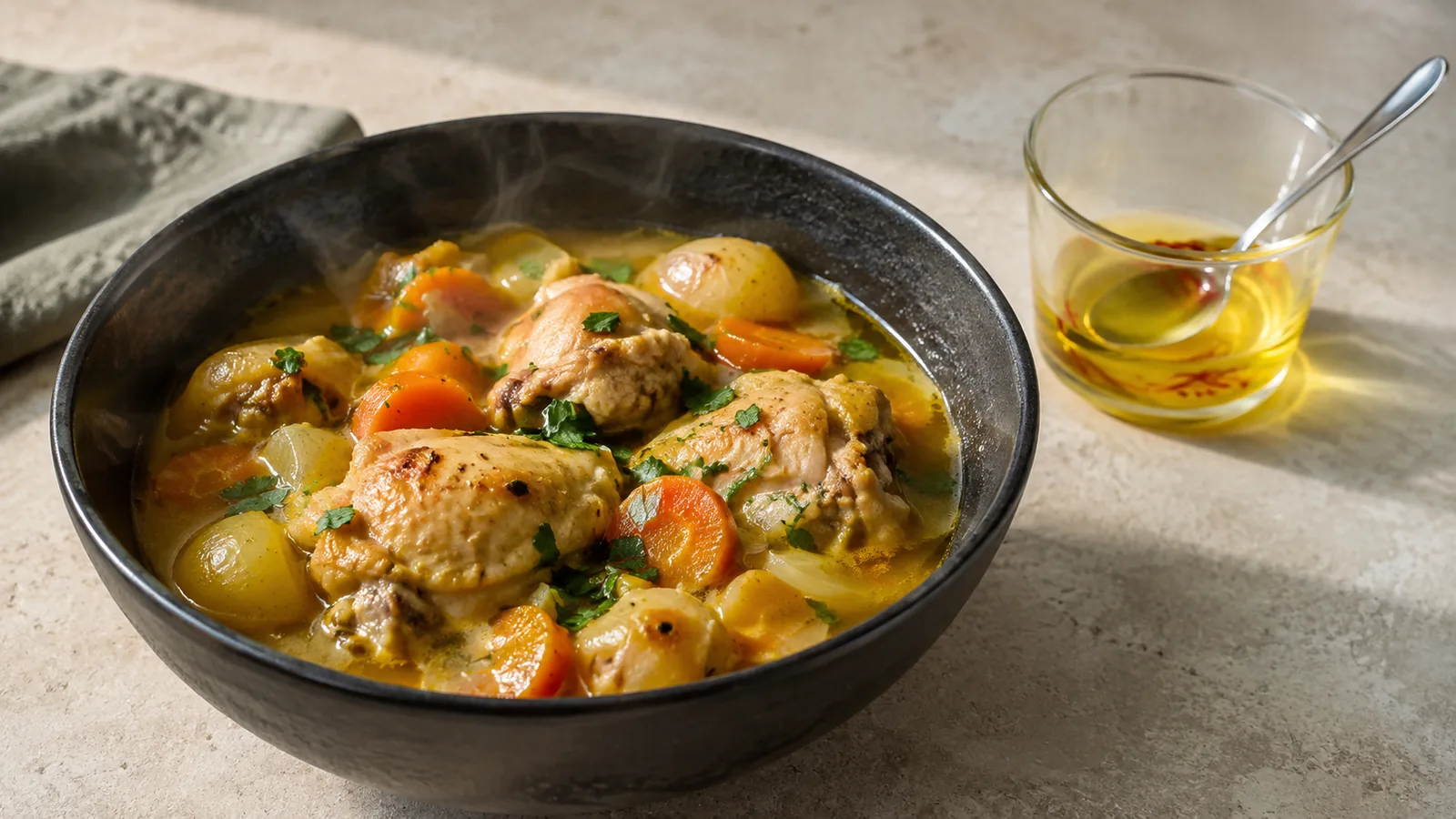
This recipe for cooking delicious wild apple marmalade with Iranian saffron slowly turns tart apples into a soft, spiced preserve with raisins, sliced almonds and a golden saffron finish.
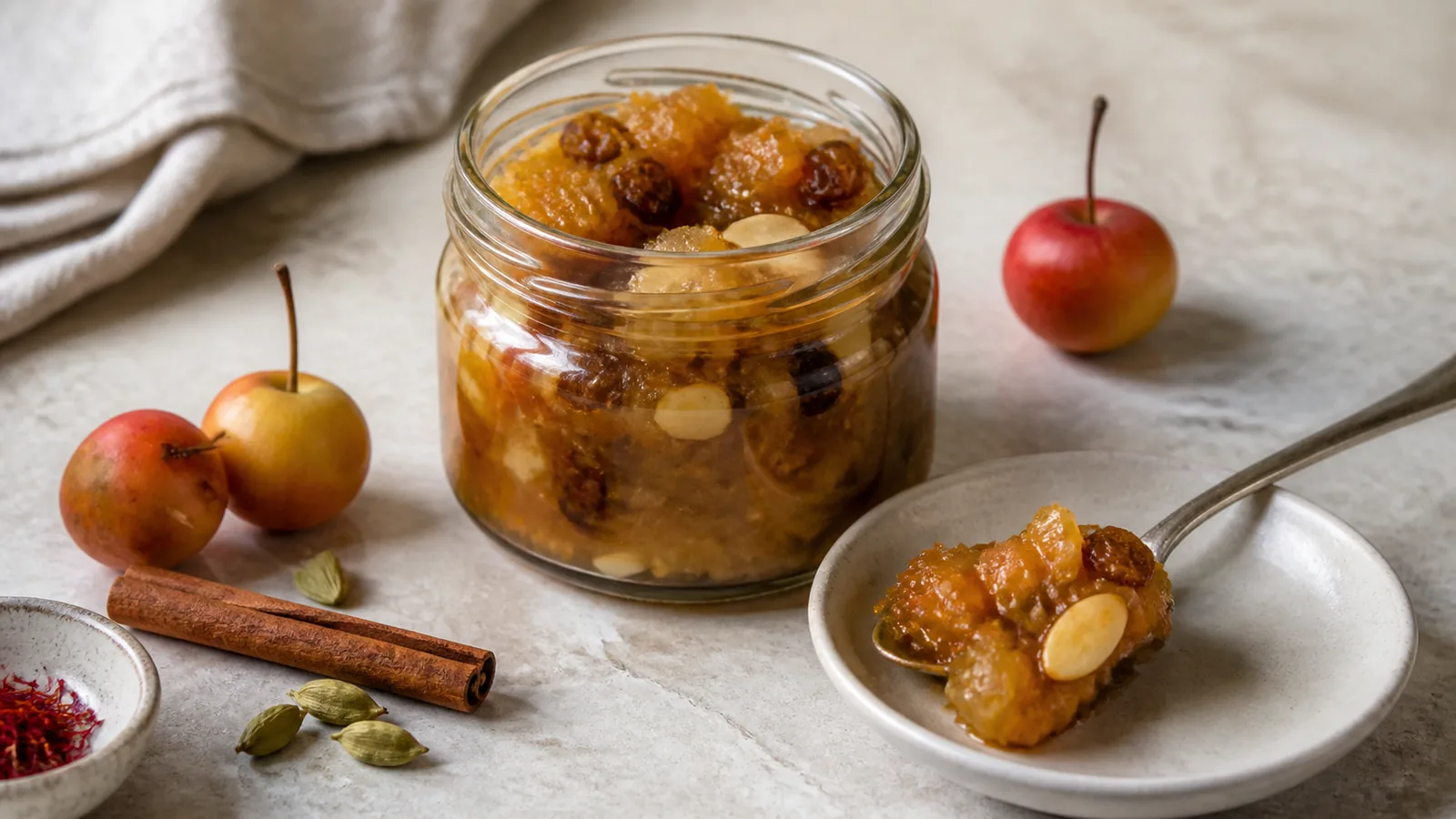
Wild apples vary in sweetness and firmness, so the pan matters more than a rigid clock. Cook gently, watch the liquid reduce, and add the nuts, fruit and saffron only after the apples have softened.
Wild apple marmalade ingredients
- Wild apples or crabapples: 1 kilogram after sorting
- Granulated sugar: 1 kilogram
- Water: 4 to 5 glasses
- Cinnamon sticks: 3
- Cardamom: as needed
- Raisins: as needed
- Sliced almonds: as needed
- Brewed saffron: as needed
- Lemon juice: 2 tablespoons
Use apples from a tree you can identify confidently as edible. Discard fruit that is mouldy, fermented, badly bruised or damaged by insects. Small cultivated crabapples work well when genuinely wild fruit is not available.
Prepare the apples
Wash the apples thoroughly. Peel them if the skins are tough, then remove the stems, cores and seeds. Chop the flesh finely for a spreadable marmalade, keeping the pieces similar in size so they soften together.
You should have about 1 kilogram of prepared fruit. If the apples darken while you work, toss them with a little of the measured lemon juice, reserving most for the end.
Start the sugar syrup and fruit
Put the 1 kilogram of sugar and 4 glasses of water in a large heavy saucepan. Stir over medium heat until the sugar is mostly dissolved, then add the chopped apples.
Bring the mixture to a boil. If the apples are unusually dry or the syrup does not move freely around them, add part or all of the fifth glass of water. Do not add it automatically; extra water extends an already long cooking time.
Cook slowly with cinnamon and cardamom
Lower the heat once the pan boils. Add the 3 cinnamon sticks and a modest amount of cardamom. Let the apples simmer slowly for about 2 hours, stirring often enough to stop the bottom from catching.
As the fruit softens, press some pieces against the side of the pan with a spoon. Leave others intact for texture. The mixture should gradually lose its watery appearance and become glossy and spoonable.
Add raisins, almonds and saffron
When the apples are fully soft and the syrup has visibly reduced, add the raisins and sliced almonds. Pour in brewed saffron a little at a time until the colour and aroma are clear but not harsh.
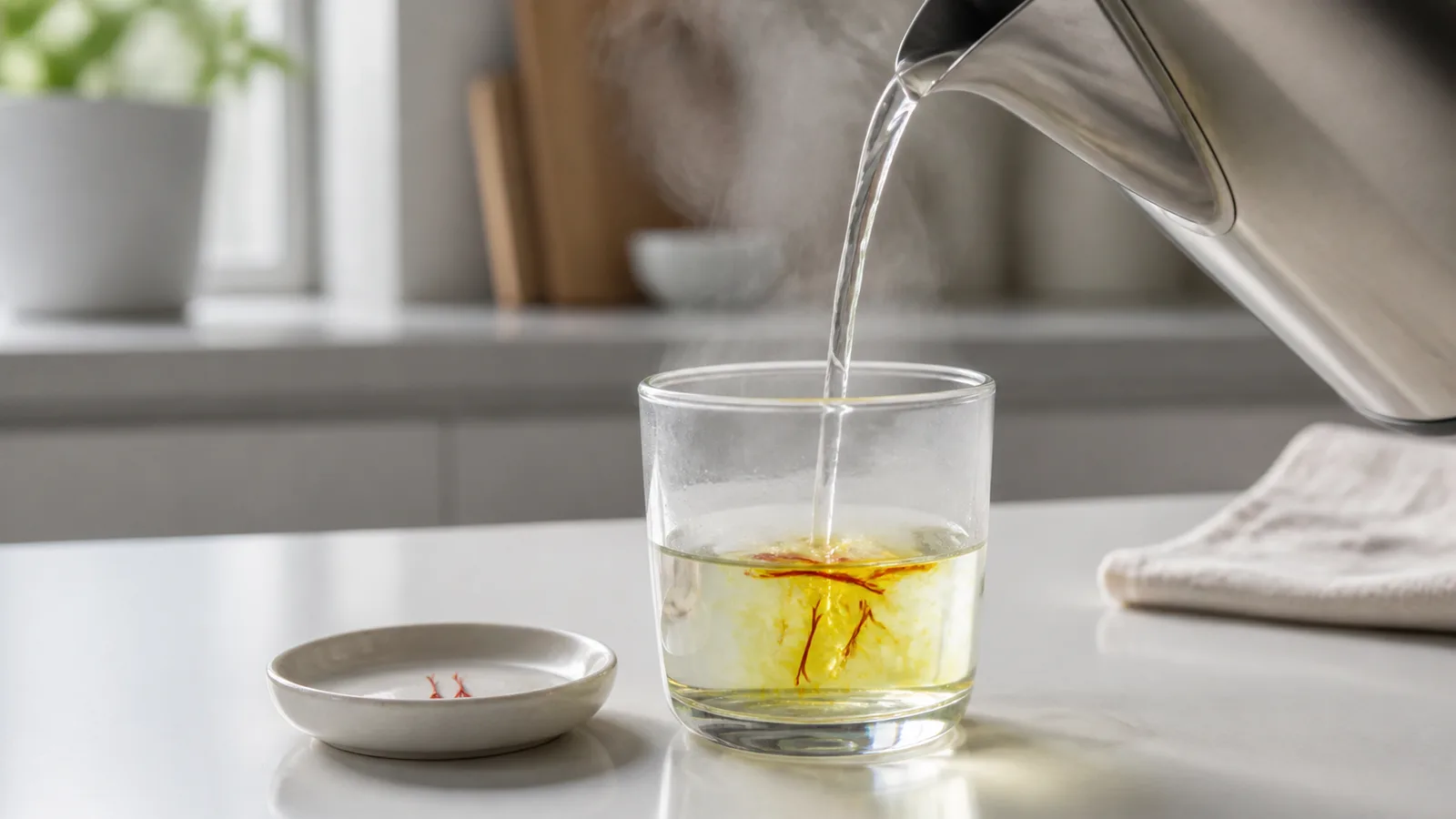
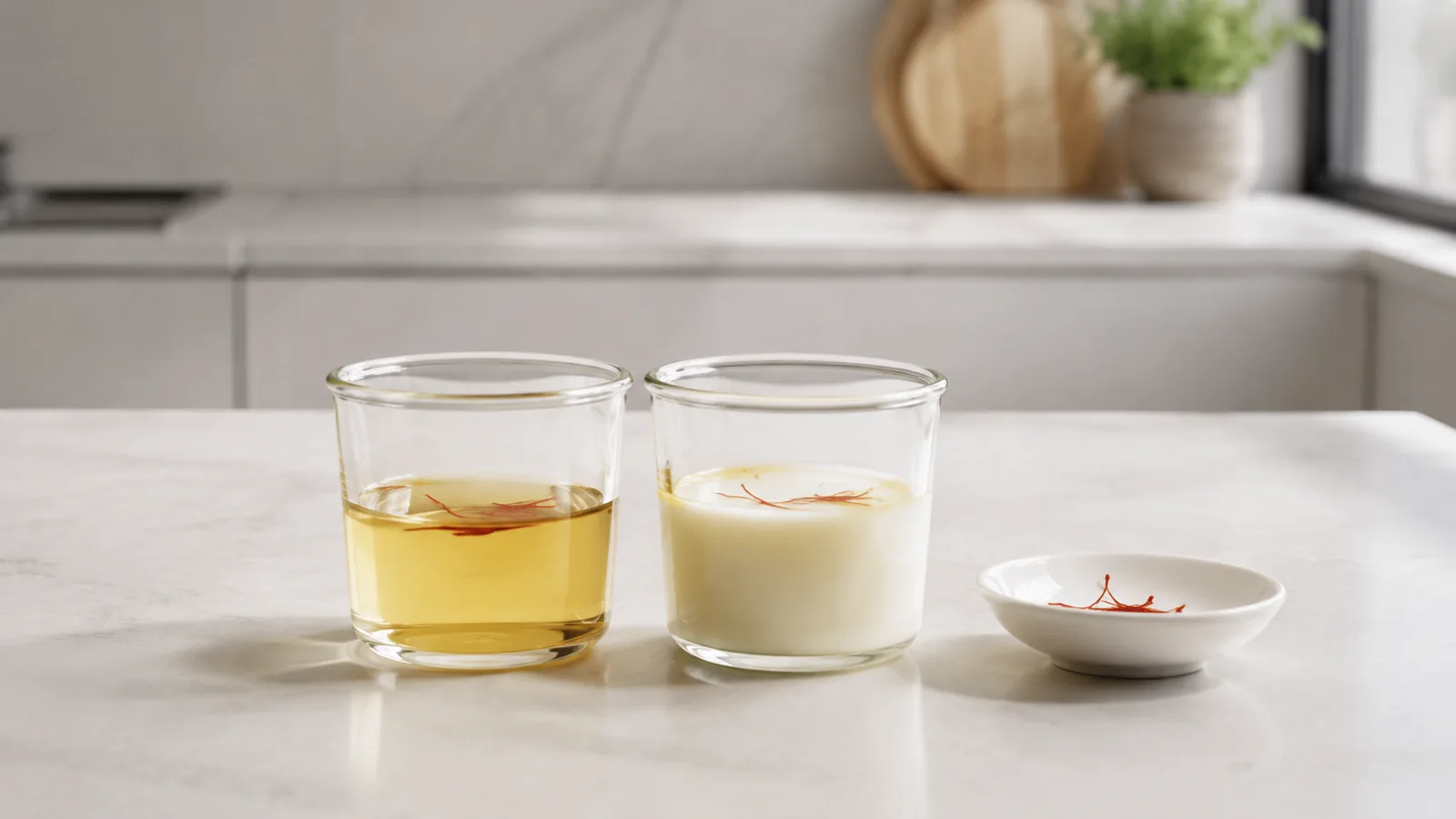
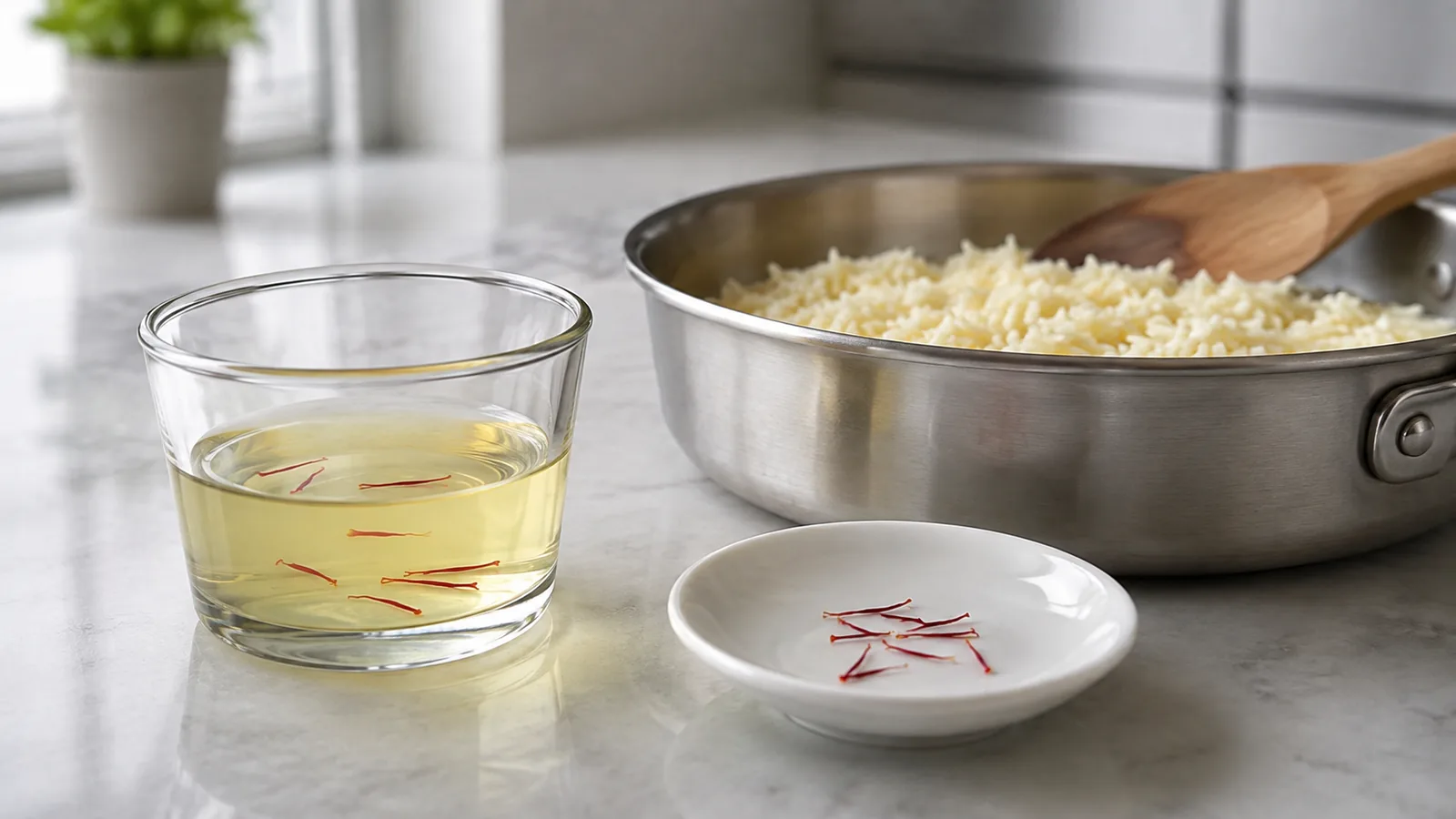
For a concentrated infusion that does not add unnecessary liquid, see the best way to brew saffron.
Continue cooking over low heat for another 30 minutes. Stir gently so the almond slices remain intact and the raisins distribute through the apple marmalade.
Finish with lemon juice
Remove the cinnamon sticks and any whole cardamom pods. Stir in the 2 tablespoons of lemon juice near the end, then cook briefly until the marmalade returns to a steady simmer.
To check the texture, place a small spoonful on a cold plate and wait a minute. It should thicken as it cools and move slowly when the plate is tilted. Stop before the preserve becomes stiff in the hot pan because it will set further as it cools.
Cool and refrigerate safely
Take the pan from the heat and allow the preserve to settle briefly. Spoon it into clean heatproof jars while still warm, then leave the jars uncovered only until the strong steam subsides. Close them and refrigerate after cooling.
This saffron, raisin and almond formula is not presented as a tested shelf-stable canning recipe. Keep it refrigerated. The National Center for Home Food Preservation’s jam guidance uses tested ingredient ratios and processing instructions for products intended for pantry storage; do not improvise that processing from this refrigerator recipe.
Control the final consistency
- Start with 4 glasses of water and use the fifth only if the apples need it.
- Keep the heat low during the 2-hour softening stage and scrape the bottom regularly.
- Add raisins, almonds and saffron for only the final 30 minutes.
- Use the cold-plate test rather than judging a boiling preserve by appearance alone.
- Remove whole spices before filling the jars and keep the finished marmalade refrigerated.
The finished wild apple marmalade should be soft enough to spread, with a tart apple base, warm cinnamon and cardamom, and small contrasts from raisins and almonds. Saffron belongs in the final stage, where its aroma remains distinct after the long apple simmer.