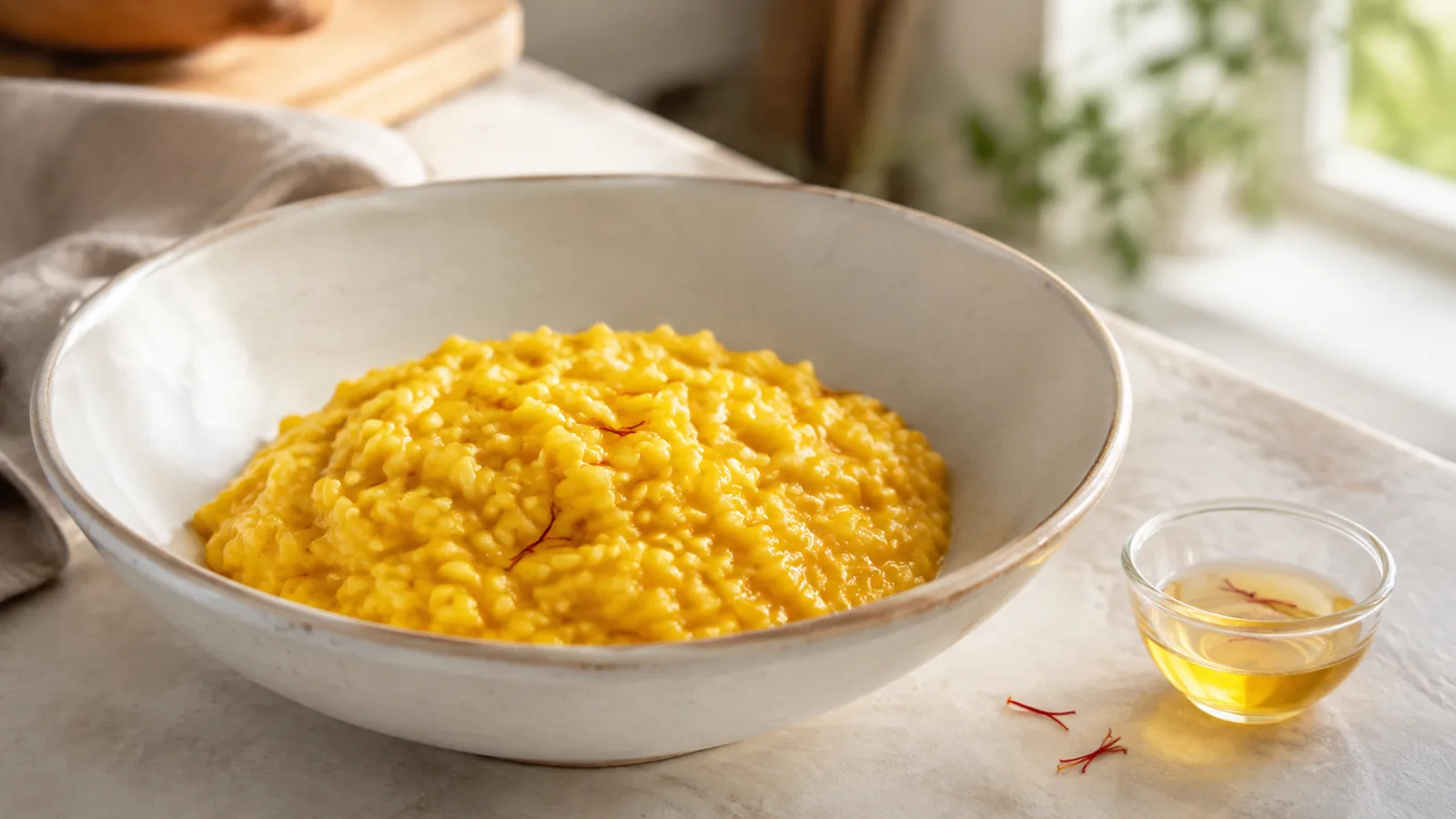
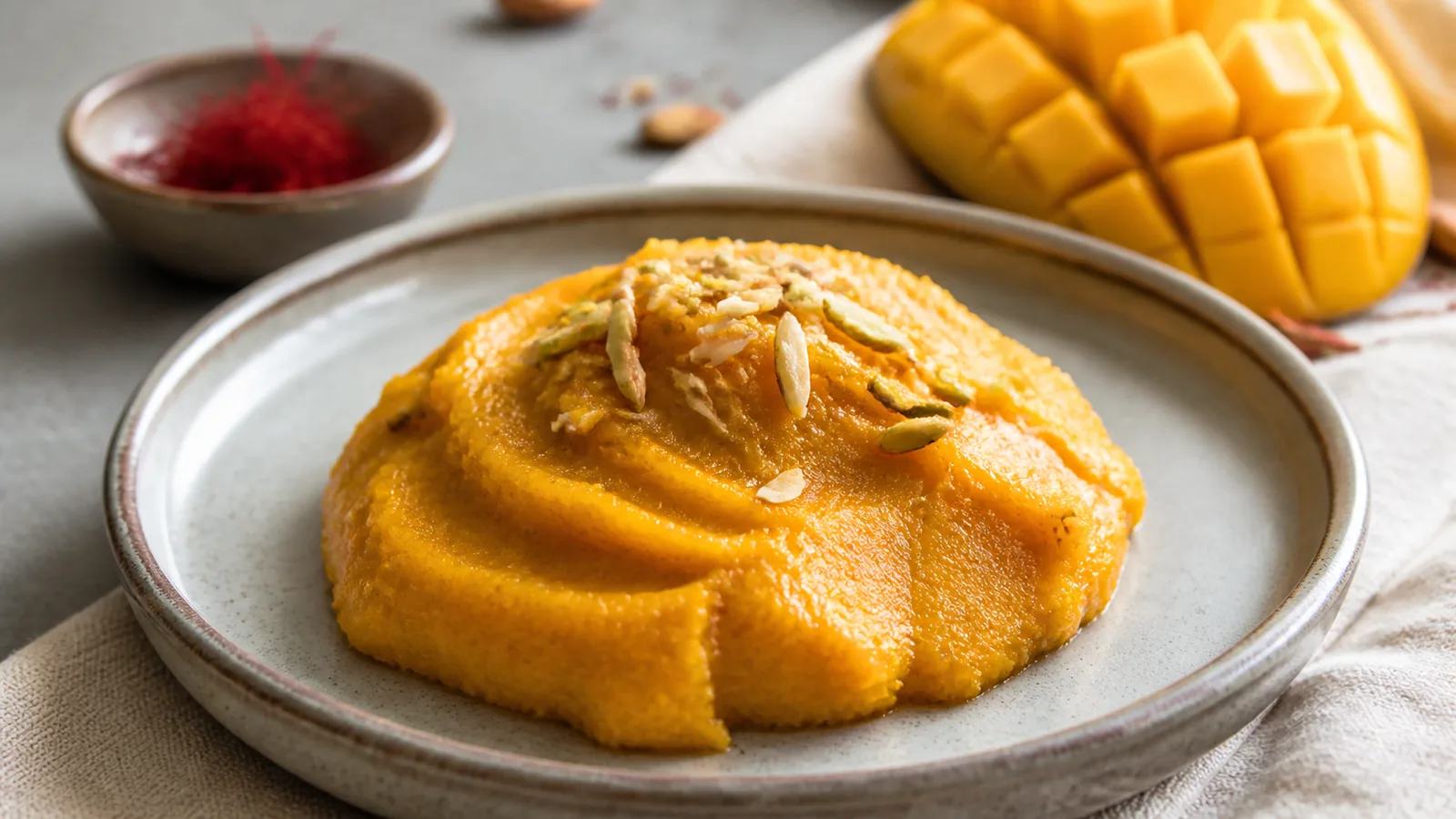
Mango halva brings ripe fruit into a soft flour-and-semolina halva scented with saffron and cardamom. Mango supplies moisture and a gentle tang, while the semolina gives the finished dessert a slightly grainy, tender texture rather than the dense finish of an all-purpose-flour halva.
This is a stovetop sweet that needs steady stirring. Measure and warm the liquids before roasting the flour; once mango and milk enter the pan, the mixture thickens quickly.
Mango halva ingredients
- 1/2 cup all-purpose flour
- 1/2 cup fine semolina flour
- 1/5 cup granulated sugar, as written in the original formula
- 1 cup smooth ripe-mango purée
- 50 g butter and neutral oil combined
- 2/3 cup milk
- 1/2 teaspoon ground cardamom
- Concentrated brewed saffron, to taste
- Slivered almonds or pistachios, for decorating
The stored recipe says 1/5 cup sugar. That is an unusually small amount, and the old notation may be ambiguous, but it should not silently be changed to 1 1/2 cups. Start with the written amount and taste the mango mixture before it enters the hot flour. Add sugar a tablespoon at a time only if your fruit needs it.
Prepare the mango and saffron milk
Use fully ripe mango with no fibrous or sour patches. Purée the flesh, then press it through a sieve to remove fibres. Mangoes do not contain hard seeds in the purée; the older instruction to strain out “seeds” refers to these fibres.
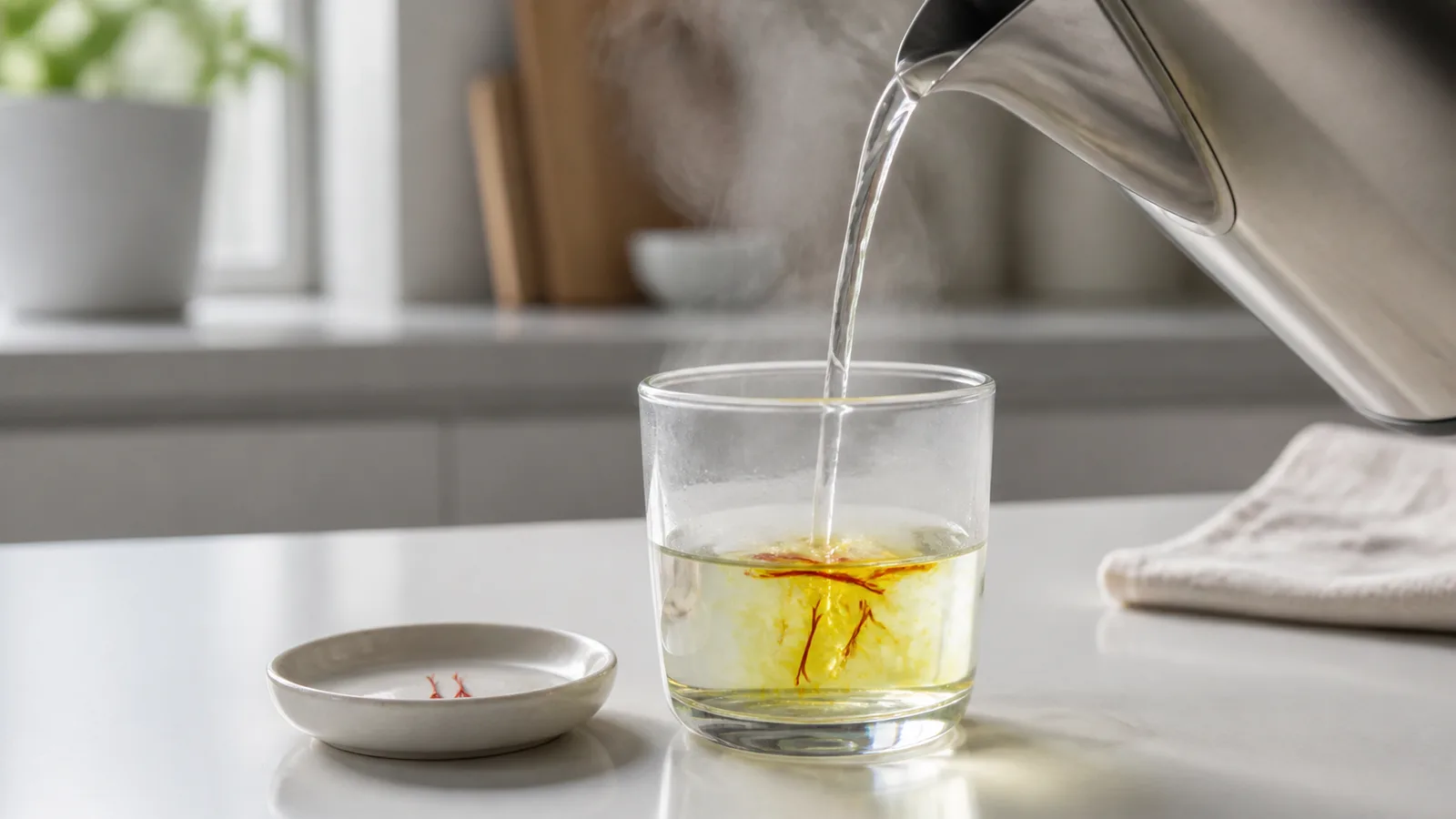
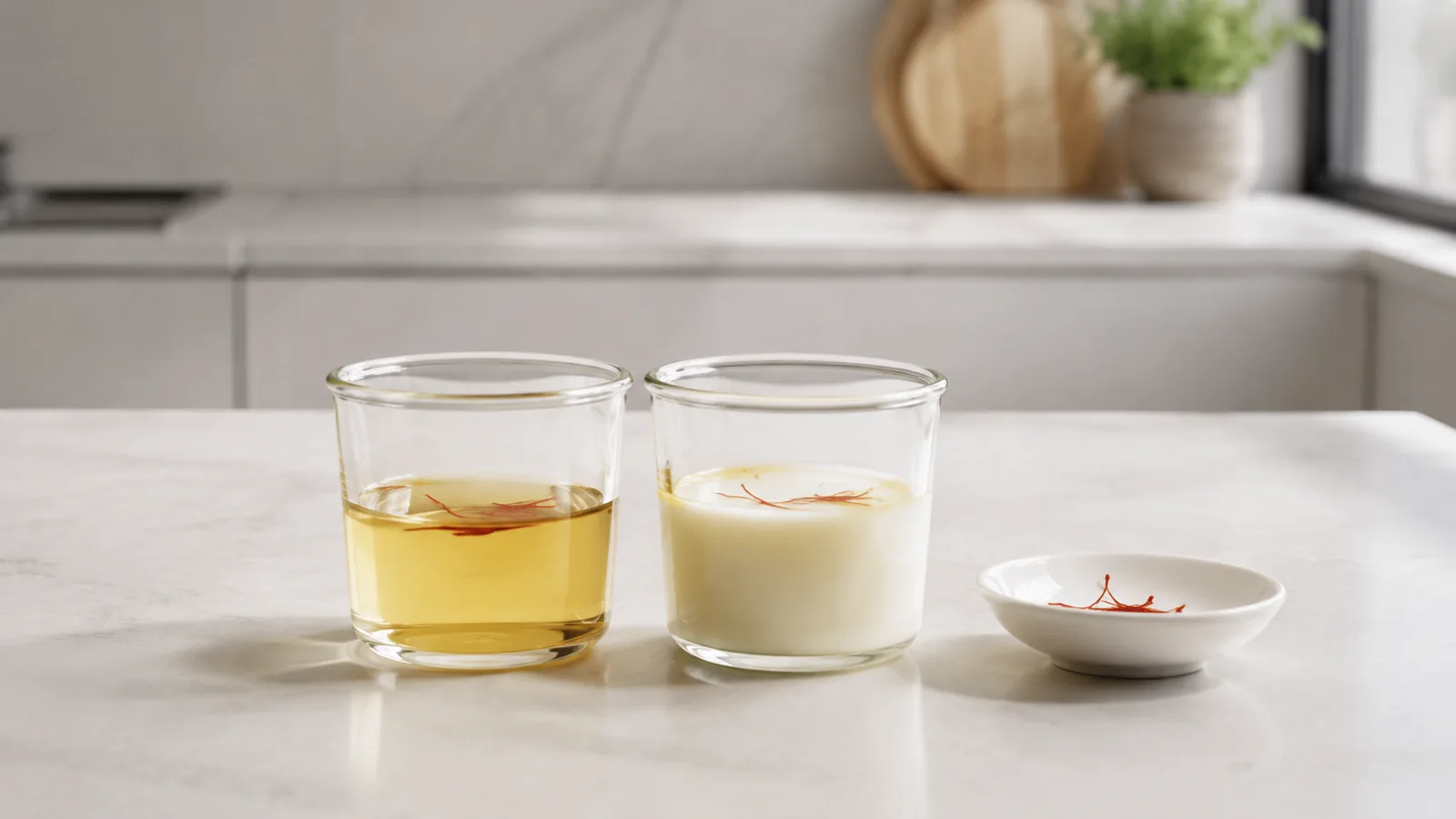
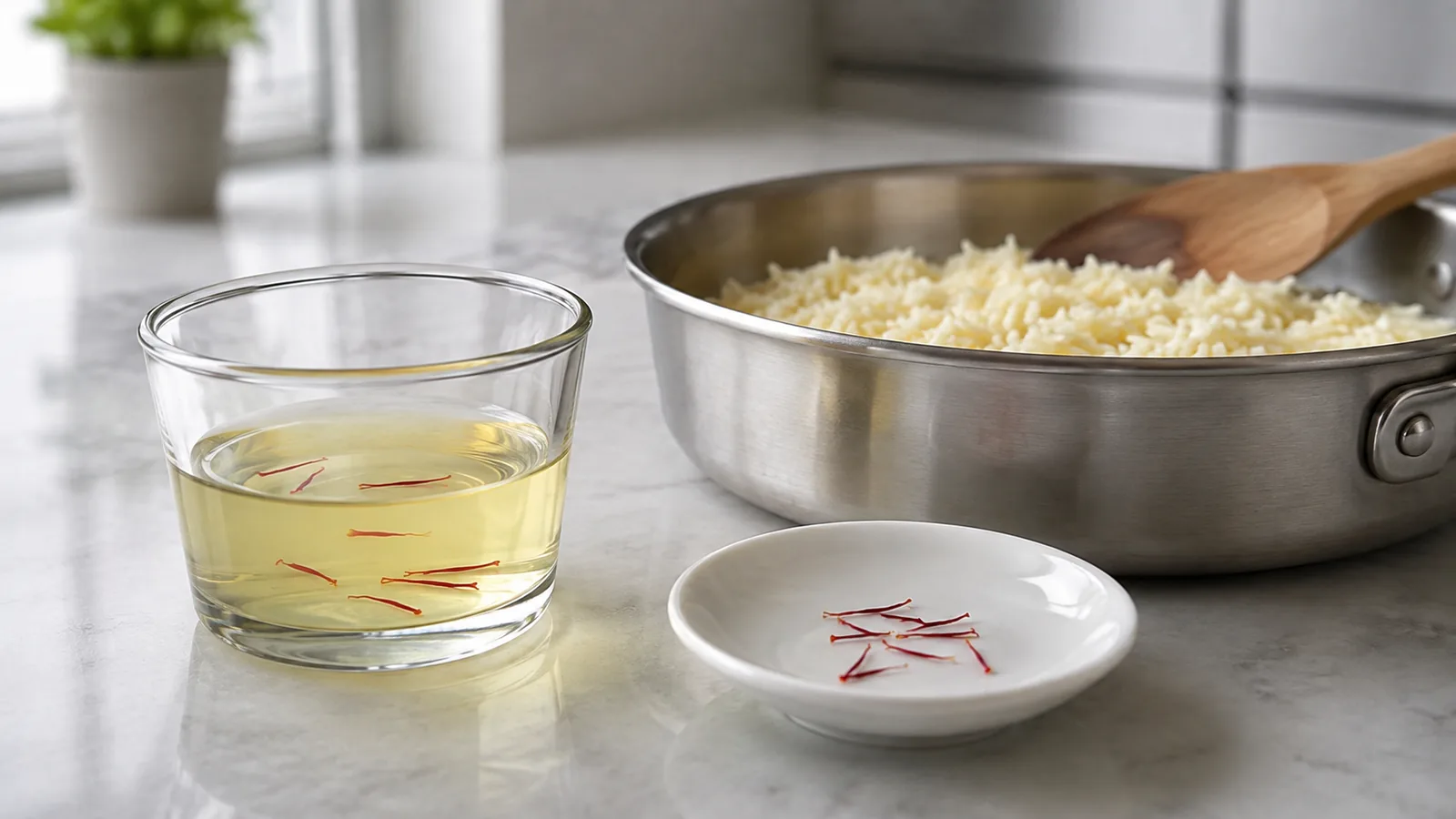
Mix the sugar into the mango purée and set it aside. Warm the milk until steaming but not boiling, then stir in the cardamom and enough brewed saffron to turn it a clear golden yellow.
Keep both mixtures near the stove. Liquids added to hot flour and fat can steam strongly, so use a deep pan and add them gradually.
How to make mango halva
1. Sift and roast the flours
Sift the all-purpose flour and semolina together into a wide, heavy pan. Place it over low heat and stir constantly, scraping the base and corners.
Roast until the raw flour smell disappears and the mixture becomes cream to pale gold. This usually takes 12–18 minutes. Do not rush with high heat: semolina can develop dark flecks before the rest of the flour is properly toasted.
If semolina is unavailable, replace it with the same amount of all-purpose flour. The halva will still work, but it will be smoother and less delicately crumbly.
2. Add butter and oil
Use any balance of butter and neutral oil that totals 50 g. Butter contributes flavour; oil keeps the halva supple after cooling. Add both to the toasted flour and stir over medium-low heat for about one minute.
The mixture should resemble a smooth paste with no dry flour. If it remains dusty, add one teaspoon of oil rather than a large pour.
3. Work in the mango
Take the pan off the burner. Add the mango-and-sugar mixture in three portions, stirring each one completely into the flour paste. Keep your face and hands back from the steam.
Return the pan to low heat and stir until the mixture is even. Mango colour varies, so judge by texture and aroma rather than expecting one exact shade.
4. Add saffron milk and finish
Pour in the warm saffron-cardamom milk gradually while stirring. Continue cooking over medium-low heat until the halva thickens, gathers into one soft mass and leaves the side of the pan cleanly.
For spooned or moulded halva, cook until it holds a soft ridge. If you plan to pipe it, stop slightly earlier while it is still flexible enough to pass through a wide nozzle. It will firm as it cools.
Shaping and decorating
Spoon warm halva into a serving dish and smooth it with the back of an oiled spoon, or pipe broad rosettes while it is still pliable. Finish with slivered almonds or pistachios.
For a moulded version, lightly oil a small mould and press the warm halva in firmly so there are no air pockets. Chill for about 30 minutes, then loosen the edge and turn it onto a plate. Refrigeration is preferable to freezing; freezing a warm dairy dessert can create condensation and a wet surface when unmoulded.
How to correct the consistency
If the halva is too loose, keep stirring over low heat for a few more minutes. If it becomes too firm to shape, work in warm milk one teaspoon at a time. Do not add cold milk to a very hot pan.
A greasy halva may have been under-roasted or cooked past the point where it released from the pan. A grainy halva may come from coarse semolina, unsifted flour or sugar that was not dissolved in the mango.
Serving and storage
Serve mango halva in small portions at room temperature or lightly chilled. Its fruit and dairy make it different from a dry flour sweet, so cover and refrigerate leftovers within two hours. Use within three days.
The finished halva should taste first of ripe mango, followed by toasted flour, saffron and cardamom. The aromas support one another; none needs to be overpowering.