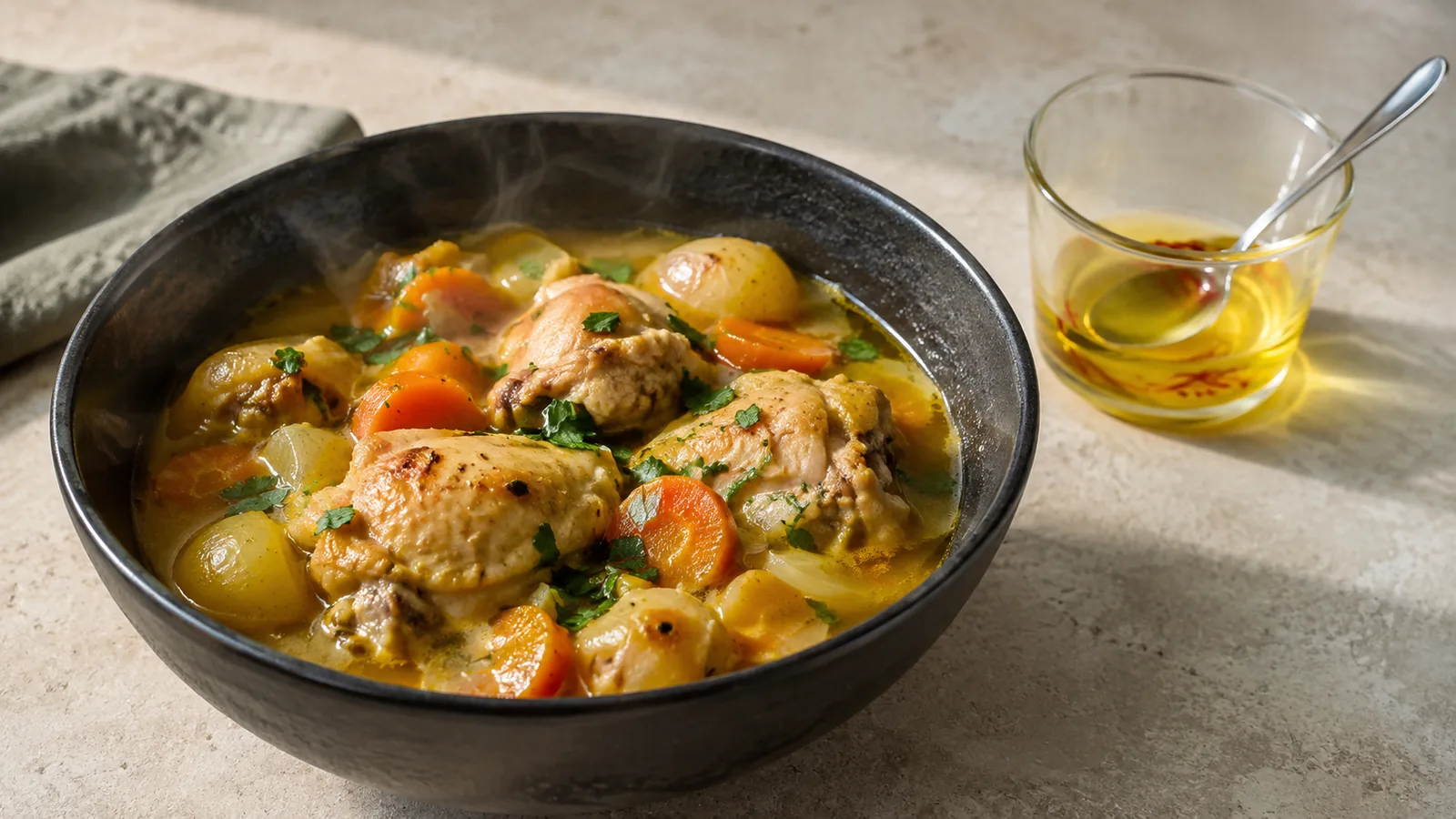
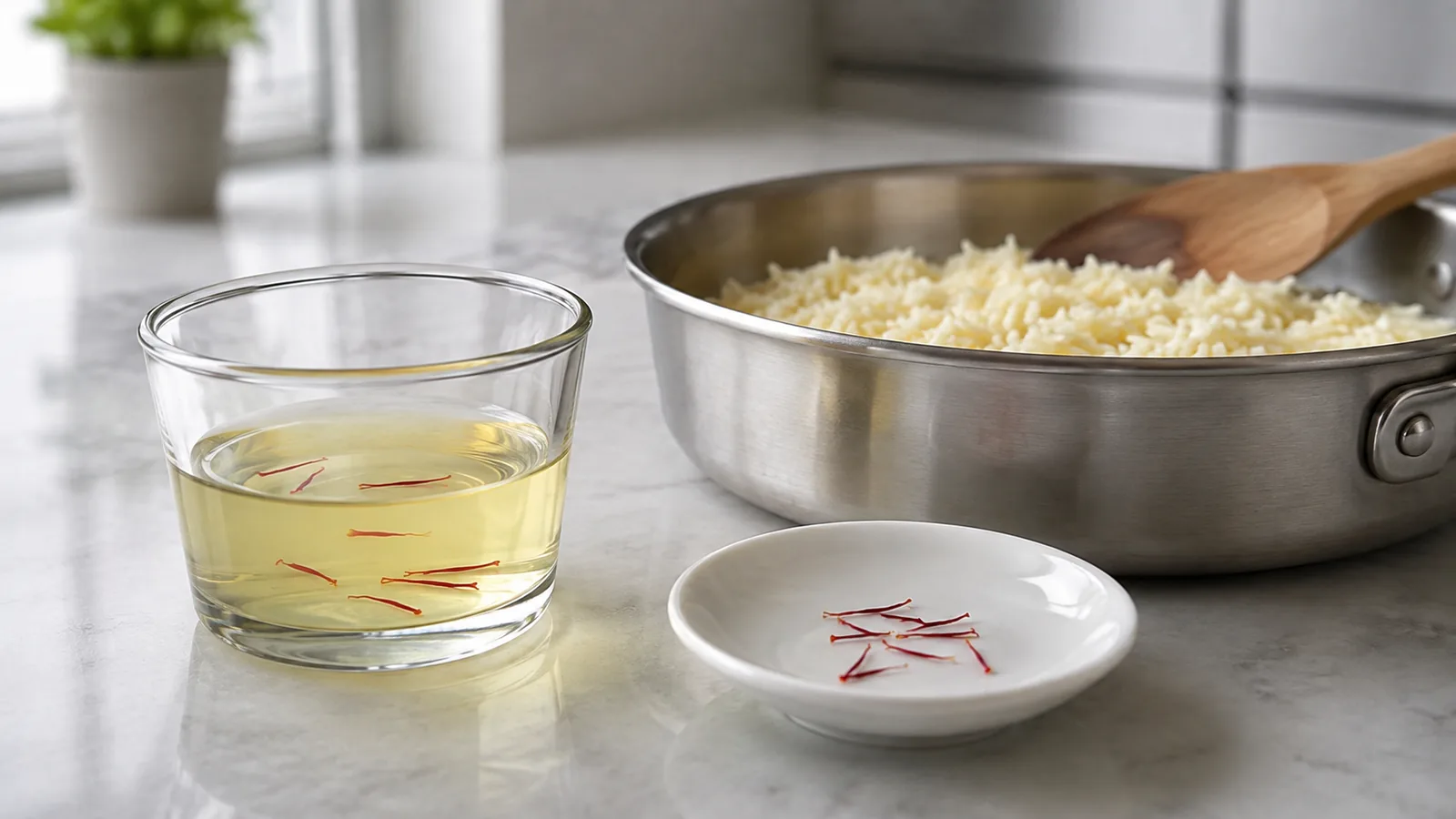
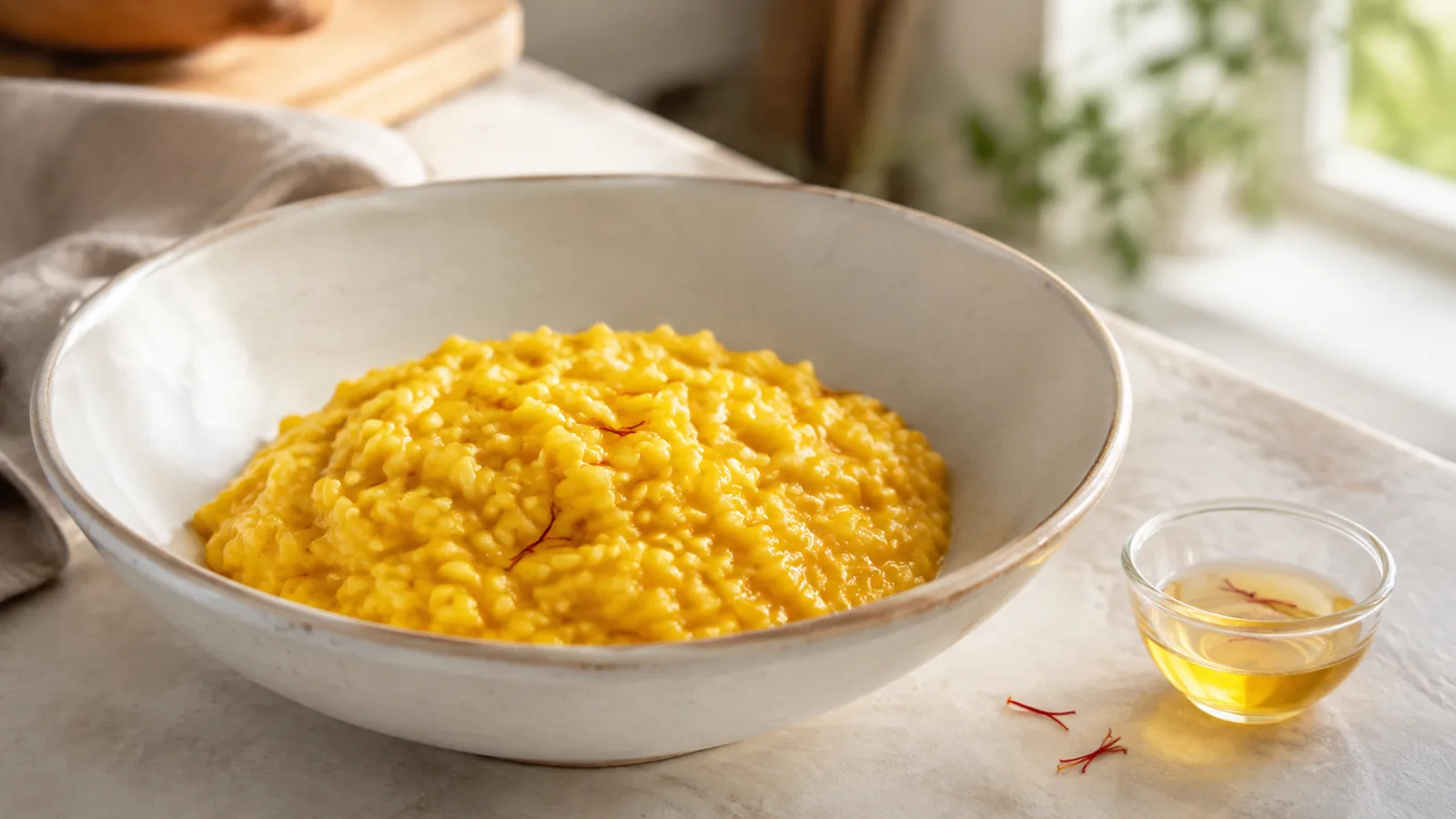
This recipe for cooking chickpea stuffing with Iranian saffron combines slow-cooked chickpeas and mutton with dried Persian lime, tomato, golden onion and crisp potatoes.
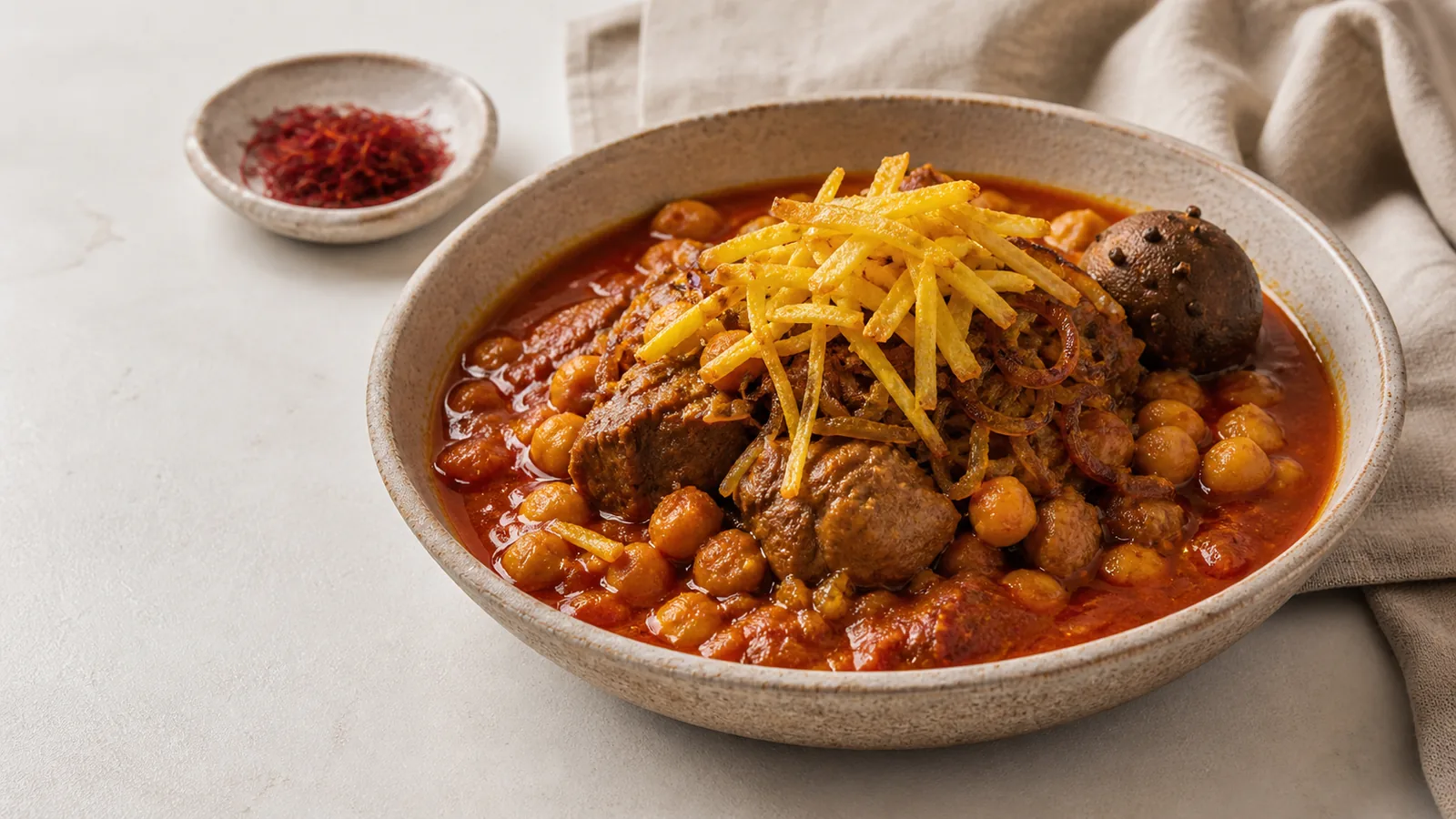
Despite the English name, the finished dish is spoonable and stew-like rather than a dry stuffing. Its character comes from tender chickpeas, small pieces of meat, the tartness of Omani lime and a measured amount of bloomed saffron.
Ingredients for chickpea stuffing
- 200 g dried chickpeas
- 200 g mutton or lamb, cut into small slices or cubes
- 2 tablespoons tomato paste
- 5 dried Omani limes, also sold as dried Persian limes
- Up to 1 cup neutral cooking oil, mainly for frying the onion and potatoes
- 1/4 cup bloomed Iranian saffron
- 200 g potatoes
- 4 tablespoons golden fried onion
- Turmeric, as needed
- Salt and black pepper, as needed
- Water, as needed for simmering
The older ingredient list called for “hot honey onion.” This means onion fried to a honey-gold color, not onion mixed with honey. Keep some of it for the final garnish if you like a little crisp texture on top.
Soak the chickpeas for two days
Put the dried chickpeas in a large bowl and cover them generously with cold water. Refrigerate them while they soak for two days, changing the water several times. They expand considerably, so make sure water remains above them.
Drain and rinse the chickpeas before cooking. A long soak helps the whole chickpeas soften more evenly, but it does not cook them; they still need to simmer until completely tender.
Prepare the saffron, limes and potatoes
Prepare 1/4 cup of concentrated saffron liquid. If you are starting with threads, this guide to brewing Iranian saffron explains how to grind and bloom them without flooding the stew with water.
Rinse the dried limes and pierce each one in two or three places with a skewer or the point of a small knife. This lets the cooking liquid reach the center. If you prefer a gentler lime flavor, soak them in warm water for 15 minutes, then drain them before they enter the pot.
Peel the potatoes and cut them into slim matchsticks or small cubes. Hold them in cold water while the stew cooks, then drain and dry them thoroughly before frying.
Half-cook the sliced mutton
Place the sliced mutton in a heavy saucepan and add enough water to cover it by a few centimeters. Bring it to a boil, skim away any foam, then lower the heat so the liquid simmers steadily.
Cook until the meat is about halfway tender. The exact time depends on the cut and the size of the pieces, so use texture rather than the clock: a fork should enter the surface, but the center should still resist.
Stir in the bloomed saffron at this stage. Keep the simmer gentle so its aroma stays present as the meat finishes cooking.
Fry the tomato paste and onion
Warm one or two tablespoons of the oil in a small pan. Add the tomato paste and cook it over medium-low heat for about two minutes, stirring until its raw smell fades and the color deepens slightly.
Add most of the fried onion and a little turmeric. Stir briefly, then scrape the mixture into the saucepan. Frying the paste separately gives the broth a fuller color without requiring all of the listed oil in the stew.
Add the chickpeas and Omani lime
When the mutton is halfway cooked, add the drained chickpeas, prepared tomato-and-onion mixture, pierced Omani limes and black pepper. Add hot water if needed so the ingredients remain just covered.
Return the pot to a gentle simmer, cover it partly and cook until both the chickpeas and meat are completely tender. Stir from the bottom occasionally and top up with hot water in small amounts rather than allowing the pot to dry out.
Salt the stew once the chickpeas are close to tender. Taste the broth before adding extra sourness: five dried limes can be assertive. The original recipe allows lemon juice instead of Omani lime, but add it gradually near the end so the saffron and chickpea flavors are not overwhelmed.
Mutton and lamb pieces should be fully cooked before serving. The official safe-temperature chart lists 145°F (63°C) with a three-minute rest for whole cuts; in this stew, the meat will normally cook well beyond that point as it becomes tender.
Let the chickpea stew thicken
Once the chickpeas and meat are tender, uncover the pan and keep it over low heat until the liquid has a light sauce consistency. The old instruction says to reduce the heat until the food “fits,” meaning the stew should settle and thicken rather than remain watery.
Stir carefully so the chickpeas stay mostly whole. Remove the dried limes if the broth has reached the sourness you want; leaving them in indefinitely can make the sauce bitter.
Fry and add the potatoes
Heat enough of the remaining oil to shallow-fry the dried potato pieces. Work in batches so they brown instead of steaming. Lift them onto a rack or paper towel and season lightly while hot.
Add the fried potatoes only when cooking is finished. Fold in a small portion if you want them to absorb the saffron-lime sauce, and keep the rest crisp for the top. Finish with the reserved golden onion.
Serve the saffron chickpea stuffing
Spoon the chickpea stuffing into a warm shallow bowl and scatter the crisp potatoes and onion over it. The sauce should cling to the meat and chickpeas, with enough liquid to eat comfortably beside steamed rice or flatbread.
Taste one last time for salt, pepper and acidity. Properly cooked chickpeas should be creamy inside, the mutton should yield easily to a fork, and the saffron should remain fragrant behind the deeper tomato and dried-lime flavors.