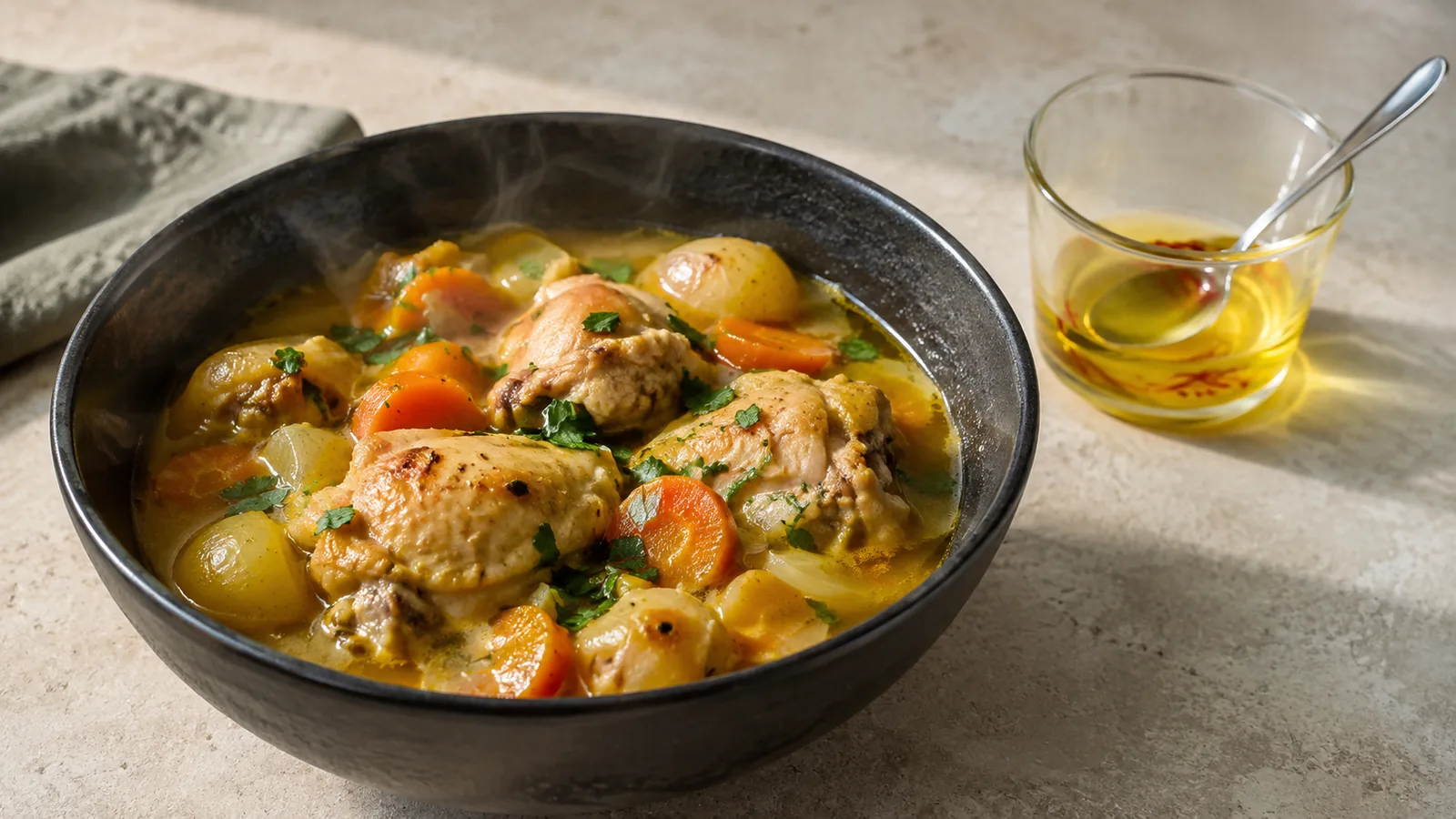
This recipe for cooking carrot stew with Iranian saffron combines tender meat, fried carrots and Bukhara plums in a saffron-tomato sauce sharpened with lemon juice or verjuice.
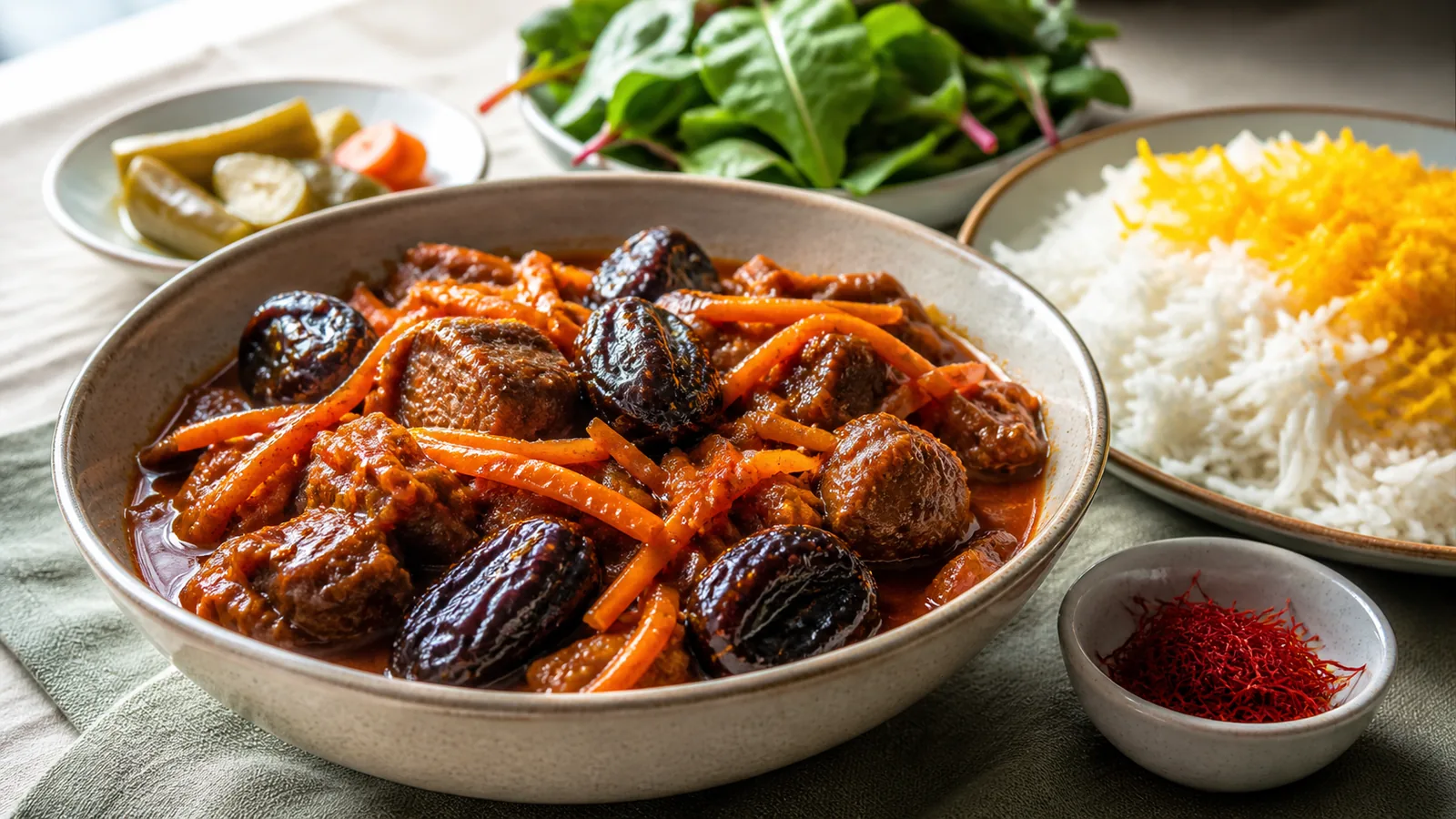
The older article accidentally calls it mandarin stew in one line, but every ingredient and step describe Iranian carrot stew. Its flavour can lean tart or gently sweet; the best time to decide is near the end, after the plums and sauce have concentrated.
Ingredients for carrot stew
- 250 g mutton or beef, cut into stew pieces
- 3 medium carrots
- 1 medium onion
- 2 tablespoons tomato paste
- Dried Bukhara plums, as desired
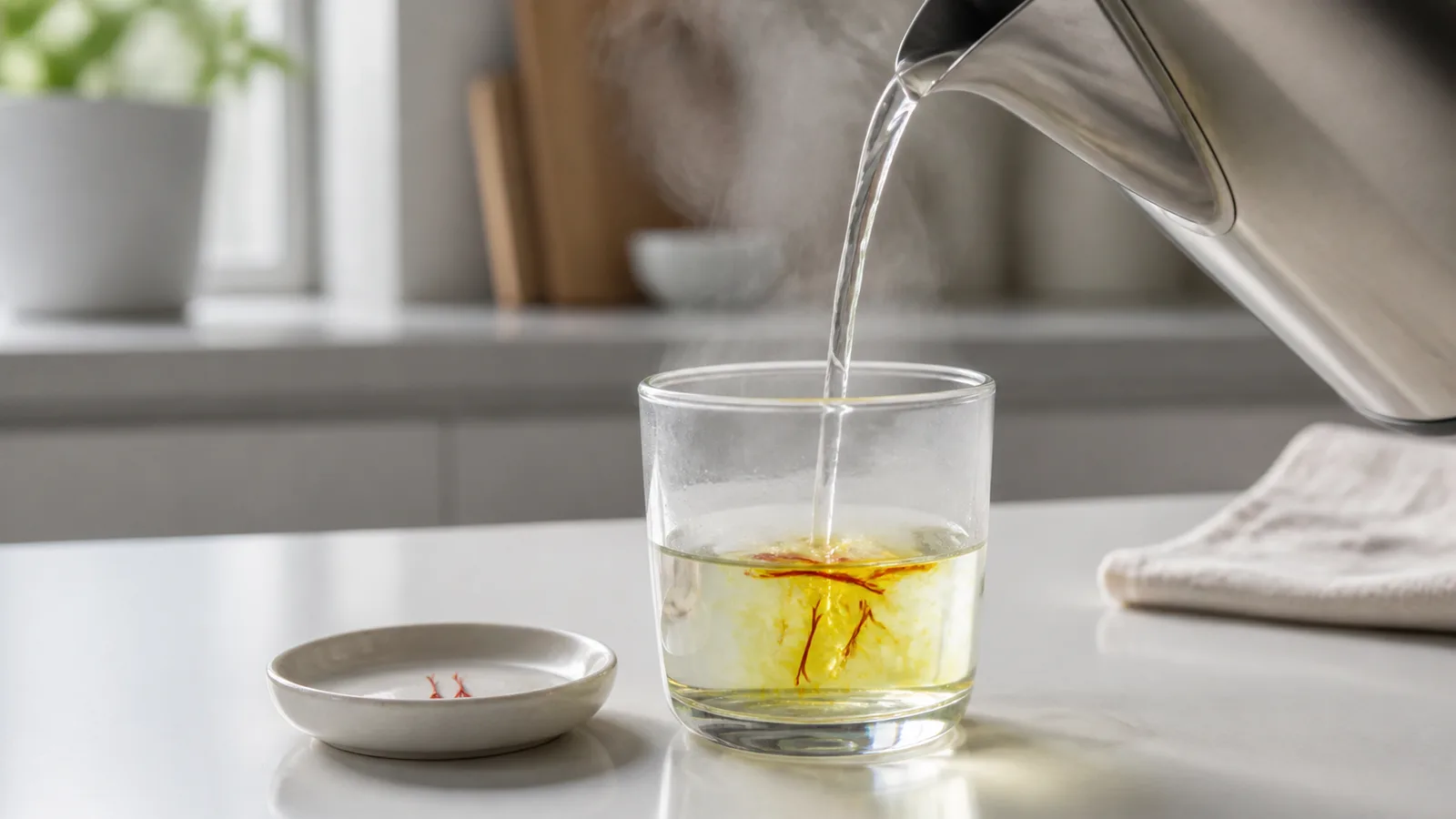
- Concentrated brewed saffron, as needed
- Salt and black pepper, as needed
- Turmeric, as needed
- 1/2 cup lemon juice or verjuice
- Oil or butter, as needed
- Boiling water, enough to cover the meat
Soak the dried plums in cool water while the meat cooks. Rinse them first and remove any stones if your variety is not pitted.
Brown the onion and meat
- Finely chop the onion.
- Warm a little oil or butter in a heavy pot and fry the onion until pale golden.
- Add the meat and turn the pieces until their surfaces change colour.
- Add turmeric, black pepper, the tomato paste and any chosen dry spice.
- Fry briefly, stirring so the paste coats the meat without burning.
- Add enough boiling water to cover the meat.
Lower the heat, cover partly and cook until the meat is fully tender. The original method allows about 3 hours, but the actual time depends on the cut and size of the pieces. Check the pot occasionally and add a little hot water if needed.
Cut and fry the carrots
Peel the 3 carrots. Cut them into fine matchsticks for defined pieces, or grate them for a softer, more integrated sauce. The original recipe permits either texture.
Warm a little oil in a separate frying pan and fry the carrot gently until it begins to soften and colour. If you wish, add a spoonful of brewed saffron during this stage so it coats the strips directly.
Do not boil the carrots in advance. Frying keeps their flavour concentrated and gives you more control over how sweet and soft the finished stew becomes.
Combine the stew
When the meat is tender, add the fried carrots, soaked Bukhara plums, salt and the remaining brewed saffron to the pot.
Simmer over low heat for about 30 minutes. Stir gently from the edge so the plums do not all break apart. The sauce should reduce enough to coat the meat and carrots without becoming dry.
Add lemon juice or verjuice last
During the last 5 minutes, stir in the 1/2 cup lemon juice or verjuice. Add one or the other, not both at full strength.
Taste first if you have used very tart plums or another souring ingredient. The old notes correctly warn that stacking plums, vinegar, green tomatoes, dried lime and lemon can overwhelm the stew. Add acidity in stages and stop when the sweet, tart and savoury flavours are balanced.
Optional seasoning variations
A small amount of cinnamon, one clove of garlic or a little garlic powder, curry powder, or diced quince can be added according to taste. Keep any one of these restrained so the carrot, plum and saffron remain clear.
For a sweeter carrot stew, add a little sugar during the final 10 minutes and allow it to dissolve completely. This is optional; many Bukhara plums already provide enough fruit sweetness.
Pomegranate-paste variation
For these quantities, the original notes suggest about 2 tablespoons pomegranate paste. Fry it briefly in place of, or alongside part of, the tomato paste, then adjust the final lemon or verjuice after tasting.
Pomegranate paste varies widely in sweetness and acidity. Adding it does not automatically mean the stew also needs the full measure of every other sour ingredient.
Chicken, turkey and meat-free options
Chicken or turkey can replace the mutton or beef, but poultry usually becomes tender sooner than a tough stew cut. Follow the same flavour sequence while adjusting the first cooking stage to the meat you use.
The USDA safe minimum temperature chart lists 165°F (74°C) for chicken and turkey. Check the thickest piece before serving rather than assuming the sauce colour proves doneness.
For a meat-free version, omit the meat stage. Brown the onion and tomato paste, add a modest amount of boiling water, then continue with the fried carrots, plums and saffron. Simmer until the sauce is concentrated and the carrots are tender.
Optional split-pea version
The older translation says the stew can be made with “cobs” and gives “a quarter of a clove.” In this Persian-recipe context, that means roughly 1/4 cup split yellow peas for 250 g meat, not corn cobs or a fraction of garlic.
Rinse and soak the split peas, then add them after the onion and meat have been browned. Give them enough time to become tender without letting them dissolve into the sauce.
Cook the plums separately if preferred
If you want every plum to remain intact, simmer them separately with a little water, salt, cinnamon and, if needed, a small amount of sugar. Spoon them over the finished stew at serving time.
You can also fry the tomato paste in the carrot pan after removing the carrots. This uses the flavour left in the pan and deepens the paste’s colour before it enters the pot.
Serve the saffron carrot stew
Serve the stew hot with pilaf, salad and pickles. Place a few carrot strips and whole plums on top so the dish reads clearly before the first spoonful.
A well-finished carrot stew has tender meat, carrots that have not vanished, and a glossy sauce with enough acidity to lift the fruit without hiding the Iranian saffron.