These baked potatoes use bloomed Iranian saffron, red onion, garlic, mustard seeds and rosemary for a fragrant tray with tender centres and browned edges.
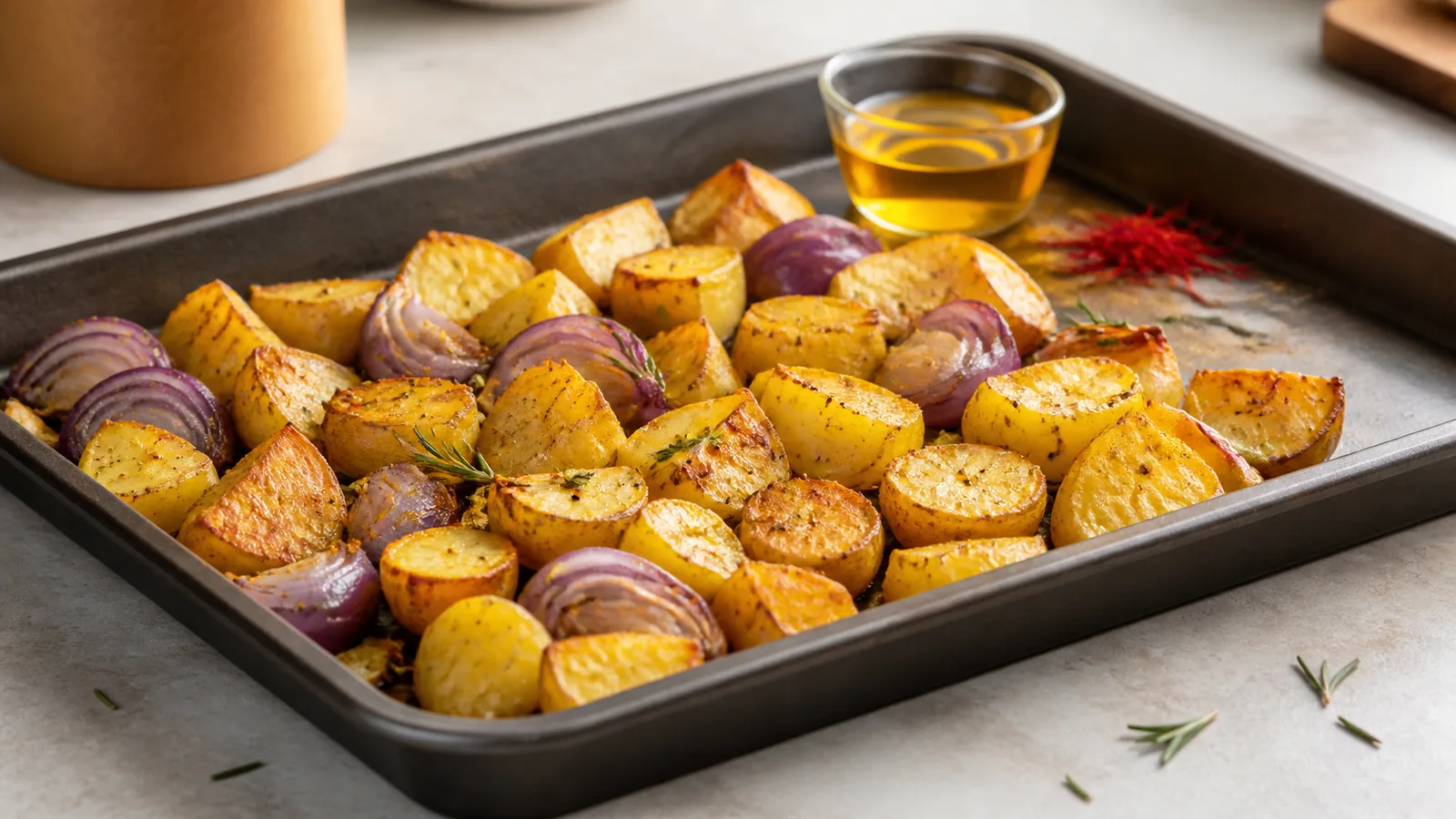
This saffron potatoes recipe starts covered so the potatoes cook in the saffron-infused liquid, then finishes uncovered so excess moisture can evaporate. It is a useful approach when you want saffron potatoes that taste of the spice rather than simply looking yellow.
Ingredients for saffron baked potatoes
- 1 teaspoon finely ground saffron
- 6 tablespoons boiling water
- 675 g potatoes, scrubbed and cut into roughly 3–4 cm pieces
- 1 red onion, cut into 8 wedges
- 2 garlic cloves, crushed
- 1 tablespoon white vinegar
- 2 tablespoons olive oil
- 1 tablespoon mustard seeds
- 5 tablespoons vegetable stock
- 2 teaspoons chopped fresh rosemary
- Salt and black pepper, to taste
Choose potatoes that hold their shape during roasting. There is no need to peel thin, clean skins; they add texture and help the pieces stay intact.
How to make baked potato with Iranian saffron
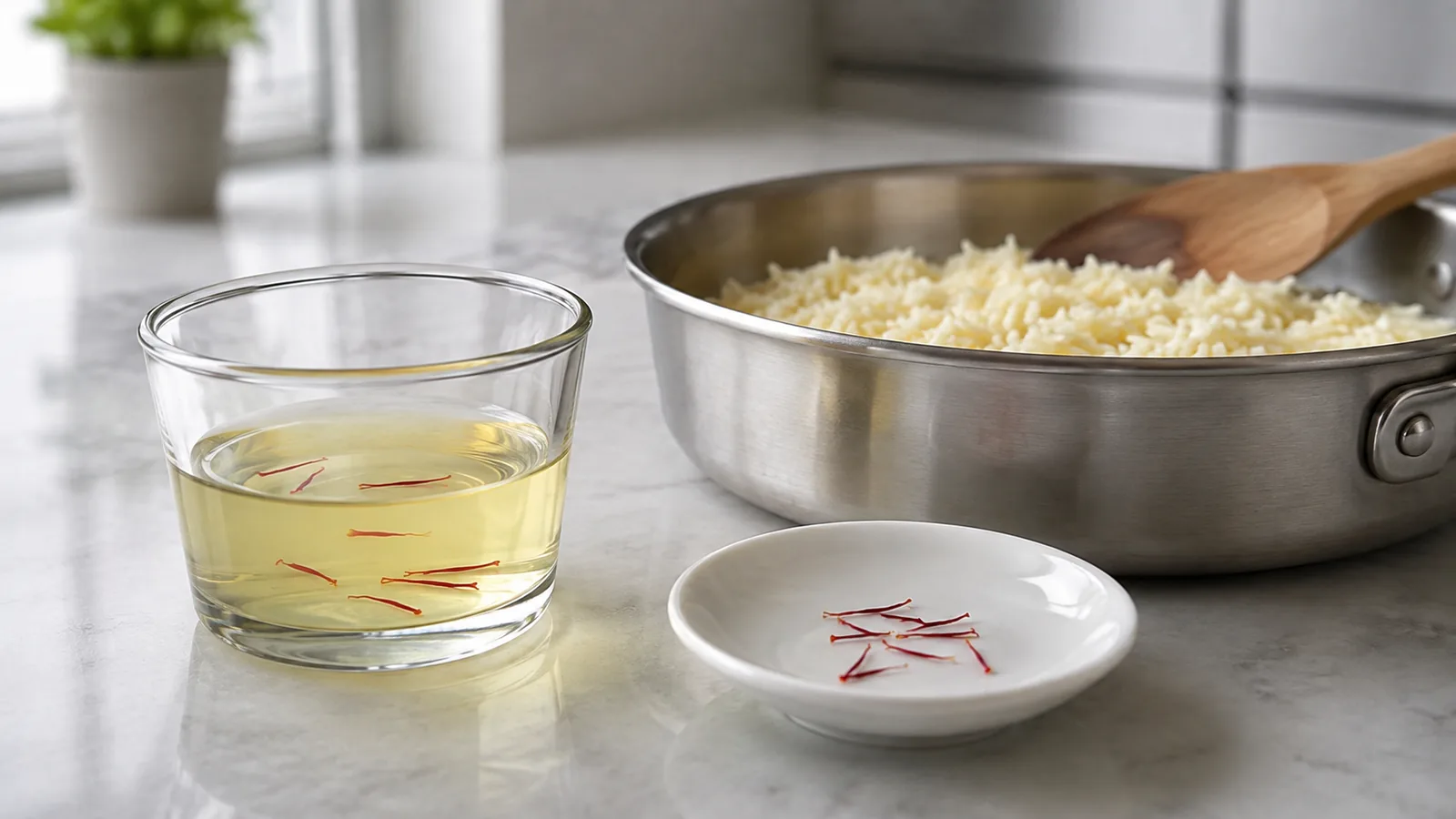
- Bloom the saffron. Put the ground saffron in a small heatproof bowl, pour over the 6 tablespoons of boiling water and cover. Leave it in a warm place for 10 minutes.
- Heat the oven. Preheat it to 200°C, 400°F or Gas 6. Choose a rimmed metal roasting tray large enough to hold the potatoes without piling them deeply.
- Assemble the tray. Add the potatoes, red-onion wedges and crushed garlic. Pour in the vinegar, olive oil, vegetable stock and bloomed saffron, including all the liquid. Sprinkle over the mustard seeds and rosemary, then season with salt and black pepper.
- Coat everything well. Turn the potatoes and onion until the saffron mixture reaches every surface. Spread the pieces into an even layer.
- Bake covered. Seal the tray with foil and bake for 30 minutes. The trapped steam helps the potato centres soften while they absorb the saffron, garlic and stock.
- Brown uncovered. Remove the foil carefully, turn the potatoes and return the tray to the oven for about 10 minutes. If the pieces are tender but still pale, give them another 5–10 minutes rather than raising the heat sharply.
- Serve hot. Taste one piece, adjust the salt and pepper, and spoon any saffron-rich juices from the tray over the potatoes.
What makes this saffron potato recipe work
Blooming distributes the saffron
Ground saffron is potent but easy to concentrate in one part of a dish. Steeping it first creates an infusion that can coat the whole tray. Keep the bowl covered while it rests so the aroma stays in the liquid.
Covered baking cooks; uncovered baking browns
The first 30 minutes are about tenderness. The final uncovered stage is about colour and texture. If you uncover the tray too early, the small amount of liquid may evaporate before the potatoes are cooked through. If you never uncover it, the potatoes can remain soft and wet.
Mustard, vinegar and rosemary balance the dish
Saffron is floral and earthy. Mustard seeds add small bursts of warmth, vinegar keeps the tray from tasting heavy, and rosemary gives the potatoes a savoury backbone. None should dominate; measure them before adding more.
How to get crisp saffron roasted potatoes
- Use a metal tray rather than a deep ceramic casserole, which holds steam for longer.
- Keep the pieces similar in size so they become tender together.
- Leave a little space between pieces. Use two trays if necessary.
- Turn the potatoes when the foil comes off so a moist side meets the hot tray.
- Check tenderness with a small knife. Oven times vary with potato variety and piece size.
For more browning, preheat the empty metal tray for a few minutes before adding the mixed ingredients. Handle it carefully and make sure the saffron liquid goes in immediately so the garlic and spices do not scorch.
Serving ideas
Serve these saffron potatoes beside roast chicken, grilled fish or a plate of vegetables and yogurt. A handful of parsley can add freshness at the end, but taste first; the saffron and rosemary should remain clear.
Leftovers can be cooled promptly, refrigerated in a covered container and reheated on a tray until piping hot. The oven or an air fryer restores the edges more effectively than adding extra stock.
Can turmeric replace the saffron?
Turmeric can colour potatoes, but it does not reproduce saffron’s aroma or flavour. If saffron is unavailable, treat turmeric as a different variation: use a small amount, expect an earthier result and do not present it as the same baked potato recipe.
The original combination is simple: bloom the saffron, let the covered tray build tenderness, then uncover it for a properly roasted finish. That two-stage method is what turns a handful of familiar ingredients into fragrant saffron potatoes rather than ordinary potatoes with colour added at the end.