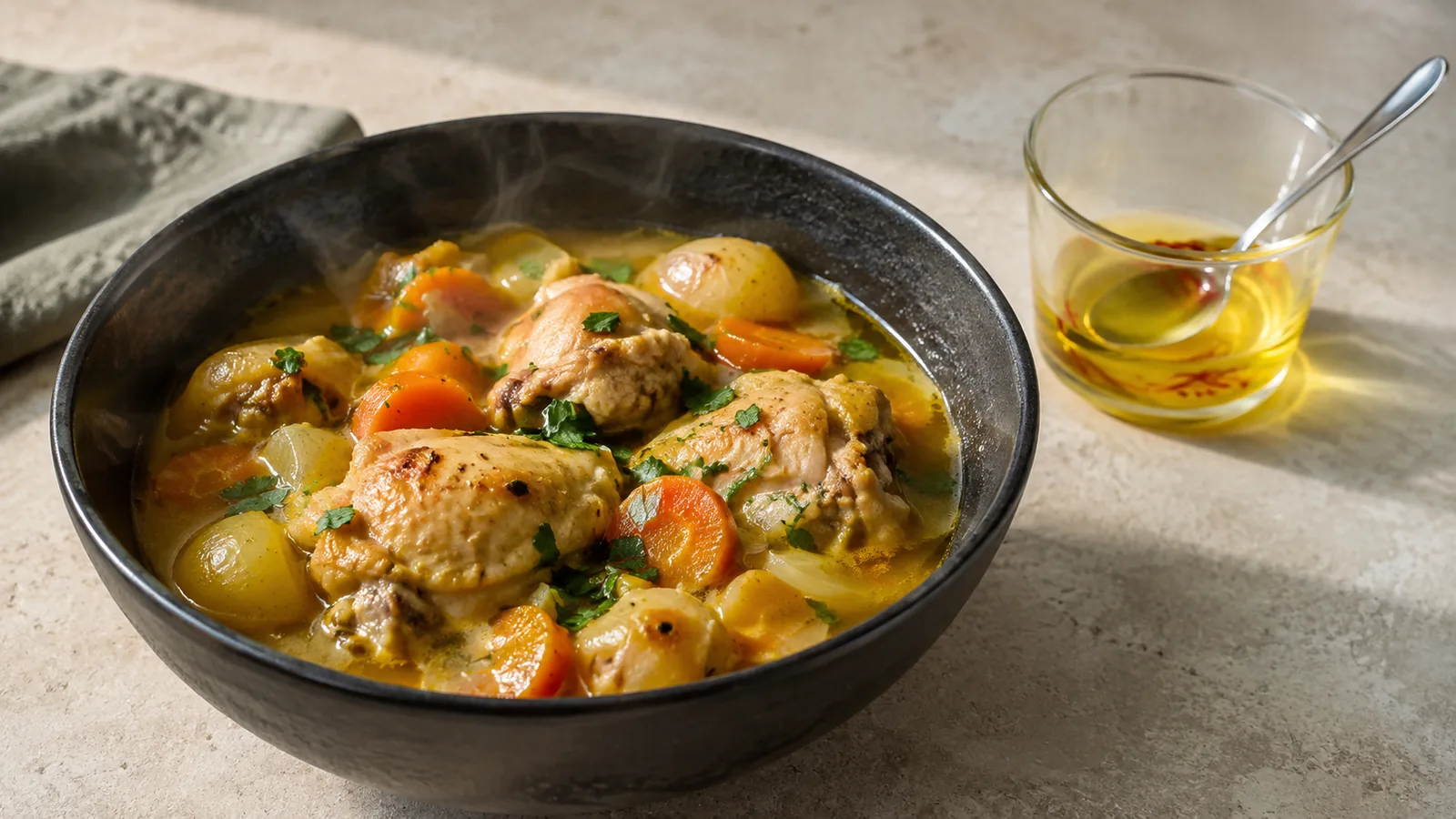
This recipe for Bozghorme stew cooking with Persian saffron turns goat, chickpeas, garlic and kashk into a slow-cooked Kermani dish with a thick, savory finish. Persian saffron, or Iranian saffron, provides its aromatic garnish.
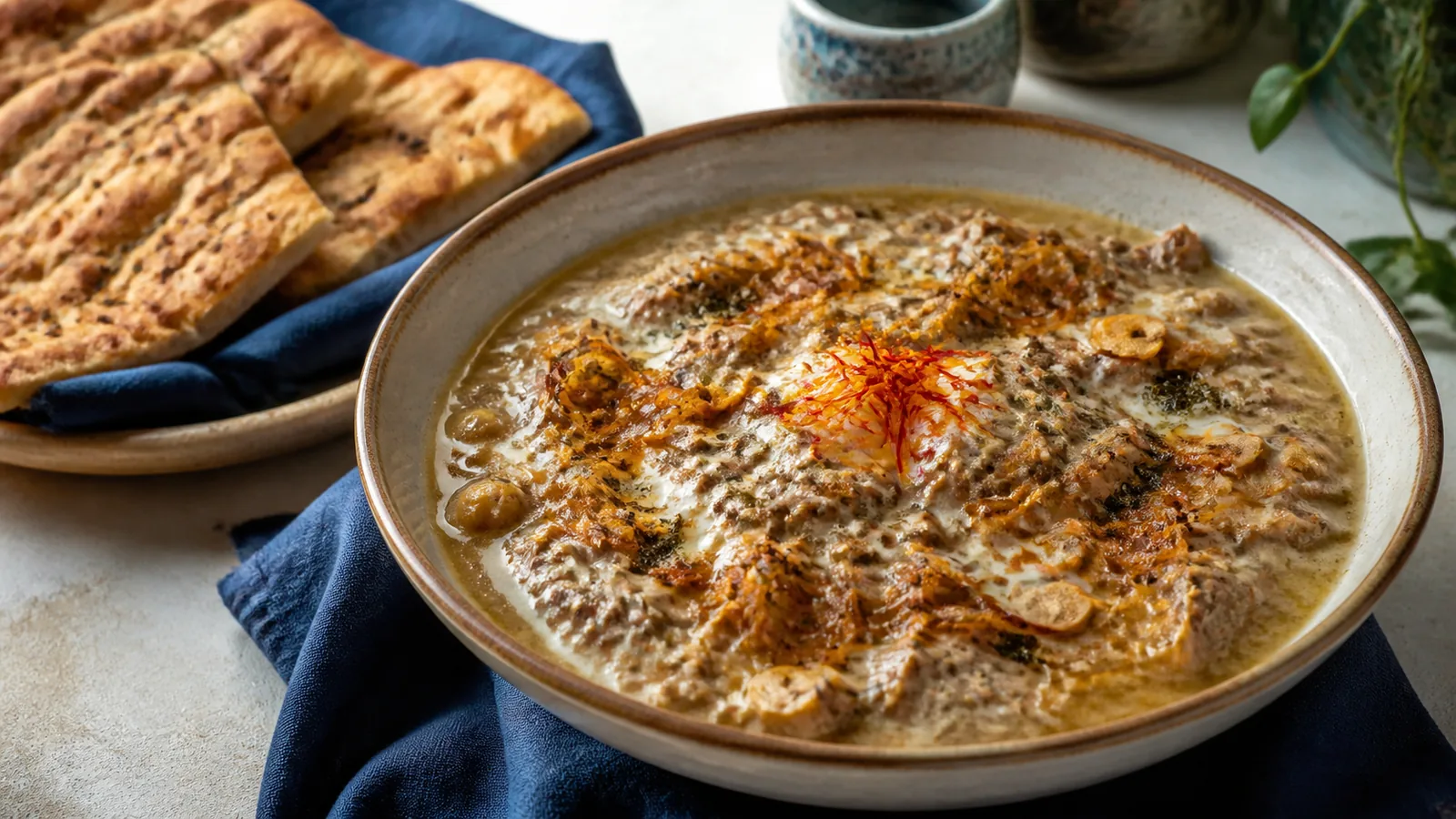
The name also appears as Bozghormeh, Boz Ghormeh or Boz Qormeh. English search and machine translation sometimes produce spellings such as “bogum stew,” but they refer here to the same dish. This version keeps the original article’s quantities and saffron garnish while making the method clear enough to cook.
What is Bozghorme?
Bozghorme is associated with Kerman in southeastern Iran. Goat, chickpeas, onion and garlic are simmered until very tender, then kashk gives the pot its characteristic tang and creamy body. It can be served in a bowl with bread or spooned beside rice as a stew.
The old translation called the meat “goat head meat and lean muscle muscle.” A more useful reading is goat shoulder and shank: working cuts with enough connective tissue for slow cooking. Boneless meat is easier to portion, but bone-in pieces give the broth extra body. Ask the butcher for stew-size pieces and remove any bone fragments before serving.
Bozghorme is sometimes translated literally as “goat crumbs.” That phrase is misleading. Boz means goat, while qormeh points to meat prepared by slow cooking or braising. The finished meat may be broken into soft strands, but the name is not an instruction to use crumbs.
Ingredients
This large-pot recipe serves approximately eight people.
- 1 kg goat shoulder, shank or another goat stewing cut
- 2 cups dried chickpeas
- 5 medium onions
- 1 whole head of garlic
- 3 cups prepared kashk
- 1 tablespoon bloomed Persian saffron
- 1 teaspoon turmeric
- Black pepper, as needed
- Salt, added cautiously after the kashk
- Oil, as needed
For the garnish, reserve some of the onions and garlic for fried onion and fried garlic. A little dried mint fried briefly in oil is also common, although it was not listed in the original version.
Prepare the chickpeas, kashk and saffron
Soak the chickpeas
Rinse the chickpeas and soak them in plenty of cool water for 8–12 hours. Drain and rinse again before cooking. Traditional versions may use peeled or split chickpeas; whole soaked chickpeas also work, but can take longer to soften.
Choose and handle the kashk
Kashk is a concentrated fermented dairy ingredient, sold as a thick liquid, paste or dried product. Use a commercially prepared, pasteurized product and follow its label for dilution or heating. Its salt level varies widely, which is why the stew should be tasted after the kashk goes in and salted only then.
Bloom the Persian saffron
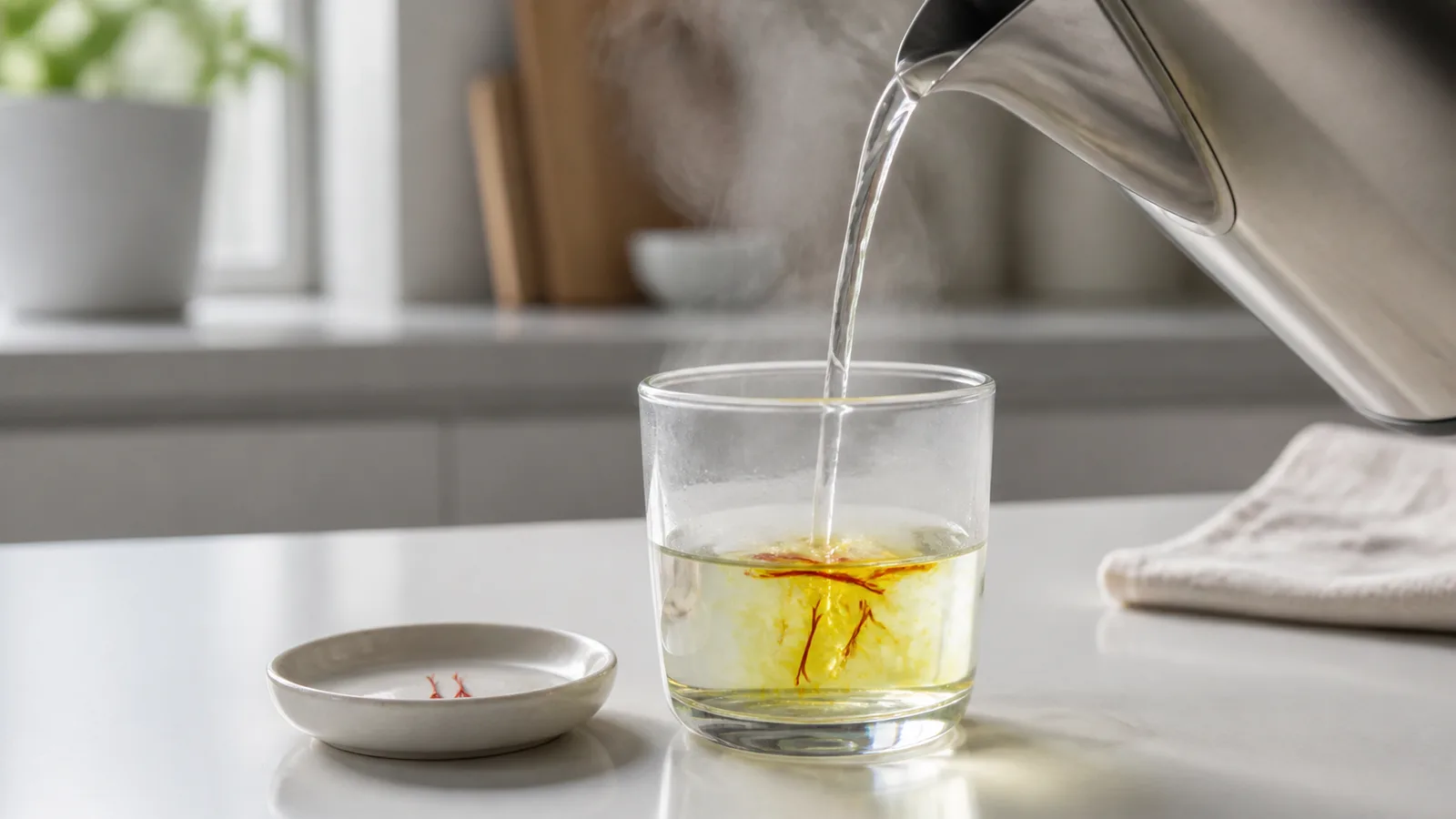
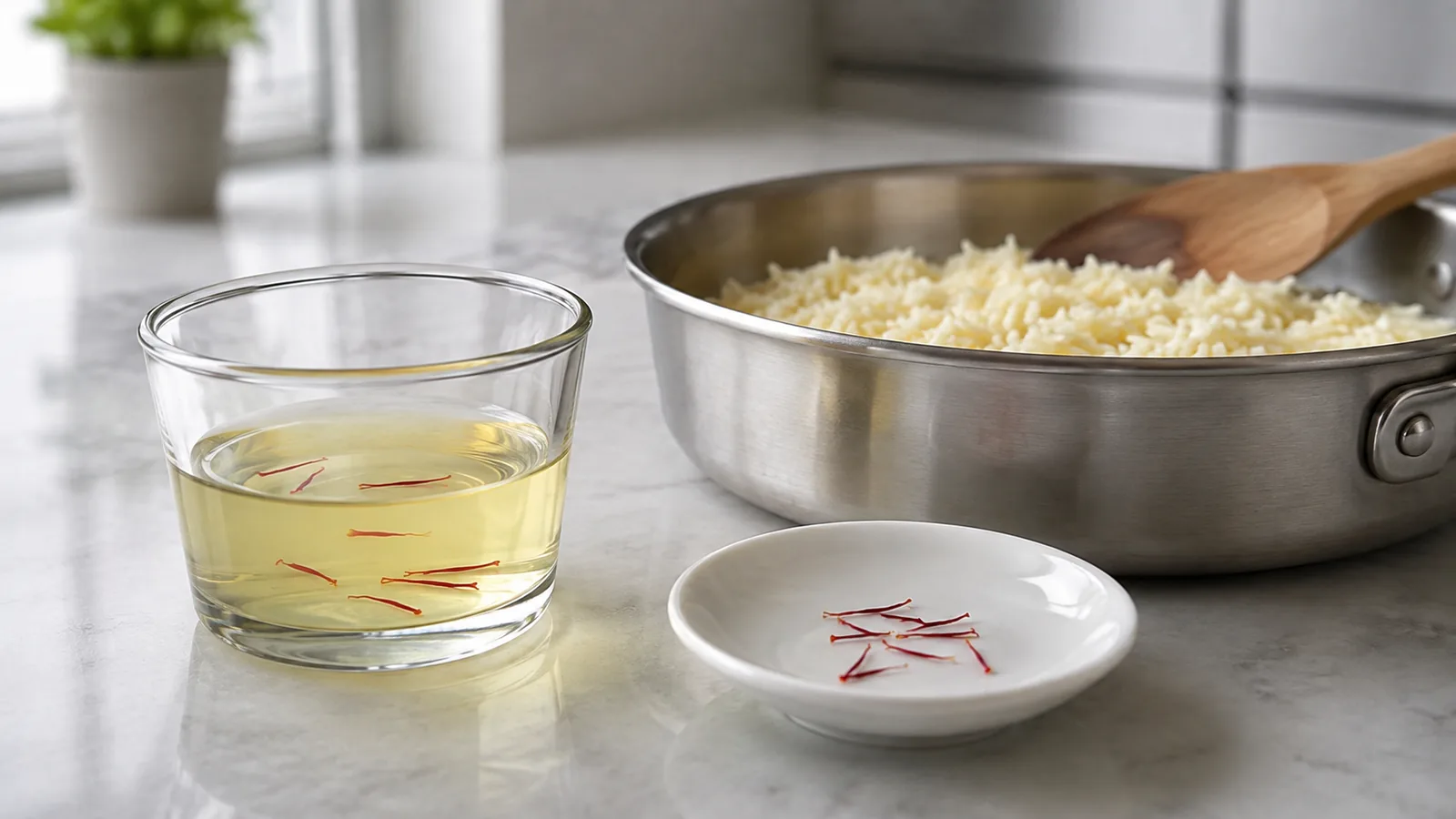
Finely grind a small pinch of saffron threads, cover with a few spoonfuls of hot water and let it stand for 10–15 minutes. Measure one tablespoon of the resulting saffron solution for the garnish. Our saffron-brewing guide shows the technique in more detail.
How to cook Bozghorme stew
1. Build the onion and garlic base
Thinly slice the five onions. Heat a modest layer of oil in a heavy pot and cook about two-thirds of the onion over medium heat until soft and lightly golden. Peel the garlic head, crush half of the cloves and stir them into the pot for about 30 seconds. Keep the remaining onion and garlic for the garnish.
2. Add the goat and chickpeas
Add the goat pieces, drained chickpeas, turmeric and black pepper. Turn them through the onion mixture, then add two liters of water. Bring the pot to a boil and skim away any foam that collects on the surface.
Reduce the heat to a very gentle simmer. Cover with the lid slightly ajar and cook for about two hours, checking occasionally that the meat and chickpeas remain covered by liquid. Older goat and larger cuts can need another 30–60 minutes. The meat should pull apart easily and the chickpeas should be completely tender before kashk is added.
3. Thicken the stew with kashk
When the meat is tender, lift out any bones. Break some of the meat into strands with two forks, and mash a portion of the chickpeas against the side of the pot. This creates the thick texture without flour.
Stir in the prepared kashk gradually. Keep the lid half open and the flame very low, just as the original recipe directs. Simmer gently for another 20–30 minutes, stirring the base regularly so the dairy does not catch. The liquid should become glossy and thick enough to cling to a spoon, not dry into a paste.
Taste only after the kashk is fully mixed in. Add salt if needed, along with more black pepper. If the stew becomes too thick, loosen it with a little hot water. If it remains thin, continue the uncovered gentle simmer rather than raising the heat sharply.
4. Make the fried onion and garlic garnish
While the stew finishes, fry the reserved onion in a small pan until deep golden. Remove it before it turns bitter. Thinly slice the remaining garlic and fry it briefly over medium-low heat; garlic can go from pale to burnt quickly.
Spoon the Bozghorme into a warm bowl. Finish with fried onion, fried garlic and the tablespoon of bloomed saffron. If using mint, heat it in oil for only a few seconds and add a small ribbon over the surface.
How to judge the final texture
Bozghorme sits between a stew and a thick soup. It should be cohesive enough for torn bread to pick up, but still soft enough to spoon. The chickpeas should no longer feel grainy, and the goat should separate without resistance.
Do not use color alone to judge whether the meat is safe. The long simmer needed for tenderness will take stew-size pieces well beyond the minimum, but a thermometer is still the reliable check. Official safe-temperature guidance lists 145°F (63°C) plus a three-minute rest for whole cuts of goat and 160°F (71°C) for ground red meat.
Can another meat replace goat?
The original notes allow other red meats. Lamb shoulder is the closest practical substitute because it also responds well to slow simmering. Beef chuck can work, though its flavor changes the dish and its cooking time may differ.
Goat is not automatically tender, as the earlier article claimed. Age and cut matter: a young, well-trimmed piece may soften quickly, while mature goat often needs longer cooking. The pot—not the clock—should decide when the meat is ready.
Serving and storing the stew
Serve Bozghorme with warm flatbread for scooping, or as a rich accompaniment to plain rice. Put extra kashk, fried onion and herbs on the side so each person can adjust the sharpness and richness.
Cool leftovers promptly in shallow containers and refrigerate them within two hours. Reheat only the amount needed, stirring gently until it is steaming throughout. Kashk thickens as it rests, so add a splash of water during reheating if the stew has become too firm.
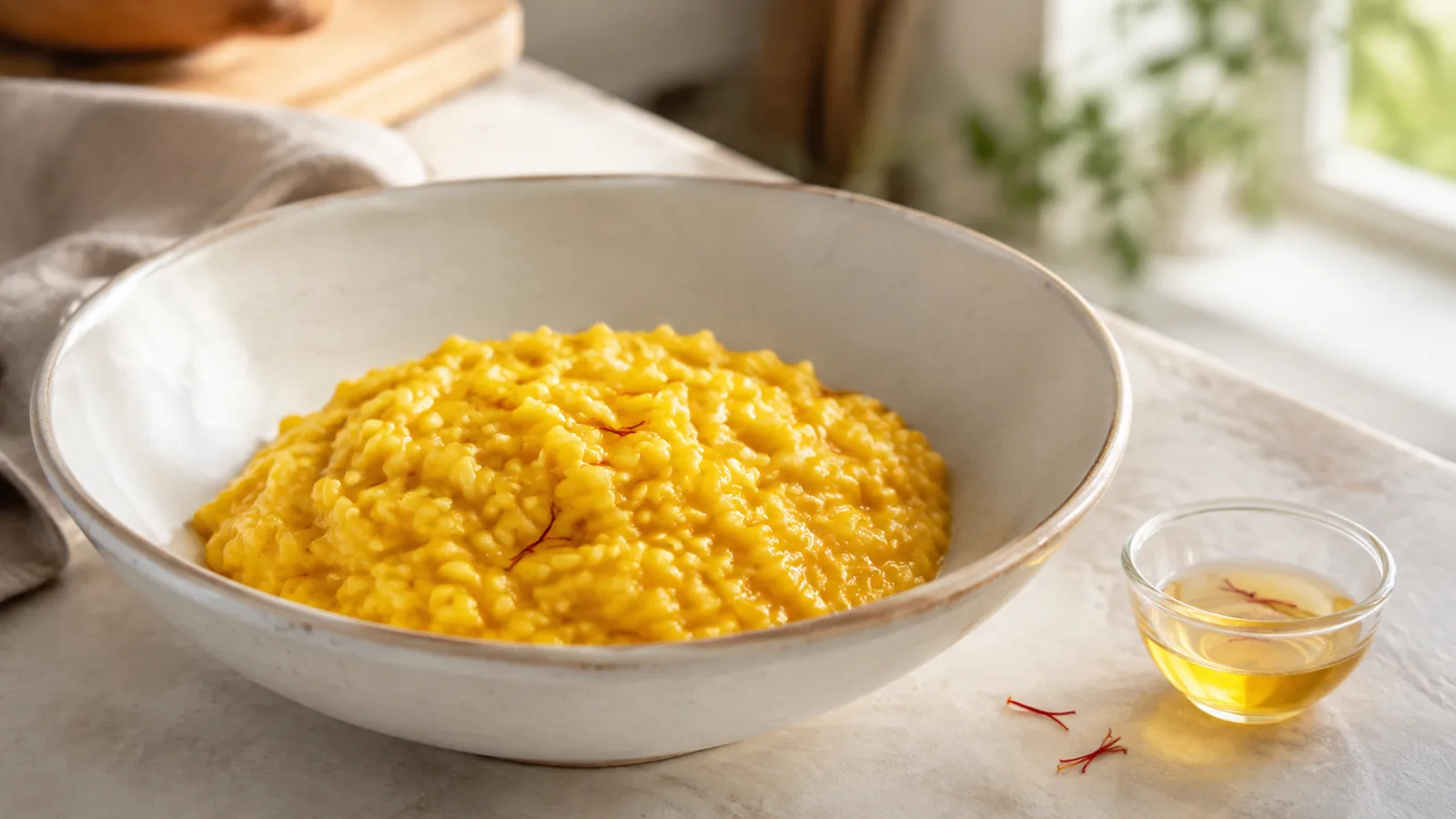
The best Bozghorme has a patient, slow-cooked character: tender goat, fully softened chickpeas, enough kashk to bind the pot, and Persian saffron added at the end so its aroma is not lost.