Qazvin tea bread is a gently sweet, cardamom-scented Persian cookie made for tea tables and Nowruz visits. Known in Persian as nân-e châi, it should be tender and crisp rather than bread-like. A saffron-and-yogurt glaze gives the patterned tops their warm colour and delicate aroma.
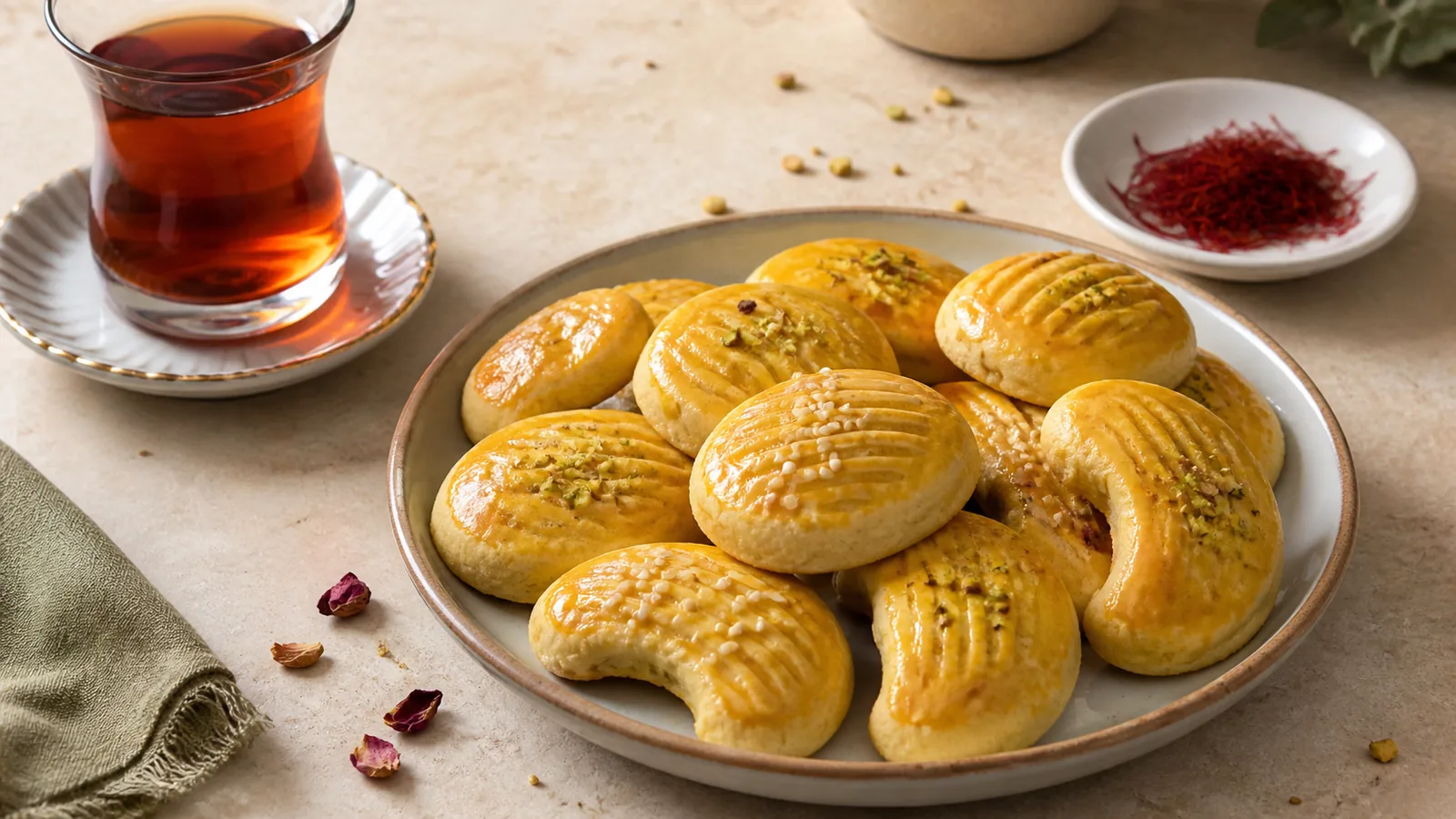
Ingredients for Qazvin tea bread
For the dough
- 500 g plain flour, plus a little only if needed for shaping
- 150 g icing sugar, sifted
- 250 g unsalted butter or pastry shortening, softened but not melted
- 2 egg yolks, at room temperature
- 90 g thick, mild yogurt, at room temperature
- ¼ teaspoon baking powder
- 1 teaspoon ground cardamom
For the saffron glaze
- 1 egg yolk
- 1 teaspoon thick yogurt
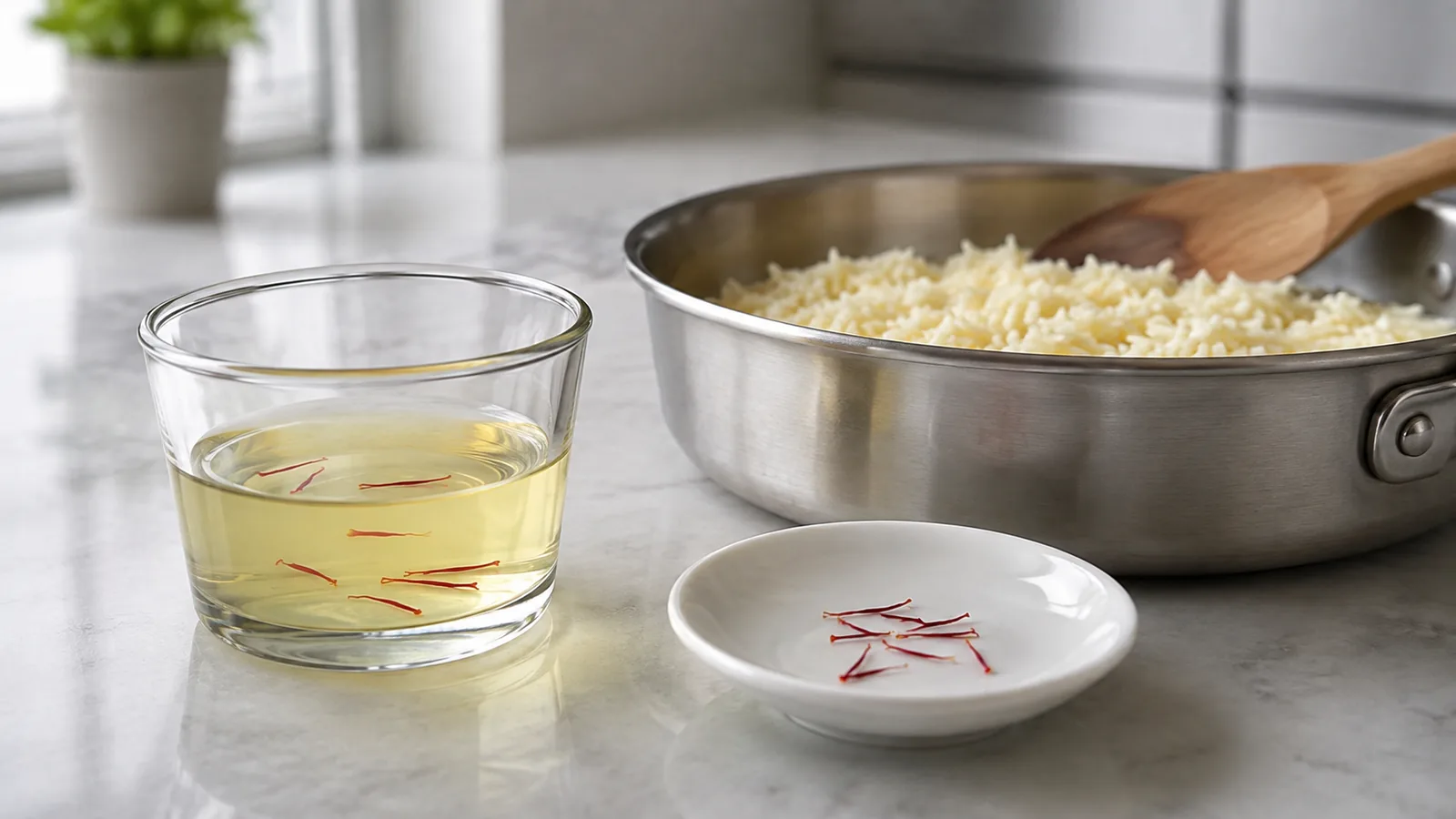
- 1 teaspoon concentrated brewed saffron
- Sesame seeds or finely chopped pistachios, for finishing
How to make Qazvin tea bread with saffron
1. Cream the butter and sugar
Put the softened butter and sifted icing sugar in a large bowl. Beat with an electric mixer for about 4 minutes, scraping the bowl once or twice, until the mixture looks pale and creamy. Softened fat traps air; melted fat will make the dough greasy and the patterns less distinct.
2. Add the yolks and cardamom
Beat in the 2 egg yolks and cardamom for 1 to 2 minutes, just until smooth. In a separate small bowl, stir the yogurt and baking powder together. Let it stand briefly until it begins to foam, then mix it into the butter mixture.
3. Bring the dough together
Sift in the flour gradually. Use the mixer only for the first additions, then change to a spoon and finally your fingertips. Stop as soon as the dough holds together when pressed. Flour absorbs differently from one kitchen to another, so do not force in the last spoonful if the dough is already pliable.
Turn the dough onto a clean surface and knead it very lightly—only enough to make it even. Overworking warms the fat and develops the gluten, which can leave these delicate tea cookies tough or oily. Cover the dough and rest it in a cool place for 30 minutes.
4. Shape the cookies
Heat the oven to 170°C (340°F). Line a baking tray with parchment. Roll the dough to an even thickness of 5 to 8 mm. Traditionally, the surface is marked with a ridged rolling pin or comb-like tool before the pieces are cut; a clean fork or patterned cookie stamp also works.
Cut small ovals, crescents or simple rounds. Lift them with a thin spatula and leave a little space between them on the tray. Gather scraps only once and press them together gently—the more often the dough is rerolled, the less tender the final cookies will be.
5. Apply the saffron glaze
Whisk the egg yolk, yogurt and concentrated saffron until smooth. Brush a thin coat over each cookie, wait a minute, then apply a second light coat without flooding the grooves. Finish with sesame seeds or pistachios.
6. Bake and cool
Bake on the centre rack for 20 to 25 minutes, checking early if your cookies are thin. They are ready when the tops look set and the underside is pale gold; the edges should not become dark brown. Leave them on the tray until firm, then transfer them to a rack. Moving them while hot can make them crumble.
How to keep the pattern neat
If the stamped lines spread in the oven, the dough or tray was probably too warm. Chill the shaped cookies for 10 minutes before glazing and baking. If the dough cracks as you roll it, let it stand at room temperature for a few minutes and press it together gently rather than adding water.
Use thick, fresh yogurt rather than a watery or sharply sour one. Milk or cream can change how much flour the dough needs, so yogurt is the most predictable choice for this version. Brew the saffron strongly; a small amount of concentrated liquid colours the tops without thinning the glaze.
Serving and storage
Let Qazvin tea bread cool completely before placing it in an airtight container. Store it at cool room temperature, separating layers with parchment, and keep it away from steam and direct sunlight. In a humid climate, refrigeration can help, but bring the cookies back to room temperature before serving so their cardamom and saffron fragrance opens up beside the tea.