


Bamie, more often transliterated as bamieh, is a crisp Persian choux pastry soaked briefly in saffron-and-rosewater syrup. These small ridged sweets are especially familiar during Ramadan, often served beside zoolbia and a glass of unsweetened tea. The best pieces have a crisp shell, an airy centre and enough syrup for flavour without becoming soft.
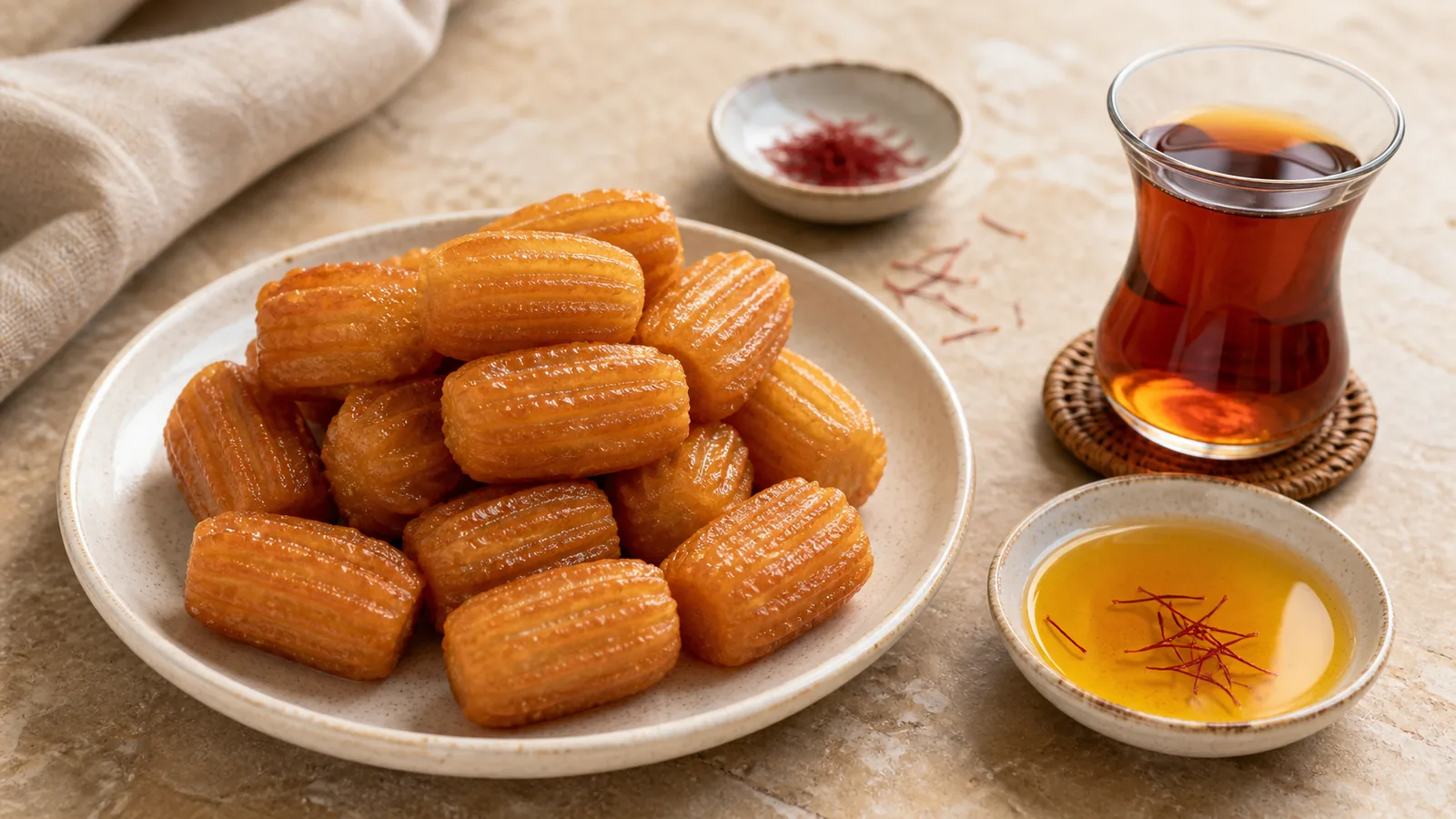
Bamie ingredients
For the saffron syrup
- 2 cups granulated sugar
- 1 cup water
- ¼ cup rosewater, or up to ½ cup for a stronger floral flavour
- 2 tablespoons concentrated brewed saffron
- 1 teaspoon fresh lemon juice
For the pastry
- 1 cup plain flour
- 1 cup water
- 50 g unsalted butter
- 2 teaspoons granulated sugar
- 2 large eggs, at room temperature
- ½ teaspoon vanilla
- Neutral high-heat oil, for deep-frying
How to make Persian bamieh
1. Make and cool the saffron syrup
Combine the sugar and water in a saucepan over medium heat. Stir only until the sugar dissolves, then let the syrup simmer gently for about 10 minutes. Add the brewed saffron, rosewater and lemon juice during the final minute. Remove it from the heat and leave it to cool to room temperature.
The syrup needs time to cool before frying begins. Hot pastry absorbs room-temperature syrup cleanly; if both pastry and syrup are very hot, the bamie can soften quickly.
2. Cook the choux dough
Put the water, butter and 2 teaspoons of sugar in a medium saucepan and bring them just to a boil. Tip in all the flour at once. Stir firmly over low heat until the flour is absorbed and the dough forms a smooth ball.
Continue turning and pressing the dough against the pan for 8 to 10 minutes. This dries it enough to accept the eggs and helps the finished pastry stay hollow and crisp. Stir in 2 tablespoons of the prepared syrup, then transfer the dough to a mixing bowl.
3. Add the eggs
Let the dough cool until it is warm rather than hot; eggs added to steaming dough may cook on contact. Beat in the first egg and the vanilla. The mixture may separate at first, but it will come back together. Add the second egg gradually and stop when the dough is smooth, glossy and soft enough to pipe while still holding a ridged shape.
4. Pipe into the oil safely
Fit a sturdy piping bag with a medium open-star nozzle. Pour enough oil into a deep, heavy pan for the pieces to float, leaving plenty of empty space above the oil. Keep the pan stable, use a thermometer if possible and never add water near hot oil.
For the first batch, pipe short lengths of dough over warm—not smoking—oil and cut each one with lightly oiled kitchen scissors. Bring the oil gradually to about 160°C (320°F). Fry in small batches, turning the pieces so they expand and colour evenly. Maintain gentle heat; a dark exterior can hide a wet centre.
Allow the oil to return to the same moderate temperature between batches. Do not crowd the pan, because each piece needs room to puff and float.
5. Soak briefly
Lift the deep-golden bamieh with a slotted spoon and drain for a few seconds. While they are still hot, place them in the room-temperature saffron syrup for about 2 to 3 minutes. Turn once, then transfer to a rack so excess syrup can run off.
Why this bamieh dessert may turn soft or fail to puff
If the pieces remain dense, the dough may have been too firm, the oil too hot at the start or the pan overcrowded. If they become soft soon after frying, they may need a little longer in the oil, or they may have stayed in the syrup too long. A consistent moderate oil temperature is more reliable than judging by colour alone.
Grease the scissor blades lightly whenever the dough begins to stick. Ridged pieces cook more evenly when they are similar in size, so aim for short lengths rather than mixing very small and very large ones in a batch.
Bamieh, zoolbia and zalabiyya
Persian bamieh is usually made from cooked egg dough, while zoolbia is a lacy fermented-batter sweet. Zalabiyya is a broader regional name used for several fried sweets, some of which are related in serving style but are not identical to this recipe. Keeping the names distinct helps readers find the crisp ridged Ramadan sweet they intended to make.
Bamieh is at its best on the day it is fried. Serve it at room temperature with black tea, and keep leftovers loosely covered in a cool place; airtight storage can trap moisture and soften the crisp shell.

![Exporting Saffron to Turkey + Price Guide [Complete 0 to 100]](https://img.rowhanisaffron.com/20260827003933/saffron-export-turkey-quality-inspection.webp)



