


This article records a saffron-market forecast made during the first economic shock of COVID-19. In 2020, Iranian industry representative Ali Hosseini warned that reduced international demand could push bulk saffron prices back toward a much lower historical range. It is an archive of that forecast, not a current price quotation.
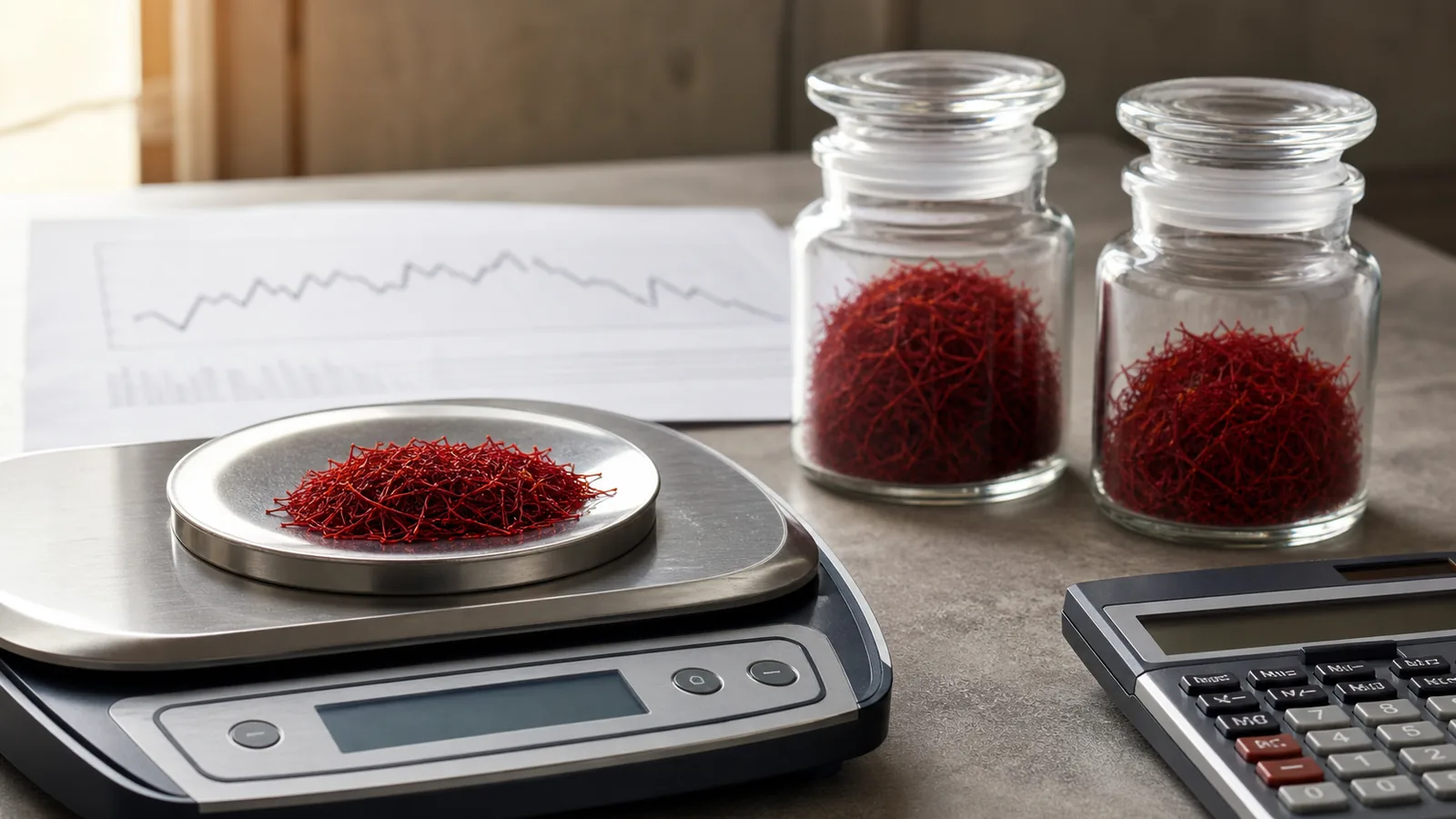
What shaped the world market saffron forecast
Hosseini, then identified as a member of Iran’s National Saffron Council, argued that the pandemic would affect non-essential purchases more severely than basic goods. Saffron is valuable, lightweight and widely traded, but buyers can postpone some industrial and commercial orders when factories, restaurants and retail channels slow down.
His concern centred on demand rather than harvest quality. Spain and Italy were important buyers of Iranian saffron and were also among the European countries hit earliest by major COVID-19 disruption. China, another significant market in the original report, had already experienced factory and logistics interruptions. A pause across several buying countries at once could leave exporters competing for fewer orders.
What “rates of the 60s” meant in the original forecast
The headline’s “rates of the 60s” is an awkward translation of the historical comparison used in the report. The useful figure is the price band stated in the text: Hosseini referred to an earlier international bulk value of roughly US$400–$500 per kilogram and compared it with a pre-pandemic level of about US$1,100 per kilogram.
Those numbers should not be read as today’s shop price. A quoted bulk export value and the price a customer pays for a small retail pack are different things. Grade, origin documentation, laboratory testing, packaging, exchange rates, freight, duties and the number of intermediaries can all change the final price.
The 2020 warning in context
At the time, Hosseini expected the recession following pandemic closures to weigh on agricultural products generally and on saffron in particular. He said that even illicit cross-border trade had slowed, an observation he used to illustrate how abruptly commercial movement had contracted.
His chain of reasoning was straightforward:
- COVID-19 restrictions interrupted manufacturing and trade in major buyer countries.
- Businesses facing uncertainty reduced or delayed purchases that were not immediately essential.
- Saffron exporters therefore encountered weaker demand and greater price pressure.
- A prolonged interruption could have produced a deeper post-lockdown recession for growers and traders.
This was a forecast made under exceptional conditions. It should not be presented as a permanent rule about the saffron trade, nor as proof that every part of the market moved in the same way. Wholesale contracts, retail sales and different saffron grades do not necessarily change together.
Why a single “world saffron price” can mislead
Saffron is not a uniform commodity sold everywhere at one public rate. Threads with different colour strength, aroma, moisture, cut and purity can command different prices. A large unbranded shipment cannot be compared directly with tested saffron packed for consumers in a traceable retail format.
Currency also matters. A producer may see the domestic price rise while the dollar-denominated export price falls, or the reverse. Comparing two dates without recording the currency, grade, quantity and point in the supply chain can create a dramatic headline but a weak comparison.
How to interpret historical saffron-price reports
Before using an old figure, check four details: the date of the quotation, whether it describes wholesale or retail trade, the saffron grade and the market where the transaction occurred. Also separate a prediction from a completed sale. In this case, the central claim was Hosseini’s expectation about the aftermath of COVID-19—not a guarantee of the price that every exporter would receive.
The lasting value of the report is its view of market vulnerability. Growers and exporters depend not only on crop yield but also on international logistics, buyer confidence and the health of downstream industries. Those relationships help explain why saffron prices in world markets can shift even when the product itself has not changed.

![Exporting Saffron to Turkey + Price Guide [Complete 0 to 100]](https://img.rowhanisaffron.com/20260827003933/saffron-export-turkey-quality-inspection.webp)



