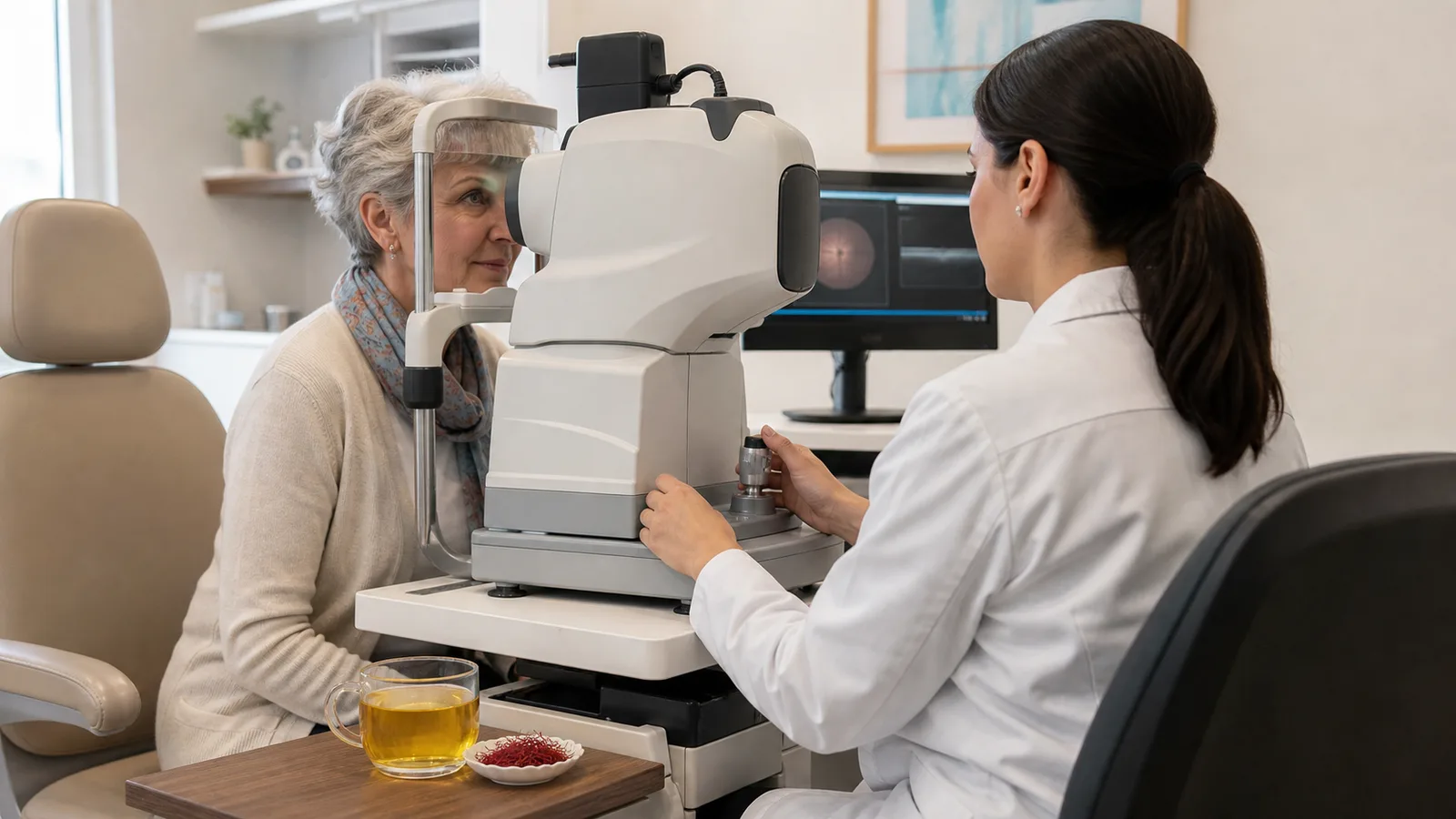
Saffron and prevention of blindness in aging is a more complicated subject than the headline suggests. Small clinical studies have explored standardised saffron supplements in people with age-related macular degeneration (AMD), with some modest changes in retinal-function tests. They have not shown that saffron tea prevents blindness, cures AMD or protects every older person’s sight.
The original version of this page was mostly a saffron-tea recipe and made broad claims about metabolism, blood glucose, cancer and depression. Those recipes are retained below in usable form, but a cup of tea should not be confused with the measured preparations used in eye research.
What “blindness in aging” usually means here
Several eye conditions become more common with age. The saffron studies discussed on this page concern AMD, which damages the macula at the centre of the retina. AMD affects sharp, straight-ahead vision used for reading, recognising faces and driving. It does not normally remove all peripheral vision, so the word “blindness” can give an incomplete picture.
Dry AMD is more common and usually progresses gradually. Wet AMD is less common but can cause faster central-vision loss when abnormal blood vessels damage the macula. Early AMD may have no symptoms, which is why waiting for a visible change is not a sound screening plan.
See an eye professional promptly if straight lines begin to look wavy, a blurred or blank area appears near the centre of vision, colours look less bright or vision changes suddenly. A dilated examination and, when needed, retinal imaging can identify the cause.
What saffron studies have found
A double-blind crossover trial enrolled 100 adults over 50 with mild or moderate AMD. Participants received a standardised oral saffron supplement or placebo for three months, then crossed to the other treatment. The reported difference in best-corrected visual acuity was less than one letter on average, while one measure from multifocal electroretinography also changed modestly.
A later 12-month, open-label extension followed 93 adults from that research programme. Some multifocal electroretinogram response-density measures improved, but average best-corrected visual acuity was 1.6 letters worse at 12 months. Without a concurrent placebo group, an extension study cannot prove that saffron caused a change. The researchers described the retinal-function result as modest.
Other small trials have reported changes in retinal flicker sensitivity, electroretinography or optical coherence tomography. Different doses, populations, AMD types and outcome measures make the literature difficult to reduce to a single promise. These studies justify more research; they do not establish saffron as a prevention programme for age-related blindness.
Why saffron tea is not the studied intervention
Saffron contains water-soluble crocins and other compounds, and hot water can extract colour, aroma and flavour into tea. The old article therefore said tea was the “best” way to consume saffron because active compounds would enter the bloodstream. That explanation was too certain.
Clinical trials use a defined preparation and dose. A home infusion varies with the saffron’s identity, age, storage, number and weight of threads, water temperature, steeping time and how much is actually consumed. The body also transforms compounds during digestion and metabolism. Solubility alone does not establish absorption, dose or clinical effect.
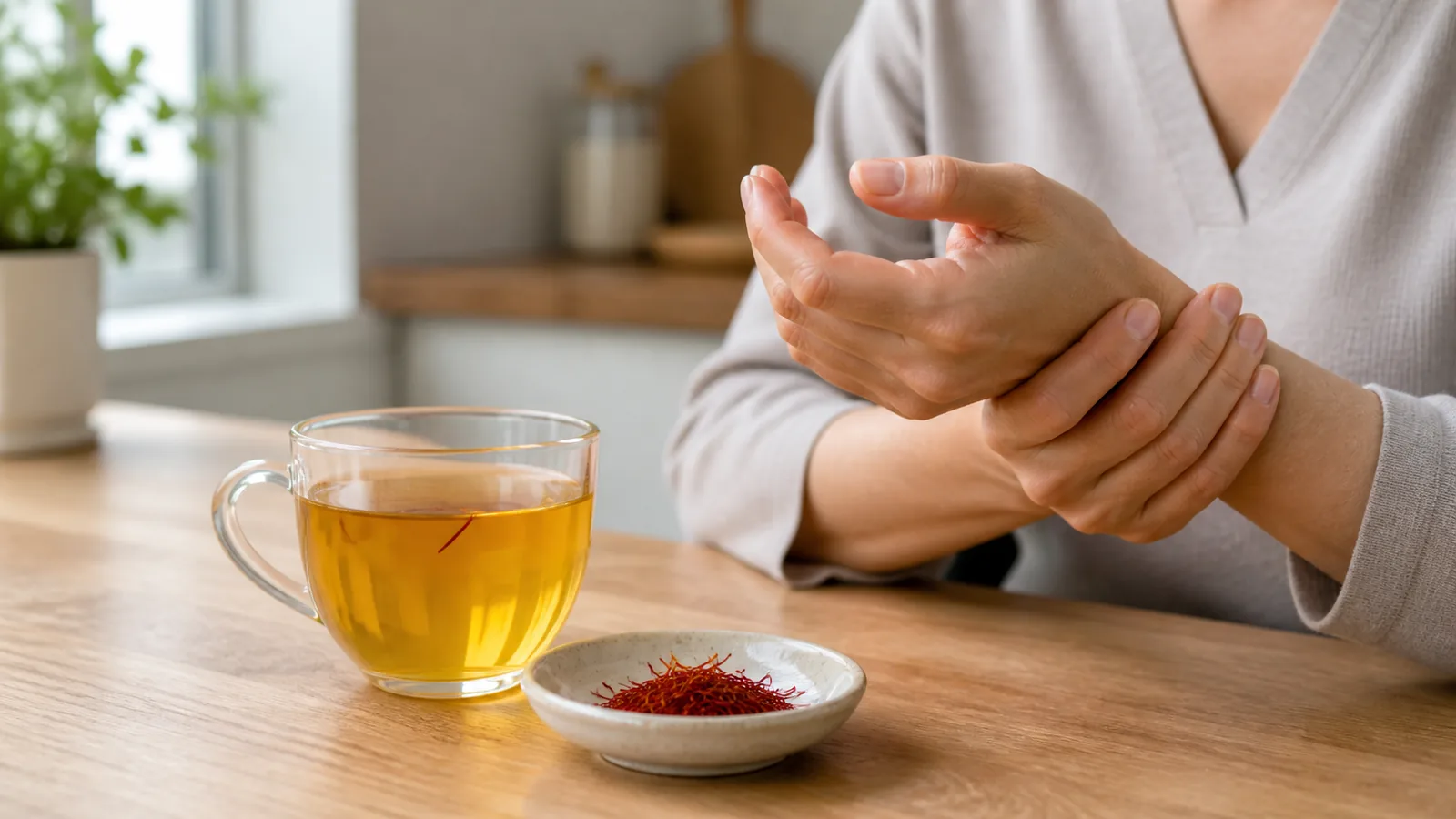
Saffron tea can be enjoyed as a drink. It should not be presented as equivalent to a study capsule or as a substitute for AMD treatment.
Does saffron tea raise metabolism?
The page’s stable URL and old Yoast text refer to raising body metabolism with saffron tea, so that subject remains important to answer. Human studies have examined saffron or crocin preparations in weight, appetite, glucose and lipid contexts, but results are not a licence to claim that ordinary tea “boosts metabolism.”
Metabolism is the collection of chemical processes that keep the body functioning, not a switch that one ingredient simply turns up. A tea made with substantial honey or sugar also adds energy. Anyone managing diabetes should count those sweeteners and follow their clinical plan rather than relying on saffron to regulate blood glucose.
The original list also called saffron antioxidant, anti-inflammatory, anticancer and antidepressant. Laboratory antioxidant or anti-inflammatory activity is not a general treatment claim. Depression trials use specified preparations under controlled conditions, while most anticancer findings remain preclinical. Tea should not replace cancer care, mental-health treatment or prescribed medicine.
Saffron and ginger tea
The earlier recipe said “4 pounds of water,” an impossible volume instruction caused by poor translation. For two moderate cups, use:
- 500 ml water;
- a small pinch of saffron threads;
- 2 or 3 thin slices of fresh ginger;
- a small piece of cinnamon stick, if wanted; and
- honey to taste, added after steeping.
- Bring the water just to a boil, then remove it from the heat.
- Add the saffron, ginger and cinnamon.
- Cover and steep for 10 to 15 minutes.
- Strain, taste and add only as much honey as you need.
There is no need to boil the saffron for a second 15 minutes as the old instructions appeared to suggest. Gentle covered steeping gives the threads time to release colour and aroma without reducing the drink to a harsh concentrate.
Moroccan-style green tea with saffron
The original page also included green tea, saffron, sugar and optional mint. This produces a fragrant tea, although it is better described as Moroccan-style because tea traditions and household recipes vary.
- 500 ml freshly boiled water;
- 2 teaspoons loose green tea;
- a small pinch of saffron threads;
- a few fresh mint leaves; and
- sugar to taste rather than the old quarter-cup default.
- Rinse the teapot with hot water. If desired, briefly rinse the green-tea leaves and discard that first splash.
- Add the leaves, saffron and mint to the pot.
- Pour in the hot water and steep for about three to five minutes.
- Strain and sweeten after tasting.
Green tea contains caffeine. People who are sensitive to it can reduce the quantity, steep more briefly or choose a caffeine-free drink.
What actually helps protect vision with age
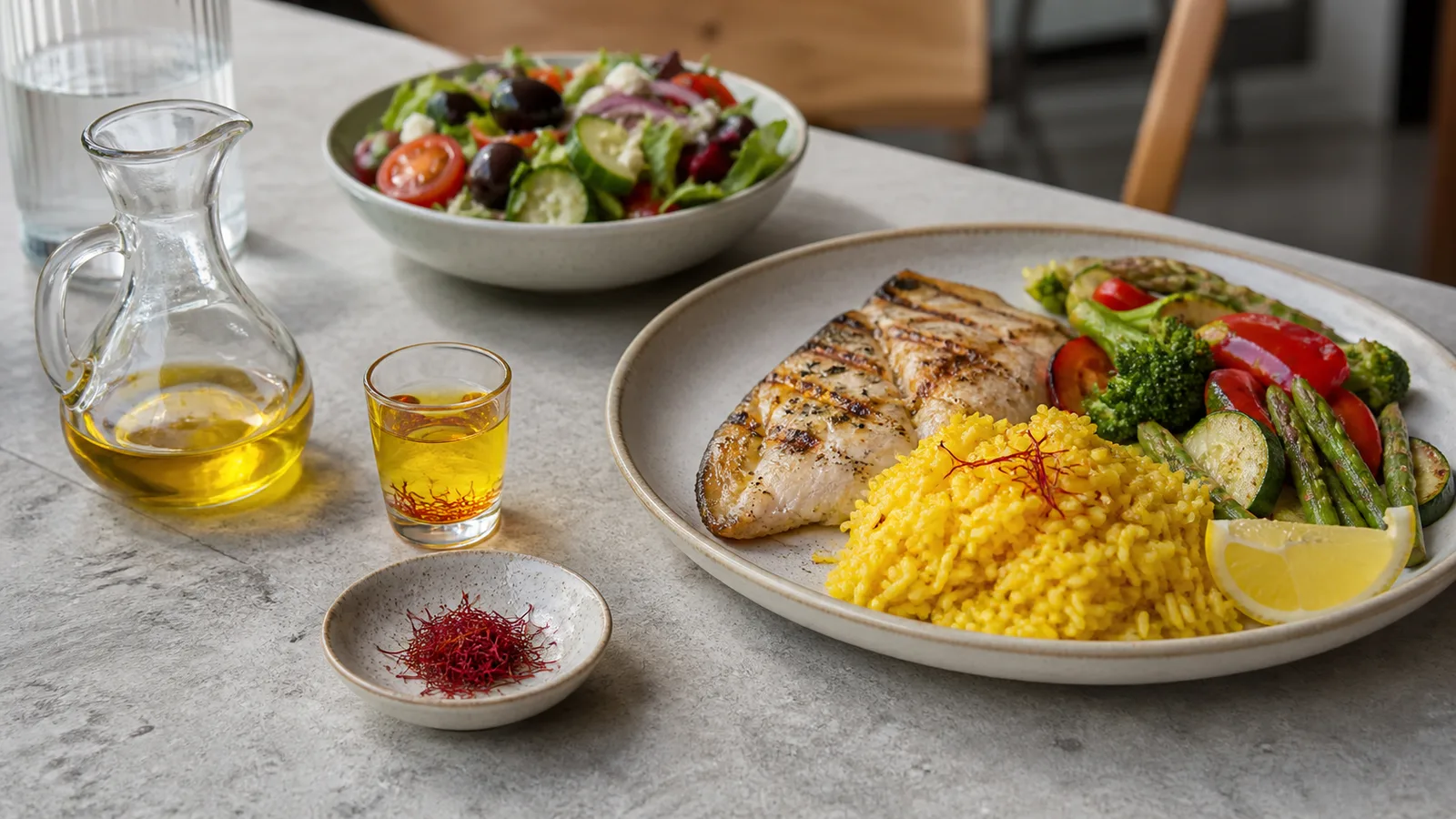
The US National Eye Institute recommends regular dilated eye examinations, especially when age or family history raises risk. Not smoking, staying physically active, maintaining healthy blood pressure and cholesterol, and eating a varied diet that includes leafy green vegetables and fish can help lower AMD risk or slow vision loss.
For some people with intermediate AMD, an ophthalmologist may recommend the specific AREDS2 vitamin-and-mineral formula. It is not intended for everyone and it does not prevent early AMD from becoming intermediate AMD. Wet AMD may require anti-VEGF injections or other prompt treatment. Saffron tea is not part of those established protocols.
Our evidence review of saffron and eyesight research looks at the same distinction from a broader vision perspective: interesting clinical signals are worth following, but preserving sight depends on diagnosis, disease stage and proven care.
A practical conclusion
Enjoy either saffron tea recipe for its flavour and aroma. If you are considering a concentrated saffron supplement because you have AMD, discuss the exact product with your ophthalmologist and do not replace prescribed treatment. A study result from a measured capsule cannot be transferred automatically to a cup containing “a few strings.”
Saffron and prevention of blindness in aging remains a legitimate research question. The honest answer today is that several small studies are promising, the clinical effect appears modest and uncertain, and established eye care still carries the weight of evidence.