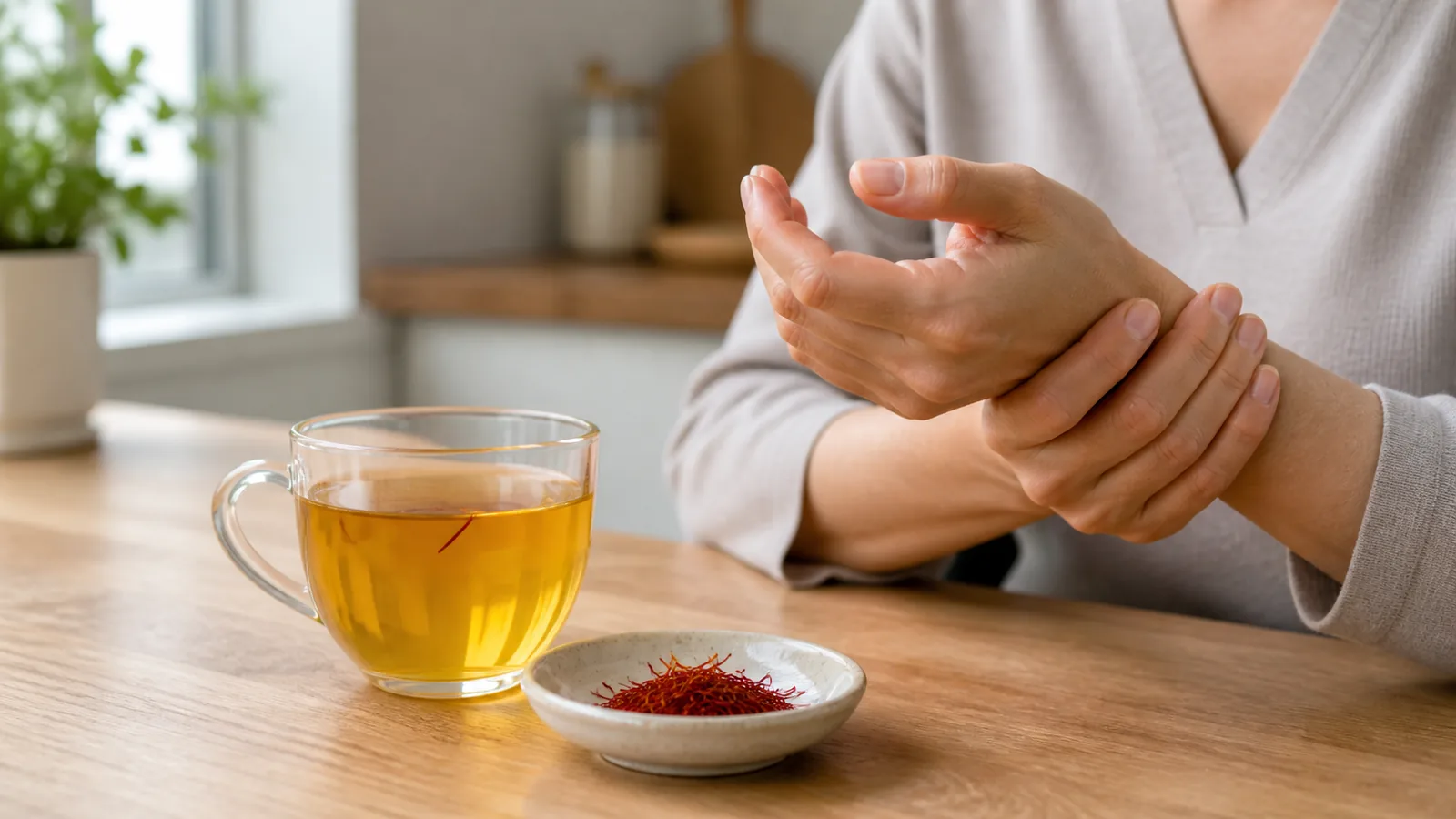
Poushali saffron is a commercial thread grade, not a special medicinal variety. Early research has examined saffron and its compounds in asthma and airway-inflammation models, but there is no good evidence that the Poushali grade treats coughs, bronchitis or another respiratory disease. The grade describes the cut and visible style material; health evidence concerns a particular saffron preparation used in a study.
This distinction corrects a common marketing shortcut. A buyer can compare Poushali saffron for appearance, purity and culinary value without assuming that its shape gives it a different therapeutic effect.
What Poushali saffron means
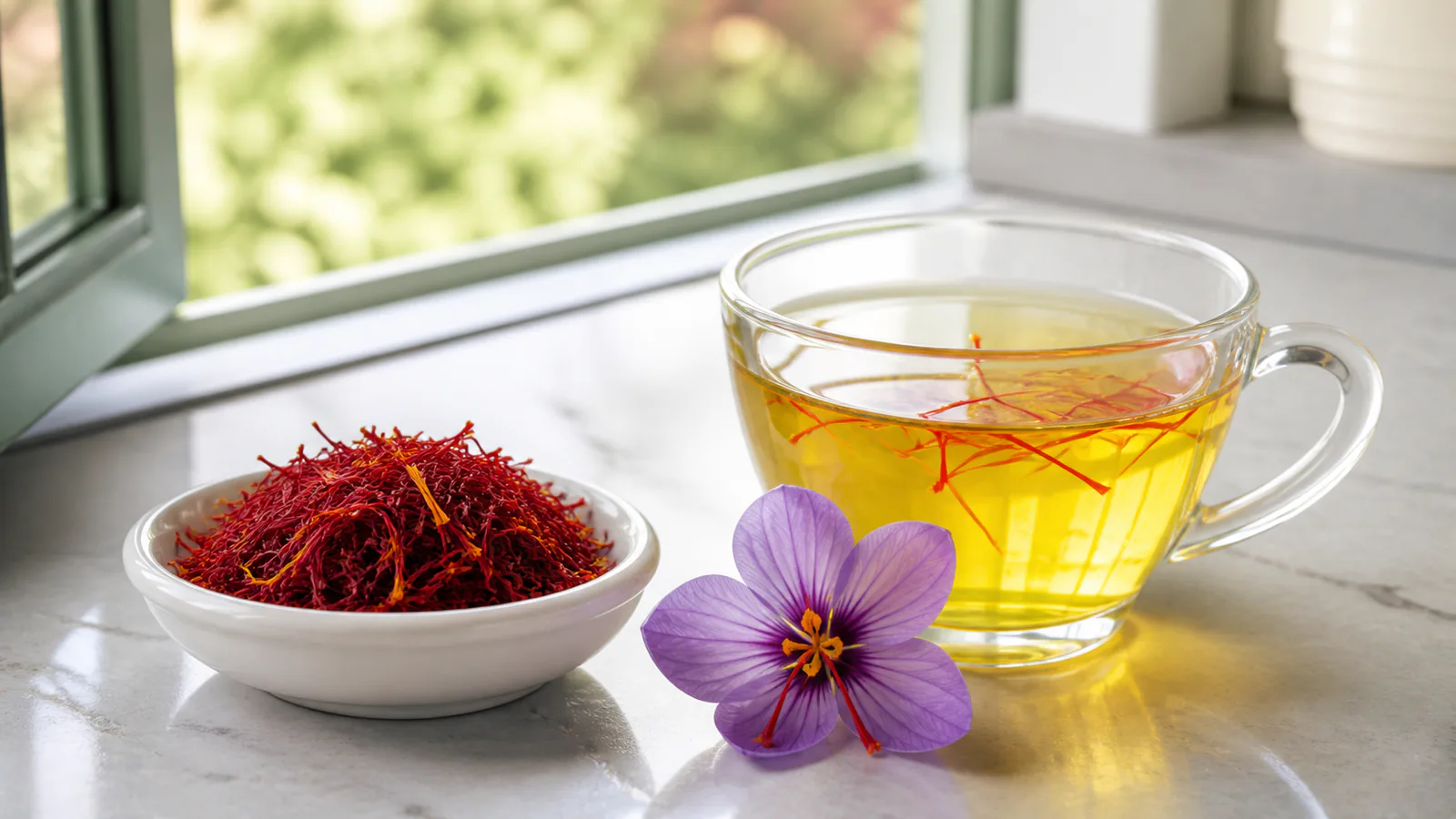
Poushali—also written Pushal or Poshal—usually refers to saffron threads in which the red stigma remains attached to a portion of the yellow or orange style. The visible transition can make the thread structure easier to recognise. The proportion of red and pale material, thread length and sorting quality still vary by supplier and batch.
Commercial names are not a substitute for a specification. The current ISO 3632-1:2025 saffron standard defines requirements for dried saffron in filament, cut-filament and powder forms. A buyer evaluating a large lot should ask for a recent batch test and check which specification and methods were actually used.
What the respiratory research actually studied
Most proposed respiratory mechanisms for saffron come from animal experiments. A 2024 systematic review and meta-analysis combined 13 studies involving 536 animals in an ovalbumin-induced asthma model. The studies reported changes in inflammatory cells, immune signals and measures of airway responsiveness.
Ovalbumin sensitisation is a controlled way to reproduce selected features of allergic airway inflammation. It is not the same as the varied triggers, severity, lung function, medicines and other conditions seen in people with asthma. The reviewers concluded that the findings supported further clinical trials, not routine treatment.
The small human asthma trial
A 2019 randomised placebo-controlled trial enrolled 80 adults with mild or moderate persistent allergic asthma. For eight weeks, participants received a defined saffron supplement or placebo alongside their existing care. The saffron group reported improvements in several symptom-frequency measures, while the difference in asthma severity was borderline rather than conventionally significant.
This is a useful clinical signal, but one small, short trial cannot establish long-term effectiveness or safety. It also did not show that saffron works as a rescue medicine during an asthma attack, or that a cup of saffron tea matches the tested capsules.
Does Poushali saffron treat a cough?
No reliable clinical evidence shows that Poushali saffron treats coughs. A cough is a symptom, not one disease. It may come from a viral infection, asthma, allergies, reflux, smoke exposure, a medicine or a more serious lung or heart problem.
A warm drink may feel soothing, and saffron can be used as a flavouring if it is otherwise appropriate for the person. That comfort should not be presented as evidence that saffron treats the cause of a cough.
Bronchitis and COPD are different questions
Acute bronchitis is commonly linked to infection and usually resolves with time, while chronic bronchitis is associated with ongoing airway disease. Chronic obstructive pulmonary disease (COPD) requires clinical diagnosis and an individual management plan.
A small trial has studied crocin in people with COPD and reported changes in selected inflammatory markers. A biomarker result does not by itself establish fewer exacerbations, easier breathing, improved exercise capacity or slower disease progression. Crocin, whole-saffron capsules and Poushali culinary threads are also not interchangeable preparations.
Why grade does not determine a health effect
Poushali, Negin and Sargol refer to how saffron threads are separated and presented. These categories can affect appearance, the percentage of red stigma and commercial price. They do not identify a clinically tested medicine.
Research results depend on botanical identity, purity, extraction, constituent levels, amount, duration and the people studied. A supplier should not imply that one thread grade relieves asthma or cough more effectively unless that exact comparison has been tested.
Safety for people with breathing conditions
Do not replace an inhaler or another prescribed respiratory medicine with saffron. Asthma symptoms can worsen quickly, and a rescue plan should be followed exactly as provided by a clinician.
Concentrated extracts deserve more caution than culinary use. People who are pregnant, preparing for surgery or taking several medicines should ask a clinician or pharmacist before using a saffron supplement. Product purity also matters: an allergy or reaction to an undeclared dye or plant material may be mistaken for a response to saffron itself.
When a cough needs medical attention
Seek urgent care for severe difficulty breathing, blue or grey lips, chest pain, confusion or coughing blood. Medical advice is also appropriate for a cough that persists, repeatedly wakes you, comes with fever or wheezing, or occurs in a young child or a person with existing lung disease.
How to buy Poushali saffron responsibly
- confirm that the product is genuine Crocus sativus stigma and style material;
- ask what the supplier means by Poushali and what red-to-style proportion is specified;
- check origin, lot number, harvest or packing information and storage conditions;
- request a batch-specific certificate of analysis for commercial quantities;
- treat respiratory claims as research questions, not as proof of medicinal quality.
Poushali saffron can be a useful, recognisable culinary grade. Respiratory research on saffron is still developing, and its results should remain attached to the preparation and study that produced them—not turned into a promise that Poushali saffron treats coughs.