


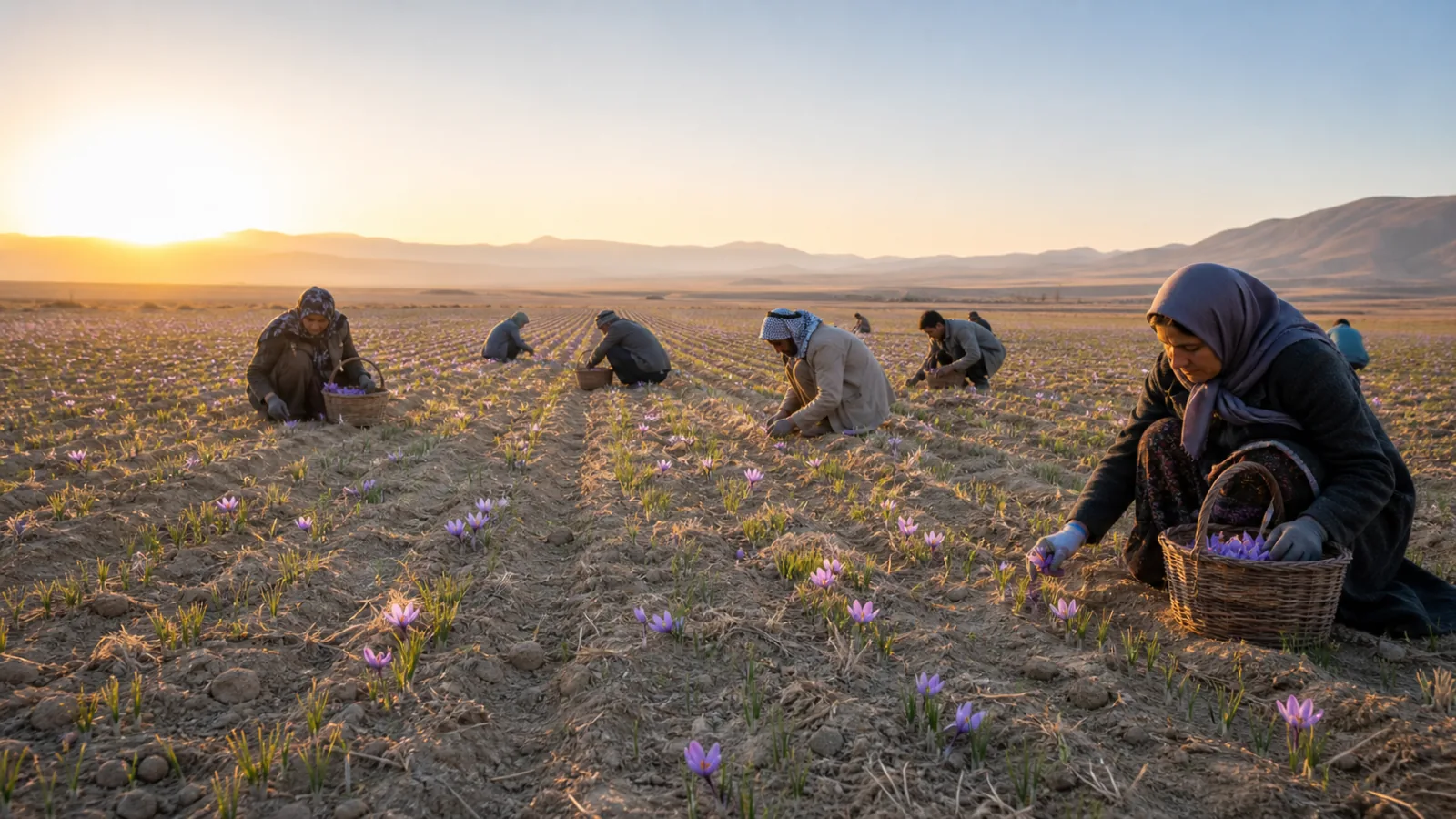
Planting saffron in a vast area of Sarayan city reflects more than a headline about acreage. The original report described a county where saffron farming supported seasonal work, made use of limited water and depended on keeping healthy planting corms available to local growers. It also captured a difficult policy question: how can authorities protect the region’s production base without preventing farmers from selling surplus corms through legitimate channels?
The figures below belong to the period of the report, published in 2018. They are not presented as current statistics. Agricultural area, productive acreage and harvest volume change from season to season, so dated numbers are most useful when they are treated as a snapshot rather than a permanent description of Sarayan.
The scale of saffron planting reported in Sarayan
Musa Soleymani, then identified as director of Sarayan’s Agricultural Jihad office, said that saffron covered 2,540 hectares of farmland in the county and produced more than 10 tonnes annually. The report placed Sarayan second within South Khorasan Province for saffron production.
A separate report from the same period gives a helpful comparison. It recorded 2,625 hectares under saffron, including 2,490 productive hectares and 135 hectares not yet productive, with an expected harvest of 10 tonnes. The small difference between the two area totals may reflect a later reporting date or a different count of productive and newly planted fields; it should not be hidden by choosing one figure and presenting it as exact for every year.
Those numbers show why saffron matters locally. Sarayan is not a trial site with a handful of demonstration plots. It is an established growing district in South Khorasan, one of Iran’s principal saffron regions. Later reporting has continued to identify Sarayan among the province’s largest saffron-growing counties, but each new figure needs its own date and source.
Why a lower-water crop still needs careful planning
Soleymani described saffron as a strategic crop that uses less water than many alternatives and contributes to employment in a drought-affected area. That does not mean saffron can be planted anywhere or grown without irrigation. It means its seasonal water pattern can suit some dry farming districts better than crops with heavy, continuous demand.
A field should still be assessed for soil condition, water quality and availability, drainage, climate and access to labour before corms are planted. A practical saffron planting guide can explain the cultivation sequence, but local agronomic advice remains essential because irrigation dates, planting depth and disease pressure vary with the site.
Research on rural development in South Khorasan has described saffron as a cash crop with modest water and machinery requirements but a high need for labour during flowering. That combination helps explain its appeal to small farms. It also reveals the constraint: a large planted area has little value if flowers cannot be picked and processed promptly.
Seasonal work is concentrated into a short harvest
The historical interview associated saffron with roughly 30 days of harvest employment. Work is compressed because flowers are collected soon after they open and the red stigmas must be separated carefully. Farms need enough pickers, suitable containers and a clean processing space before flowering begins; waiting until the crop is open leaves little room to solve labour or handling problems.
Employment is not limited to picking. Field preparation, corm selection, irrigation, weeding, flower transport, stigma separation, drying, grading and packing all contribute to the local chain. Still, it would be misleading to turn a month of intense seasonal activity into a promise of permanent employment for every household. The type and duration of work should be stated precisely.
Why saffron corm movement became a concern
The old text used the expression “saffron onion.” In cultivation, the more accurate English term is corm: the underground planting structure from which a saffron plant grows. Because saffron is generally propagated by corms rather than seed, the condition and movement of planting material affect the next production cycle.
Soleymani warned that unauthorized removal and smuggling of corms could weaken local employment and help establish production elsewhere, including Afghanistan. His argument was about unregulated movement, not a claim that every sale by a farmer was harmful. The same interview recognised the other side of the issue: after years of drought, growers might need income from selling corms when they could not expand their own fields.
The proposed answer was authorization through the local Agricultural Jihad authority. In practical terms, a controlled channel can distinguish a documented sale from smuggling, protect plant health and allow officials to monitor what leaves the county. This article does not provide current export or phytosanitary rules; anyone moving planting material must check the rules in force at the time.
What responsible expansion looks like
Expanding saffron cultivation is not simply a matter of increasing hectares. A sound plan connects the planted area with reliable water, healthy corms, trained labour, timely flower collection and a market able to handle the dried product. If one part is missing, a larger field can magnify losses rather than improve farm income.
For Sarayan, the historical evidence points to four practical priorities:
- Record fields accurately. Productive and newly planted hectares should be reported separately so expected output is realistic.
- Protect corm quality. Planting material should be healthy, traceable and moved through lawful channels rather than informal cross-border trade.
- Plan for the harvest window. Labour and hygienic handling capacity must be ready before the first flush of flowers.
- Treat water claims carefully. Saffron may have a favourable seasonal demand, but every field still needs a viable water and soil plan.
This is the enduring lesson behind planting saffron across a vast area of Sarayan city. Acreage demonstrates the crop’s importance, while responsible management determines whether that acreage supports farmers over the life of the field. The 2018 report is valuable as a record of that balance: safeguarding local production, creating seasonal work and giving drought-affected farmers a legal way to earn from their corms.
Sources and date context
- The original Rowhani Saffron post, based on a Mehr News interview with Musa Soleymani, supplied the 2,540-hectare figure and the comments on employment, drought and authorized corm movement.
- Tasnim’s 2017 report from Sarayan recorded 2,625 hectares, the productive/non-productive split, the 10-tonne forecast and farm-management advice.
- The Japan International Cooperation Agency’s South Khorasan rural-development study documented saffron’s regional role, labour requirements and comparatively low water and machinery demands.

![Exporting Saffron to Turkey + Price Guide [Complete 0 to 100]](https://img.rowhanisaffron.com/20260827003933/saffron-export-turkey-quality-inspection.webp)



