A saffron face mask can add a pleasant, temporary glow and a softer feel when it is made with gentle ingredients and used carefully. What it cannot do is cure acne, erase sun damage, or permanently lighten skin. The practical recipes below keep those limits clear: they use a small saffron infusion, avoid harsh scrubbing, and give you a base suited to dry, oily, or sensitive skin.
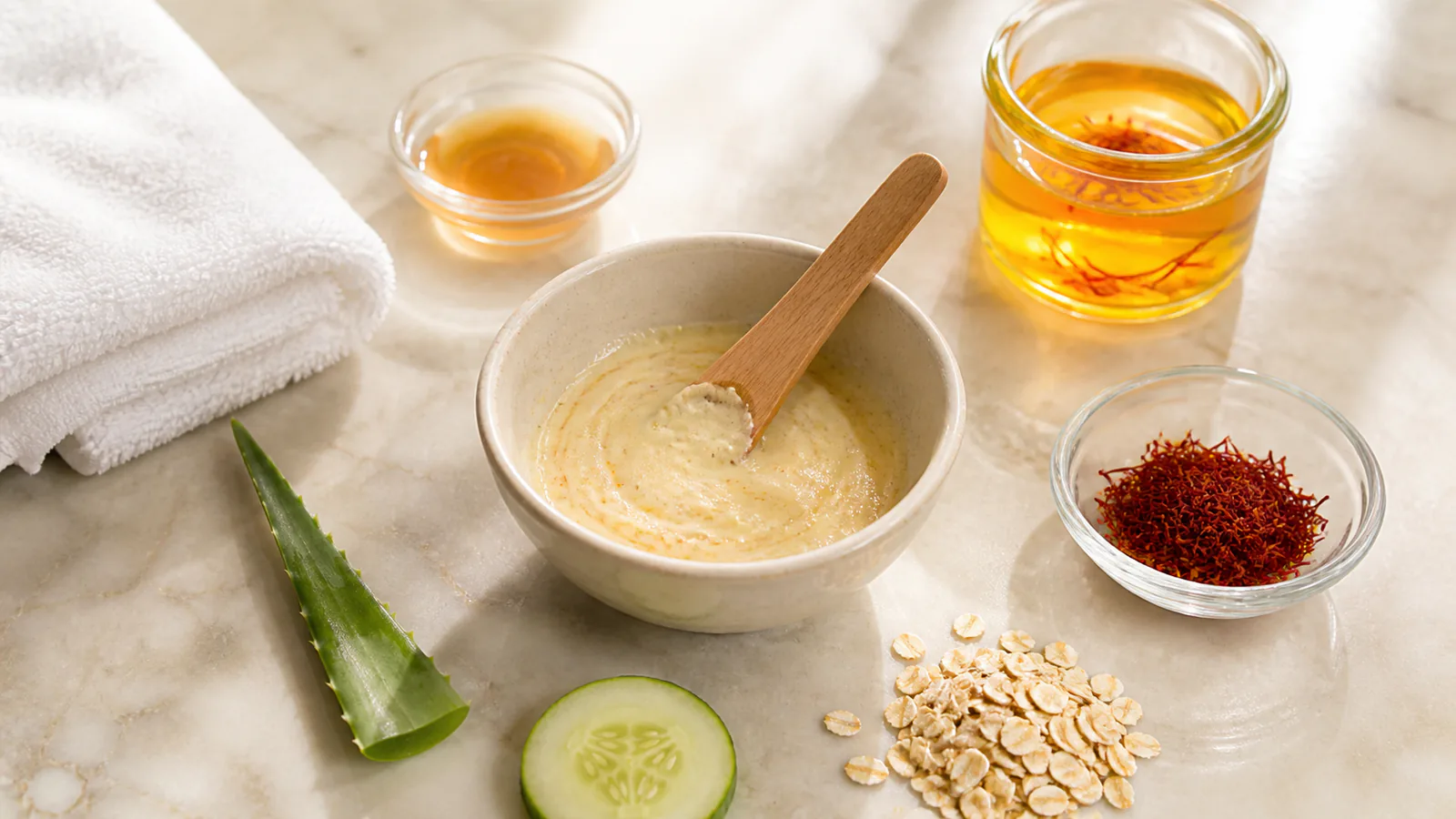
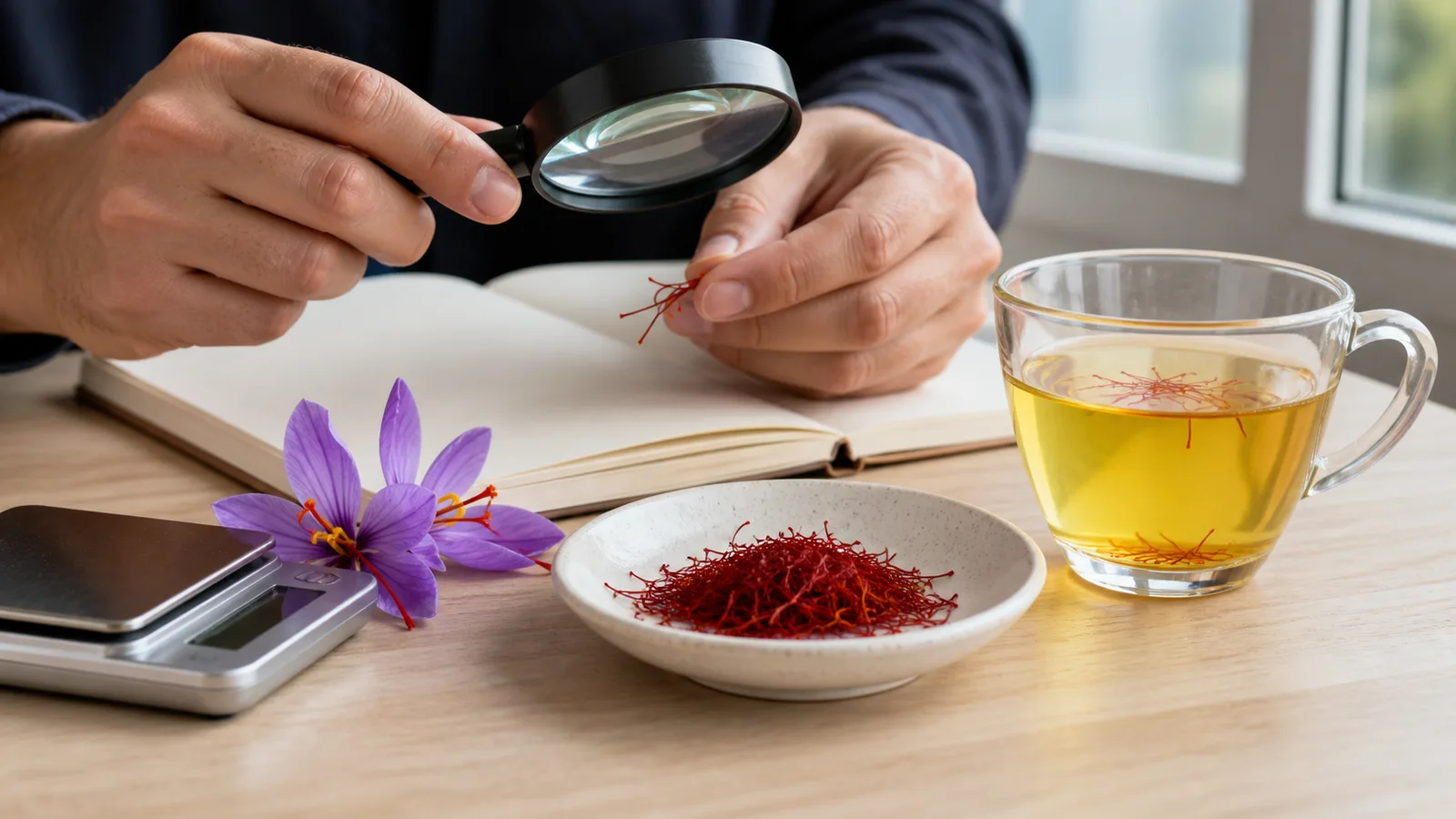
Start by blooming 6 to 10 saffron threads in 1 teaspoon of warm water for 10 minutes. That makes enough saffron infusion for one mask. Use clean utensils, prepare only what you need, and do not save a mixture containing milk, yogurt, fruit, or fresh leaves.
Saffron face mask benefits: what the evidence really says
Saffron contains crocin, crocetin, and safranal. Laboratory studies have found antioxidant and other skin-related activity in these compounds, and a review of saffron’s dermoprotective research describes its potential in cosmetic formulations. A small clinical study also tested a professionally formulated cream containing saffron extract and avocado oil. Those findings are interesting, but a measured cosmetic formula is not the same as mixing culinary saffron in a kitchen bowl.
That distinction matters. Evidence for homemade saffron masks is limited, so the recipes here are for a brief cosmetic ritual, not medical treatment. Their most dependable immediate effect comes from the moist base and the time spent leaving skin alone. If you have persistent acne, eczema, melasma, an infected area, or a changing skin lesion, speak with a dermatologist instead of treating it with a spice mixture.
Before you put any homemade mask on your face
- Patch-test the complete mixture on a small area of the inner arm and wait 24 hours before facial use.
- Apply it to clean, unbroken skin. Keep it away from the eyes and lips.
- Leave it on for 10 to 15 minutes unless a shorter time is specified, then rinse with lukewarm water.
- Wash it off at once if it burns, stings, itches, or causes swelling.
- Begin no more than once a week. More frequent use is not automatically better.
- Follow with your usual fragrance-free moisturizer and daytime sunscreen.
The American Academy of Dermatology’s facial-mask guidance makes the same central points: choose ingredients for your skin, test first, avoid irritating combinations, and remember that a mask does not replace cleansing, moisturizing, or sun protection.
10 gentle saffron face masks
1. Saffron and honey mask for dry-feeling skin
Stir 1 teaspoon of plain honey into the prepared saffron infusion. Spread a thin layer over the face, leave it for 10 minutes, and rinse thoroughly. The mixture is sticky, so tie back your hair and use less rather than more. Skip this recipe if you react to honey or other bee products.
2. Saffron, milk, and white sandalwood mask
Soak 6 to 8 threads in 2 teaspoons of milk for about 30 minutes. Add enough cosmetic-grade white sandalwood powder to make a loose paste, apply for up to 10 minutes, and rinse without rubbing. This is the milk-and-sandalwood preparation described in the older article being consolidated here. It is traditionally used for a brighter-looking complexion, but that outcome has not been established for this homemade formula. Fragrant sandalwood can trigger contact dermatitis, so a patch test is especially important.
3. Saffron and rosewater compress
Bloom the threads in 2 teaspoons of plain, fragrance-free rosewater. Soak a clean reusable cotton pad or soft cloth in the liquid, press it gently over the skin, and rinse after 5 to 10 minutes. Do not call it a cleanser unless you have already removed makeup and sunscreen; colored water does not reliably remove oil-based products.
4. Saffron, yogurt, and oat mask
Combine 1 teaspoon of plain, unsweetened yogurt, 1 teaspoon of finely ground colloidal oatmeal, and half a teaspoon of saffron infusion. Leave the smooth mixture on for 10 minutes. Rinse with water and your fingertips rather than using the oats as a scrub. This is a comfortable option when you want a thicker mask without clay.
5. Saffron and aloe gel mask
Mix equal amounts of saffron infusion and plain aloe vera gel. Check the gel’s label first: added fragrance, alcohol, or strong colorants can defeat the purpose of a simple mask. Apply a thin layer for 10 minutes, then rinse. Do not put aloe or saffron on a fresh burn, blistered skin, or an open wound.
6. Overnight saffron infusion for dull-looking skin
Place 6 threads in 1 tablespoon of cool water, cover it, and refrigerate overnight. The next day, mix 1 teaspoon of the infusion with 1 teaspoon of oat flour or colloidal oatmeal and apply for 10 minutes. The older source proposed this method for darkening after sunburn. It may provide a cooling cosmetic step after the skin has fully healed, but it does not reverse ultraviolet damage. A broad-spectrum sunscreen is the useful preventive step.
7. Saffron and cucumber mask
Grate a small piece of peeled cucumber and press out most of the excess liquid. Mix 1 tablespoon of the pulp with half a teaspoon of saffron infusion. Apply for 10 minutes while reclining, because this mask does not set. Its cool, wet texture can feel refreshing; that is a sensory benefit, not a treatment claim.
8. Saffron and turmeric mask
Mix 1 teaspoon of plain yogurt, half a teaspoon of saffron infusion, and only a tiny pinch of culinary turmeric. Leave it on for 5 to 8 minutes. Both spices can stain fabric, and turmeric may temporarily tint very fair skin, so keep the quantity small and protect your clothing.
9. Saffron and kaolin mask for oily-feeling areas
Add saffron infusion to 1 teaspoon of cosmetic-grade kaolin clay a few drops at a time until it spreads easily. Apply it only to oily areas and rinse before it becomes tight or cracked, usually within 5 minutes. Clay can leave dry or sensitive skin uncomfortable; this is not the right choice if your skin barrier is already irritated.
10. Saffron, avocado, and oat mask
Mash 1 teaspoon of ripe avocado until no lumps remain. Add half a teaspoon each of finely ground oatmeal and saffron infusion. Apply for 10 minutes and rinse well. The recipe gives you an emollient, easy-to-spread base, but it should not be confused with the standardized saffron-extract and avocado-oil cream used in clinical research.
What about lemon, basil, acne, and sunburn?
Earlier versions of these two articles recommended saffron with lemon for dry skin, basil leaves for acne, and an overnight infusion for sunburn marks. Those promises were stronger than the evidence.
We have left lemon juice out of the recipes because its acidity is difficult to control and citrus on skin can contribute to irritation and light-related reactions. Basil and saffron paste has not been shown to treat acne. If you still choose to patch-test a basil mixture as a cosmetic mask, do not place it over inflamed or broken spots, and stop if it stings. Acne that scars, hurts, or does not improve deserves evidence-based care from a dermatologist. Likewise, a saffron mask is not first aid for sunburn: cool the skin, protect it from further sun, and seek medical advice for blistering or severe symptoms.
How to choose saffron for a face mask
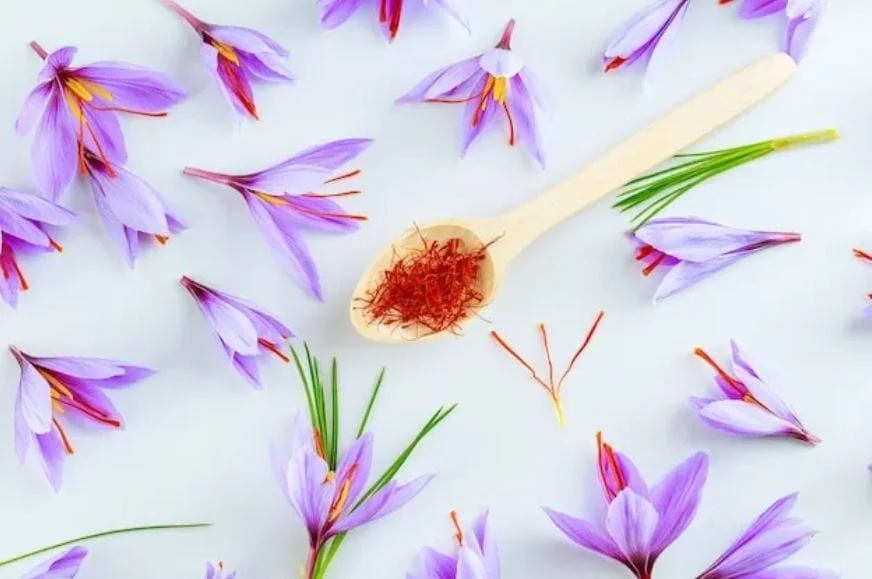
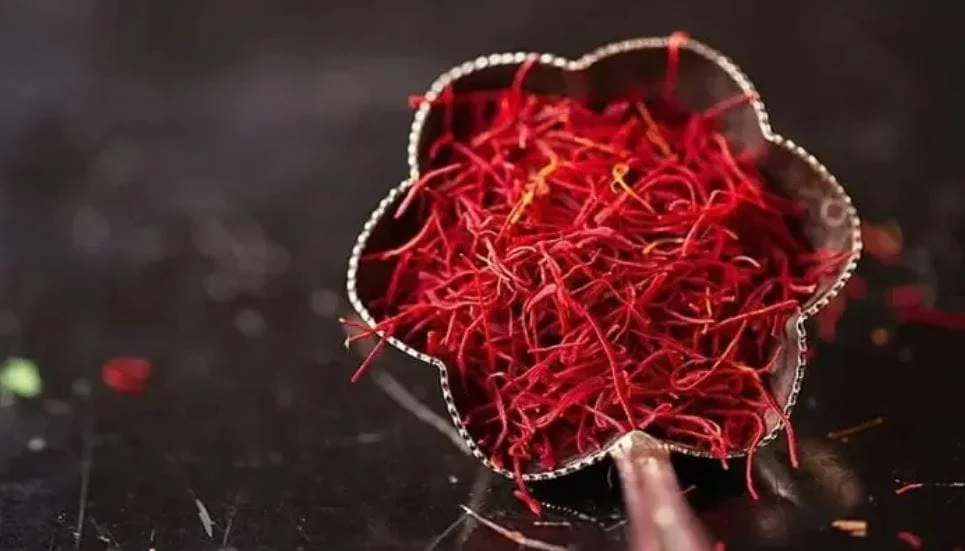
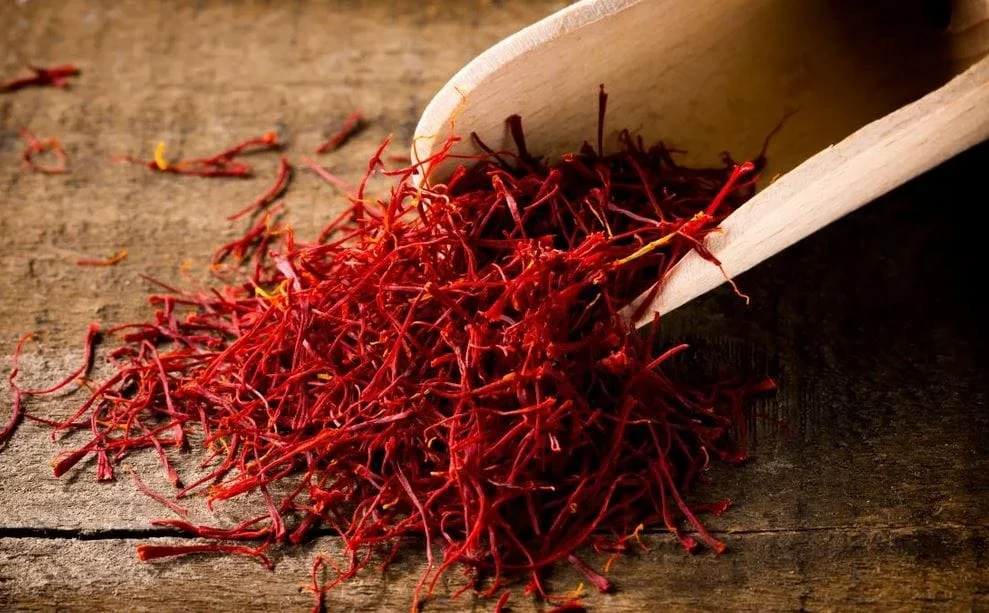
Use a few whole threads from a supplier you trust. Threads are easier to inspect than powder and less likely to contain an unknown blend. Genuine saffron stigmas are deep red, often with a slightly lighter flared end, and release a golden-yellow color and characteristic aroma when infused. An instant cloud of vivid red dye is a warning sign, but a home water test cannot certify purity or grade. For a fuller buying check, use our guide to buying high-quality saffron.
Do not use a product that smells musty, shows moisture damage, or contains unidentified particles. Skin is not a place to test suspicious saffron.
Store the saffron, not the leftover mask
Keep unused threads in an airtight glass or metal container in a cool, dry, dark cupboard. Light, heat, air, and moisture gradually weaken saffron’s aroma and color. Grind only the small amount you need, because the greater exposed surface area makes powder lose quality faster. Our saffron storage guide covers the details.
Discard every leftover homemade face mask after use. A kitchen mixture has no cosmetic preservative system, and refrigeration does not make it safe to keep indefinitely. Fresh preparation, a clean bowl, and a cautious patch test are more valuable than a complicated recipe.