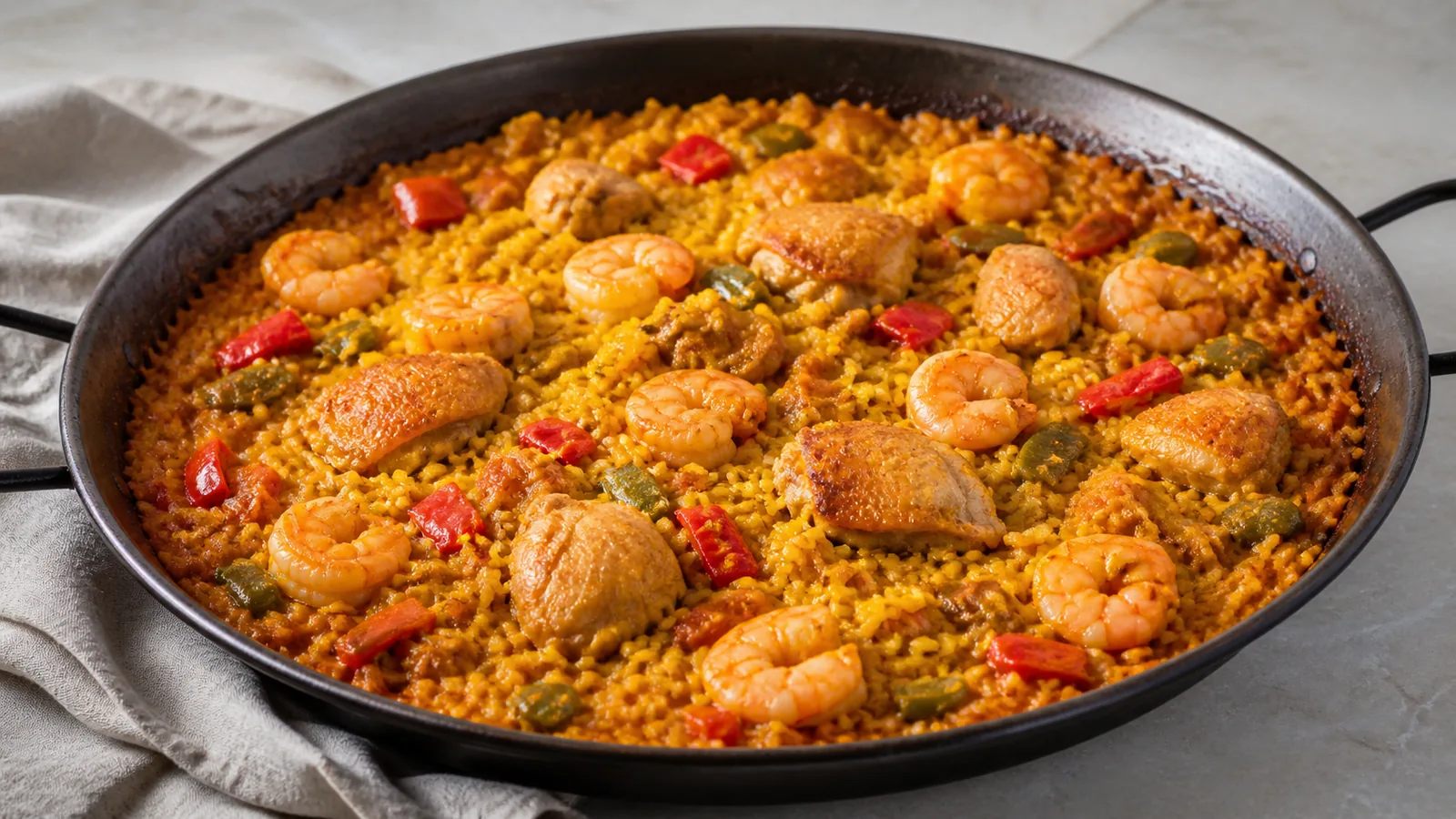
This payla saffron recipe is a chicken-and-shrimp rice dish cooked in a wide pan with peppers, tomato, garlic and saffron. “Payla” is a common search spelling of paella, the Spanish rice dish; this version keeps the ingredients and gentle cooking style of the original Rowhani recipe.
What is a payla dish?
Payla rice, also searched as payla food, refers here to paella. The rice cooks in a seasoned liquid rather than being boiled and drained, so it absorbs the flavour of the chicken, tomato, saffron and peppers. A broad, shallow pan helps the liquid reduce evenly and gives more of the rice direct contact with the heat.
This is a generous recipe for a gathering. Use the widest heavy-based pan you have; if the ingredients sit in a very deep layer, divide them between two pans so the rice cooks evenly.
Ingredients
- 600 g short- or medium-grain rice
- 1 chicken, about 1 kg, cut into serving pieces
- 500 g raw shrimp, peeled and deveined
- 3 to 4 garlic cloves, thinly sliced
- 1 small onion, finely chopped
- 1 tablespoon tomato paste
- 2 to 3 red and green bell peppers, cut into small squares
- 150 ml neutral cooking oil, divided
- 1 teaspoon finely ground saffron
- 5 to 6 cups warm water or unsalted chicken stock
- Salt and black pepper, to taste
How much saffron should you use in paella?
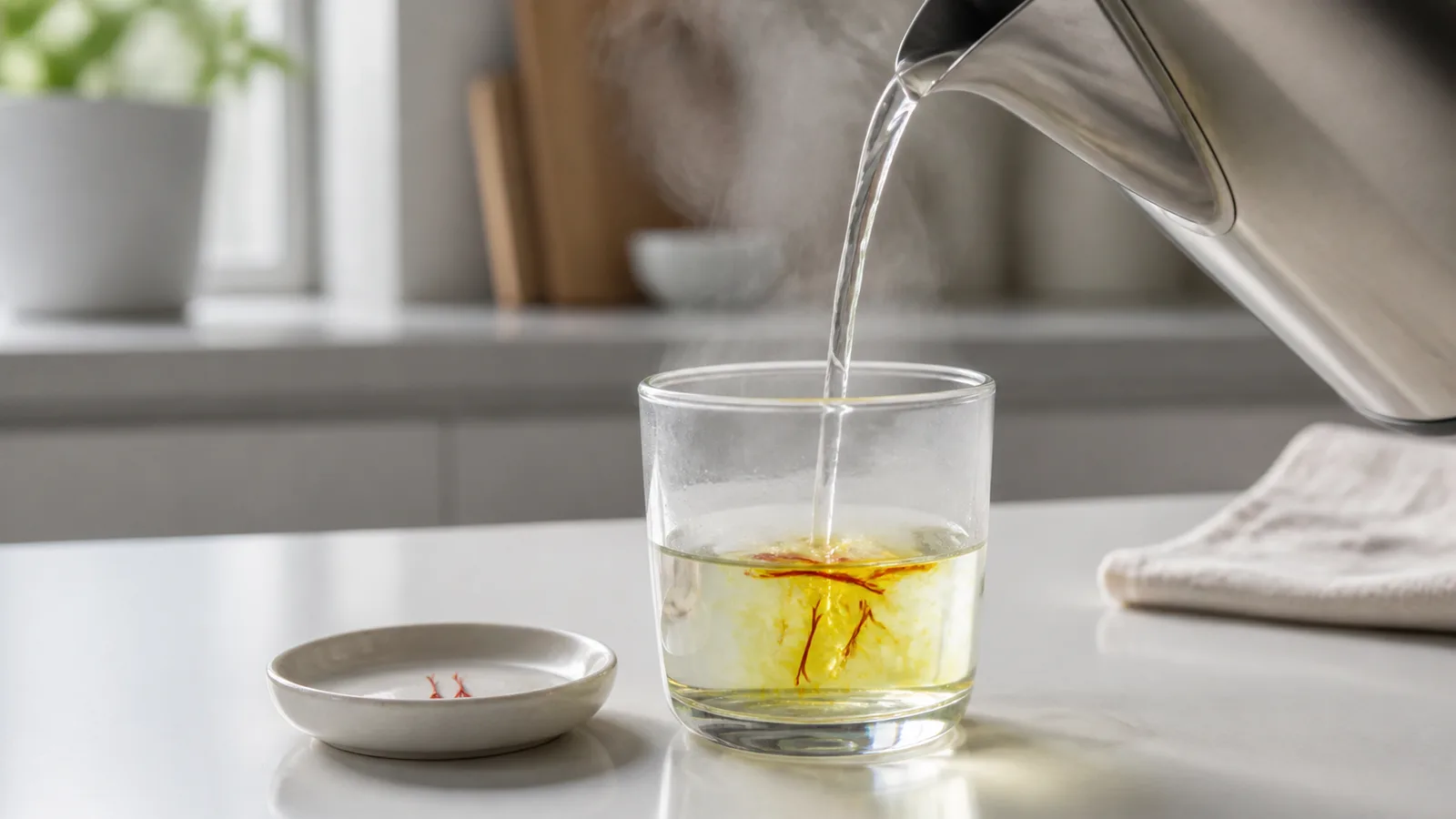
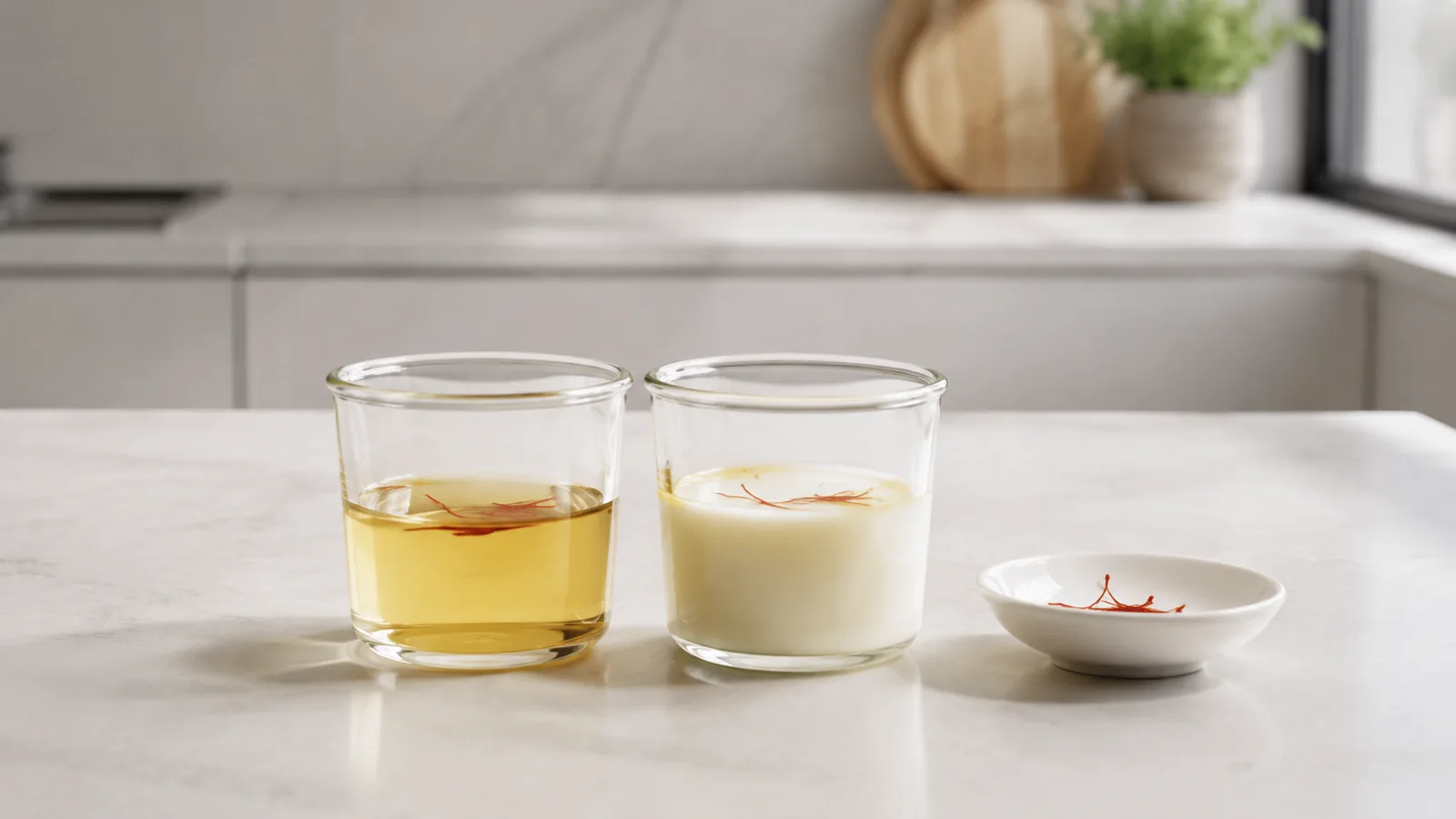
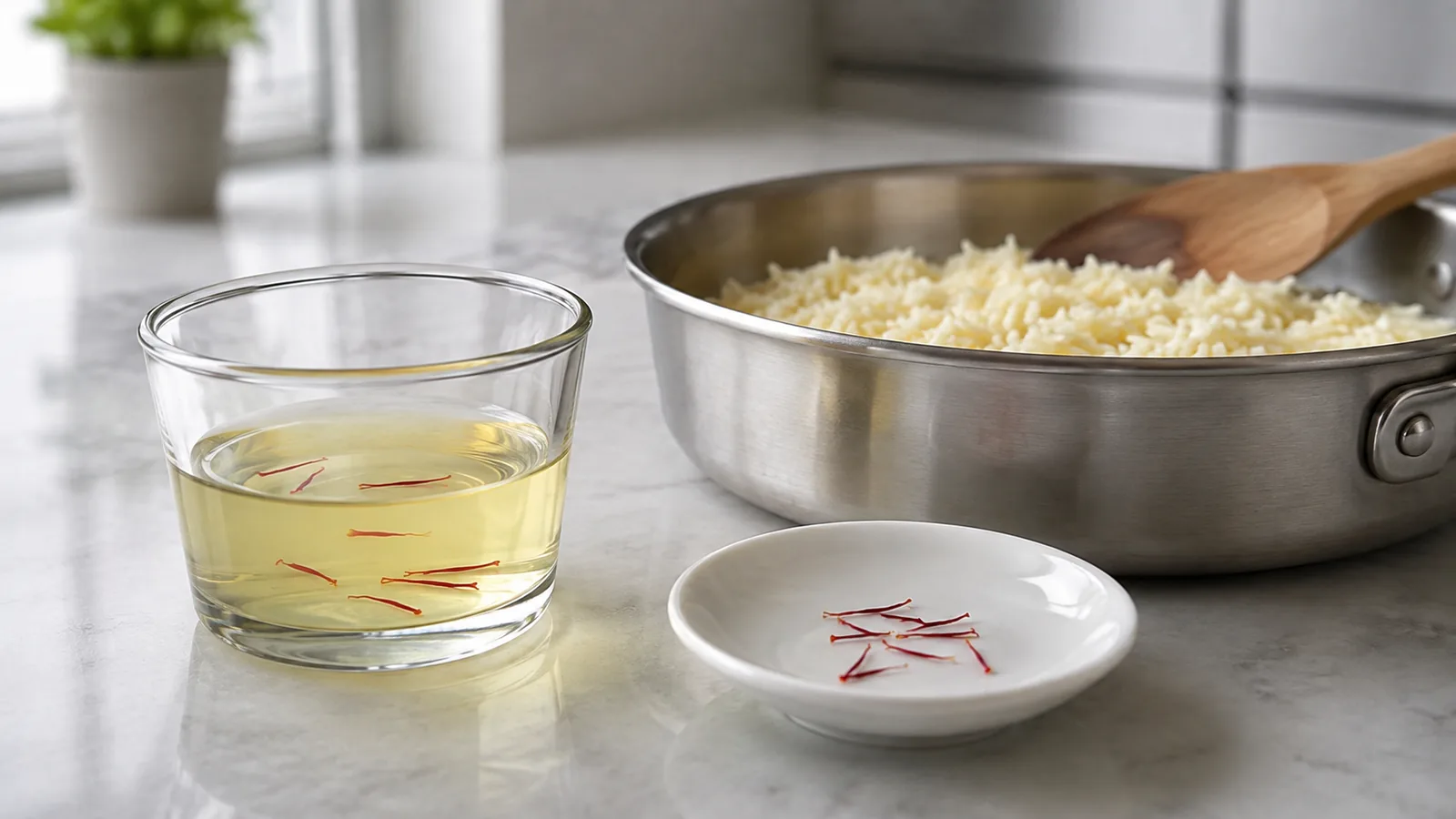
For the 600 g of rice in this payla recipe, use 1 level teaspoon of finely ground saffron. Bloom it in 4 tablespoons of warm water before it goes into the pan. That spreads the colour and aroma more evenly than adding dry saffron directly to the rice. Our saffron-brewing guide covers the method in detail.
Saffron varies in strength. If yours is especially aromatic, begin with a little less; adding more spice does not rescue rice that has been overcooked or heavily salted.
Cook the chicken
Season the chicken lightly with salt and pepper. Warm 2 tablespoons of the oil in the pan and brown the pieces on both sides. Add the onion, 1 or 2 sliced garlic cloves and 1/2 cup water. Cover and simmer gently until the chicken is nearly cooked through and a small amount of liquid remains.
Move the chicken to a plate. Strain and reserve the cooking liquid, then remove the meat from the bones when it is cool enough to handle. Cut it into bite-size pieces rather than shredding it finely.
Prepare the shrimp and peppers
Pat the shrimp dry. Add about 50 ml of the remaining oil to the pan and warm it over medium heat. Cook the rest of the sliced garlic for 20 to 30 seconds, then add the red and green peppers. Stir for 3 minutes so they begin to soften but keep their shape.
Add the shrimp, a pinch of pepper and half of the bloomed saffron. Cook only until the shrimp begin to turn pink and opaque; they will finish cooking with the rice. Transfer the shrimp and peppers to the plate with the chicken.
Cook the payla rice
Add the tomato paste to the pan and cook it for a minute. Stir in the rinsed rice, the reserved chicken liquid and 5 cups of warm water or stock. Season cautiously, bring to a steady simmer and cook uncovered for about 10 minutes.
Arrange the chicken, shrimp and peppers evenly over the rice. Pour the remaining saffron infusion across the surface. Lower the heat and continue cooking without stirring for 15 to 20 minutes, or until the rice is tender and most of the liquid has been absorbed. Add some of the final cup of warm water only if the rice is still firm and the pan is dry.
For a lightly crisp base, listen near the end: the sound should change from bubbling liquid to a gentle crackle. Do not turn up the heat sharply, because the bottom can burn before the centre is ready.
Rest and serve
Take the pan off the heat, cover it loosely with a clean tea towel and let the rice rest for 5 to 10 minutes. Bring the pan to the table and serve from the edges inward so each portion gets rice, chicken, shrimp and peppers.
Check the chicken at its thickest point before serving. The official benchmark is 74°C (165°F); shrimp should be pearly and opaque. The US government safe-temperature chart gives the current guidance.
Practical notes
- Do not keep stirring: once the liquid is in, leave the rice in place so the grains and base can set.
- Use unsalted stock: reducing salty stock can make the finished dish too strongly seasoned.
- Watch the shrimp: adding them partway through keeps them tender.
- No tomato paste: the original recipe allows a small pinch of turmeric in the cooking liquid instead, although the finished flavour will be different.
This recipe contains shellfish. Keep raw shrimp and chicken separate from cooked ingredients, and wash the board, knife and hands that touched them before continuing.