


The sale and price of saffron are insured in the stock exchange was the headline used for a historical interview about Iranian saffron options. “Insured” is an imprecise translation. An option can limit a defined part of price risk when it matches a real saffron exposure, but it does not insure the crop, guarantee a buyer or lock in profit under every market condition.
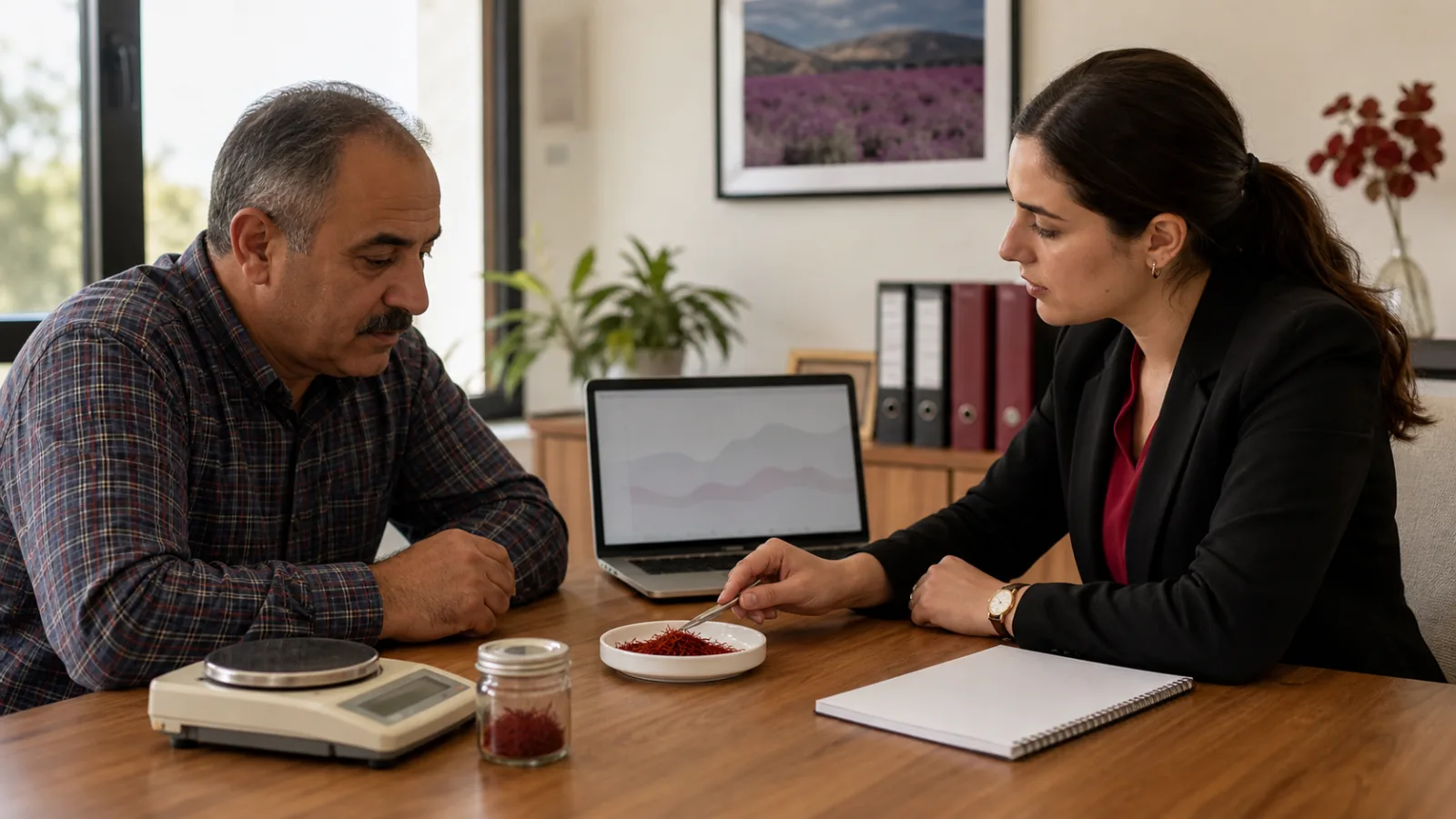
Mohammad Reza Khajeh Nasiri, then identified as managing director of Tamaddon Capital, discussed the planned launch of saffron option contracts after earlier exchange instruments such as saffron futures and warehouse deposit certificates had attracted interest. His case was that producers and other economic participants needed more ways to manage future price risk as prices and exchange rates became harder to predict.
What an option gives a saffron seller
An option gives its buyer a right, but not an obligation, to buy or sell at a stated price under specified terms. The buyer pays a premium for that right. A put option is the form most readily associated with a producer who wants protection against a fall: if the relevant price drops below the strike price, the option may gain value; if the market rises, the producer can let the option expire and sell physical saffron at the higher cash price.
The US Commodity Futures Trading Commission’s agricultural-options guidance describes these instruments as tools for managing agricultural price exposure. Its explanation also makes the trade-off clear: the purchaser pays a premium, and protection applies only according to the contract’s strike price, expiry and underlying commodity.
That is why “minimal and specific risk” in the translated interview needs context. A buyer’s option risk may be limited to the premium in a simple structure, but the commercial business around it still carries crop, quality, basis, exchange-rate, delivery and counterparty risks. The option seller has a different obligation and risk profile.
Options, futures and deposit certificates are not the same
The interview referred to several exchange tools that serve different jobs:
- A saffron deposit certificate represents an eligible quantity held through an approved warehouse system. Its usefulness depends on sampling, grade, custody and delivery records.
- A futures contract obliges the parties under the contract’s rules unless the position is closed or otherwise settled.
- An option gives its purchaser a defined choice. A put concerns the right to sell; a call concerns the right to buy.
None of these instruments changes the physical quality of a lot. A hedge is only as relevant as the relationship between the contract and the saffron that a farmer, processor or exporter actually expects to sell or buy.
Why volatility increased interest in risk tools
Khajeh Nasiri argued that risk-management tools become more valuable when economic variables fluctuate and future prices are difficult to forecast. He singled out exchange-rate changes because they can affect export returns, domestic costs and expectations about future saffron prices.
An option may create a price floor or ceiling for a defined exposure, depending on the position. It cannot make the market stable. Nor does it make a participant “secure” in the everyday meaning of that word. Premium cost, liquidity, contract size, expiry, exercise rules and the difference between the futures reference and the physical cash price all matter.
The CFTC’s commodity futures and options overview describes these markets as complex and volatile and urges participants to understand every obligation. This article explains market mechanics, not whether any person should trade.
Moving price risk out of private physical dealing
One argument in the interview was that futures and options could draw some price-risk taking and speculative activity away from opaque physical dealing and into a recorded financial market. Public bids, offers and completed transactions can improve price transparency by making price formation easier to observe. A clearing and rule framework may also standardise how a position is handled.
That does not eliminate speculation or prevent manipulation by itself, and it cannot guarantee market stability. A healthy market still needs oversight, enforceable position and delivery rules, reliable warehouse controls and enough independent participants. Financial trading should remain connected to the grade, volume and delivery economics of the underlying saffron.
Why professional intermediaries were expected to matter
Khajeh Nasiri expected saffron options to receive interest because agricultural participants had already used futures and saffron deposit certificates. He also anticipated a learning period for the traditional physical market.
In his view, specialist funds and financial institutions could make services easier to use and deepen the market, instead of asking every farmer or small investor to trade a commodity instrument directly. That distinction is sensible only when intermediaries are competent, transparent about costs and conflicts, and subject to appropriate rules. More accounts do not necessarily mean better liquidity; market depth requires genuine, executable interest across prices and contract months.
Could exchange trading improve world saffron price discovery?
The interview also asked whether Iran’s exchange could become a reference for the world price of saffron. Khajeh Nasiri’s answer linked better price discovery to higher trading volume, stronger infrastructure and financial institutions connecting farmers, producers and the market. As depth increases, he argued, the market can respond faster and produce a more informative price.
That possibility should not be confused with controlling a global price. International buyers compare specific grades, origins, currencies and delivery destinations. An Iranian exchange quotation becomes influential when it represents repeatable physical quality and trade that overseas participants consider relevant. Our earlier discussion of saffron price discovery through the Iran Mercantile Exchange sets out those limits.
What the original “insured” claim should mean in practice
The useful idea behind the headline is narrower than insurance. A producer may pay for the right to sell at a defined strike price, or a commercial buyer may pay for the right to buy at one. That can make a particular adverse price move less damaging while leaving some favourable price potential open.
For the mechanism to help Iran’s saffron sector, contract design must fit real crop quantities, accepted grades and delivery patterns. Participants must understand the premium and obligations, warehouse quality must be dependable, and the published market must have enough depth to support meaningful prices. Options can be part of transparent risk management; they cannot replace sound production, testing, sales or export work.

![Exporting Saffron to Turkey + Price Guide [Complete 0 to 100]](https://img.rowhanisaffron.com/20260827003933/saffron-export-turkey-quality-inspection.webp)



