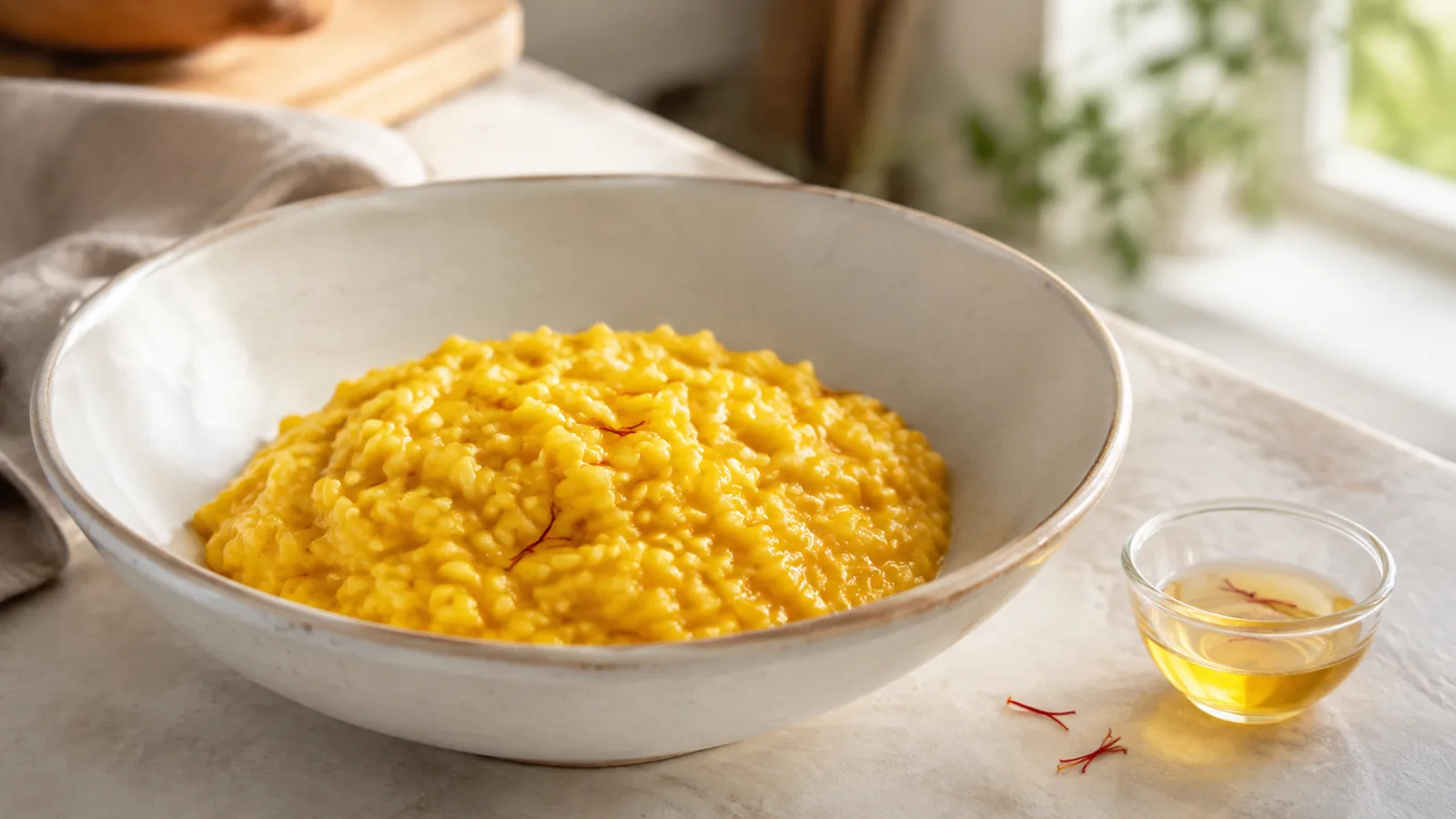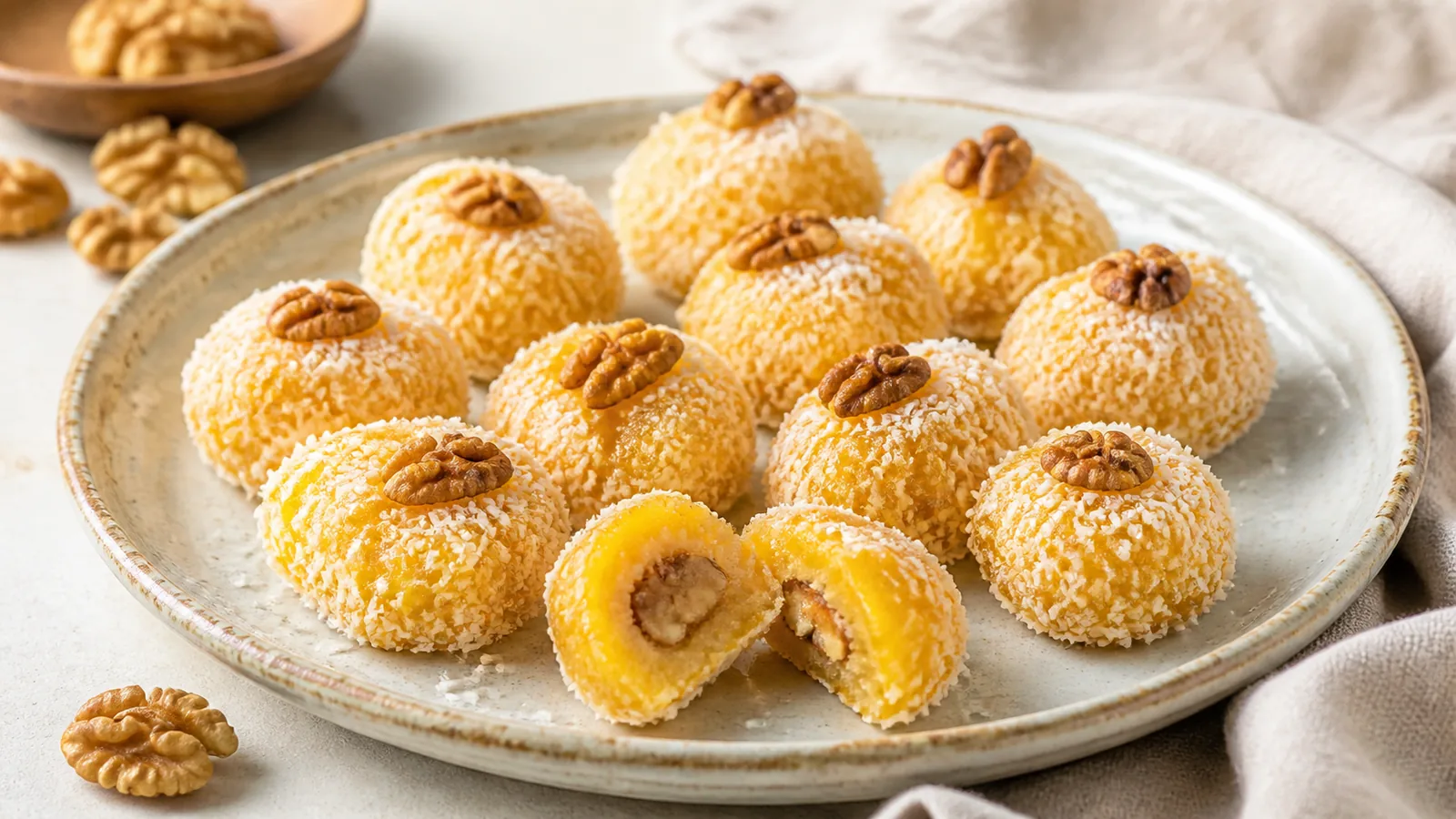
Persian basloq is a soft starch sweet scented with rose water and saffron, wrapped around walnut and rolled in coconut. The mixture begins milky and loose, then turns glossy and elastic as it cooks. The important part is steady low heat: the starch must cook fully without catching on the base of the pan.
The full batch makes roughly 45–54 small pieces. The original cook used one third of the quantities and obtained about 18, so scaling down works if you use a small saucepan.
Ingredients
- 640ml cold water (4 small cups)
- 210g wheat starch or cornflour/cornstarch
- 300g sugar (about 1 1/2 cups)
- 32g unsalted butter (2 tablespoons)
- 160ml rose water (1 small cup)
- 1 level teaspoon finely ground saffron
- 160g walnut halves or large pieces (about 1 cup)
- desiccated coconut, for coating
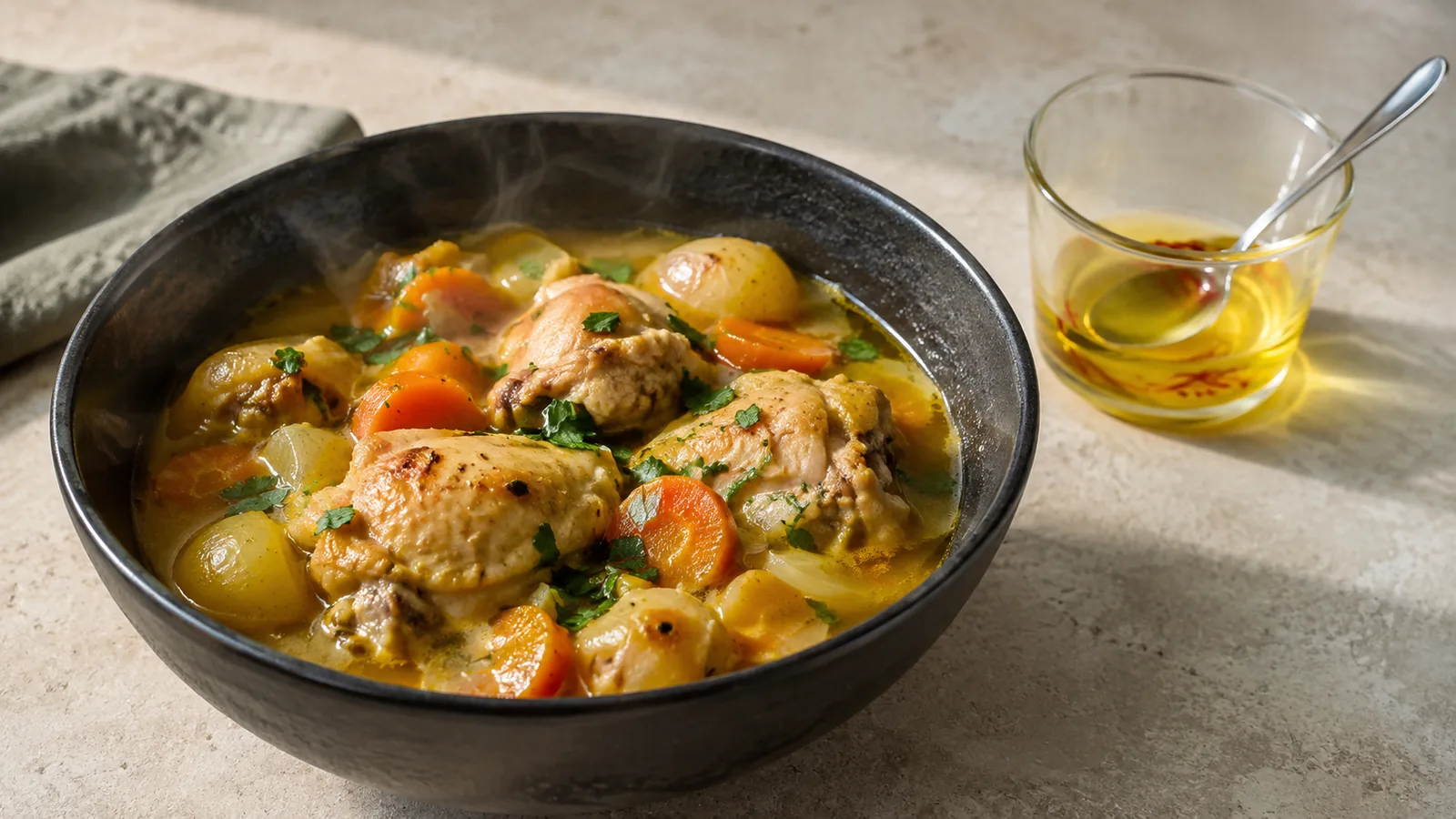
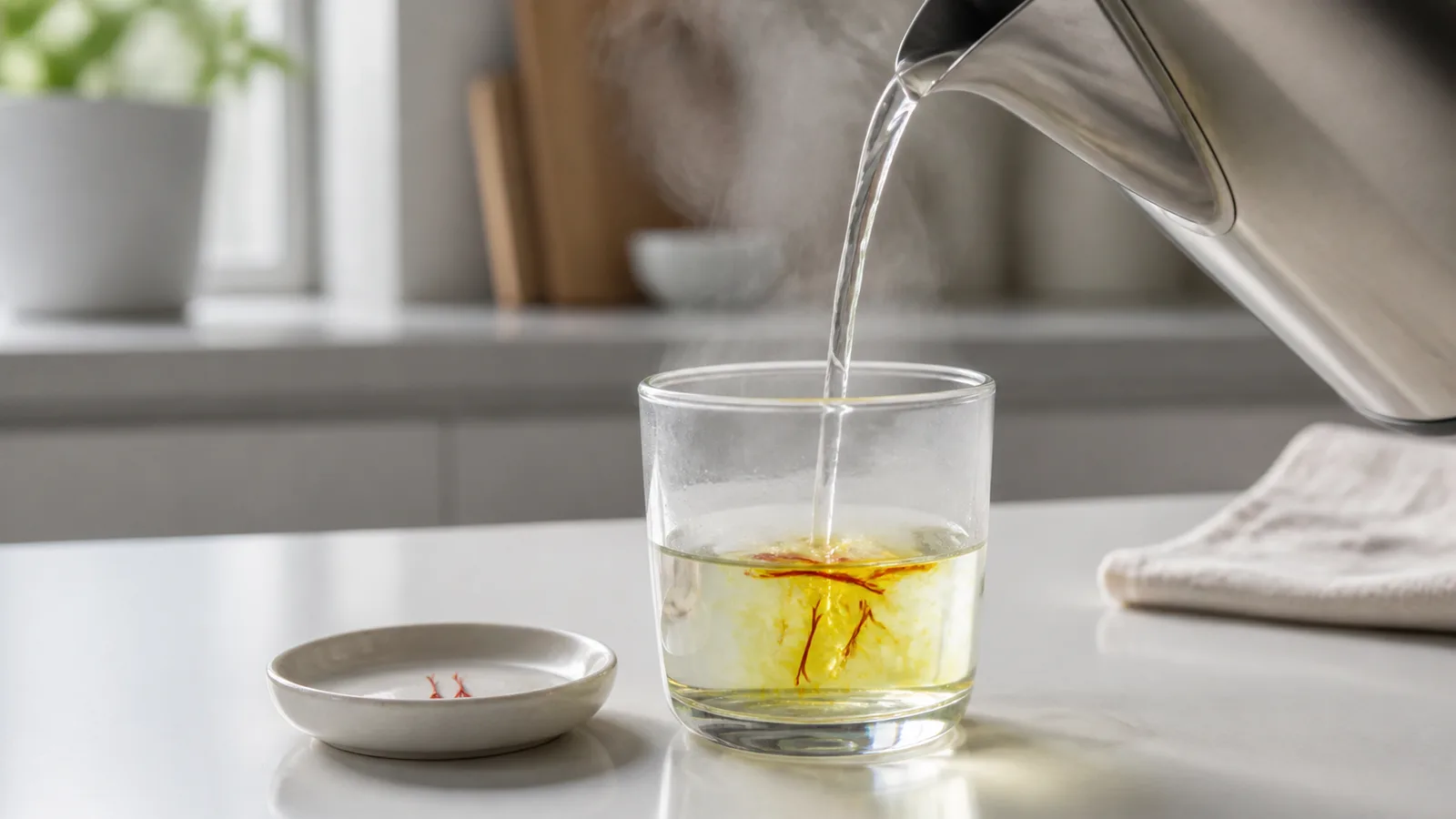
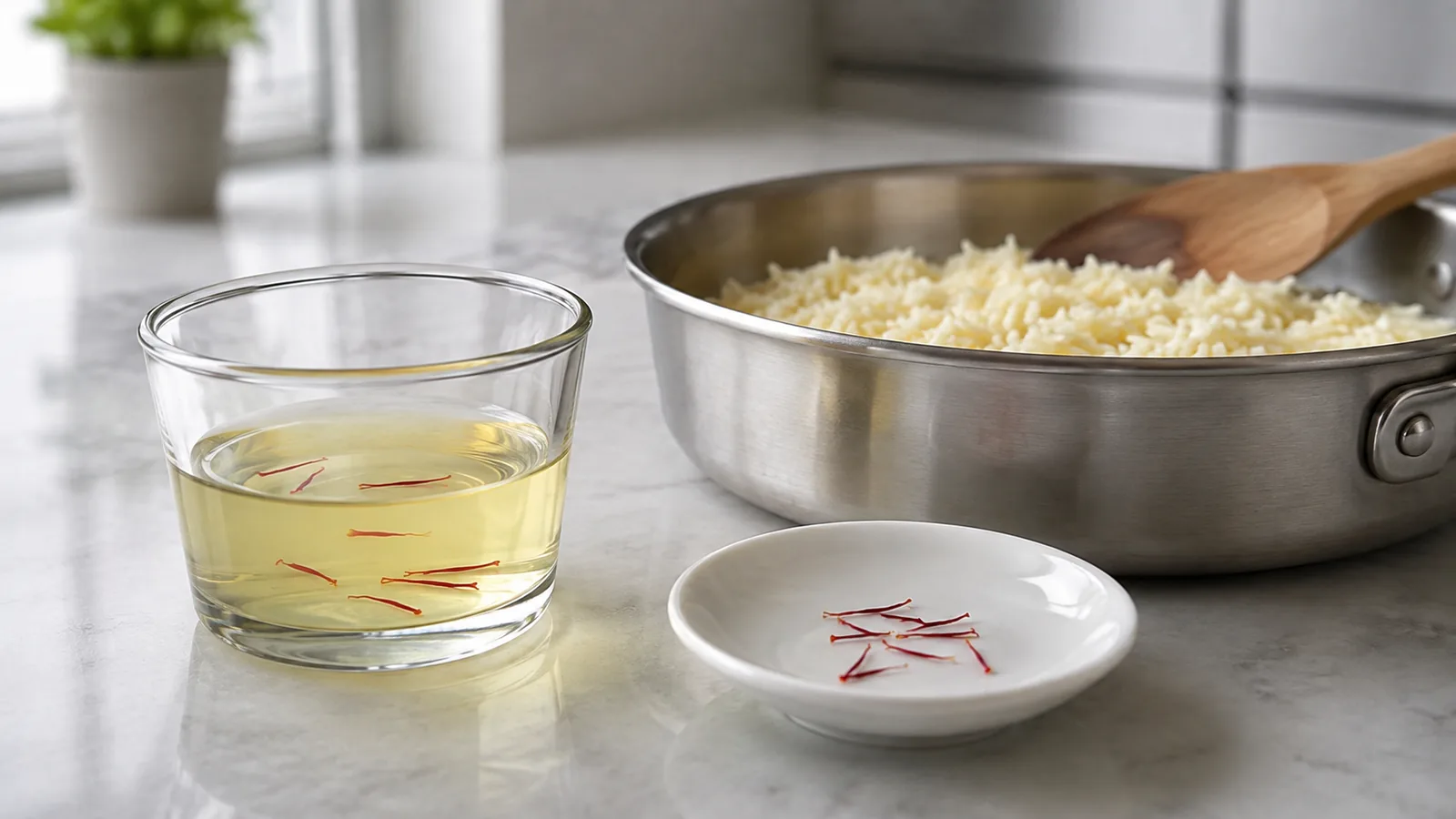
Starches absorb differently. Use the texture cues below rather than adding more dry starch midway. Brew the saffron in a spoonful of the measured water if you want the colour to disperse faster; our saffron infusion guide explains the process.
Dissolve the starch in cold water
Put the starch in a heavy, preferably non-stick saucepan. Add the cold water gradually while whisking until completely smooth. Reach into the corners of the pan with the whisk so no dry pocket remains.
Set the pan over low heat and switch to a sturdy silicone spatula or wooden spoon. Stir continuously, scraping the full base. The opaque liquid will thicken first in streaks, then come together into a soft paste.
Add the sugar
Once the starch has formed a cohesive paste, add the sugar in two or three portions. The mixture will loosen as the sugar dissolves; this is expected and does not mean the starch has failed.
Continue stirring over low heat until the syrup and starch reunite into an even, glossy mass. Do not raise the flame to hurry it. Sweet starch can scorch in seconds and any burnt flavour will remain in the finished candy.
Work in saffron, rose water and butter
Add the saffron, rose water and butter. Stir patiently as the mixture becomes loose once more, then thickens. It is ready when it pulls cleanly from the base and sides in one mass and a line drawn through it stays open.
The texture in the pan should resemble very thick chilled cream or a soft, stretchy dough. Depending on pan width and heat, this stage may take 30–45 minutes. Proper cooking removes the raw starch taste and helps the pieces hold their shape.
Shape around the walnuts
Spread a generous bed of desiccated coconut on baking paper or a clean tray. Working carefully—the mixture is sticky and hot—drop small spoonfuls onto the coconut. Let them cool only until safe to handle; if they become cold, shaping is harder.
Press a walnut piece into the centre of each portion. Bring the soft candy around it, roll into a ball between coconut-coated palms and return it to the tray. Add more coconut wherever the surface remains sticky.
Chill for four to five hours
Arrange the pieces in a single layer in a covered container, separating layers with baking paper if needed. Refrigerate for 4–5 hours, until the exterior is dry and the centre has settled into a tender chew.
Serve cool rather than ice-cold. The rose and saffron aroma opens as the sweet sits for a few minutes at room temperature.
Troubleshooting Persian basloq
- Too soft to shape: return the mixture to low heat and continue stirring until it releases from the pan.
- Rubbery: the heat may have been too high or the starch over-measured.
- Raw starch taste: the paste needed longer gentle cooking before shaping.
- Coconut will not stick: shape while the surface is still warm and tacky.
- Saffron streaks: grind more finely or use a cooled concentrated infusion.
Name and spelling
Basloq can also appear as baslog or باسلوق. Persian search results may describe the saffron version as باسلوق زعفرانی; Arabic-keyboard forms sometimes display the last word as زعفراني. These spellings refer to the same style of walnut-filled starch sweet in this recipe.
Storage
Keep basloq covered in the refrigerator so it does not absorb other aromas or dry at the edges. Use within five days for the best texture. It contains walnut, butter and coconut, so note those ingredients when serving guests with allergies.