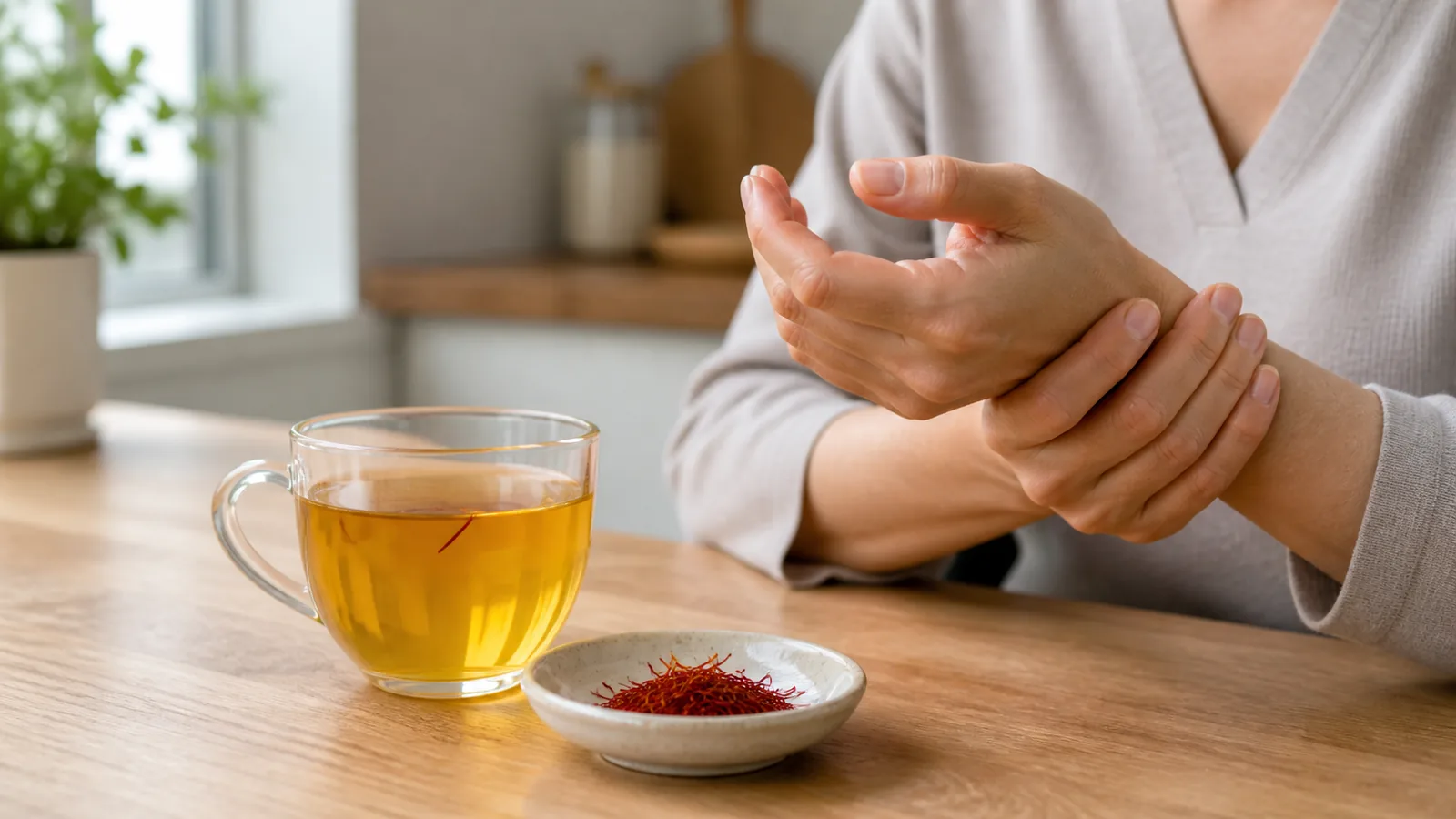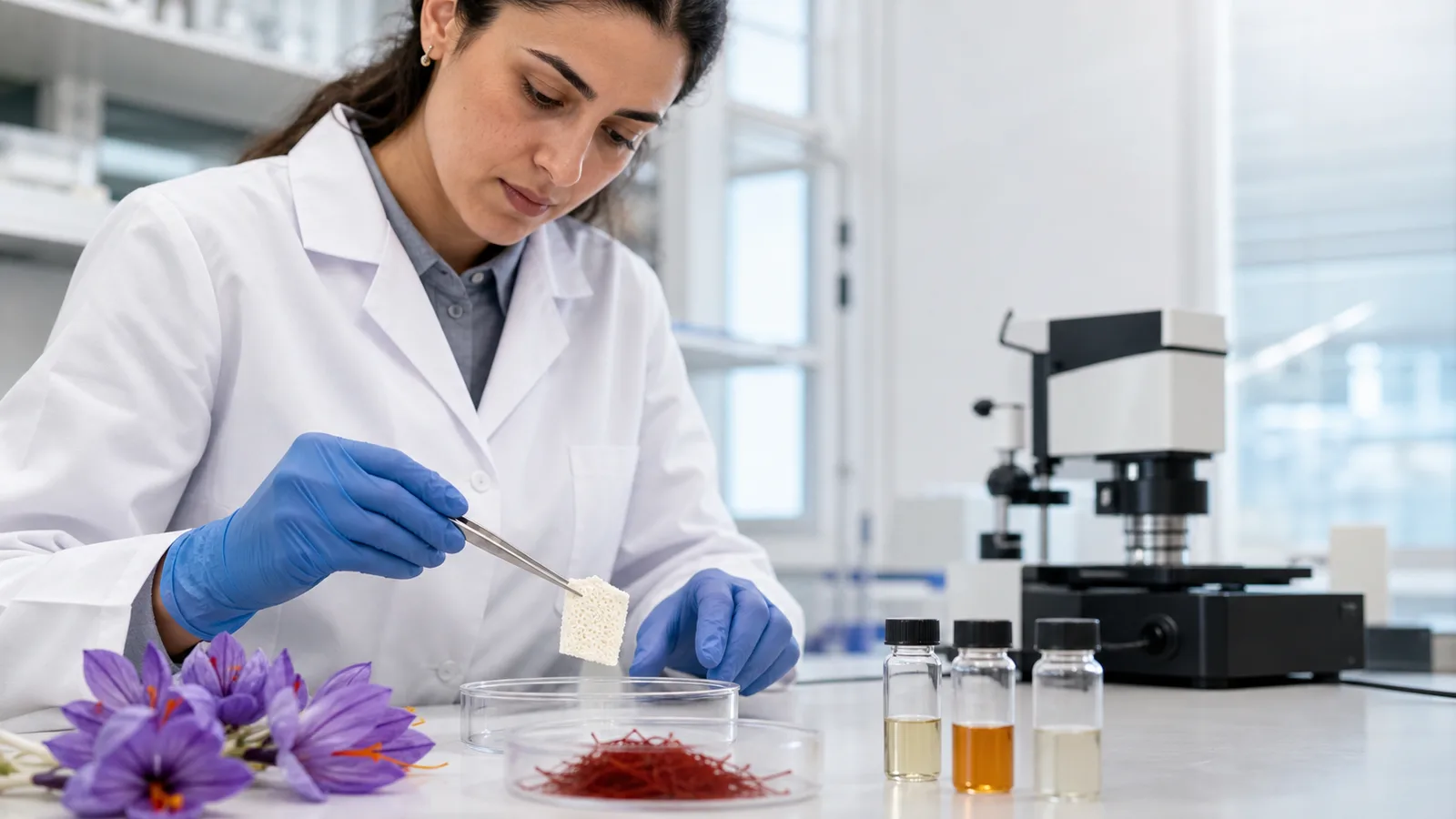
Knead diabetic wounds against saffron is a broken translation, not a medical instruction. Do not knead a wound and do not put saffron threads, powder, tea or a homemade saffron paste on a diabetic ulcer. The original report described an early research project involving saffron-derived material and silver nanoparticles in experimental dressings, adhesive and ointment.
The work was preclinical. Its reported 21-day result came from diabetic mice, not people. A mouse-wound observation can justify more research, but it cannot establish that a product is safe, sterile, effective or approved for a human diabetic wound.
What the original saffron project reported
Alireza Ramandi, identified in the old article as a biotechnology student in Torbat Heydarieh, described a project to make three formats: a dressing, a wound adhesive and an ointment. He said the team had used nanotechnology and produced silver nanoparticles “from a saffron base.”
The report claimed that the experimental material helped repair wounds in diabetic mice over 21 days. Ramandi said the group intended to turn the research into a paper and was confident that the project would be commercialised. A later record of a saffron startup competition in Torbat Heydarieh lists a team led by Alireza Ramandi, using saffron nanoparticles for diabetic wounds, as a third-place project.
Those statements preserve the historical announcement. They do not provide the data needed to assess it. The page did not link a peer-reviewed paper, identify the saffron plant part or extract, describe nanoparticle size and dose, name the mouse model, report control groups, show statistical results or identify a registered human trial.
What “saffron-based silver nanoparticles” may mean
Plant extracts can be used in “green synthesis” as reducing or stabilising agents during formation of silver nanoparticles. In such a material, saffron may take part in manufacturing while the final nanoparticle and dressing matrix have their own chemical and biological behaviour.
That is different from saying saffron itself healed the wound. A proper paper would need to separate at least four effects:
- the saffron extract or specific saffron compound;
- the silver nanoparticles;
- the dressing, gel, adhesive or ointment carrier; and
- ordinary wound protection and moisture control.
Controls are essential because silver can have antimicrobial activity, while particle size, coating, concentration and release rate can also affect cells and tissue. “Nano” does not automatically mean safer or more effective.
What later saffron wound research found
A separate 2024 study examined Crocus sativus petal extract, without presenting it as the same Ramandi product. Researchers tested human dermal fibroblasts and endothelial cells in the laboratory, then used an excisional-wound model in diabetic mice.
The extract was associated with cell viability and migration, tube-like structure formation, expression of COL1A1 and VEGF, and histological measures including fibroblasts, collagen and vascularity. The authors reported faster wound closure than in their comparison groups.
This independent work makes saffron floral by-products an active research subject. It still remains preclinical. Laboratory cells and diabetic mice do not reproduce the full infection, circulation, neuropathy, pressure, medication and comorbidity profile of a person with a diabetic foot ulcer.
Petals are also not the same material as the dried red stigma sold as spice. Our article on research into saffron petals and stamens explains why a flower by-product must be chemically identified before anyone proposes a use.
Why diabetic wounds are medically urgent
Diabetes can damage nerves, reduce sensation and impair blood flow. A person may not feel a blister or cut, and reduced circulation can make infection and healing more difficult. A small wound can therefore become a deep ulcer, gangrene or a threat to the limb.
The US National Institute of Diabetes and Digestive and Kidney Diseases advises calling a healthcare provider promptly for a cut, blister or bruise that does not begin healing after a few days; a foot that becomes red, warm or painful; dried blood inside a callus; or a black, foul-smelling infection. Waiting to test a home remedy can lose critical time.
What established diabetic-foot care involves
Modern diabetic-wound care is not one ointment. Depending on the wound, a multidisciplinary team may assess:
- depth, tissue damage, drainage and surrounding skin;
- infection and whether culture, imaging or antibiotics are needed;
- blood flow and whether vascular treatment is required;
- neuropathy, pressure and a suitable offloading device;
- debridement and wound-bed preparation;
- blood-glucose management, nutrition and smoking;
- a dressing chosen for the wound’s moisture and clinical needs; and
- progress measured at regular follow-up.
The International Working Group on the Diabetic Foot evaluates healing interventions alongside this standard multidisciplinary care. Its guideline development focuses on randomised controlled trials and outcomes such as sustained healing, new infection, function, quality of life and mortality—not only a photograph of a smaller wound.
Are silver dressings proven for every diabetic ulcer?
No. Silver is used in some regulated wound-care products, particularly where antimicrobial action is clinically relevant, but evidence and recommendations depend on the wound and product. It is not a reason to apply uncharacterised silver nanoparticles or a saffron mixture at home.
Older guideline evidence reviewed by the US Food and Drug Administration did not support selecting a silver-based or other antimicrobial dressing simply to improve healing or prevent infection in every diabetic foot ulcer. A trained wound clinician should decide whether a particular dressing belongs in the treatment plan.
What would be required before a saffron dressing reaches patients?
A credible development programme would need to publish:
- the exact saffron species, plant part, origin and extraction method;
- nanoparticle composition, size distribution, coating, stability and release;
- sterility, shelf life and manufacturing controls;
- cell-toxicity, irritation, sensitisation and systemic-exposure studies;
- animal results with appropriate controls, blinded assessment and full statistics;
- a regulated, ethically approved sequence of human trials;
- comparison with current care using complete healing and safety outcomes; and
- regulatory review for the final product and its claimed use.
A dressing, adhesive and ointment are not interchangeable. Each formulation changes contact time, moisture, absorption, particle release and the way a wound is handled, so each final product needs evidence.
The old report also made a broader value-chain point: operators, industry owners, academics, exporters, importers and regulatory agencies would have to coordinate for a knowledge-based product to move beyond a laboratory. That remains true. Food-processing experience alone does not qualify a company to manufacture a sterile pharmaceutical or medical-device product; each sector has different evidence, quality and licensing duties.
What people with a diabetic wound should do now
Do not wait for a saffron product to be commercialised, and do not improvise one. Keep pressure off the injured area as instructed, protect it with the dressing recommended by the care team, and arrange prompt assessment. Do not cut calluses, probe the wound or remove tissue yourself.
Seek urgent care if there is spreading redness, warmth, swelling, pus, bad odour, fever, increasing pain, black tissue, colour change, a cold foot or rapid deterioration. Neuropathy can hide pain, so lack of pain does not make an ulcer safe.
The saffron diabetic-wound project is worth recording as an example of researchers looking beyond the food market to higher-value materials. Its mouse result and commercial ambition were a starting point, not permission to use saffron on an open wound.
Sources
- The original interview with Alireza Ramandi preserved in the previous version of this page, plus the Torbat Heydarieh saffron-startup result archived in Persian.
- In vitro and in vivo evaluation of the diabetic wound-healing properties of saffron petals, 2024 preclinical study.
- US NIDDK: diabetes and foot problems.
- International Working Group on the Diabetic Foot: 2023 wound-healing guideline.
- US FDA evidence appendix on antimicrobial dressings.