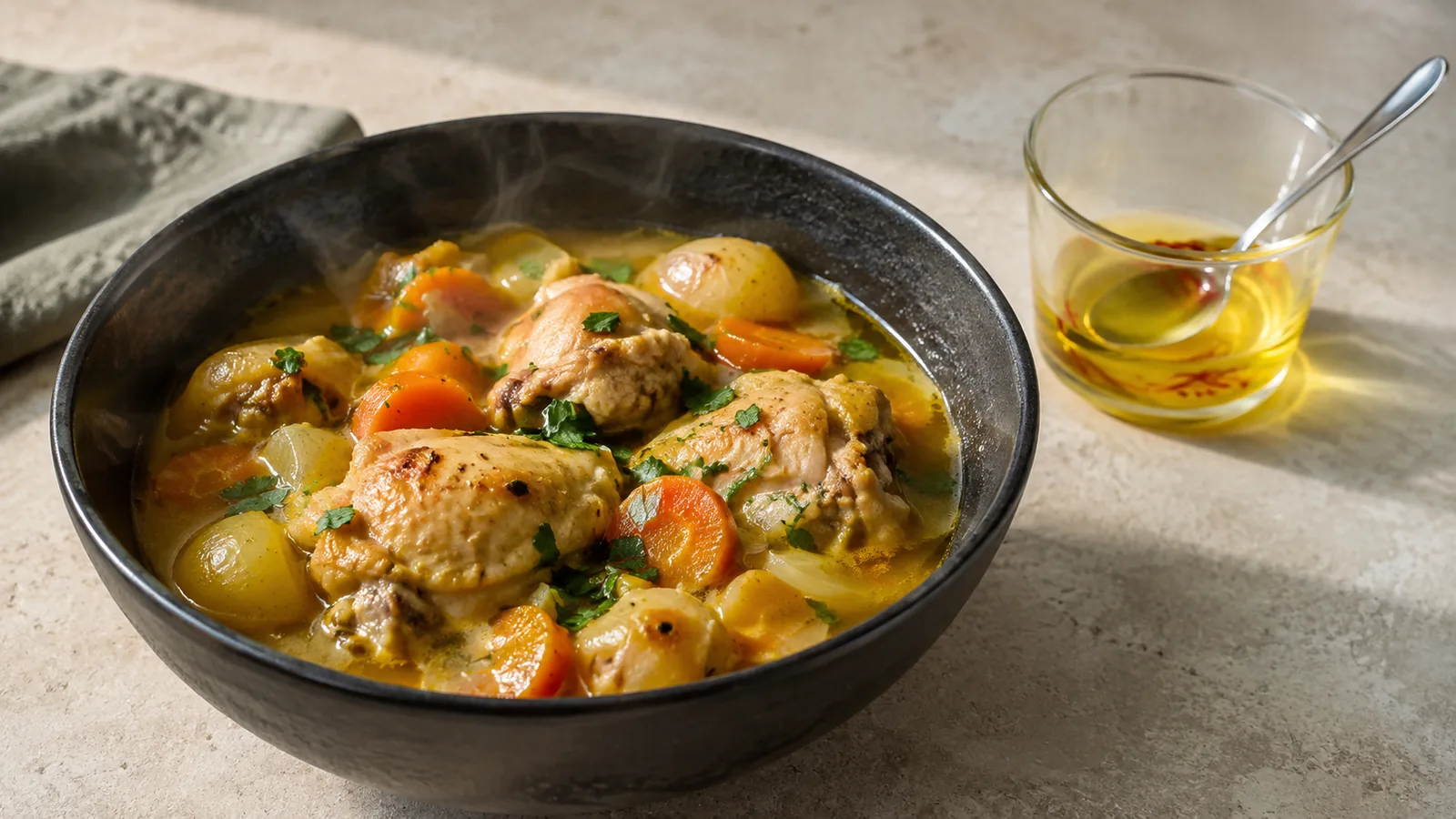
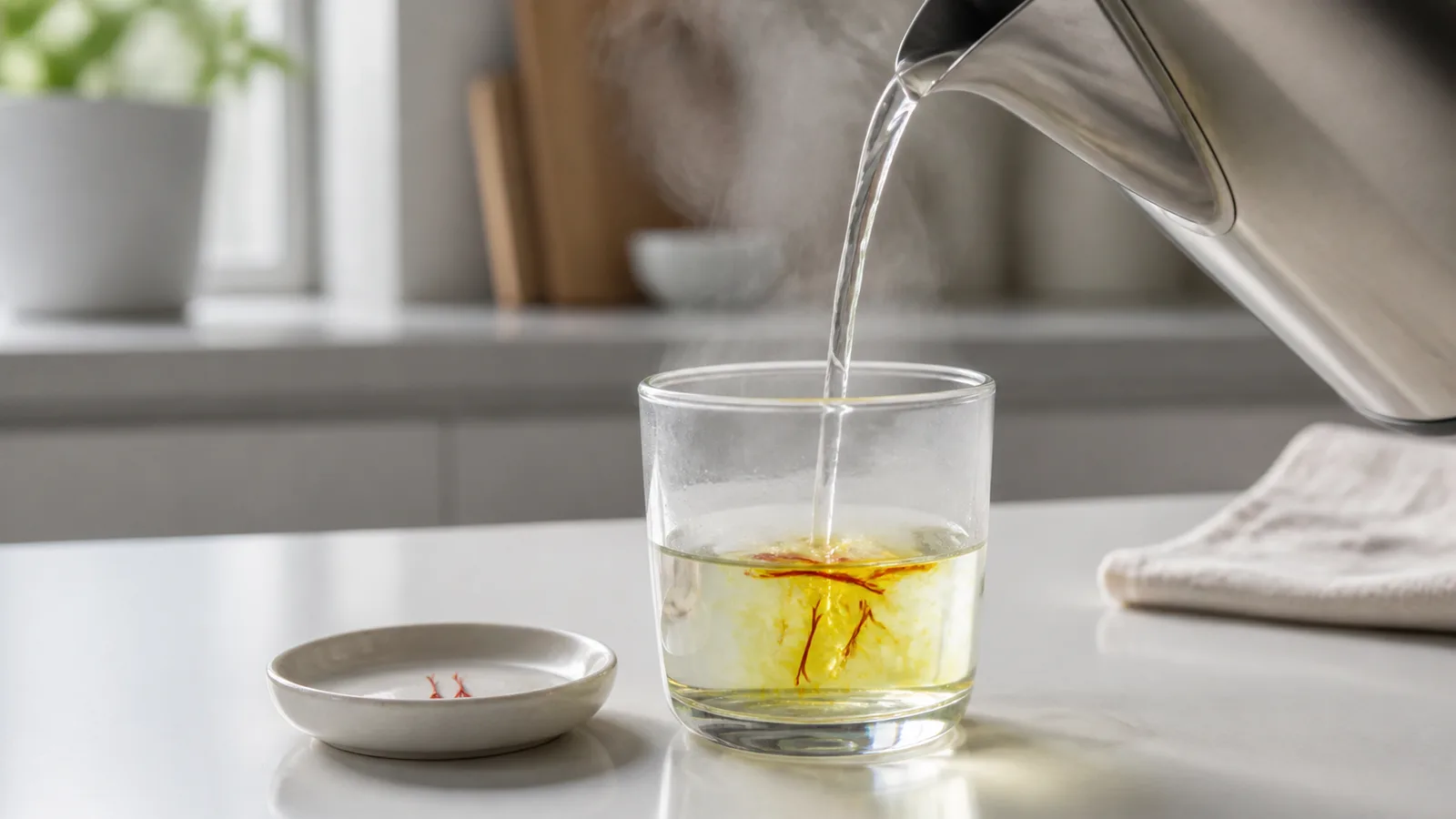
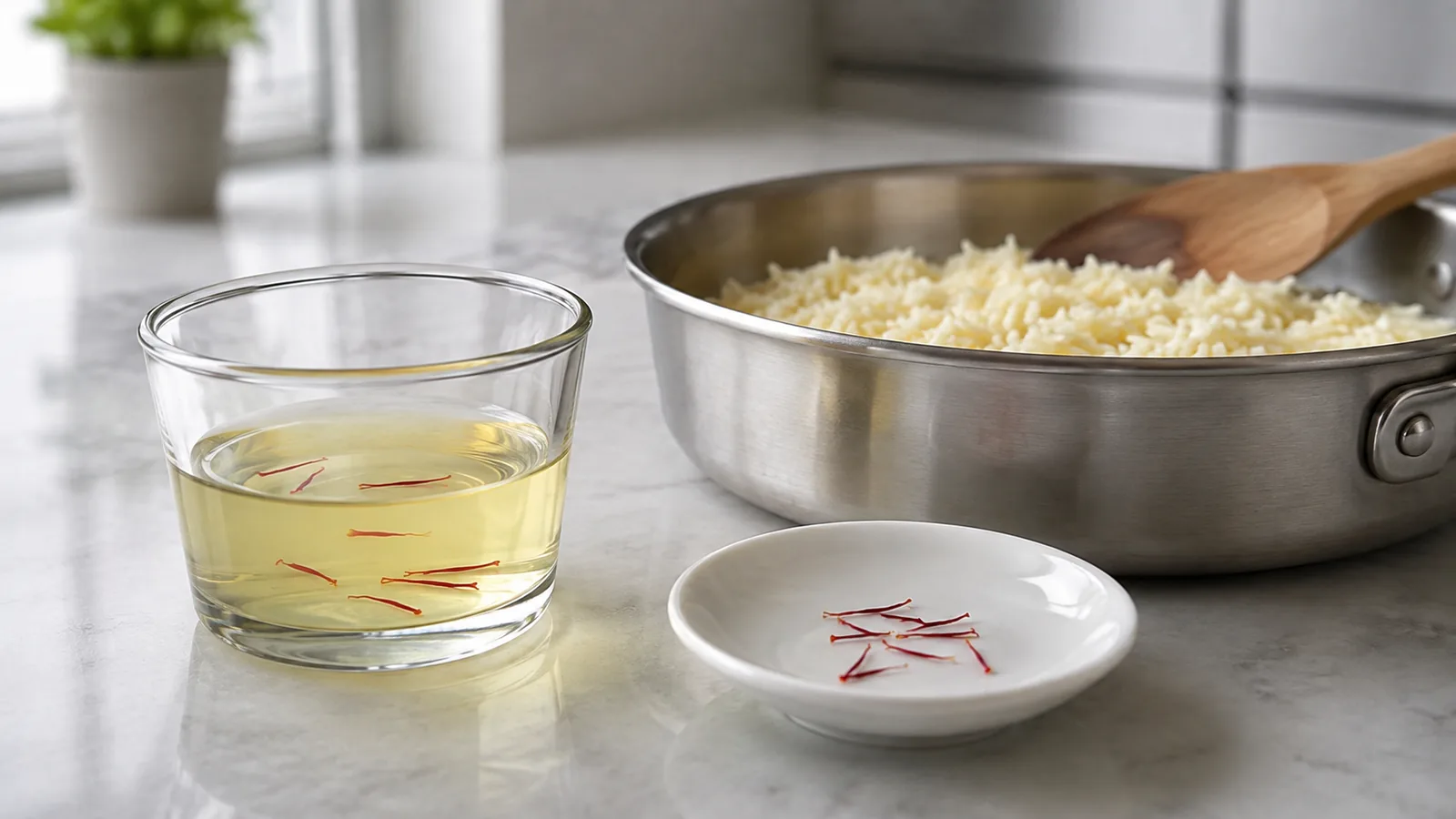
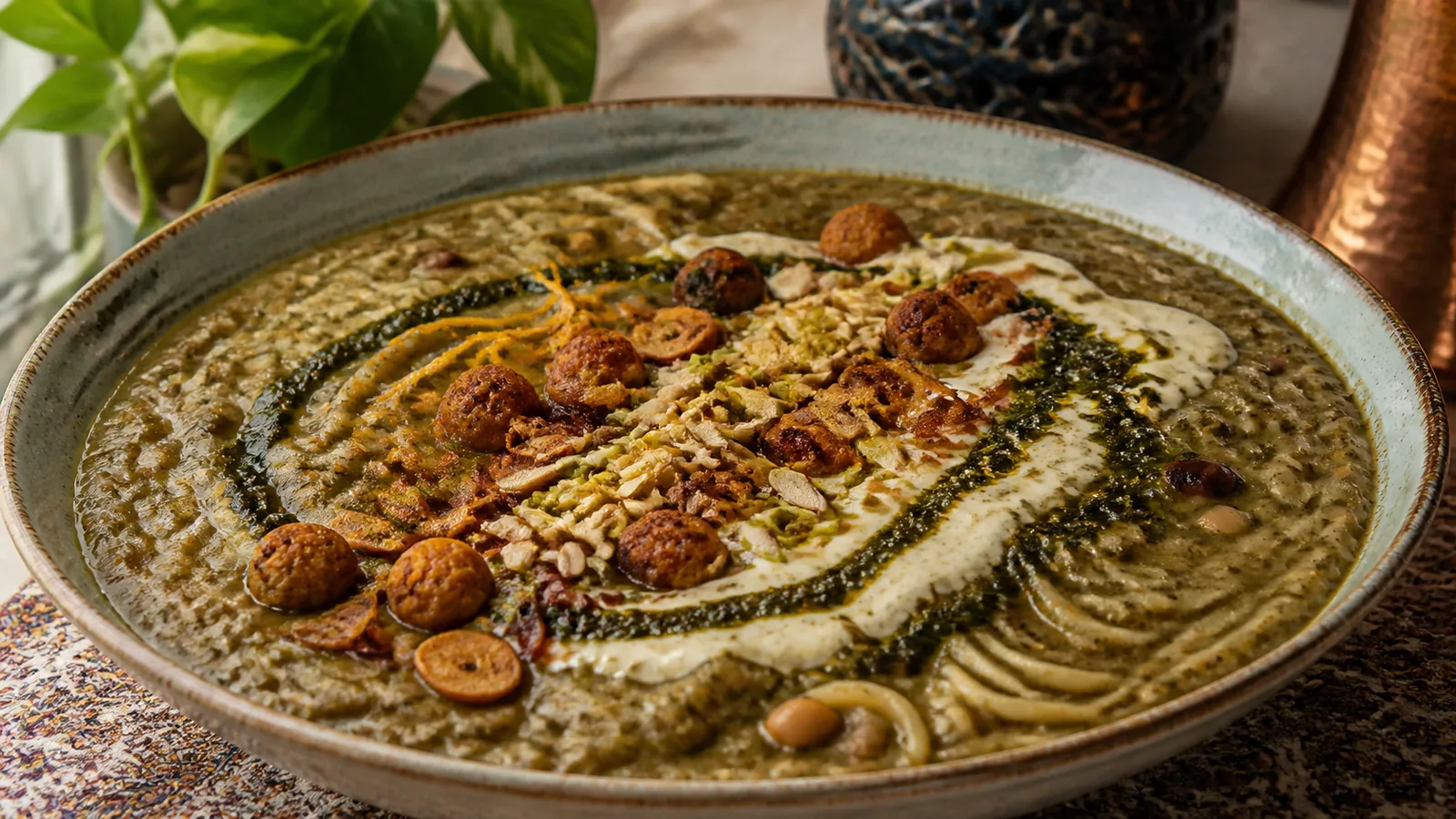
Kerman noodle soup is a local Ash Reshteh with a festive finish. Beans, chickpeas, lentils, herbs and noodles make the thick soup familiar, while saffron meatballs, orange peel, nuts and sekanjabin give this Kerman version its own character.
This is a generous recipe. The original quantities suit a gathering and need a large stockpot. If your pot is smaller, halve every ingredient rather than reducing only the liquid or noodles.
Ingredients
For the soup
- 1 cup dried pinto beans, soaked overnight
- 1½ cups dried chickpeas, soaked overnight
- 1 cup lentils, rinsed
- 4 large onions, thinly sliced
- 1 teaspoon turmeric
- 1 kg mixed ash herbs: parsley, leeks, coriander and spinach or beet leaves
- 500 g to 1 kg reshteh noodles, according to pot size and desired thickness
- At least 8 cups water, with more hot water ready
- Salt, black pepper and neutral oil
For the saffron meatballs
- 250 g minced meat
- 1 small onion, finely grated and squeezed
- ½ cup chickpea flour, added gradually
- 1 tablespoon brewed saffron
- A pinch each of cinnamon and turmeric
- Salt and black pepper
- Oil for shallow frying
For the Kerman garnish
- Pasteurised kashk, warmed
- Fried garlic
- Mint oil
- Thin strips of blanched orange peel
- Slivered pistachios and almonds
- Sekanjabin, served separately
Soak and cook the legumes
Soak the pinto beans and chickpeas in separate bowls overnight, changing the water once or twice. Drain and rinse them. Lentils cook much faster and do not need the same long soak.
In a large pot, fry the sliced onions in oil until deep golden. Reserve about one-third for garnish. Add the turmeric to the pot and stir for 30 seconds. Add the chickpeas, pinto beans and eight cups of fresh water. Bring to a boil, skim the surface, then simmer until the legumes are almost tender. This may take 60 to 90 minutes depending on their age.
Do not rely on repeatedly boiling and draining forgotten, unsoaked beans as an exact replacement for an overnight soak. It can shorten cooking, but texture remains less predictable. A pressure cooker can help if its bean and fill-level instructions are followed.
Add the herbs and lentils
Wash the ash herbs carefully and chop them into medium pieces. Add the lentils and herbs when the chickpeas and beans are nearly tender. Simmer for 25 to 35 minutes, stirring from the base occasionally.
Spinach is traditional in the mix, but beet leaves are a useful seasonal substitute. Keep the stems finely chopped so they soften at the same pace as the leaves.
Make the saffron meatballs
Combine the minced meat with the squeezed grated onion, brewed saffron, cinnamon, turmeric, salt and pepper. Add the chickpea flour a spoonful at a time until the mixture holds together. The full half-cup may not be needed if the onion is dry.
Knead briefly, then shape into small meatballs roughly the size of a hazelnut. Shallow-fry them over medium heat until browned and cooked through. Minced meat should reach 71°C (160°F). Drain the meatballs and keep them warm; adding crisp meatballs at serving preserves their shape.
Cook the reshteh noodles
Break very long reshteh into manageable lengths. Start with 500 g unless you are using an unusually large pot. Add the noodles gradually to the simmering soup, stirring gently after each portion so they do not clump.
Reshteh releases starch and thickens Ash Reshteh dramatically. Add hot water as necessary and stop adding noodles when the soup is slightly looser than your preferred final texture. Simmer until the noodles are tender, usually 10 to 15 minutes, then let the pot rest for another 10 minutes.
Taste before salting. Both reshteh and kashk may already contain salt.
Prepare the Kerman garnishes
Orange peel
Use only the orange-coloured outer peel, with as little white pith as possible. Cut it into fine strips, simmer in fresh water for a few minutes and drain. Repeat if it remains bitter. A small amount provides fragrance without making the ash taste like dessert.
Mint oil and kashk
Warm a little oil over low heat, stir in dried mint for 15 to 20 seconds, then remove it immediately. Use pasteurised kashk and heat it according to its package directions. The old blanket instruction to boil all kashk for 20 minutes is unnecessary for a ready-to-use pasteurised product and may cause scorching.
Sekanjabin
Kerman-style service may include sekanjabin, a sweet-and-sour vinegar syrup, on the side. The phrase “sesame syrup” in the old translation referred to sekanjabin, not sesame. Let each diner add a small amount according to taste.
Assemble the Ash Reshteh
Ladle the thick soup into wide bowls. Add ribbons of warm kashk, then arrange fried onion, garlic, mint oil, saffron meatballs, orange peel and slivered nuts over the surface. Keep some garnishes separate so the colours remain distinct.
If you arrived looking for an ash kashk dish, this is one: kashk provides the creamy, tangy finish rather than forming the soup base. An Ash Reshteh recipe should still taste of legumes, fresh herbs and noodles beneath that garnish.
Storage and reheating
Cool leftover ash promptly and refrigerate it in a covered container. Store delicate garnishes separately. The noodles will continue absorbing liquid, so loosen the soup with hot water when reheating and stir gently until it is steaming throughout.
The best Kerman noodle soup is thick enough to hold its decoration but still easy to ladle. Saffron meatballs and orange peel should be noticeable accents, while beans, herbs and reshteh remain the heart of the bowl.