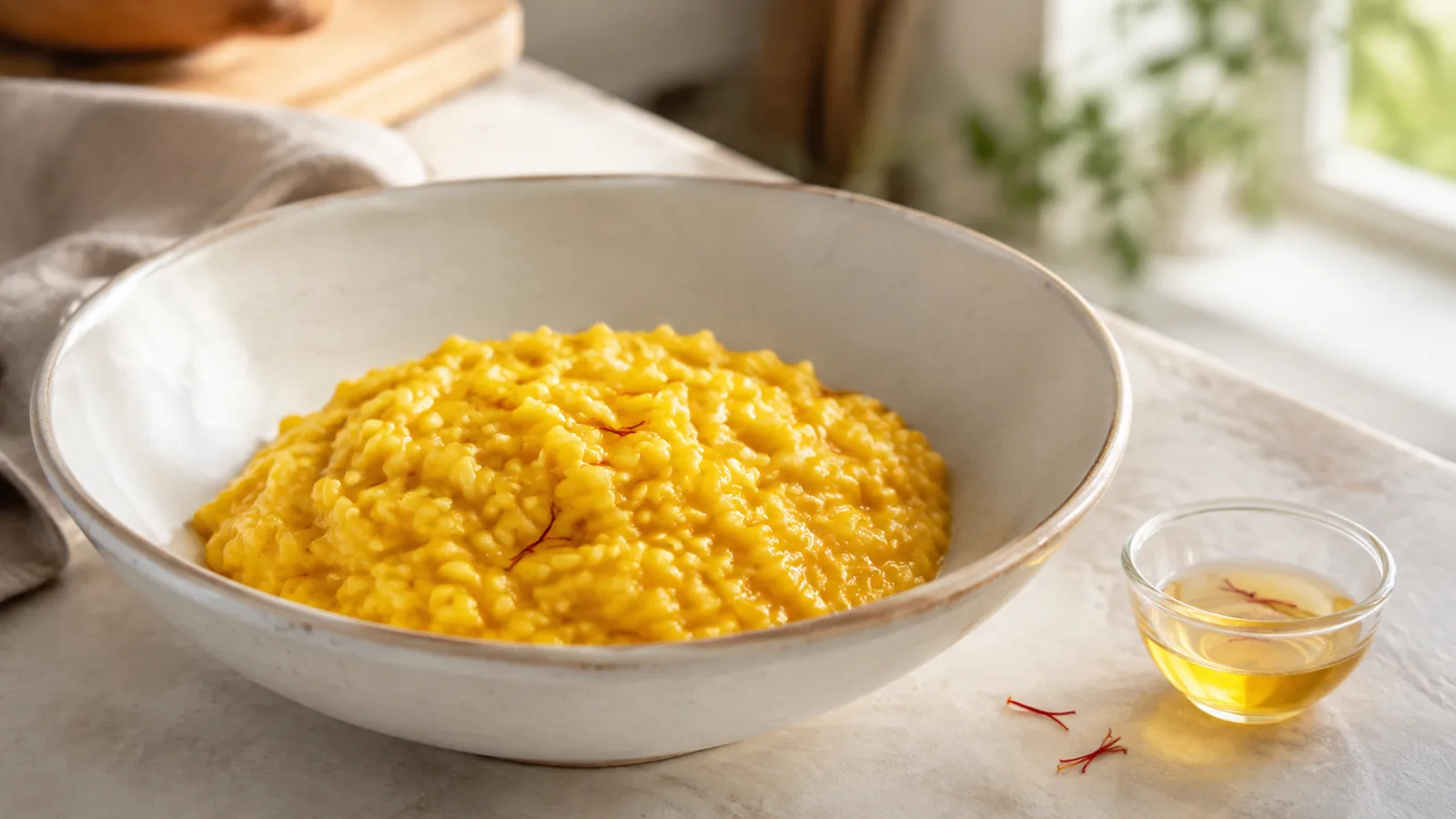
This spiral saffron kebab combines thin chicken and lamb fillets in a snail-shaped skewer. The two meats are marinated separately with onion, lemon, olive oil and saffron, then layered, rolled and cooked gently with tomatoes.
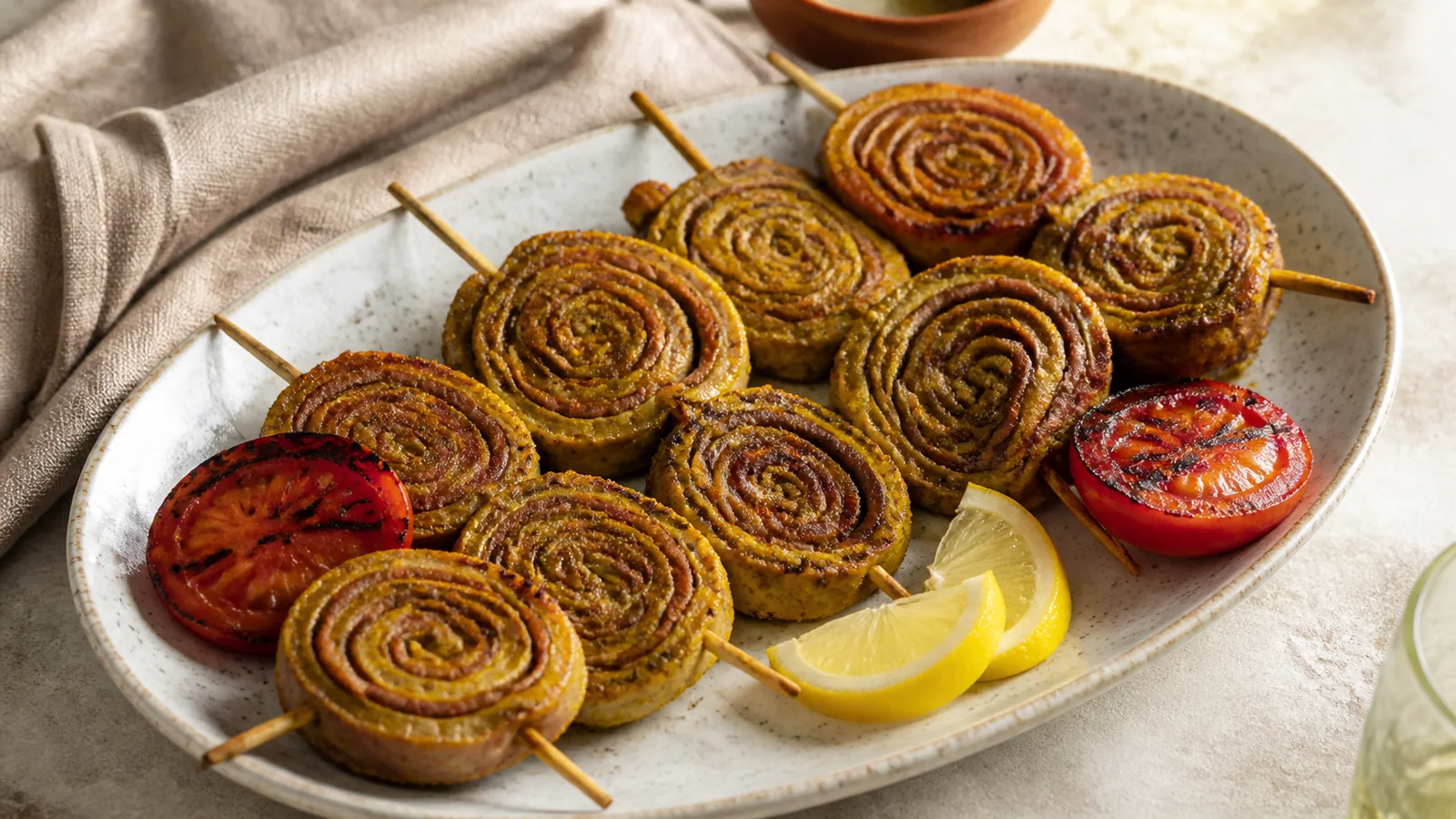
Saffron kebabs are sometimes searched as “safran kebab.” Whatever spelling brings you here, the important details are even strips, a secure skewer and moderate heat so the centre cooks before the outside becomes dry.
Ingredients
- 300 g chicken fillet or chicken breast
- 300 g lean lamb fillet
- 1 medium onion, thinly sliced
- 2 tablespoons fresh lemon juice
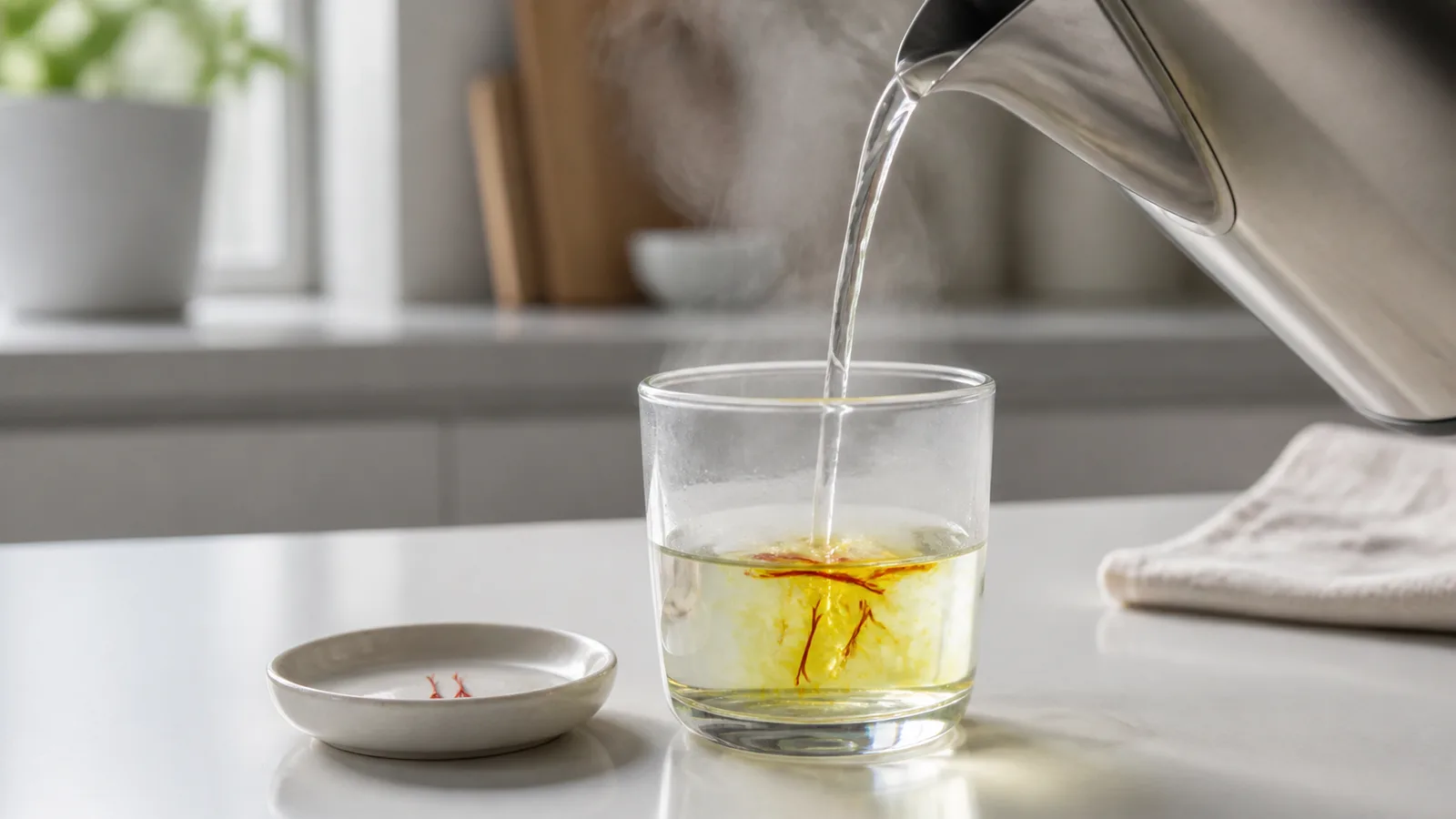
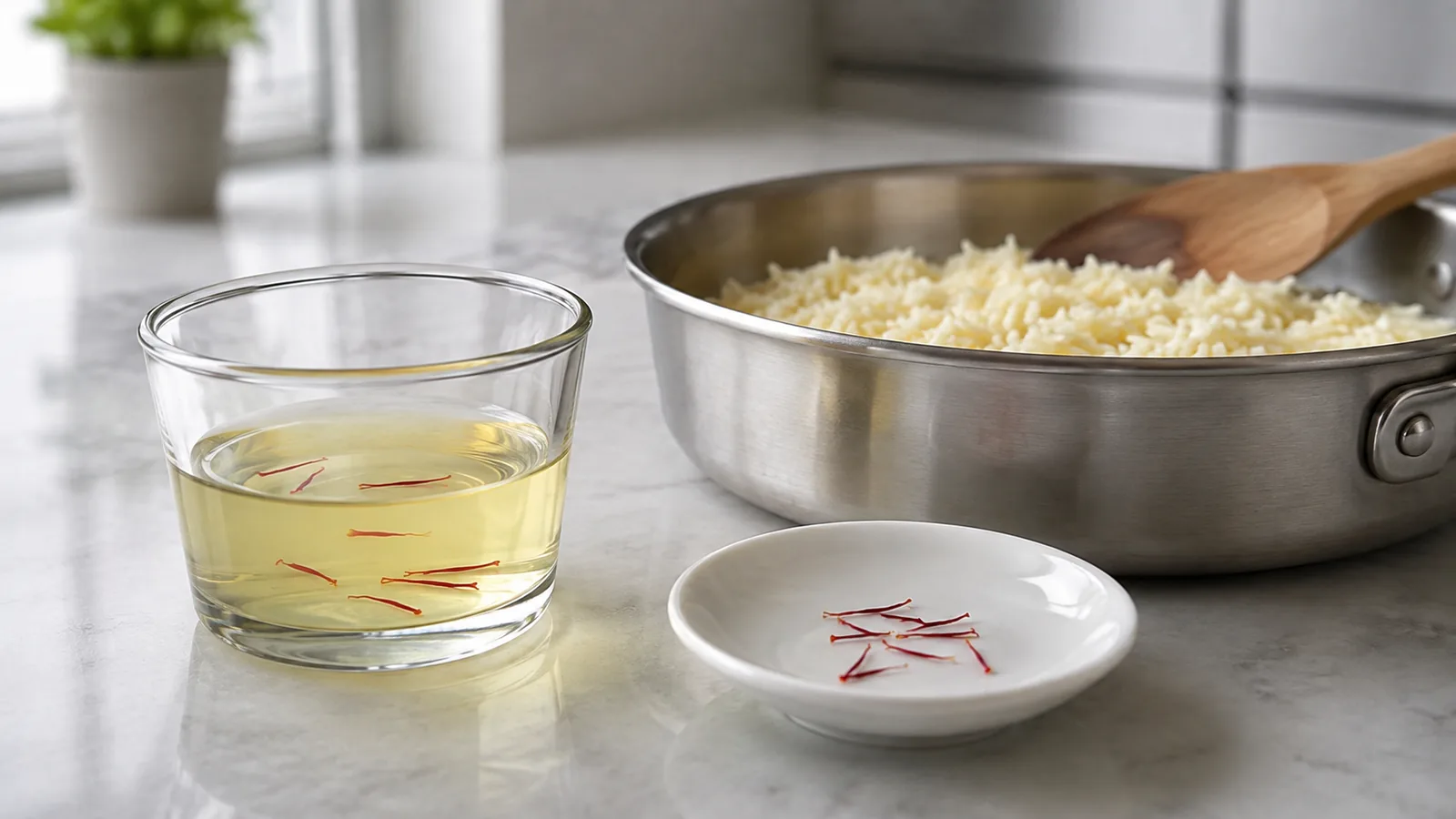
- 2 tablespoons hot saffron infusion
- 2 tablespoons olive oil
- 2 tomatoes, halved
- 1 fresh lemon, cut into wedges for serving
- Salt and black pepper, to taste
- Neutral oil, for the pan
- Wooden skewers, as needed
Soak wooden skewers in water for at least 30 minutes. They are less likely to darken in the pan, and damp wood is easier to push through the centre of the roll without splintering.
Cut the fillets into even strips
Trim the chicken and lamb, then cut both lengthwise into strips about 2 cm wide and 5 to 7 mm thick. Aim for similar lengths. Short offcuts can be cooked separately rather than forced into an uneven spiral.
Keep the two raw meats on separate plates while cutting. Wash the knife and board in hot soapy water before using them for any ready-to-eat food.
Marinate the chicken and lamb
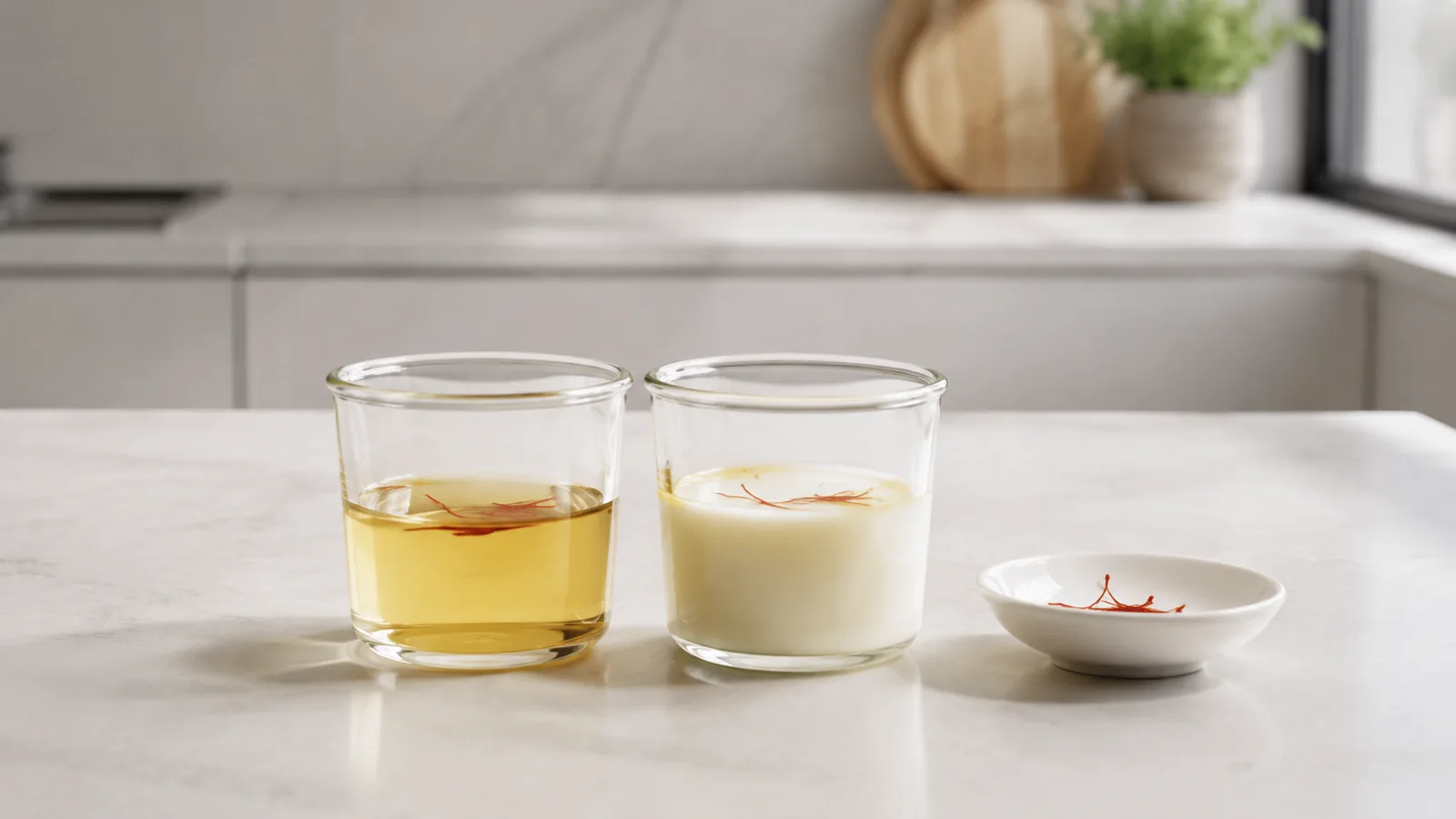
Divide the onion between two non-reactive bowls. Split the lemon juice, saffron infusion, olive oil, salt and pepper evenly between them. Add the chicken to one bowl and the lamb to the other, then turn each until coated.
Cover and refrigerate both bowls for 2 hours. Keeping them separate prevents the lamb from being crowded by the softer chicken and makes the strips easier to pair later. If you need to make the infusion, see our guide to brewing saffron.
Shape the spiral kebabs
Lift the strips from the marinade and brush off pieces of onion. Lay one chicken strip on a sheet of baking paper and place a lamb strip on top. Cover with another sheet and tap lightly with the flat side of a meat mallet until the two layers hold together and have an even thickness.
Roll the paired strip from one short end into a compact coil, like a snail shell. Push a soaked skewer straight through the coil from side to side. Depending on the length of your skewers, add one or two more coils with a small gap between them.
Repeat with the remaining meat. Discard both raw marinades; do not brush them onto cooked kebabs.
Cook the kebabs and tomatoes
Heat a cast-iron frying pan over medium-low heat and add a thin film of neutral oil. Put the kebabs in the pan without crowding them. Add the tomato halves cut-side down around the edges.
Cook the kebabs slowly, turning every 2 to 3 minutes so the coils brown evenly. Turn the tomatoes once they are golden and soft. If the meat colours too quickly, lower the heat and cover the pan loosely for a few minutes.
Because chicken and lamb are rolled together, judge the kebab by the chicken endpoint. Insert a thermometer into the centre of the thickest coil without touching the skewer; it must reach 74°C (165°F). The official safe-temperature chart gives the current benchmark.
Rest and serve
Move the kebabs to a clean plate and rest them for 3 minutes. Serve with the pan-roasted tomatoes and fresh lemon wedges. Saffron rice, flatbread or a crisp herb salad all fit the simple lemon-and-onion marinade.
How to keep the spiral intact
- Cut chicken and lamb to a similar width before pairing them.
- Pound lightly; the aim is contact, not paper-thin meat.
- Roll firmly and pass the skewer through the complete diameter of the coil.
- Cook over moderate heat and turn with tongs, not by pulling the stick.
- Make smaller coils if the centre is taking too long to reach temperature.
Keep raw and cooked utensils separate. If a plate held the uncooked kebabs, wash it before using it at the table.