


1200 hectares of land in the qanat Baladeh under the cultivation of saffron was the central figure in a historical report from Ferdows, South Khorasan. Gholamreza Ghoshi, then head of the provincial Agriculture Jihad organisation, gave the estimate during a November visit by Iran’s agriculture minister.
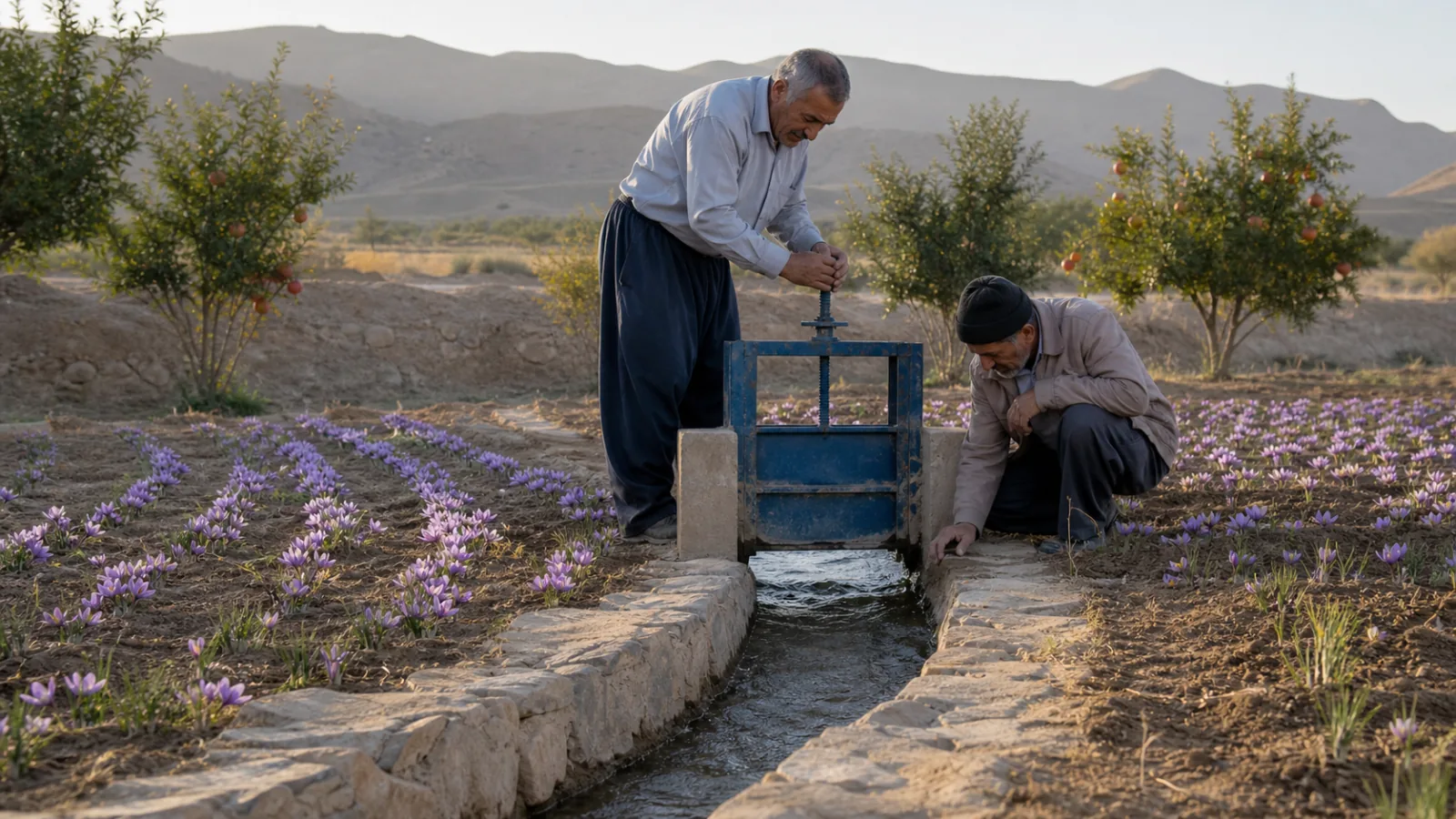
The report connected 1,200 hectares of saffron fields with the Baladeh qanat system, but it did not provide a harvest year, dry-saffron yield or measured production total. The area figure should therefore be read as the official’s estimate at the time, not as a current land survey.
What the historical report said
According to Ghoshi, the Baladeh system supplied an agricultural area that included about 400 hectares of pomegranate orchards and 1,200 hectares of saffron farms. The translated report also referred to 1,550 in connection with pomegranates and 3,000 in connection with saffron work, but it did not define those units clearly enough to treat them as tree, farm or worker counts.
That distinction matters. Hectares describe land area; they do not reveal how much of the land flowered, how much water each field received or how much dried saffron was eventually produced.
Baladeh is a qanat system, not a single irrigation pipe
A qanat taps groundwater and carries it through gently sloping underground galleries, using gravity rather than a pump along the main conveyance route. Shafts provide access for construction and maintenance, while surface channels distribute the emerging water.
The UNESCO World Heritage Centre’s record for the Persian Qanat explains that these systems have supported agriculture and permanent settlement in Iran’s arid regions, alongside traditional arrangements for sharing water. Baladeh is one of the eleven qanats included in that World Heritage property.
Calling the system “advanced,” as the historical report did, should not be confused with calling it automatic. Its performance still depends on maintaining galleries and shafts, controlling losses in distribution channels and allocating a variable flow fairly.
Reported flow changed with wet and dry years
Ghoshi said the combined water flow varied with the year’s conditions, from about 80 to 250 litres per second. That is a wide range: the upper figure is more than three times the lower one.
Neither number tells us how much water reached saffron roots. A field-level assessment would also need the duration and timing of each water turn, conveyance losses, irrigated area, soil texture, rainfall and competing demand from orchards and households.
The original translated account is also inconsistent about the number of qanat channels. It mentions 26, followed by references to 16 and 14 as active. Without the source register or a clearer official statement, those counts cannot be reconciled responsibly. They are historical reported figures, not verified current operating totals.
What 1,200 hectares does—and does not—tell us
A cultivated-area estimate helps show the economic importance of saffron around Ferdows. It cannot, by itself, establish productivity. Two fields of the same size may deliver very different amounts of dried stigma because of corm health, stand age, salinity, irrigation timing, picking speed, drying practice and weather during flowering.
To understand the season represented by the report, a complete record would separate:
- registered land from land that was actually irrigated and harvested;
- young fields from mature and declining saffron stands;
- qanat flow at its outlet from water delivered at each field;
- fresh flowers from separated stigmas and final dry saffron;
- estimated area from mapped or measured area.
Those measurements would allow growers to compare water use and output without treating every hectare as identical.
Why modern irrigation was part of the discussion
Villagers reportedly raised the lack of an advanced irrigation system with the minister. Improving field distribution can reduce avoidable losses and give growers better control over application, especially when the available qanat flow falls in a dry year.
The design still has to fit the place. Filters, pipe pressure, emitter spacing, water quality, soil infiltration and maintenance all affect whether a system works. Equipment alone cannot create more qanat water or justify expanding irrigated land beyond a sustainable supply.
Our practical overview of saffron cultivation covers the field decisions that sit alongside irrigation, including soil preparation, corm selection and harvest care.
Other concerns raised during the visit
The villagers also raised disputes involving agricultural land and natural-resources authorities, as well as the administered purchase price for pomegranates. The report said the minister placed these matters on the provincial authorities’ agenda; it did not document a final ruling, payment or construction commitment.
Keeping that boundary avoids turning a meeting statement into a completed outcome. Later records would be needed to establish whether the land cases were resolved, how pomegranate purchasing changed or whether a new irrigation network was built.
How the area figure should be checked today
A current account of saffron around the Baladeh qanat would need dated agricultural statistics, mapped harvested area, measured flow at agreed points and dry-yield records from traceable lots. It should also identify the water-sharing period and any restrictions that applied in the season.
The historical 1,200-hectare figure remains useful because it records how local officials described saffron’s scale at the time. Its value is strongest when the date, speaker and limitations remain attached to it—not when it is repeated as a present-day fact.

![Exporting Saffron to Turkey + Price Guide [Complete 0 to 100]](https://img.rowhanisaffron.com/20260827003933/saffron-export-turkey-quality-inspection.webp)



