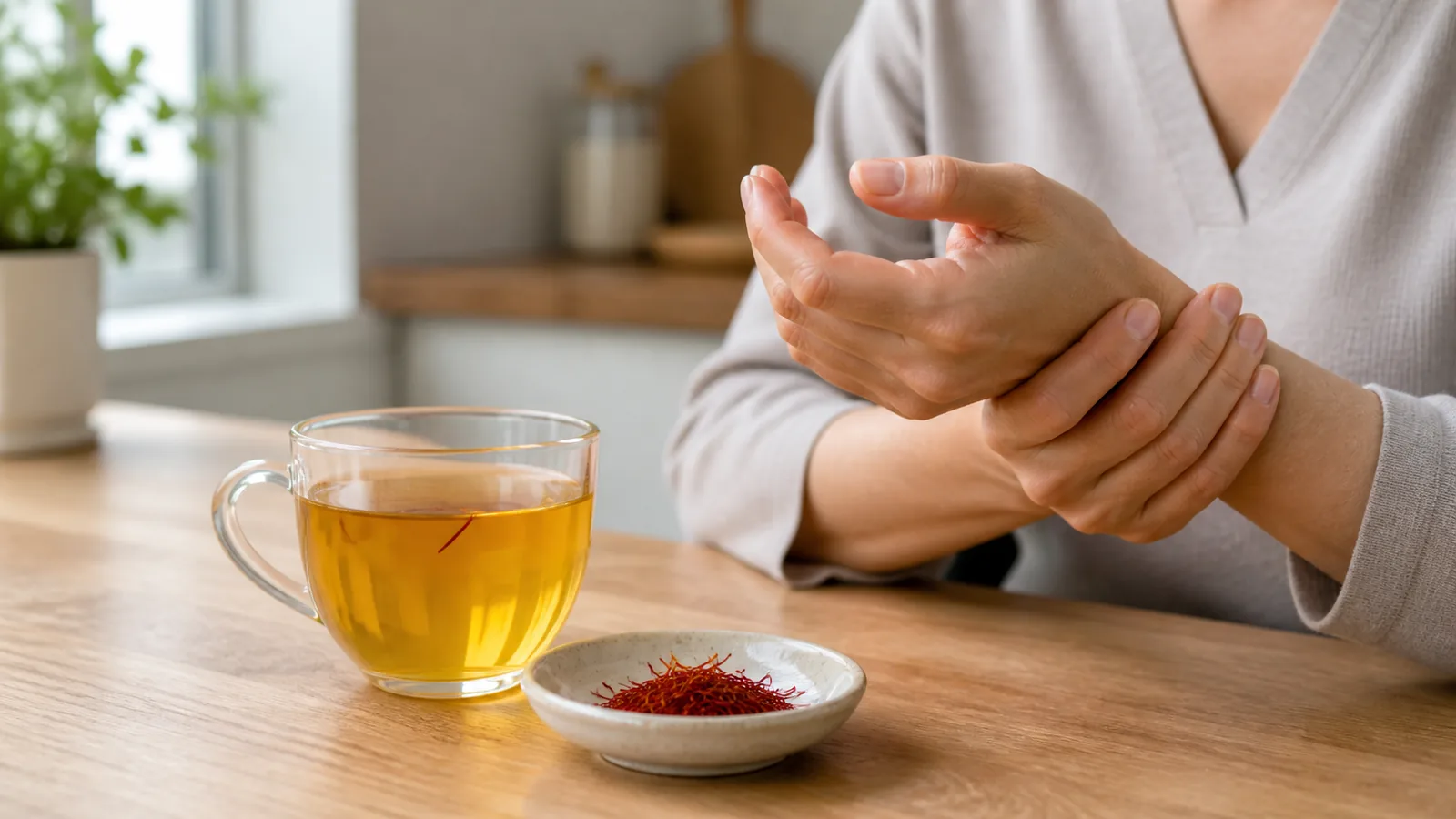
Normal culinary use of saffron is not known to be hard on the liver for most healthy adults. That does not mean saffron “detoxes,” protects or repairs the liver. Human supplement studies have reported mixed, generally small changes in liver enzymes, and they have not established saffron as a treatment for liver disease.
The form and amount matter. A few threads in food are a different exposure from a concentrated extract taken every day, and a multi-ingredient supplement raises questions that the saffron on its label cannot answer by itself.
Saffron and liver health: does saffron harm the liver?
Published trials have not produced a clear signal that defined saffron preparations routinely damage the liver at the studied amounts. However, the evidence base is too limited to declare every product, dose and duration safe for every person—especially someone who already has liver disease.
A 2026 systematic review of saffron adverse events examined clinical trials and found saffron generally well tolerated, while noting that higher-dose or prolonged medicinal use may justify monitoring. Gastrointestinal symptoms were the most frequently reported adverse events. The review does not create a universal safe liver dose.
Herbal and dietary supplements can also be contaminated, adulterated or combined with other active ingredients. If liver tests change after starting a product, causality has to consider the whole product, medicines, alcohol, infections and underlying conditions—not saffron in isolation.
Is saffron good for the liver?
Is saffron good for your liver? It is too strong to call saffron liver-protective. Crocin, safranal and other compounds have shown antioxidant effects in laboratory and animal research, including work on oxidative stress. A mechanism in cells or rodents does not prove prevention or reversal of human liver damage or a meaningful improvement in liver function.
Human results are inconsistent. A meta-analysis of nine randomised trials found a small average reduction in ALT but no significant effect on AST or alkaline phosphatase, with substantial inconsistency between studies and no dose-response relationship. A separate review of eight trials reported a small AST change but no significant ALT or alkaline-phosphatase effect.
Those enzyme findings do not show that saffron prevents cirrhosis, treats hepatitis, removes fat from the liver or improves long-term outcomes. Liver enzymes are useful clinical clues, but a small group-average shift is not the same as healthier liver tissue.
What did fatty-liver trials find?
In one 12-week trial in 76 adults with nonalcoholic fatty liver disease, 100 mg of saffron per day changed some inflammatory and oxidative markers but did not significantly change ALT or AST compared with placebo. Participants were selected and monitored; the result does not support self-treating fatty liver.
When could a high dose or supplement form be risky?
Risk becomes harder to judge with a high dose, use over extended periods, a product containing several herbs, or medicines processed by the liver. “Natural” does not mean interaction-free. The liver’s role in processing substances is not a reason to say that a large saffron dose overwhelms its detoxifying process; that popular explanation is too simplistic.
Stop the new supplement and seek prompt medical advice if you develop jaundice (yellow skin or eyes), dark urine, pale stools, persistent vomiting, unusual itching, marked fatigue, swelling or pain in the upper right abdomen. Do not wait for an article to distinguish a supplement reaction from another liver problem.
How much saffron is safe for the liver?
There is no established liver-specific daily allowance. Around 30 mg per day appears in several clinical protocols, while some trials have studied 100 mg and other defined amounts for limited periods. These are research doses, not a recommendation that everyone should take them. The original idea that 200–400 mg is broadly safe short-term goes beyond what can be generalised across products and people.
Amounts measured in grams are far beyond ordinary seasoning and should not be used as an experiment. For food, follow the recipe and use a small pinch. For a supplement, follow its label and discuss the exact product with a doctor or pharmacist rather than converting a study dose into strands.
Who should get medical advice first?
- Anyone with existing liver conditions such as hepatitis, fatty-liver disease or cirrhosis, abnormal liver enzymes, or a previous supplement-related liver injury
- People taking prescription or over-the-counter medicines, especially several products at once
- Anyone preparing for surgery
- People who are pregnant or breastfeeding
- Anyone considering saffron to replace a prescribed liver treatment
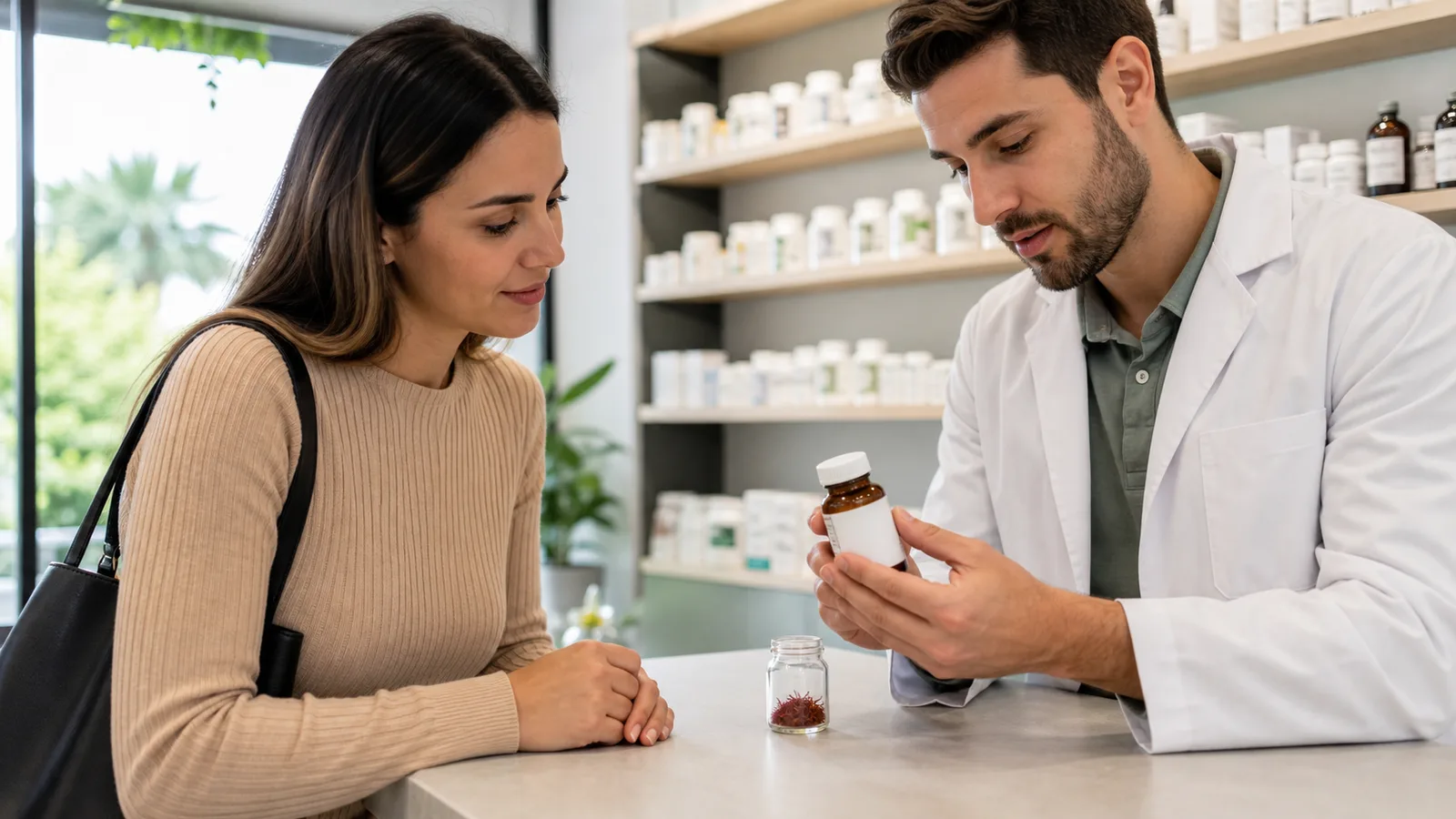
The FDA advises talking with a healthcare professional before using dietary supplements because they can interact with medicines, interfere with laboratory tests and cause adverse effects. Bring the container or a photo of its ingredient panel to the appointment.
The practical answer
Is saffron hard on the liver? A normal culinary amount is not known to be harmful for most healthy adults. Supplements require more caution, particularly with existing liver disease or other medicines. Current research does not justify promising liver protection, recommending a therapeutic dose or using saffron to treat an abnormal liver test.
Use saffron as a spice if you enjoy it, and let a clinician—not a wellness claim—guide decisions about liver disease.