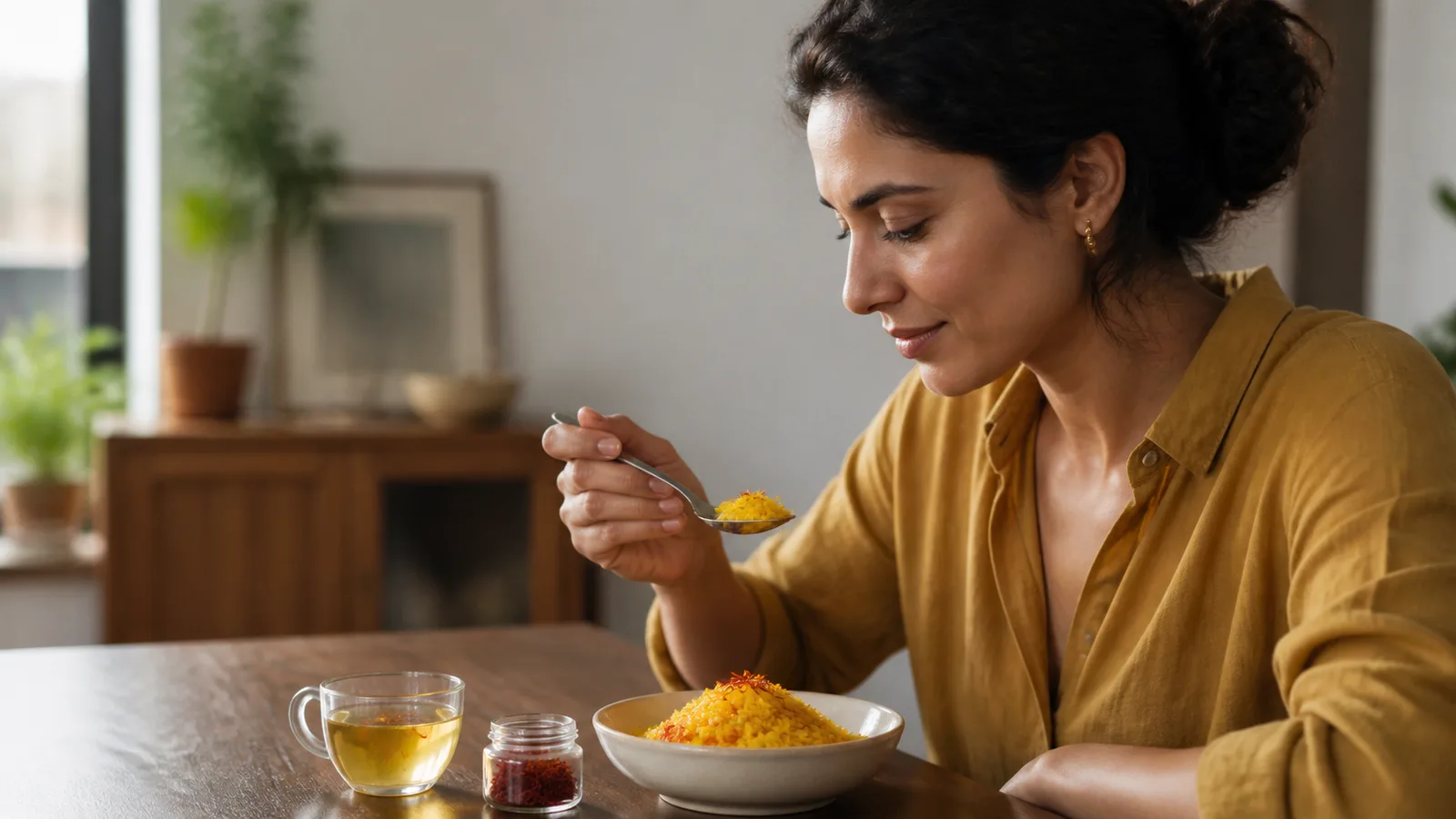
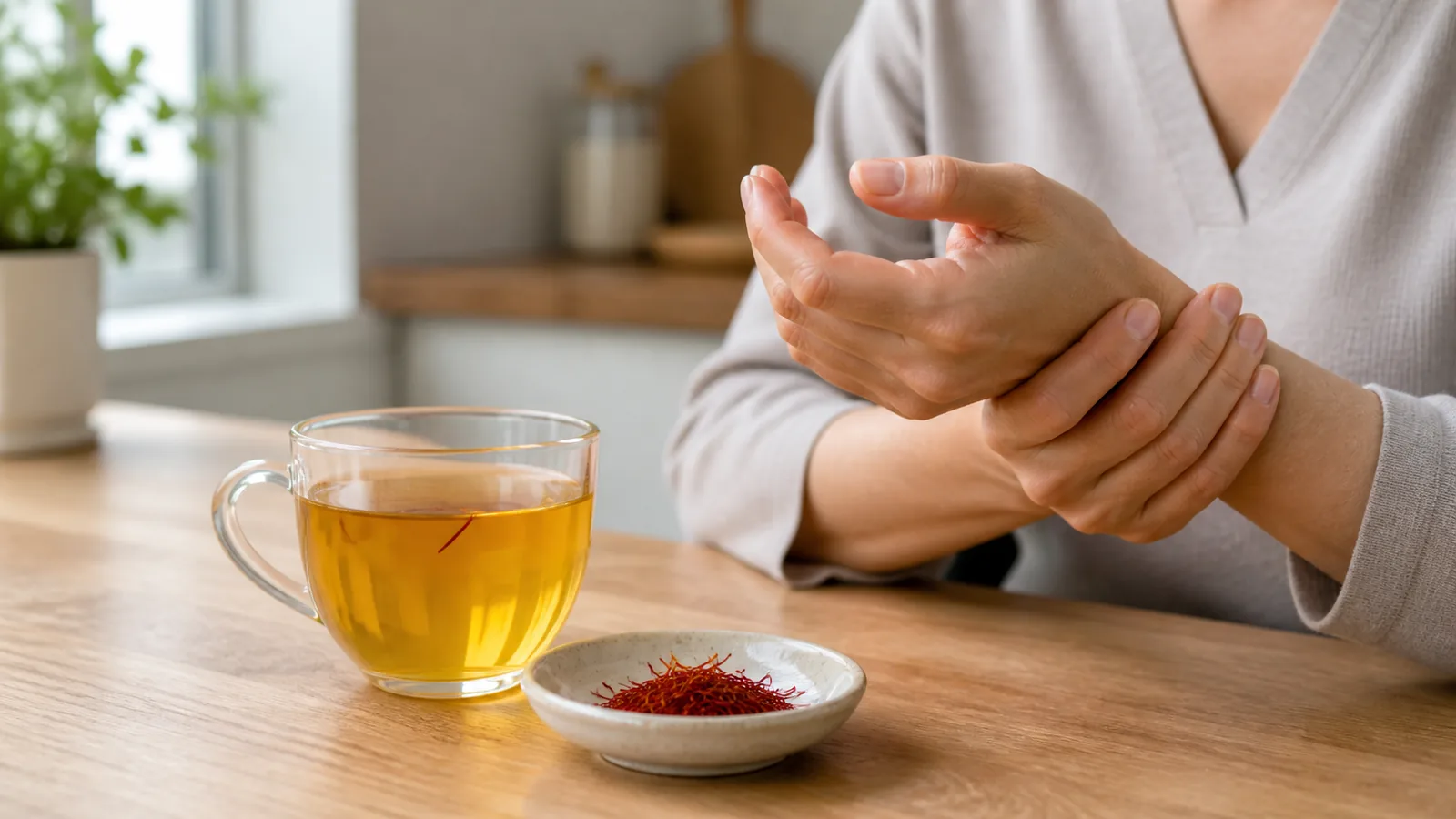
Is it safe to eat saffron every day? For most adults without an allergy or relevant medical concern, a small culinary amount in food is generally different from taking a concentrated extract every day. Daily use is not automatically better, and there is no universal thread count that suits every product and person.
Is saffron safe? In modest food use it can be for many adults, but saffron safety depends on amount, form and individual circumstances. Saffron daily drinking safety follows the same principle: a lightly infused recipe drink is not equivalent to a concentrated daily preparation.
Is It Safe to Eat Saffron Every Day?
Safe daily saffron consumption starts with knowing what you have. A pinch of genuine threads shared across a pot of rice is not equivalent to a capsule, spoonful of powder or strong homemade concentrate. Check the form, serving size and purpose before treating any amount as routine.
Health Benefits of Saffron
Saffron contains crocins, crocetin, picrocrocin and safranal. Defined preparations have been studied for mood and several other outcomes. A review of saffron evidence reviews found promising results in some areas alongside weaknesses in study quality and reporting.
That evidence does not show that a daily pinch prevents heart disease, treats anxiety, improves memory or fixes digestion. Culinary saffron certainly adds colour and aroma; any health claim needs to match the preparation and outcome actually studied.
Recommended Daily Intake of Saffron
There is no official recommended daily intake for saffron as a nutrient. Figures such as 30 or 50 milligrams often come from individual supplement studies, not a general guideline for food. Threads differ in size, powders vary in purity and extracts have their own concentrations.
There are therefore no official “saffron consumption daily guidelines” that set one nutrition allowance for everyone. A study dose is evidence about that study, not a household recommendation.
For cooking, use the modest amount a reliable recipe needs. If you take a supplement, follow that exact label and do not combine it with a daily tea or extra powder without checking the total exposure. Children should not be given an adult concentrated product.
Potential Risks of Overconsumption
Increasing the amount can cause nausea, vomiting, dizziness, headache or an allergic reaction. A toxicology review describes dose-related adverse effects and concerns with high exposure, including during pregnancy. It is not a target-dose guide.
Pregnancy, breastfeeding, planned surgery, low blood pressure, a bleeding condition, significant illness or regular medicines are reasons to ask a doctor or pharmacist before repeated concentrated use. Stop and seek urgent help for breathing difficulty, facial or throat swelling, fainting or another severe reaction.
How to Safely Enjoy Saffron
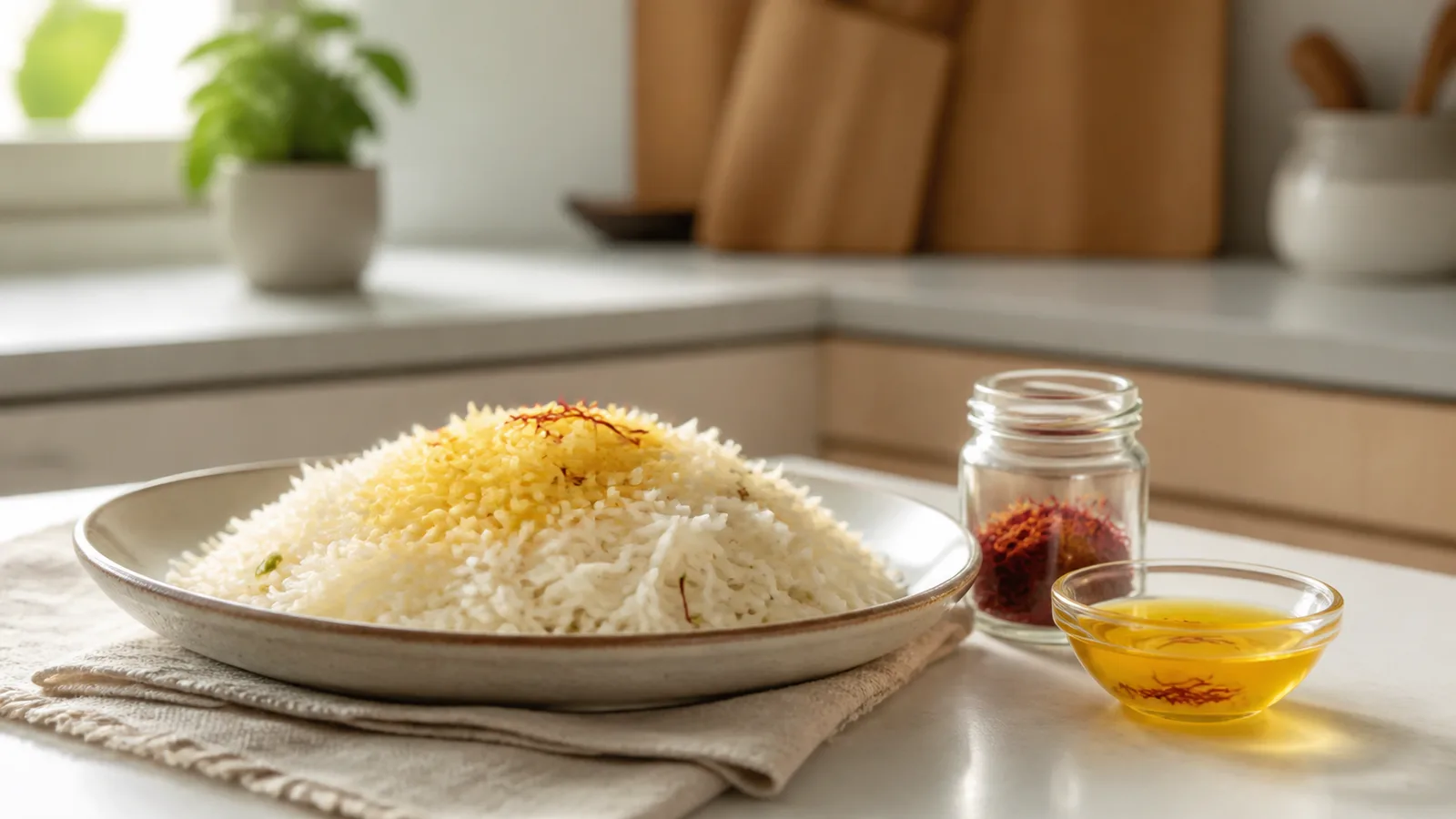
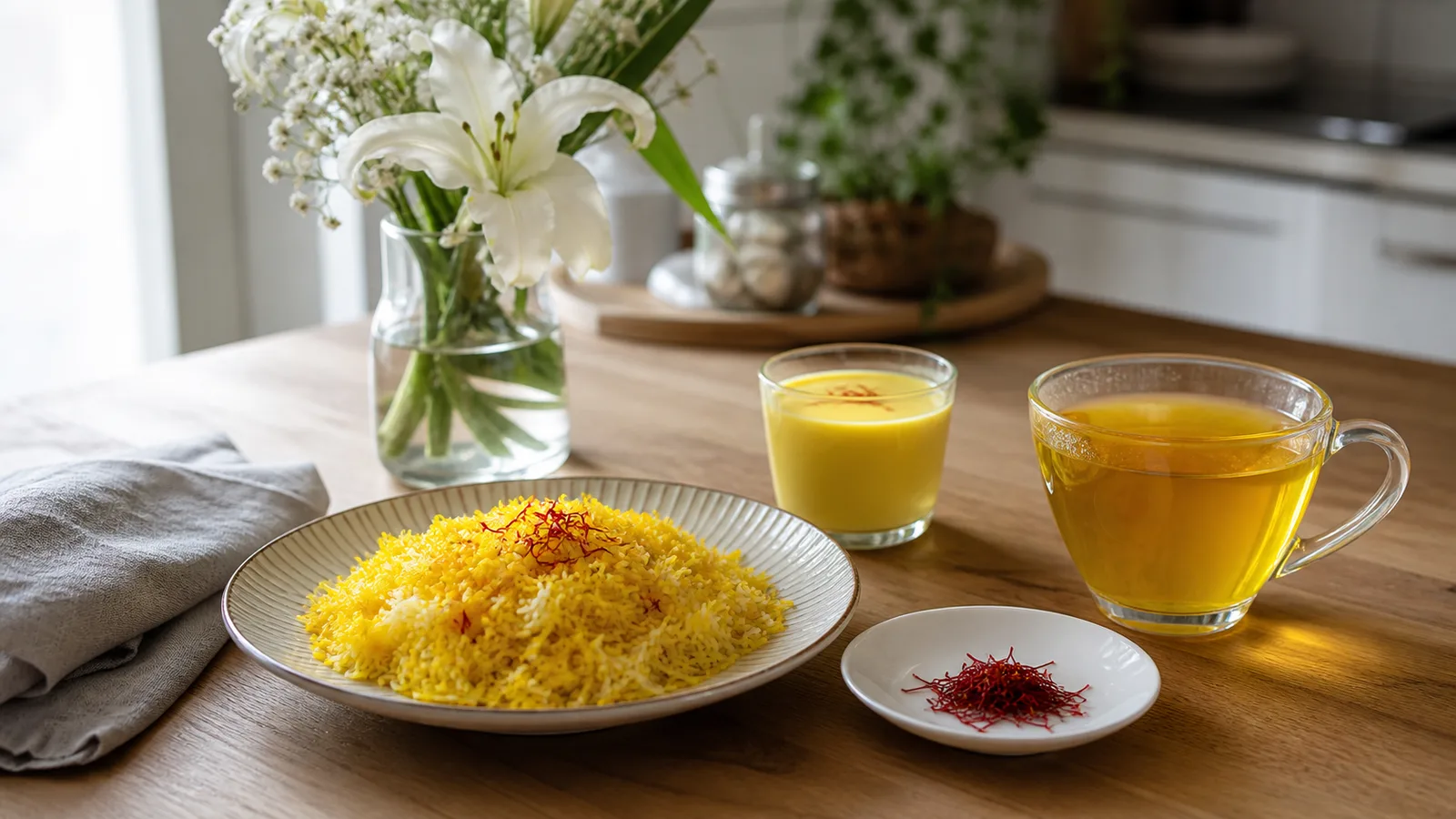
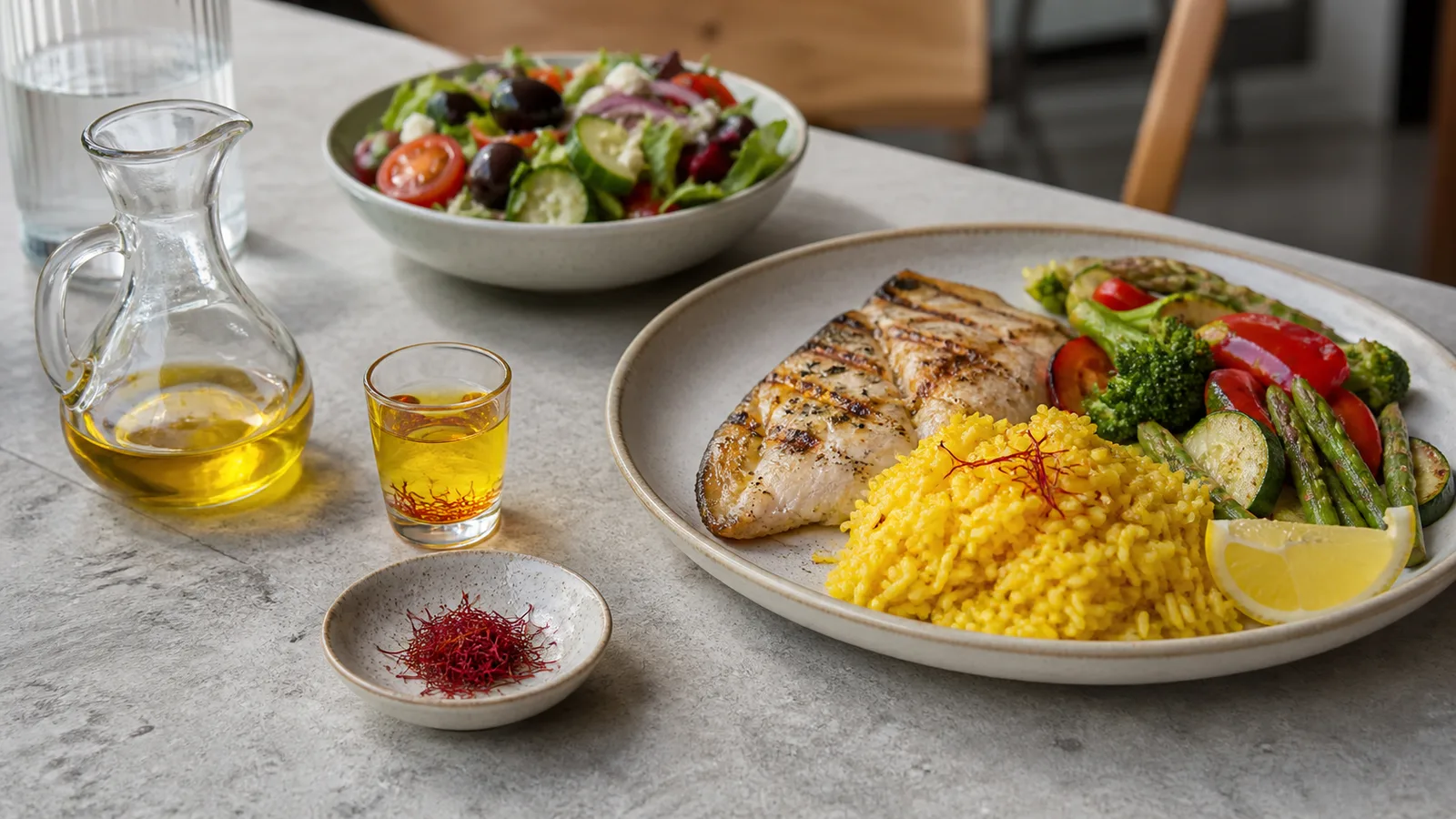
Crush a small culinary pinch and bloom it in warm water or milk for 15 to 20 minutes. Add both the liquid and softened threads to rice, soup, stew, tea, yoghurt or custard. This distributes the flavour, so you are less tempted to add an unnecessarily large amount.
Buy sealed food-grade saffron from a traceable seller. Keep it dry, airtight, cool and away from direct light. Do not use damp, mouldy, infested or chemical-smelling material, and avoid loose powder of uncertain origin.
Should You Take Breaks?
There is no general rule that everyone must cycle ordinary spice use. The more useful check is whether you have a reason to take it daily and whether the amount has quietly increased. A daily food habit that causes symptoms should stop; a supplement should be reviewed according to its label and purpose.
Conclusion
Can I eat saffron everyday? A small food amount may be reasonable for many adults, but “every day” does not make it safer or more effective. Keep culinary portions modest, treat extracts separately and get product-specific advice when health conditions, medicines, pregnancy or adverse effects are involved.
For the drink-specific version, read is it safe to drink saffron every day? You can also browse our culinary saffron.