Iranian saffron and cancer research has produced interesting laboratory findings, but saffron is not a cancer therapy. Extracts and isolated compounds such as crocin, crocetin and safranal have affected cancer cells in dishes and tumour models in animals. Researchers have not shown that eating saffron or taking a saffron supplement treats prostate cancer—or any other cancer—in people.
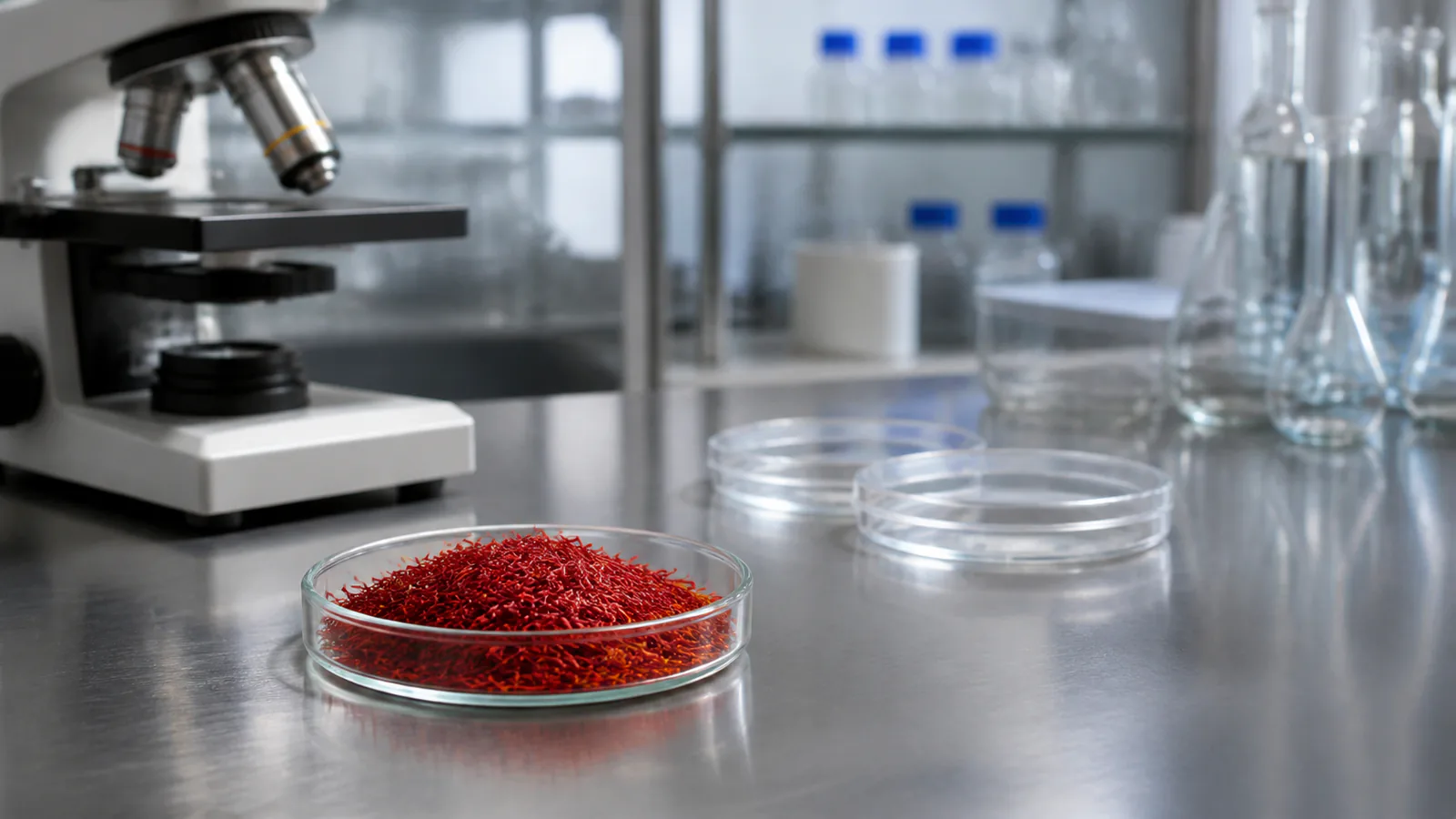
The difference between a research lead and a treatment is especially important here. The original report behind this article described a conference claim as if it were clinical proof. The verifiable evidence is preclinical and must be presented as such.
What Iranian saffron cancer studies investigate
Iranian pharmacology and medical research groups have contributed to a broad literature on Crocus sativus. Common subjects include saffron extract and its constituents:
- Crocin, a water-soluble carotenoid associated with saffron’s colour;
- Crocetin, a related compound produced as crocins are metabolized;
- Safranal, a volatile compound associated with aroma;
- Picrocrocin, which contributes bitterness.
Scientists expose cultured cancer cells to measured concentrations and examine cell growth, the cell cycle, apoptosis, gene expression and signalling pathways. Animal studies may implant human tumour cells into mice and measure tumour growth after an experimental treatment. These models can identify a possible mechanism. They cannot establish safety, effective dosing or survival benefit in patients.
What has been found in prostate cancer models?
Aqueous saffron extracts and crocin have been tested against several prostate cancer cell lines, including PC3, DU145, LNCaP and 22Rv1. Laboratory studies reported reduced cell proliferation at certain concentrations and changes in pathways involved in cell-cycle control and apoptosis.
A mouse xenograft study tested saffron extract, crocin and crocetin after animals had been implanted with human prostate cancer cells. Crocin and crocetin delayed tumour progression in parts of the experiment; crocetin produced the strongest result. The saffron-extract result was weaker and did not reach significance in every comparison.
More recent cell-line research on prostate cancer mechanisms found dose- and time-dependent changes in cell viability and gene regulation. Again, these were cells grown under controlled laboratory conditions. A concentration that affects isolated cells cannot be translated into a spoonful of saffron or a human treatment dose.
What about other cancers?
Saffron constituents have been studied in models of breast, colorectal, liver, stomach, lung, cervical, ovarian, pancreatic and blood cancers. Reviews describe recurring experimental effects such as reduced proliferation, altered oxidative signalling, cell-cycle arrest and apoptosis.
This breadth can sound impressive, but the same compound may affect many cell lines at laboratory concentrations without becoming a useful medicine. A credible cancer therapy needs controlled human trials that evaluate tumour response, side effects, quality of life or survival. Saffron has not crossed that evidentiary threshold.
Our broader guide to saffron and cancer explains the evidence ladder across cell, animal and human research.
Why apoptosis in a dish is not cancer prevention
Apoptosis is a regulated process of cell death. Cancer researchers often study whether an experimental compound can trigger it. Finding that effect in a cell line is valuable for understanding a mechanism, but it does not show that a food prevents a tumour from forming in a person.
Likewise, an effect on DNA synthesis or a signalling protein does not prove clinical benefit. Researchers must still determine whether the compound reaches a tumour at a safe concentration, what the body converts it into, how it interacts with other treatments and whether the outcome improves for patients.
The original prostate claim and lycopene
The old article blended saffron with statements about lycopene, sex hormones and prostate tissue. Lycopene is a separate carotenoid best known from tomatoes and other red fruits. Evidence about lycopene cannot be used to prove an effect of saffron, and neither ingredient should be described as a cure for prostate cancer.
Prostate cancer is not one uniform disease. Treatment decisions depend on stage, grade, PSA pattern, imaging, health, age and patient preferences. They may involve active surveillance, surgery, radiation, hormone therapy, chemotherapy, targeted therapy or immunotherapy.
Can someone with cancer use saffron?
A small culinary amount in food is different from a concentrated extract. Anyone receiving cancer treatment should tell the oncology team about supplements and herbal products. The US National Cancer Institute states that no herb or dietary supplement has been proven to slow cancer, cure it or keep it from returning, and some products can alter how treatment works.
Do not delay a biopsy, oncology appointment or proven treatment to try saffron. A clinician or oncology pharmacist can consider the exact product, dose, medicines, bleeding risk, liver and kidney function, and timing around treatment.
How to read a saffron cancer headline
- Check whether the experiment involved cells, animals or patients.
- Identify whether researchers tested whole saffron, an extract or an isolated compound.
- Look for a meaningful patient outcome, not only a molecular marker.
- Check the comparison group, study size and independent replication.
- Treat words such as “promising” and “potential” as a signal that clinical proof is not yet established.
Iranian saffron research offers legitimate hypotheses for drug-development work. It does not justify calling the spice a prostate-cancer treatment or a general cancer preventive agent.