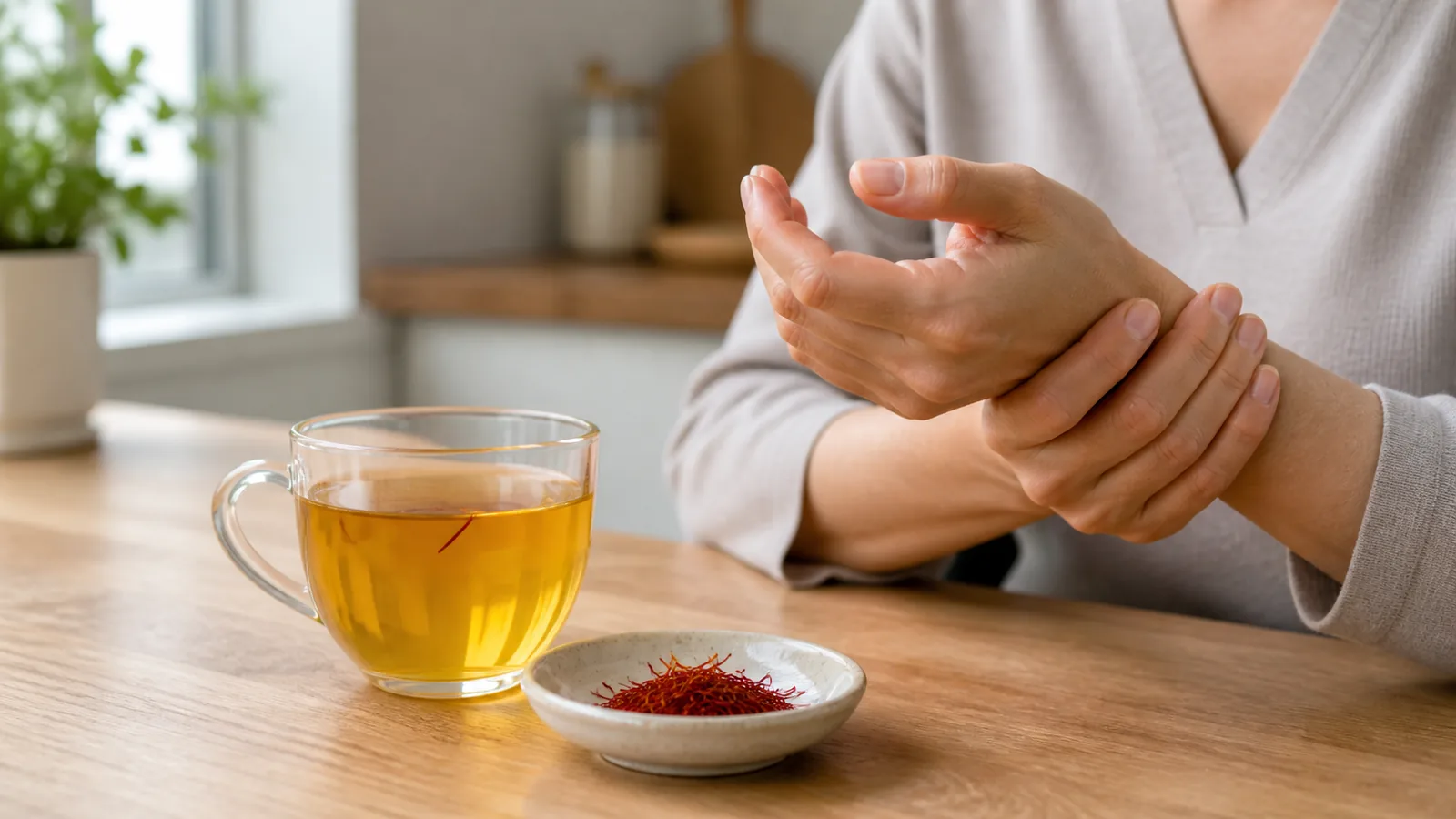
Saffron ingredients are led by three natural compounds: crocins for colour, picrocrocin for bitterness, and safranal for aroma. They are present in the dried red stigmas of Crocus sativus, the flower from which culinary saffron is made. The spice also contains smaller amounts of other plant compounds, but those three explain most of what you see, taste and smell when saffron meets food.
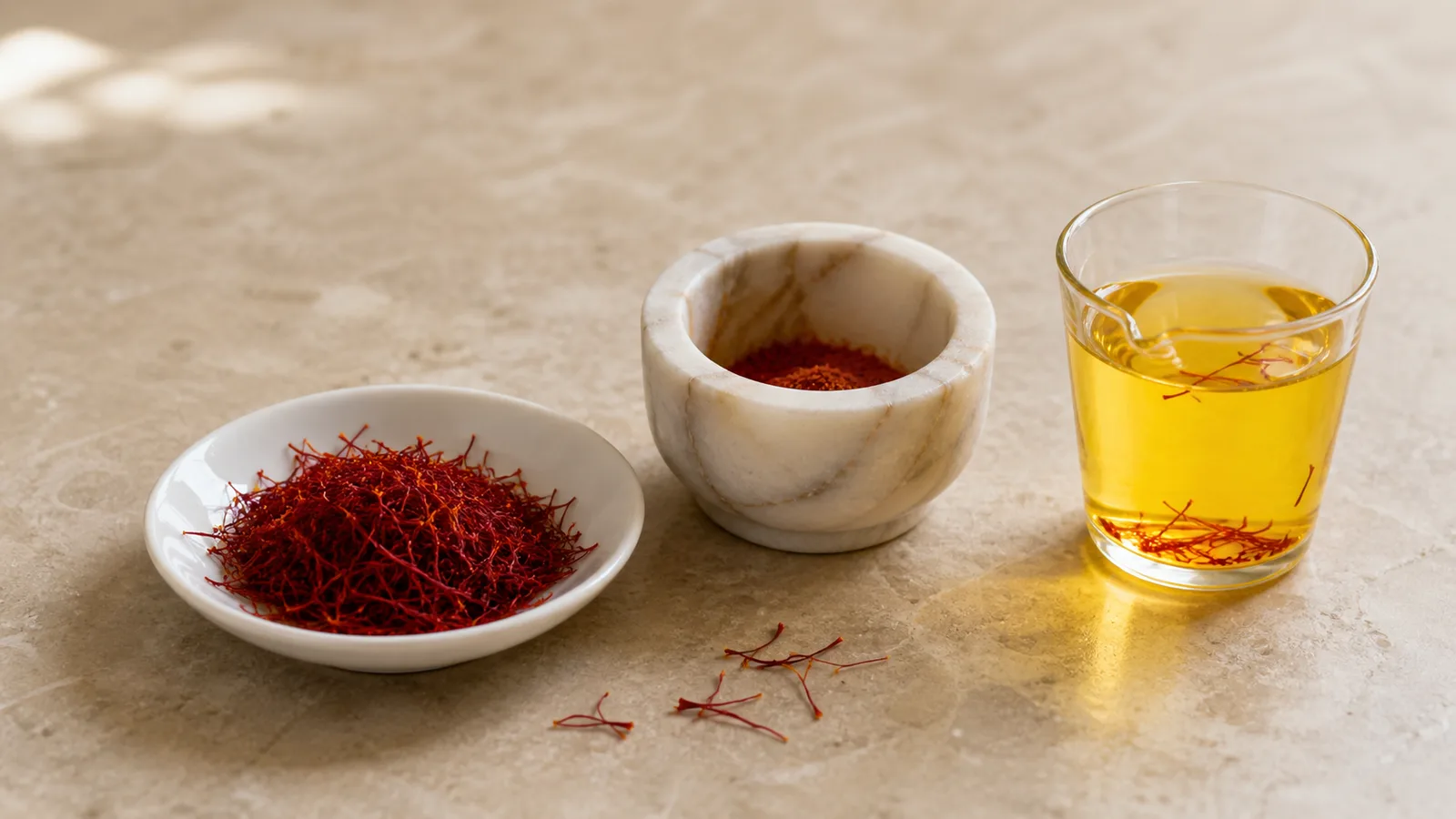
Knowing what is in saffron is useful in the kitchen. It explains why the threads release colour into water, why grinding helps, why the aroma changes with heat, and why good storage matters. It also helps separate the chemistry of a culinary spice from health claims made for concentrated extracts.
What part of the flower becomes saffron?
Saffron comes from Crocus sativus, an accepted species in the iris family. The spice is not made from the petals or the whole flower. It consists of the dried, red stigma branches collected from inside each flower. The Royal Botanic Gardens, Kew describes the plant as a tuberous geophyte and lists saffron as its English common name.
Each flower normally bears three stigma branches. That small harvest per flower is one reason genuine saffron is costly. Yellow style material may remain attached in lower grades, while the strongest colour is concentrated in the red portion. Petals from saffron flowers have their own composition, but they are not interchangeable with the culinary spice.
The three characteristic saffron ingredients
A modern review of saffron phytochemistry identifies crocins, picrocrocin and safranal as its three principal quality-related compounds. They do different jobs, so judging saffron by colour alone misses part of the picture.
Crocins create the golden colour
Crocins are carotenoid pigments derived from crocetin. Unlike many familiar carotenoids, the main crocins dissolve readily in water. This is why a few red threads can turn water, milk or rice a clear yellow-gold. The colour should spread through the liquid; the thread itself does not need to dissolve.
Crocin content varies with the crop, processing, storage and laboratory method. A dark red appearance is useful, but it cannot by itself prove strength or authenticity. Formal saffron testing assesses colouring strength rather than relying only on a photograph or a seller’s description.
Picrocrocin supplies the bitter note
Picrocrocin is the main compound associated with saffron’s characteristic bitter taste. It is a natural part of the stigma and also a precursor in the chemical pathway that produces safranal. Good saffron therefore has a slight bitterness; it should not taste sweet simply because sugar was used while grinding it.
Safranal carries much of the aroma
Safranal is a volatile aromatic compound formed as the harvested stigmas are dried and as picrocrocin changes over time. It gives saffron much of its recognisable hay-like, warm aroma. Because it is volatile, prolonged exposure to air and unnecessary high heat can flatten the fragrance.
The relationships among these compounds are explained in the peer-reviewed review Phytochemistry, quality control and medicinal uses of Saffron. The practical point is simple: colour, taste and aroma come from related but distinct parts of saffron’s chemistry.
What else does saffron contain?
Researchers have identified many other volatile and non-volatile compounds in saffron. These include crocetin, minor carotenoids, kaempferol derivatives and other flavonoids, along with the ordinary carbohydrates, proteins, moisture and minerals found in dried plant tissue. The exact profile changes with origin, harvest maturity, drying and storage.
Older descriptions sometimes single out riboflavin or fixed oil as if saffron were a meaningful dietary source. That is misleading in normal cooking. A dish uses such a small quantity of the spice that saffron should be valued for colour, flavour and aroma, not treated as a practical source of vitamins, protein or fat.
Should saffron be ground before use?
Usually, yes. Gently grinding saffron increases the surface area that touches the liquid, so its colour and flavour disperse more evenly. Grind only the amount you need, shortly before cooking. Whole threads keep their aroma better in storage and are easier to inspect for quality.
- Measure the threads before grinding; a small pinch is enough for many dishes.
- Use a clean, completely dry mortar and pestle.
- Crush the threads to a fine powder without heating them.
- If the small quantity slips under the pestle, add a pinch of sugar or coarse salt as a grinding aid. This is optional and should suit the recipe.
Grinding does not make poor saffron stronger, and the powder should not be stored for long simply for convenience. Pre-ground saffron is harder to authenticate because dyed plant fibres and fillers are less visible. If authenticity is uncertain, compare the product with the visual and aroma checks in our guide to identifying real saffron.
How to bloom ground saffron
Put the ground saffron in a small cup, add a little warm water, cover it, and leave it for about 10 to 20 minutes. The liquid should develop a clear golden colour and a distinct aroma. Add both the liquid and any remaining particles to the dish.
Boiling water is not required. A 2024 culinary study compared saffron infusions across water, oil and mixed media and at several temperatures. Water extracted the water-soluble crocins effectively, while lower tested temperatures often preserved or transferred more crocin than hotter conditions. Safranal behaved differently because aroma compounds are volatile and interact with fat. The results support a gentle infusion rather than scorching the threads or boiling them for a long time. See the full infusion-temperature study for its methods and limitations.
For rice, sauces and desserts, stir the infusion in once there is enough cooking time for even distribution. If aroma is the priority, reserve a little and add it near the end. Direct dry heat in a pan is unnecessary and can burn the spice. Heat does not instantly erase every saffron compound, but longer and hotter treatment increases the chance of losing colour or fragrance.
How storage changes saffron
Light, oxygen, moisture, temperature and time all affect saffron’s chemical profile. Crocins can degrade, picrocrocin changes, and volatile aroma can escape. Research on commercial quality therefore treats drying and storage as part of the product’s quality, not merely packaging details.
Keep whole threads in a small airtight glass or food-safe metal container, in a cool, dry and dark cupboard. A sound food-grade plastic container is not automatically unsafe, but glass or metal usually gives a better barrier against aroma loss and repeated exposure to air. Avoid storing saffron above the cooker, beside a sunny window or in a damp refrigerator. Always use a dry spoon.
Safflower is not a saffron ingredient
Safflower petals are sometimes sold under names such as “American saffron,” but safflower is a different plant. It is not an ingredient in genuine saffron and does not reproduce the same balance of crocins, picrocrocin and safranal. Dyed fibres, corn silk and excess yellow style material are other possible substitutions or additions.
Authentic threads have a recognisable trumpet-like shape at one end, a deep red colour and an aroma that is complex rather than simply sweet. No single home test is conclusive. For commercial buying, traceability and laboratory analysis are stronger evidence than a dramatic water test or a claim that every thread must look identical.
Do saffron compounds prove a health benefit?
No. Finding crocin, crocetin or safranal in the spice does not by itself prove that a serving of food prevents or treats disease. Researchers study these compounds in cells, animals and human trials, sometimes at doses or in extract forms unlike ordinary cooking. Those results should not be turned into a promise about blood pressure, cancer, depression, heart disease or any other condition.
Culinary use and supplemental use are also different. Concentrated saffron extracts can deliver a controlled dose far beyond a few threads in a meal and may interact with health conditions or medicines. Pregnancy safety evidence remains limited and depends on dose, preparation and timing. A recent integrative review of saffron in pregnancy found important evidence gaps and greater concern with high intake or exposure. Anyone who is pregnant, breastfeeding, taking medication or considering saffron as a supplement should discuss it with a qualified clinician rather than relying on a culinary article.
For cooking, the useful conclusion is more modest: buy identifiable threads, grind only what you need, bloom them gently, and protect the remainder from light, air and moisture. Those steps respect the chemistry that makes saffron valuable without asking the spice to do more than the evidence supports.