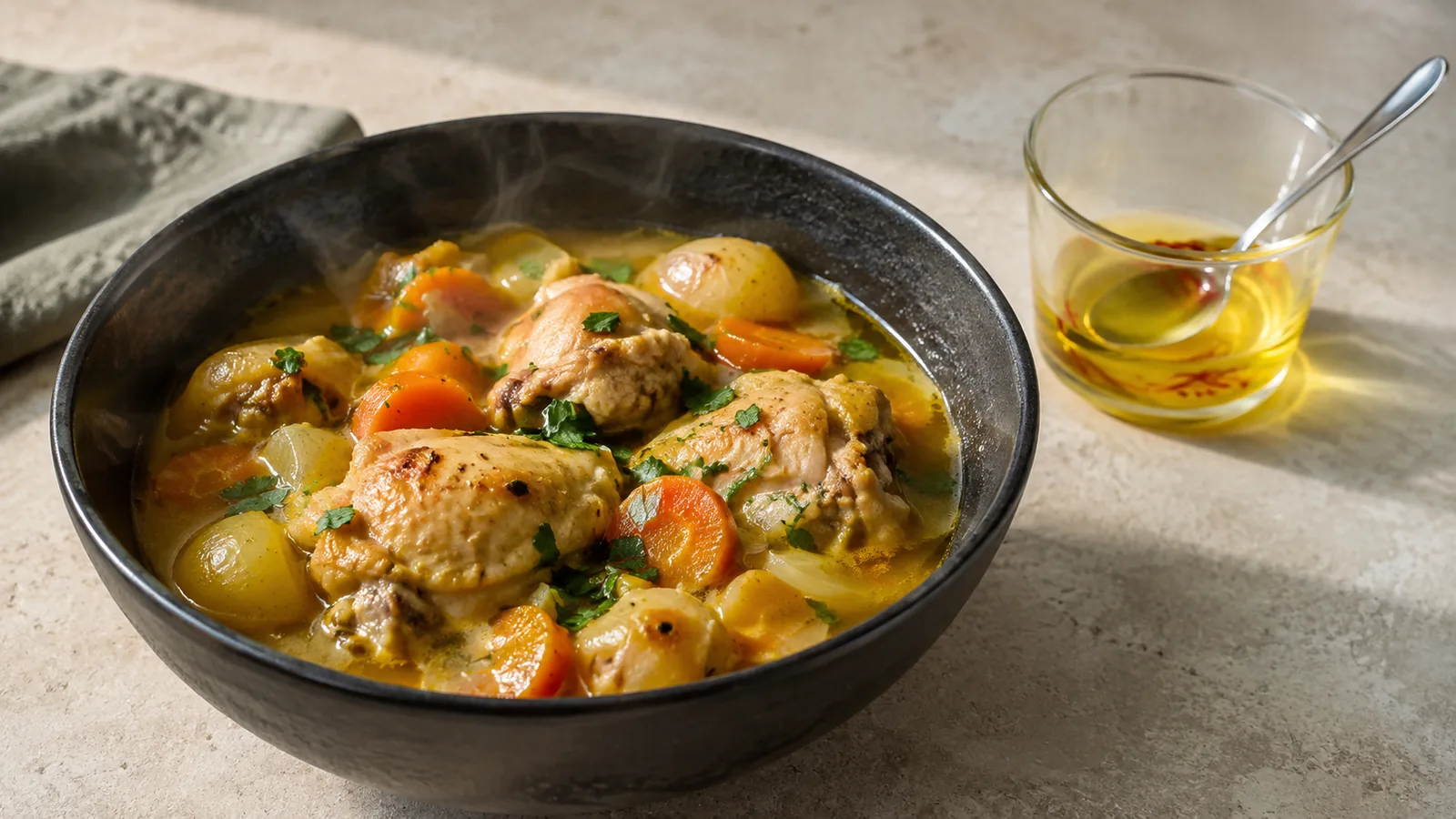
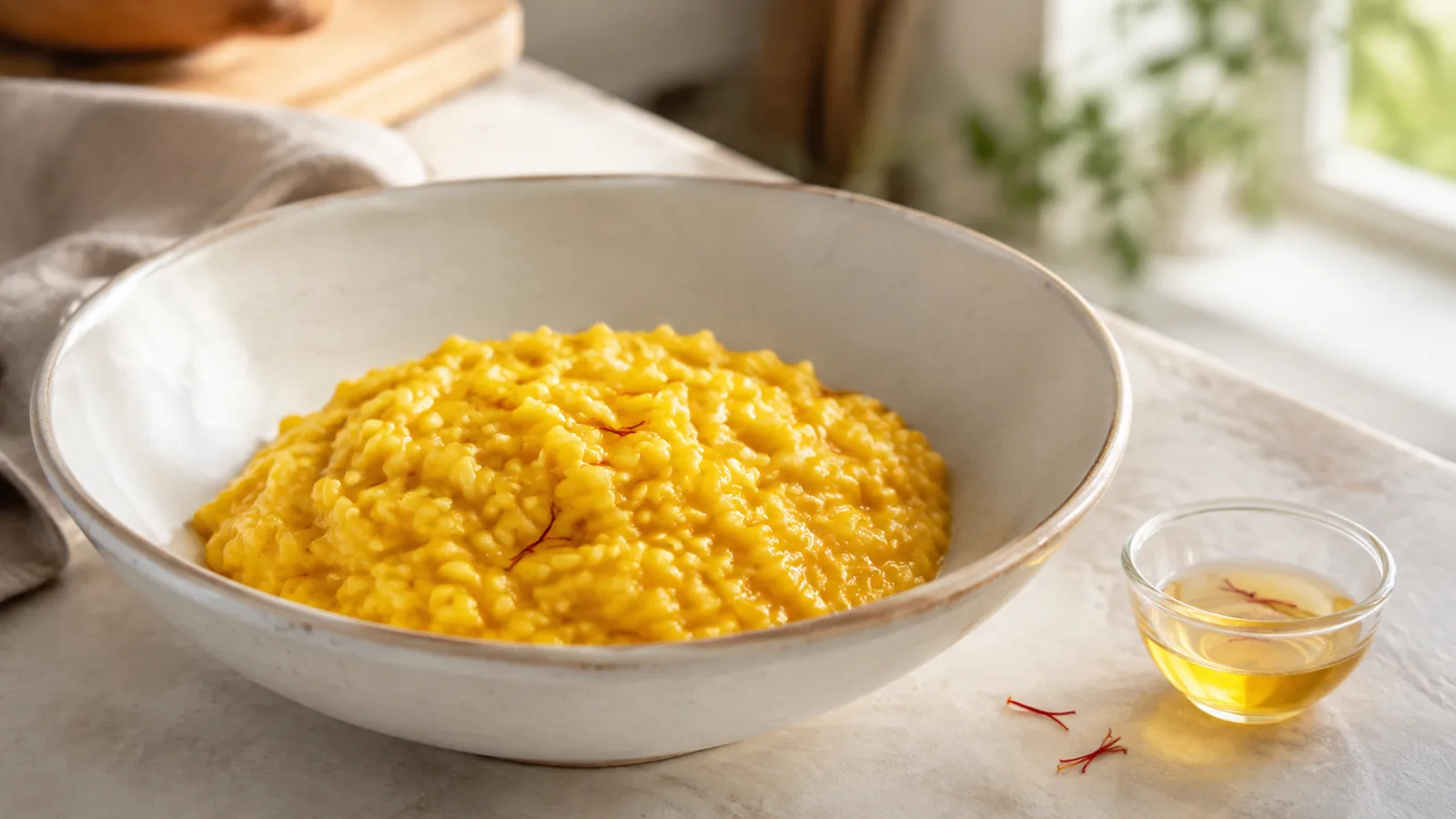
To make a saffron chicken marinade, bloom the threads in warm water, then combine the infusion with yoghurt or olive oil, lemon, garlic and salt. Coat the chicken and refrigerate it for 2 to 12 hours, depending on the cut and marinade. Cook until the thickest part reaches 74°C (165°F).
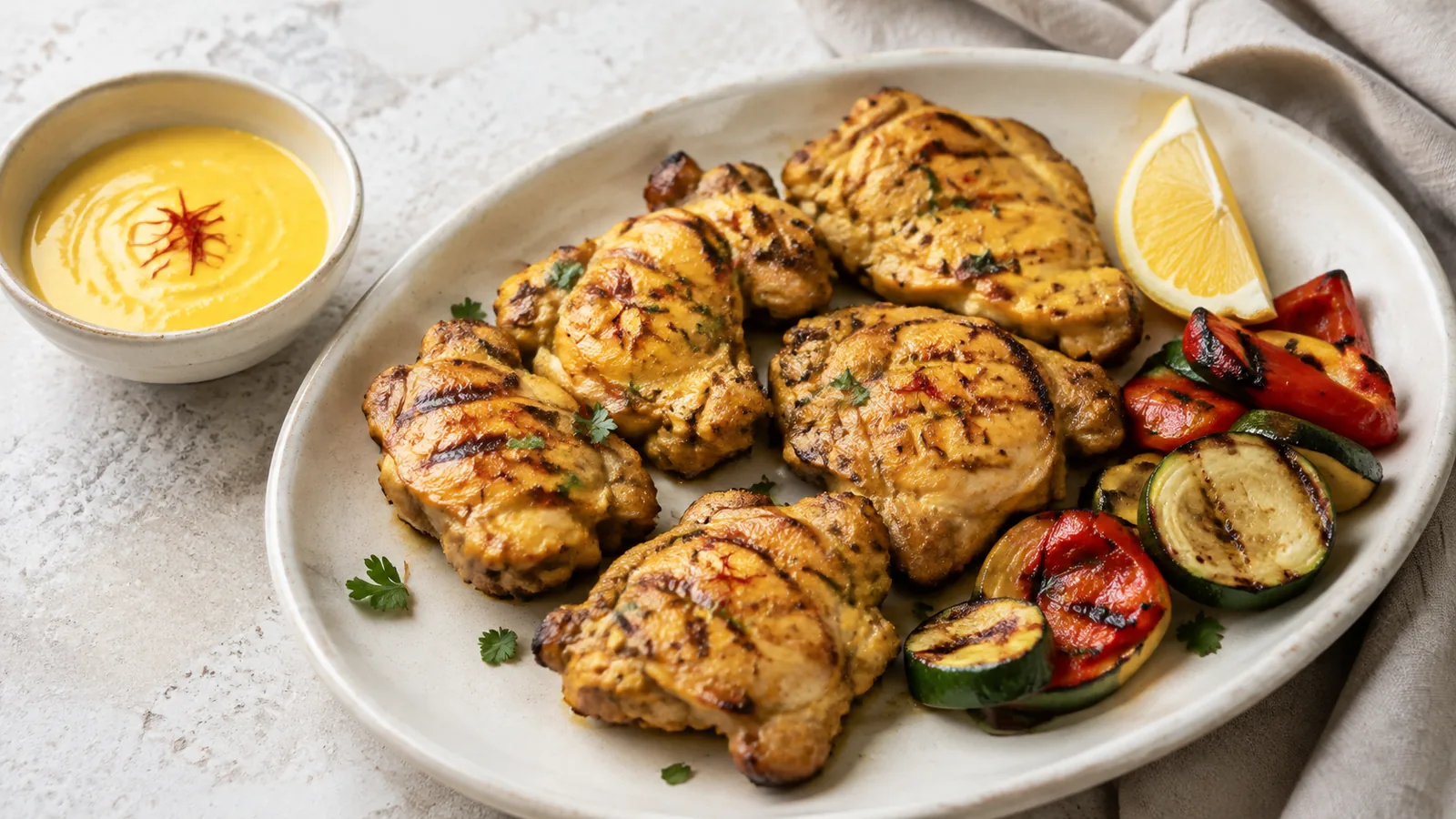
How to Use Saffron to Marinate Chicken
Saffron brings a warm golden colour and a delicate floral aroma with a hay-like edge to chicken. The spice is concentrated, so it works best as a measured part of the marinade rather than a large dry garnish. Blooming first spreads its color, aroma, and flavor across every piece.
A good marinade also needs balance. Fat carries aroma and helps coat the surface; salt seasons; a modest amount of lemon brightens the chicken; yoghurt can soften the texture. Too much acid or an excessively long soak can make the outside of lean chicken soft rather than juicy.
A Reliable Saffron Chicken Marinade
Ingredients for 1 kg of Chicken
- 1 kg boneless chicken breast or thigh, cut into even pieces
- 25 to 35 saffron threads
- 2 tablespoons warm water
- 120 g plain yoghurt
- 2 tablespoons olive oil
- 1 tablespoon fresh lemon juice
- 2 small garlic cloves, finely grated
- 1 teaspoon fine salt
- ½ teaspoon black pepper
- ½ teaspoon ground cumin or paprika, optional
For a dairy-free version, omit the yoghurt and increase the olive oil to four tablespoons. The coating will be thinner, so turn the chicken once or twice while it marinates.
Preparing the Saffron
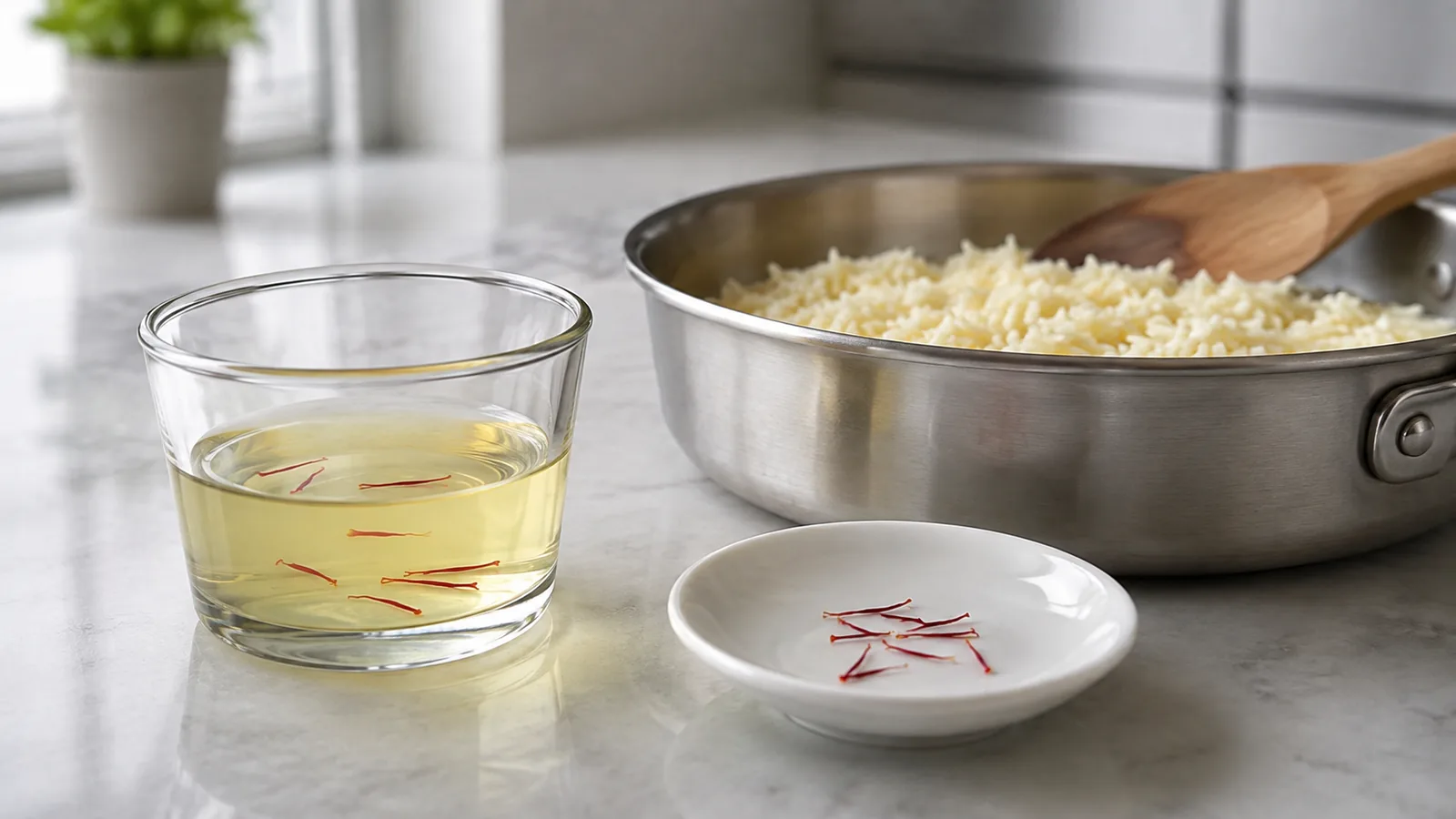
- Gently crush the threads with a mortar and pestle or between clean fingers.
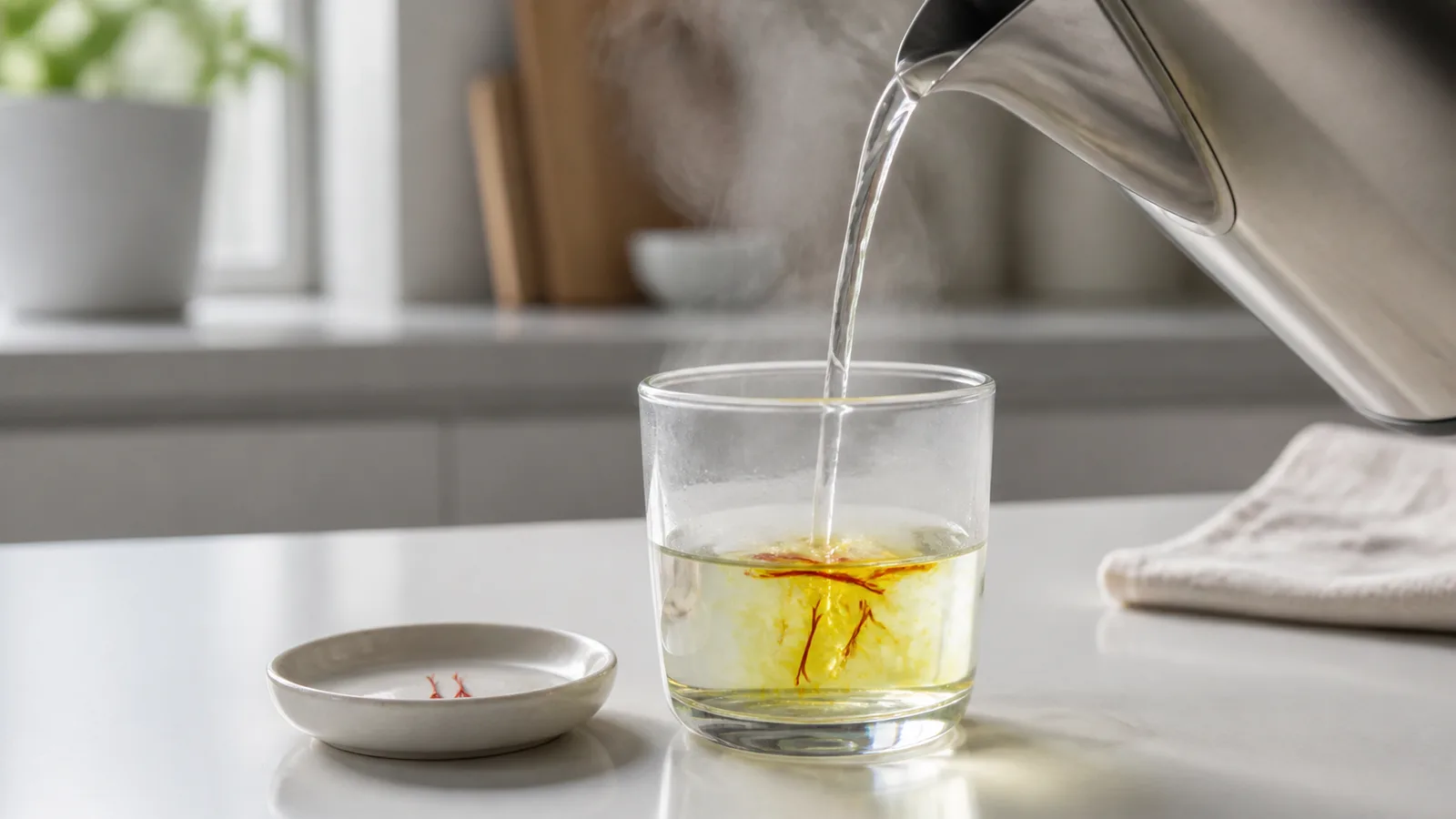
- Add two tablespoons of warm, not boiling, water.
- Leave the mixture for 10 to 15 minutes, until it is fragrant and golden.
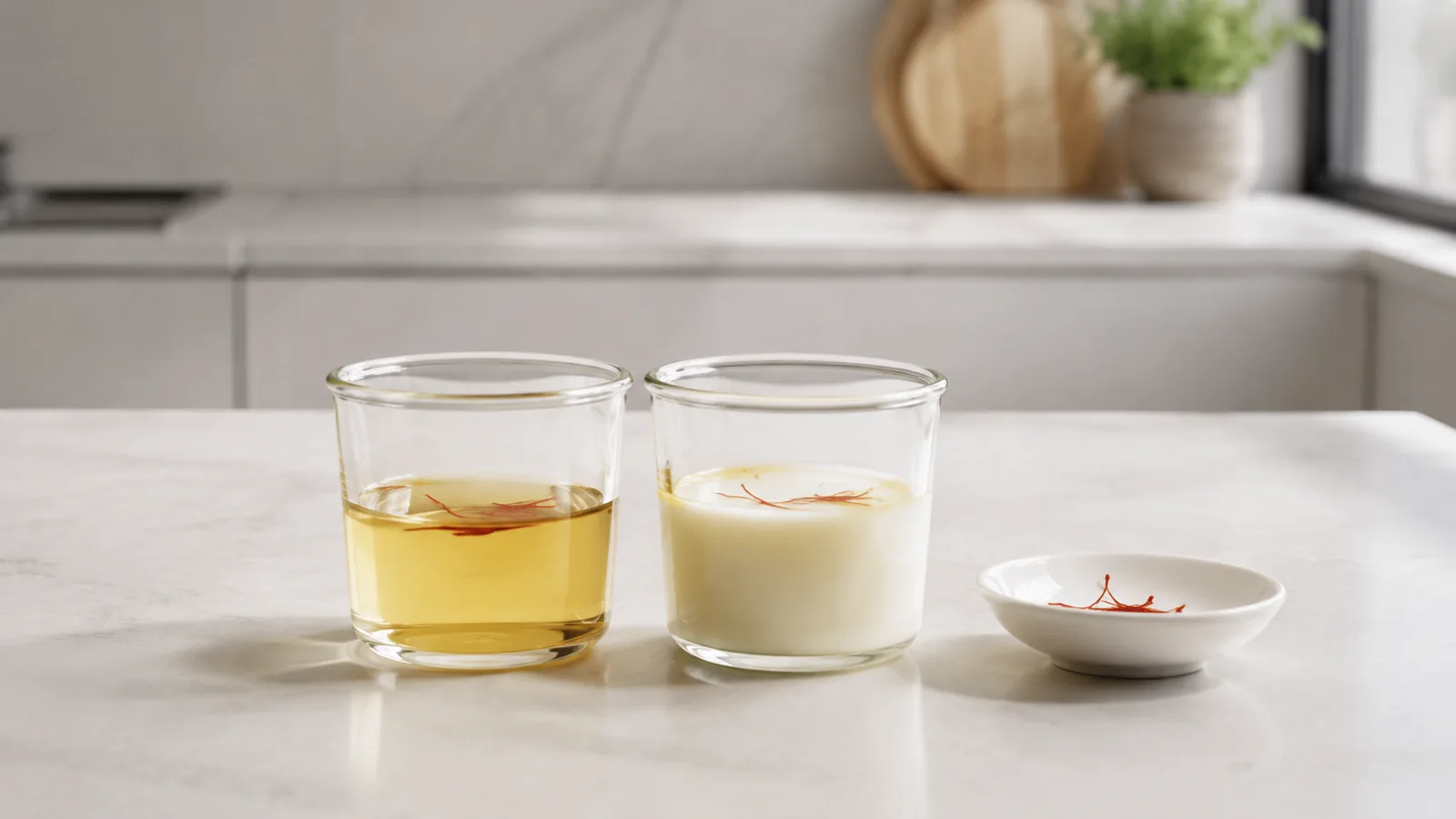
Water gives the saffron a clean start before it meets the thicker ingredients. You can bloom threads in warm milk or yoghurt for other recipes, but water mixes into this marinade more evenly. For the general technique, see how to add saffron to a dish.
Creating the Marinade
- Mix the yoghurt, olive oil, lemon juice, garlic, salt and pepper in a non-reactive bowl.
- Stir in all of the saffron infusion, including the softened threads.
- Add the chicken and turn each piece until it is coated evenly.
- Cover the bowl, or transfer everything to a food-grade resealable bag.
- Refrigerate. Do not leave raw chicken to marinate on the counter.
Marinating the Chicken: How Long?
Boneless breast pieces generally need 2 to 6 hours. Chicken thighs can sit for 4 to 12 hours. An overnight marinade is reasonable for thighs or a mild yoghurt mixture, but it is not automatically better for every cut. A strongly acidic mixture can alter the surface texture when left too long.
USDA Food Safety and Inspection Service guidance says poultry may be marinated in the refrigerator for up to two days. This recipe aims for flavour and texture well before that maximum.
Food-Safe Handling
- Keep the chicken covered in the refrigerator throughout marinating.
- Use glass, stainless steel, food-safe plastic or a food-grade bag.
- Do not reuse marinade that has touched raw chicken as a finishing sauce.
- If you want sauce for serving, reserve a clean portion before adding the chicken.
- Wash utensils, hands and surfaces that touched the raw poultry.
- Use a food thermometer; colour alone cannot confirm doneness.
Cooking the Chicken
Take the chicken from the refrigerator while the grill, oven or pan heats. Let excess marinade drip off so it does not burn, but do not rinse the chicken.
Grilling
Thread even pieces onto skewers or place larger pieces directly on a clean, preheated grill. Cook over medium-high heat, turning as needed for even browning. Exact time depends on thickness; stop relying on the clock once the centre approaches 74°C (165°F).
Baking
Arrange the chicken in a single layer on a lined tray and bake in a preheated 220°C (425°F) oven. Small boneless pieces often cook quickly, while bone-in portions take longer. Check the thickest piece with a thermometer rather than cutting every piece open.
Pan-Frying
Heat a lightly oiled heavy pan over medium to medium-high heat. Add the chicken without crowding it, work in batches if necessary, and turn when the first side releases cleanly. Lower the heat if the yoghurt coating darkens before the centre is cooked.
The marinade adds flavour and colour, but it does not guarantee moisture. Evenly sized pieces and accurate final temperature do more to prevent dry chicken than extra oil or a longer soak.
Flavours That Work with Saffron Chicken
Lemon, garlic and black pepper make a clean base. Cumin, coriander, mild paprika, turmeric, cardamom or fresh herbs can be added, but choose one direction rather than using every spice in the cupboard. Saffron is easiest to notice when the background seasonings remain controlled.
Serve the chicken with rice, flatbread, grilled vegetables or a crisp salad. For a different use of the same pairing, our guide to saffron in chicken soup explains when to add the infusion to broth.
Common Marinade Problems
The Chicken Is Yellow but Does Not Smell of Saffron
Turmeric, paprika or colouring ingredients may be doing most of the visual work. Bloom the saffron on its own and smell the infusion before mixing. Old or poorly stored threads can release colour while contributing little aroma.
The Saffron Tastes Bitter
The dose may be too high, the threads may have scorched, or another bitter spice may be competing. Use a smaller measured amount and let excess marinade drip away before high-heat cooking.
The Marinade Burns
Thick yoghurt and garlic can catch over fierce heat. Remove heavy excess coating, oil the cooking surface lightly and reduce the heat after the chicken has taken on colour.
The Chicken Is Soft on the Outside
Too much lemon or too much time is a likely cause. Keep the acid modest, match the marinating time to the cut, and do not assume that two days is a quality target merely because it is a food-safety maximum.
Choosing and Storing Saffron
Whole red threads are easy to measure and inspect. Store them sealed, dry and away from heat and light. If you need a fresh supply for the recipe, compare thread-form options in the saffron shop and buy a quantity you can keep properly closed.
Conclusion
Marinating chicken with saffron is straightforward when the spice is bloomed first and the timing suits the cut. Use a restrained lemon-and-yoghurt base, coat the pieces evenly, refrigerate throughout and cook to 74°C (165°F). The result should taste recognisably of chicken, with saffron adding an aromatic lift and a natural golden hue rather than an overpowering perfume.