How Expensive Is Real Saffron?
Real saffron is expensive per gram, but a useful price always needs a weight, grade, currency, seller and date. As a dated example, Rowhani Saffron’s live 5–15 g thread variations on 27 August 2026 worked out to about €4.87–€6.82 per gram before any delivery charge or destination tax. Prices change, so use our current saffron price page for today’s figures.
That range answers the real saffron price question more honestly than a permanent dollar claim. At the same per-gram rates, an ounce would be roughly €136–€191 and a kilogram-equivalent roughly €4,870–€6,820—but an actual bulk quote is not simply a retail pack multiplied upward.
People phrase the question as “how much does saffron cost?”, “what is the price of saffron?” or “how much does saffron sell for?” The searches “cost of saffron” and “how much is saffron worth?” are equally broad. The answer changes with the market level: a grower’s price is not the same as a packaged retail price, and saffron value also includes evidence of authenticity and quality.
How much does real saffron cost?
On the same dated store snapshot, the lowest end came from Poushali Saffron B and the highest from Super Negin A. Sargol, Poushali A and Sargol Negin A sat between them. These are product and grade differences within one catalogue, not a universal world market range.
The cost of real saffron can be lower at wholesale volume and higher in tiny gift packs. Currency conversion, harvest, origin, testing, packaging, shipping, import charges and retailer margins also move the number. A quote without net weight is not comparable.
Why saffron costs so much
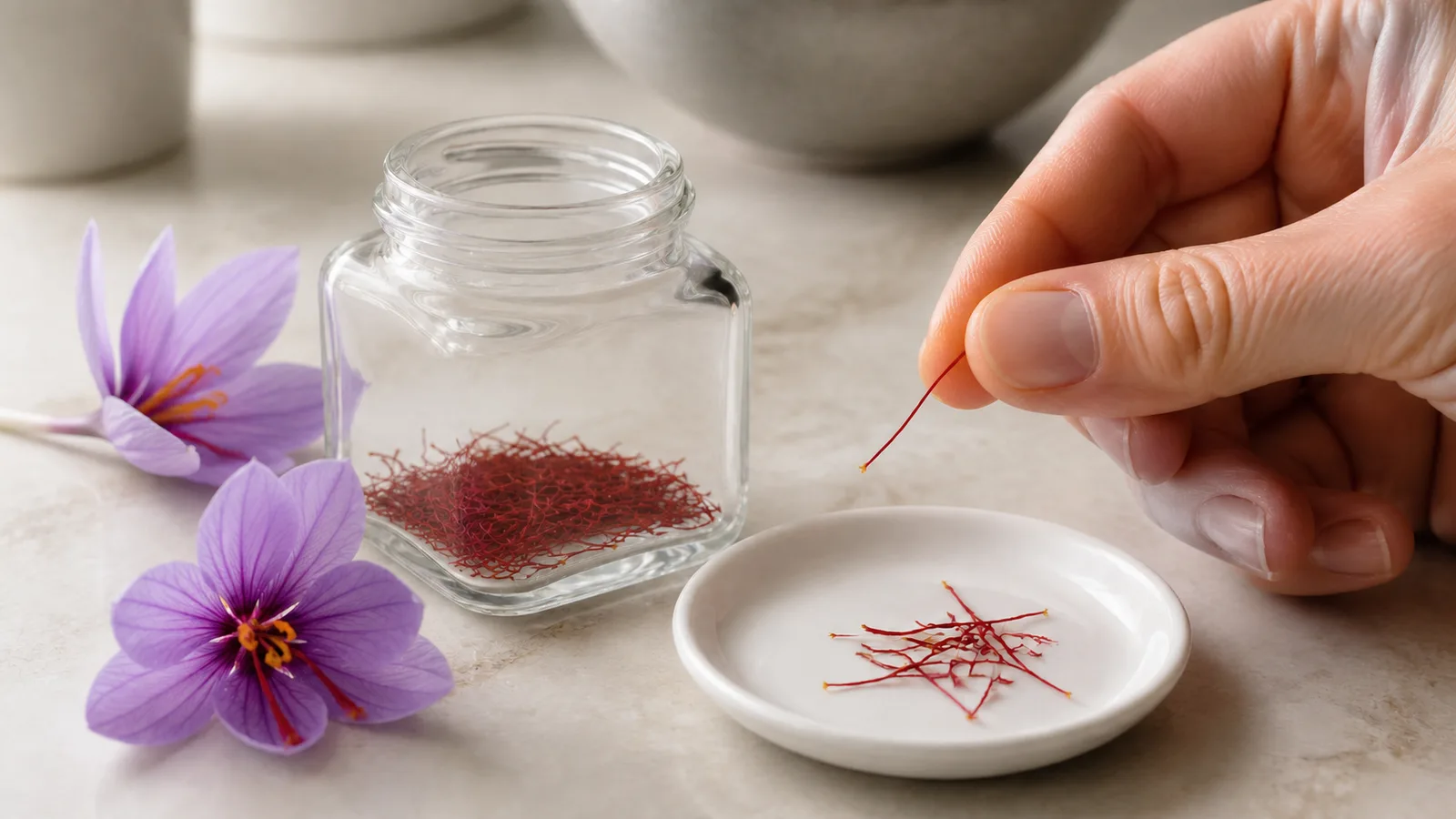
Saffron is the dried red stigma of Crocus sativus. Each flower normally produces three usable stigmas. A Food and Agriculture Organization cultivation guide estimates roughly 150,000–170,000 flowers for one kilogram of dried spice, although real yields vary.
The crop flowers during a short period. Blooms must be collected promptly, the tiny stigmas separated with care, and the material dried and stored without losing quality. Labour, low dry yield, field risk and post-harvest handling are all concentrated into a small finished weight.
Does origin determine the price?
Iran is the largest recognised production centre, and searches for Iranian saffron price, saffron Iran price or Persian saffron price per gram are common. India, Spain, Afghanistan, Greece, Morocco and other regions also produce saffron. Origin can affect reputation, supply, labour cost and traceability, but a country name alone does not prove quality.
Two lots from the same region can differ because of corms, weather, harvest timing, stigma selection, drying, storage and age. Conversely, genuine well-handled saffron from different origins can all be good. Ask what the seller can document rather than paying only for a geographical story.
What “quality” means in a saffron price
Real saffron should be Crocus sativus stigma, not dyed fibre, safflower petals or a powder diluted with another material. Within genuine saffron, buyers may compare red-stigma content, style content, thread integrity, moisture, cleanliness, aroma, taste and colouring strength.
Crocin-related compounds contribute colour, picrocrocin is associated with taste, and safranal is important to aroma. A review of commercial saffron quality explains how these markers and analytical methods support identification and grading. Terms such as Super Negin, Negin, Sargol and Poushali describe trade styles, while laboratory standards assess measurable characteristics.
“Grade 1” is not enough on its own. The grading system, test method and batch matter. Pure red threads may command more than a product containing more yellow style, but long appearance alone does not guarantee freshness or authenticity.
How much is an ounce of saffron worth?
An avoirdupois ounce is about 28.35 g. To compare a quoted ounce with a gram price, divide the total by 28.35. Using the dated Rowhani retail unit range above produces an ounce-equivalent of approximately €138–€193 before delivery and tax; rounding and actual pack sizes explain the slight difference from a simple 28 g estimate.
“Worth” can also mean what a grower, wholesaler, retailer or customer would pay. Those are different points in the supply chain. A retail ounce includes services and costs that are not part of the farm-gate price.
What does saffron cost per kilo?
A kilo figure is useful for trade comparisons but misleading for a home cook. Multiplying a five-gram retail rate by 1,000 gives a retail equivalent, not a genuine one-kilogram quotation. Bulk orders may use different packaging, quality specifications, contracts, freight and testing.
The old broad claim that saffron “typically costs $5,000–$10,000 per kilogram” is not a timeless fact. It mixes markets, currencies, grades and dates. A defensible saffron price per kilo must say whether it is farm-gate, wholesale or retail and when the quote was obtained.
Does a saffron processing plant cost set the price?
Processing equipment and facilities can influence a producer’s costs, but “saffron processing plant cost” is a business-planning question, not the price of a jar of threads. A facility budget depends on capacity, drying technology, labour, food-safety requirements, testing, property and country. It cannot be inferred from a retail saffron price.
How to compare offers without buying the cheapest fake
- Convert every offer to the same currency and price per gram.
- Compare whole threads with whole threads, not with an anonymous powder.
- Check the net weight, saffron type, batch information and seller identity.
- Ask whether shipping, tax and import charges are included.
- Look for traceability and meaningful quality testing rather than dramatic home-test claims.
- Buy an amount you can use while its aroma remains fresh.
An implausibly low price is a warning, not proof by itself. A high price is also not proof of purity. Evidence about the product matters more than the story around it.
Why real saffron remains valuable
Saffron’s culinary value comes from the colour, aroma and flavour a small quantity brings to rice, sauces, baking and drinks. It has a long history of medicinal use, and crocin, safranal and picrocrocin are studied scientifically, but health claims should not be used to justify an inflated price or promise treatment.
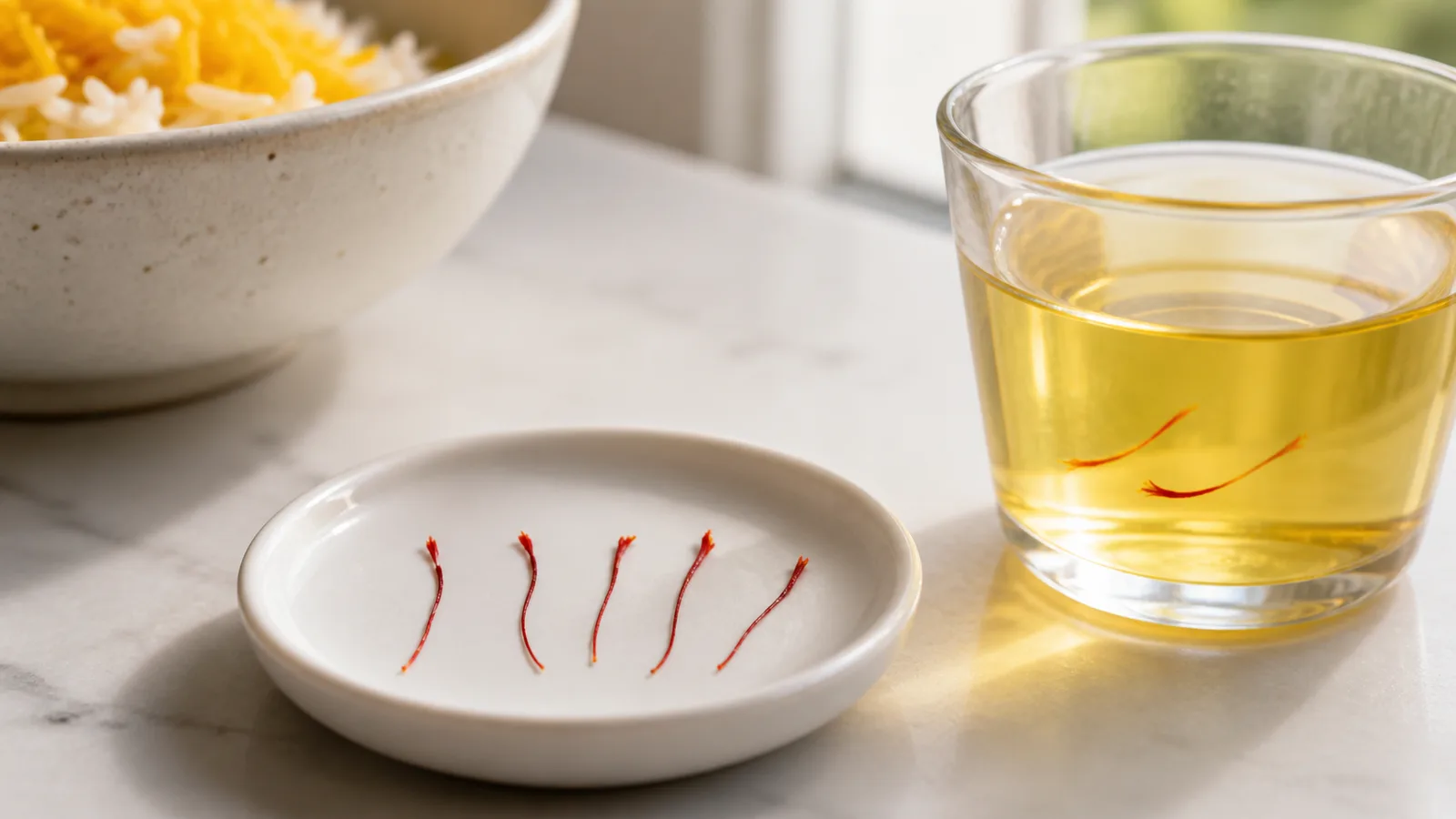
For a cook, cost per dish can be more useful than cost per kilo. A few properly bloomed threads may season a recipe, so a small fresh pack can last through several meals.
The practical answer
How expensive is saffron? On this store’s dated August 2026 snapshot, genuine Iranian thread products were about €4.87–€6.82 per gram in 5–15 g packs. The current amount may differ. Check the live price, compare net weight and grade, and treat any undated per-ounce or per-kilo figure as context rather than a promise.