To tell whether your saffron is real, examine several clues together: thread shape, colour, aroma, taste, water behaviour and the seller’s traceability. Identifying real saffron from one “instant” trick is unreliable. A genuine but old batch may smell weak, while dyed plant material can imitate one visible feature.
Real vs fake saffron is also different from strong vs weak saffron. Authentic threads can vary in grade and freshness. The most useful home check is therefore a structured inspection, followed by credible batch documentation when certainty matters.
How to check original saffron by sight
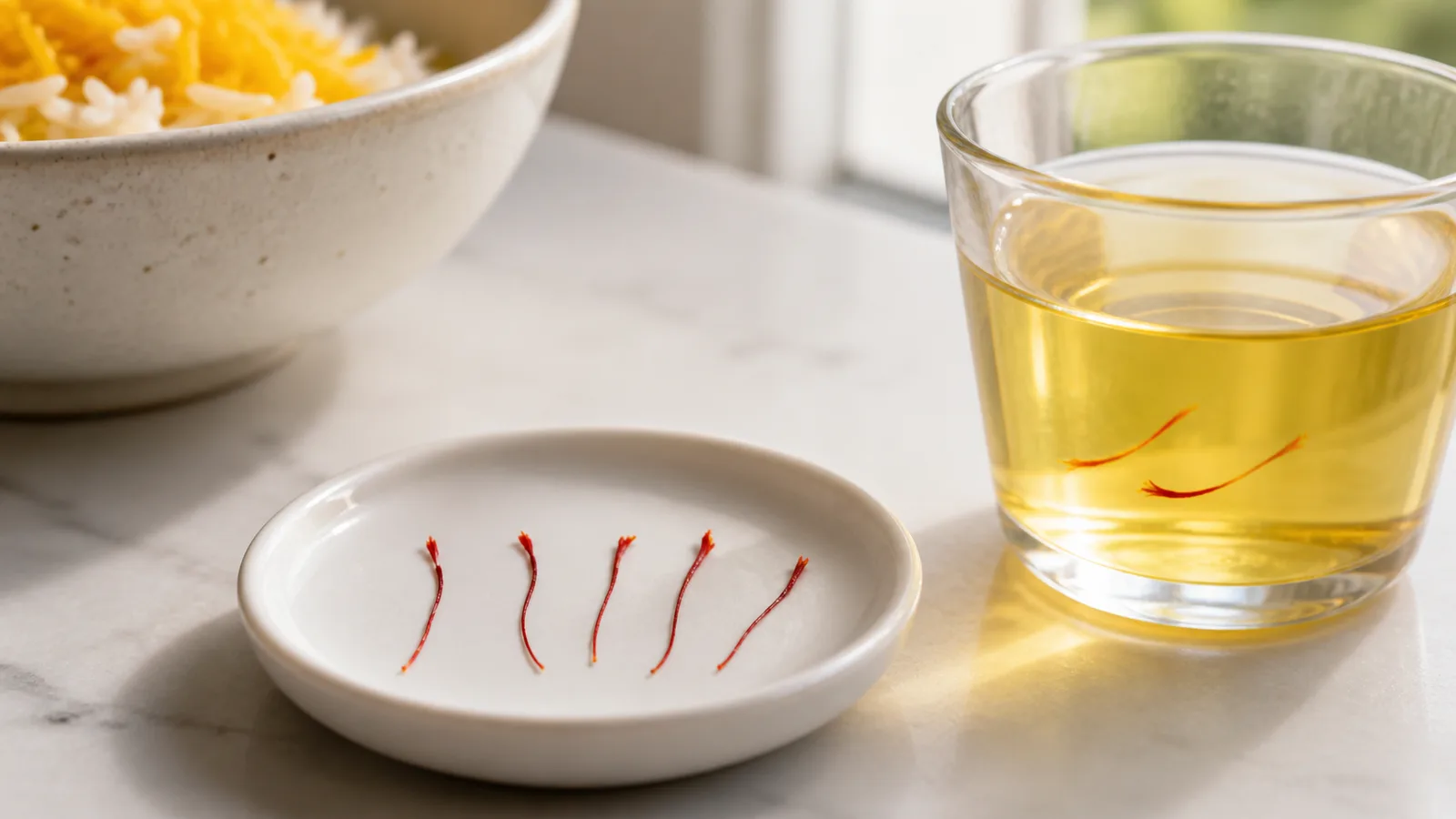
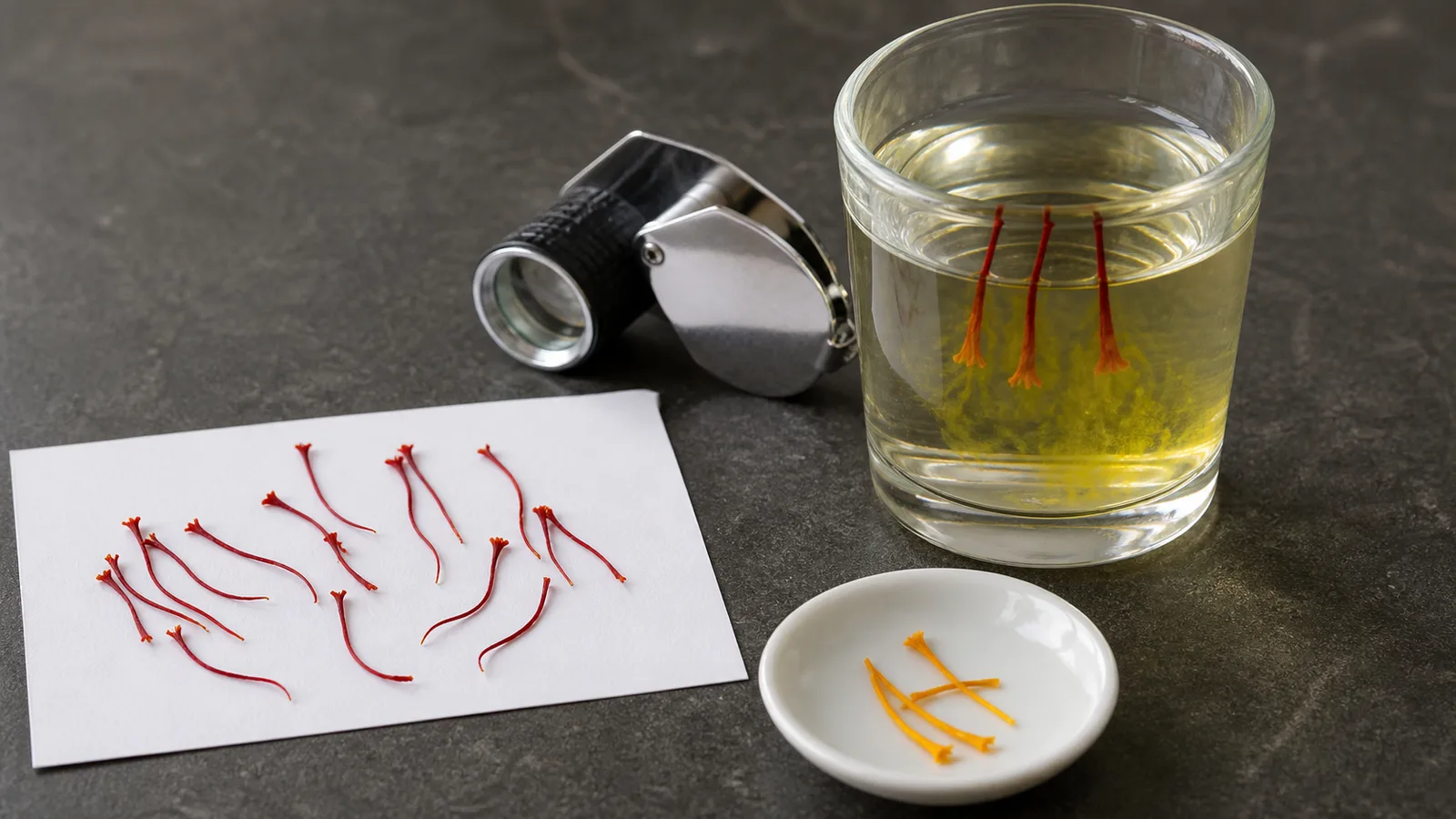
Spread a few dry threads on a white surface under bright light. A whole saffron stigma is thin along most of its length and widens near one end, often into a tiny trumpet or funnel shape. Natural threads are not identical, and some will break during harvesting, drying and packing.
Good all-red saffron is made mostly of deep red stigmas, sometimes with a lighter orange tip. Yellow or white fibres may be style material, unrelated plant fibres or another adulterant. A small amount of yellow does not automatically mean fake saffron, but excessive non-red material adds weight without the same colouring and aromatic strength.
If every strand looks machine-cut, perfectly uniform or coated in bright dye, investigate further. Dull colour alone is not proof of imitation because light and age can fade a genuine product.
How to identify good-quality saffron by aroma
Real saffron has a distinctive scent often described as floral, hay-like, earthy and faintly honeyed. “Slightly sweet” describes the aroma; the spice itself should not taste like sugar. A strong perfume with no complexity, a musty smell or no aroma at all is a warning sign.
For a flavour check, taste a drop of a weak infusion rather than chewing many dry threads. Genuine saffron is aromatic with a clean, subtly bitter finish. A bitter-sweet flavour description can be confusing: honeyed aroma and bitter taste are separate sensations.
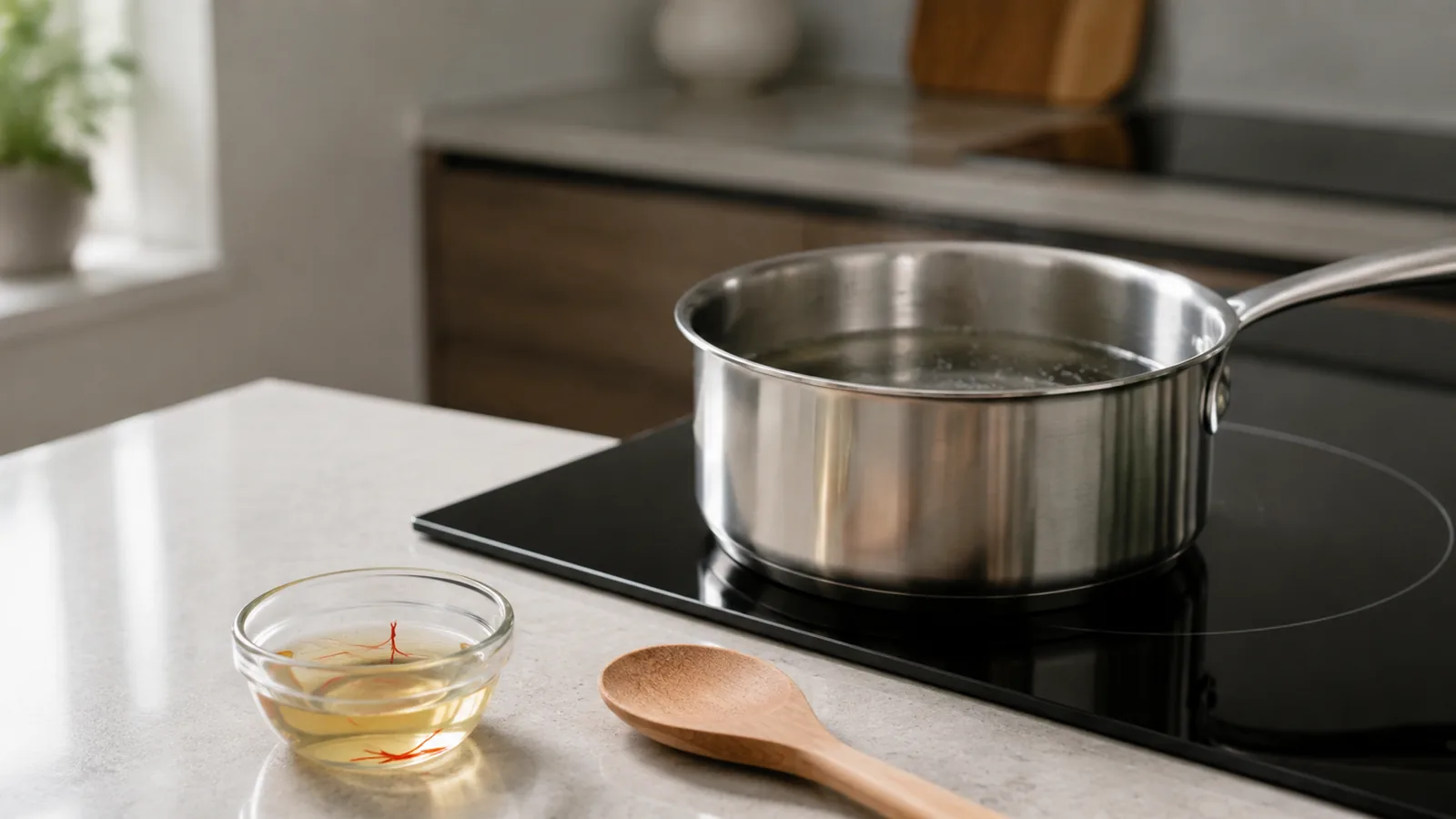
Use the warm-water test as a screen
- Put three or four threads in a clear glass.
- Add warm water or milk without vigorous stirring.
- Watch the colour develop for 10 to 15 minutes.
- Smell the liquid and inspect the threads again.
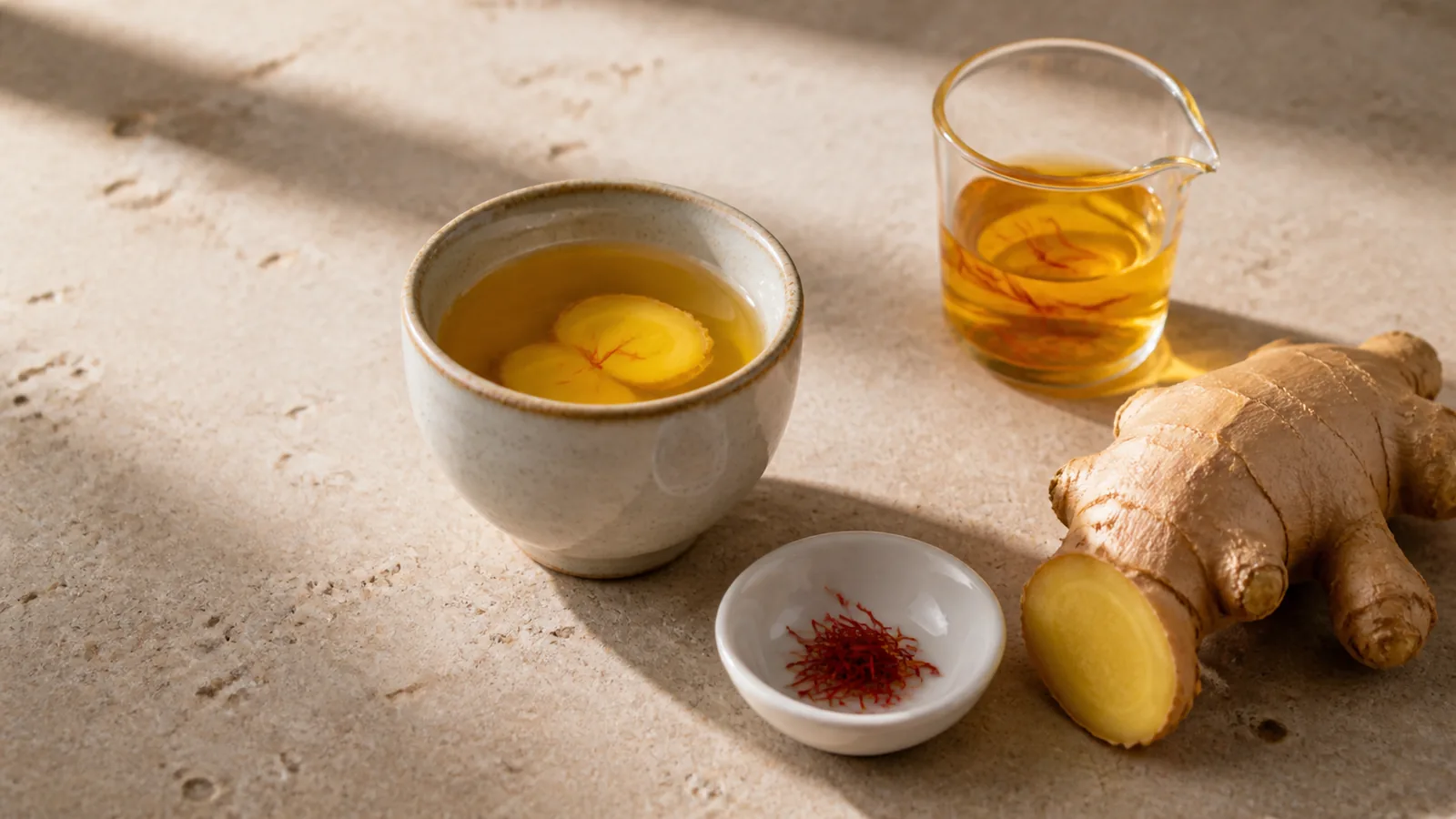
Authentic saffron gradually produces a clear golden-yellow or deep yellow-orange infusion. The threads remain recognisable, although they may soften and lighten as pigment leaves them. Artificially coloured material may create an immediate harsh red cloud, bleed unevenly or lose its coating.
The water test cannot confirm purity. Extraction speed changes with water temperature, crushing and thread size, and some fake saffron is designed to behave convincingly. Threads that dissolve immediately are suspicious, but genuine plant tissue does not have to keep its exact dry shape forever.
How to check saffron quality before buying
Ask for information that a photograph cannot provide:
- Country or growing region and a traceable seller.
- Harvest, packing or best-before information.
- Thread form and storage conditions.
- A batch or lot number and meaningful test report.
- Packaging that protects the spice from moisture, light and air.
The current ISO 3632-1:2025 specification sets requirements for dried saffron in filament, cut-filament and powder forms. A credible test offers more confidence than a home experiment, especially when a seller claims a grade or verified quality.
Common fake-saffron shortcuts to avoid
A paper rub, flame test, baking-soda test or phone photograph cannot establish authenticity by itself. Nor does a high price guarantee real saffron. Powder is particularly difficult to inspect because the underlying material is hidden, so intact threads are a better choice when learning how to identify original saffron.
Searches such as “fake saffron how to identify” or “how to know real saffron” point to the same sensible conclusion: combine sensory evidence with traceability. If you are asking how to identify good quality saffron, how to identify real saffron, or how to tell if saffron is real, the same combined approach applies. The grammatically awkward question “how to identify saffron is original” should not lead to an equally awkward rule; no single colour, shape or scent is conclusive.
Why authenticity matters
Genuine saffron provides predictable colour, flavour and aroma in cooking and tea. Adulteration may add undeclared fibres, dye or filler. Authenticity does not prove health benefits or make a spice suitable for wellness purposes; it protects culinary quality and reduces uncertainty about what you bought.
Our all-red saffron page shows the thread form we supply. Apply the same evidence-based checks to any seller, including us.
Your final authenticity decision
How can I tell if my saffron is real? Look for natural trumpet-ended stigmas, mostly deep-red colour, a complex aroma, a gradual golden infusion, slight bitterness and credible origin information. If several clues disagree, do not force a verdict from one simple test. Laboratory analysis is the only way to confirm purity with high confidence.