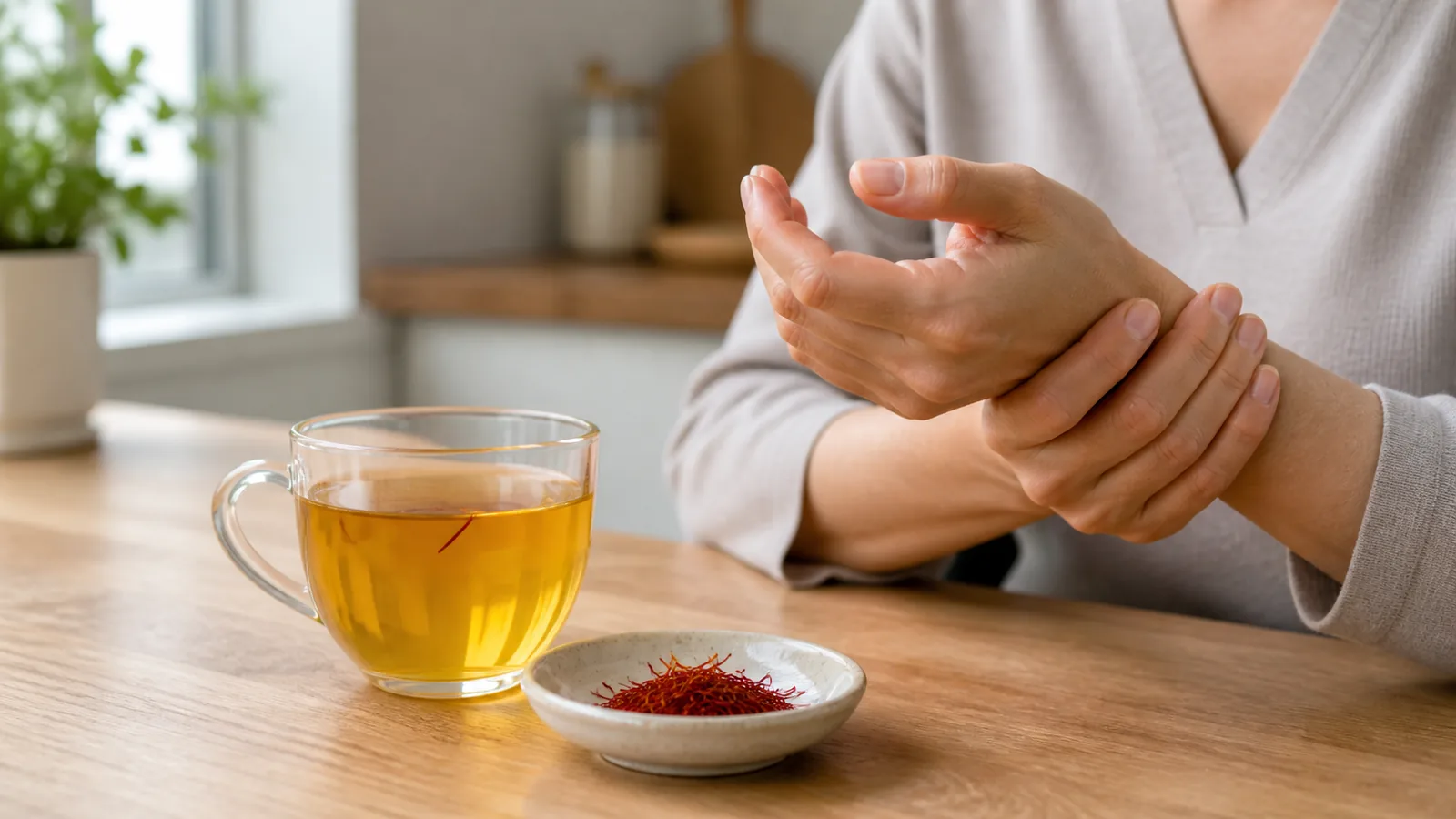
Saffron has a long place in traditional Persian medicine, where it has been described through concepts such as temperament and combined with rosewater, honey and other plants. This article records those traditional claims but does not present them as proven treatment. Research on a standardised saffron extract cannot be transferred automatically to a household drink or culinary dish.
This article began as a 2020 interview with Mohammad Reza Haji Heidari, identified as a traditional-medicine specialist. The revised version preserves the uses he described while marking clearly which ideas belong to a traditional framework and what human research can support.
What the traditional account said about “red gold”
Haji Heidari described saffron as a medicinal plant with a “warm and dry” nature and noted Iran’s position as an important producer. Warm and dry are classifications within traditional Persian medicine; they are not measurements used in modern physiology.
His remarks associated saffron, alone or combined with other ingredients, with a long list of effects:
- joy, relief from sadness and stronger memory;
- brighter skin;
- honey mixtures that “cleanse” the kidneys and bladder or break up deposits;
- rose-and-sugar preparations intended to facilitate childbirth;
- changes in appetite and sexual function;
- diuretic action alongside abdominal tightness;
- support for breathing, digestion, blood vessels, bile ducts and fatty liver;
- greater sensitivity in people described as having a hot temperament, seasonal allergies or headaches.
That list is a historical record of the interview, not a set of verified indications. It combines subjective outcomes, traditional concepts and disease claims that require very different kinds of evidence.
Saffron syrup is not the same as a trial extract
A clinical trial specifies the plant part, extraction method, chemical standardisation, amount, dosing schedule, comparison group and outcome. A homemade syrup varies with the number and quality of threads, brewing time, serving size and added ingredients. Honey, rosewater and sugar change the drink again.
For that reason, a study of a capsule cannot establish that saffron syrup produces the same exposure or benefit. It is also unsafe to reverse-engineer a drink from a supplement dose without professional formulation.
Mood: promising evidence with important limits
Human research on saffron and mood is more developed than research for most of the other claims in the interview. A systematic review and meta-analysis of 23 studies reported improvements in depression and anxiety symptoms, including when saffron was studied alongside antidepressants. The reviewers also found evidence of publication bias and limited geographic diversity.
A newer GRADE-assessed review of 34 randomised trials found improvement on some self-reported scales but not several clinician-rated outcomes, with high variation between studies. That is a reason for further research, not a basis for calling saffron syrup an antidepressant or telling someone to stop treatment.
Persistent sadness, anxiety, sleep change, loss of interest or impaired daily function deserves professional assessment. Thoughts of self-harm require immediate help from the local emergency or crisis service.
Memory and “joy” are not interchangeable outcomes
Feeling that a warm, aromatic drink is pleasant does not prove a change in memory. Small studies and preclinical experiments have investigated saffron compounds in cognitive conditions, but the interview did not cite a controlled human study for “strengthening memory.” Saffron syrup should not be used to prevent or treat dementia, neurological disease or unexplained confusion.
Kidneys, bladder and liver claims
Honey and saffron do not literally cleanse the urinary system, and this article found no clinical evidence that the combination breaks kidney or bladder stones. A stone can obstruct urine flow or accompany infection; severe side or back pain, fever, vomiting or difficulty urinating needs prompt medical care.
Likewise, saying saffron is “useful” for fatty liver, blood vessels or bile ducts is too broad. Fatty liver has metabolic and other causes, while a blocked bile duct can be urgent. A sweetened drink may add considerable sugar and is not a treatment for either problem.
Digestion, appetite and breathing
Aromatic saffron can make food appealing, and some people may find a warm drink comfortable. That experience does not establish that saffron improves absorption, strengthens the respiratory system, treats shortness of breath or reliably raises or lowers appetite. Breathlessness can signal heart, lung, allergic or other illness; sudden or severe symptoms require urgent assessment.
The traditional report also mentioned abdominal tightness. Concentrated saffron preparations can cause gastrointestinal symptoms, so new or persistent pain should not be interpreted as the drink “working.”
Skin, allergies and headaches
No drink can be promised to brighten skin from the evidence in the interview. Its advice about seasonal allergies, headaches and “hot temperaments” also lacks a defined clinical test. Saffron itself can cause an allergic reaction in a susceptible person. Stop using a product and seek urgent help for facial or throat swelling, breathing difficulty or a rapidly spreading reaction.
Sexual function is not a general potency claim
Some trials have examined saffron preparations and specific sexual-function outcomes, including problems related to medicine or disease. They do not establish that a household syrup “enhances sexual potency” in everyone. Sexual difficulties can involve medication, circulation, hormones, pain, mental health or relationships and deserve a cause-specific approach.
Pregnancy and the childbirth claim
The interview said saffron with rose and sugar facilitated childbirth while also warning pregnant women to use very little. That combination is not an adequate safety instruction. A drink should not be used at home to induce or accelerate labour, and a traditional use does not establish a safe stage, dose or preparation.
A 2026 integrative review of saffron in pregnancy described the clinical evidence as limited and inconclusive, with greater concern around high doses and occupational exposure. Anyone pregnant, trying to conceive or breastfeeding should ask an obstetric clinician before using saffron supplements or deliberate medicinal quantities. Ordinary culinary exposure and concentrated use should not be treated as equivalent.
A simple culinary saffron syrup
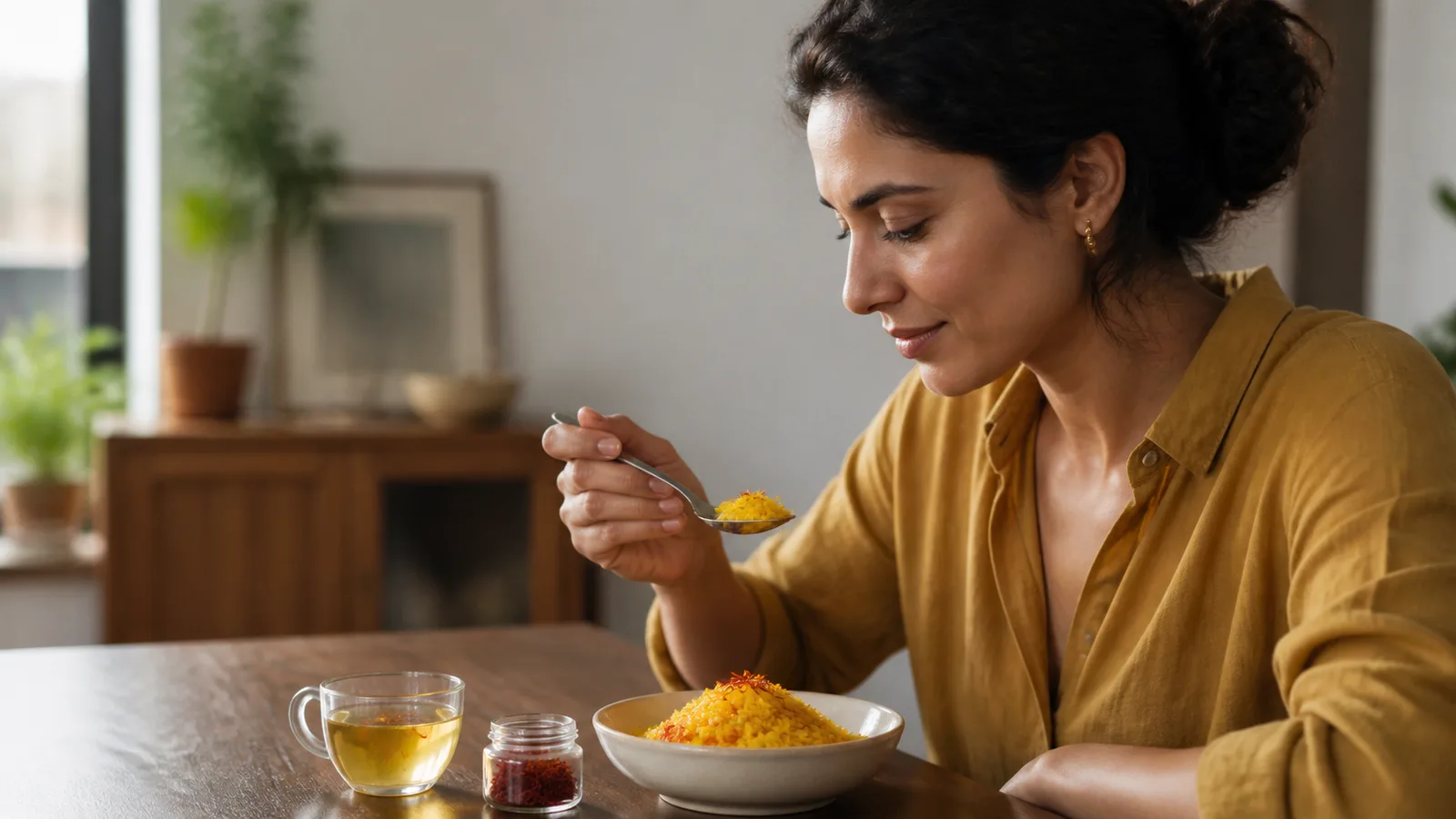
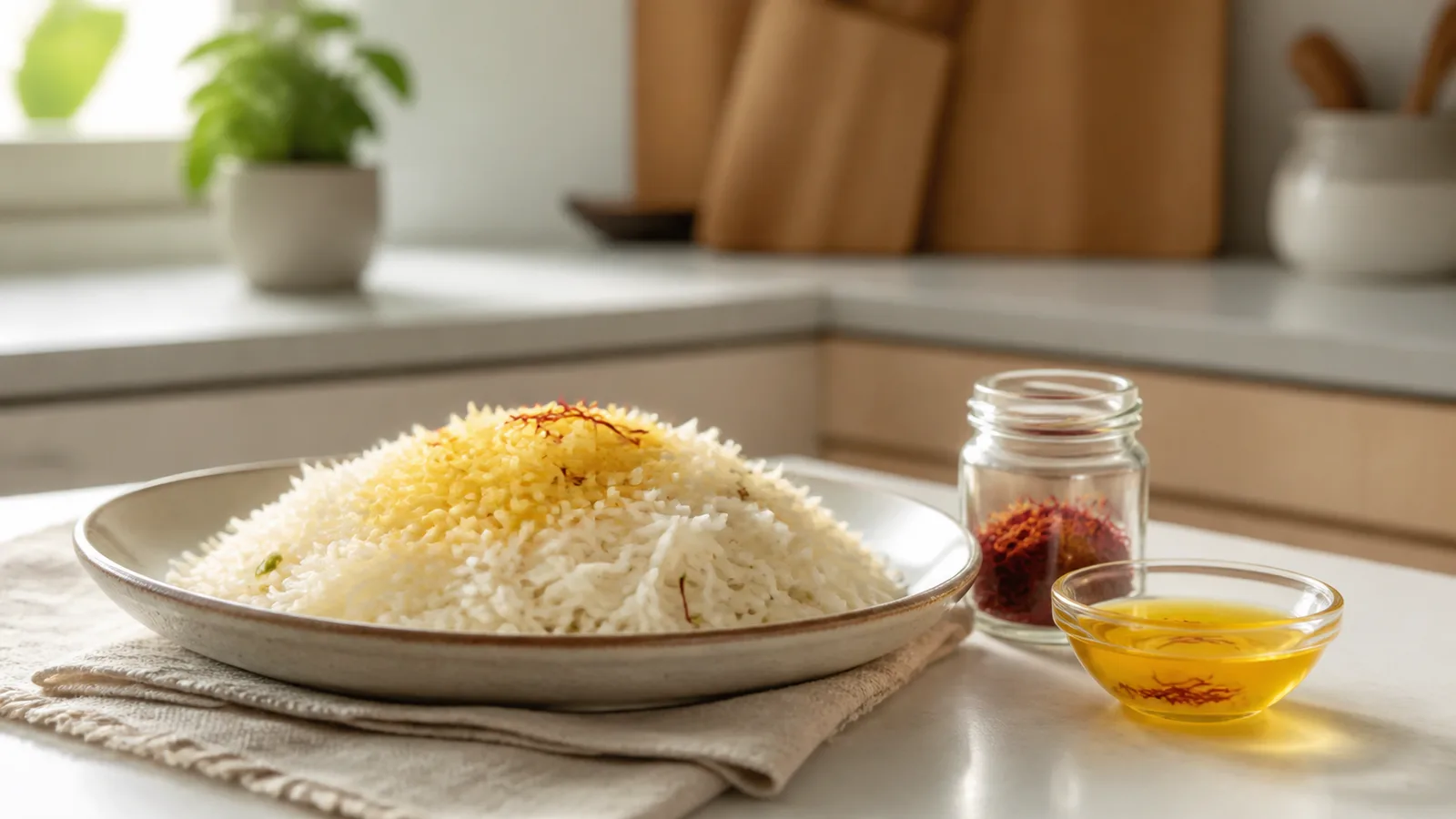
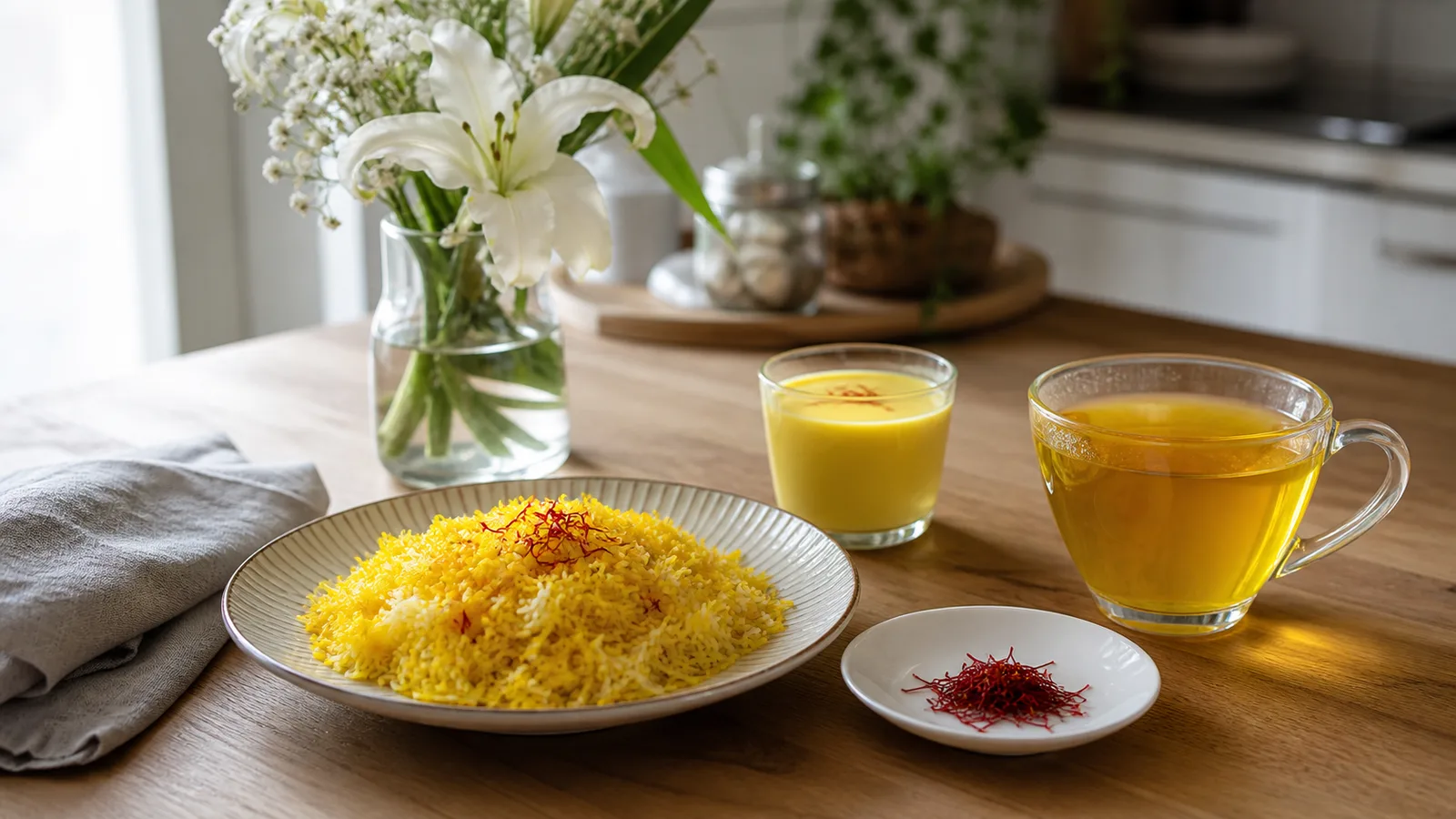
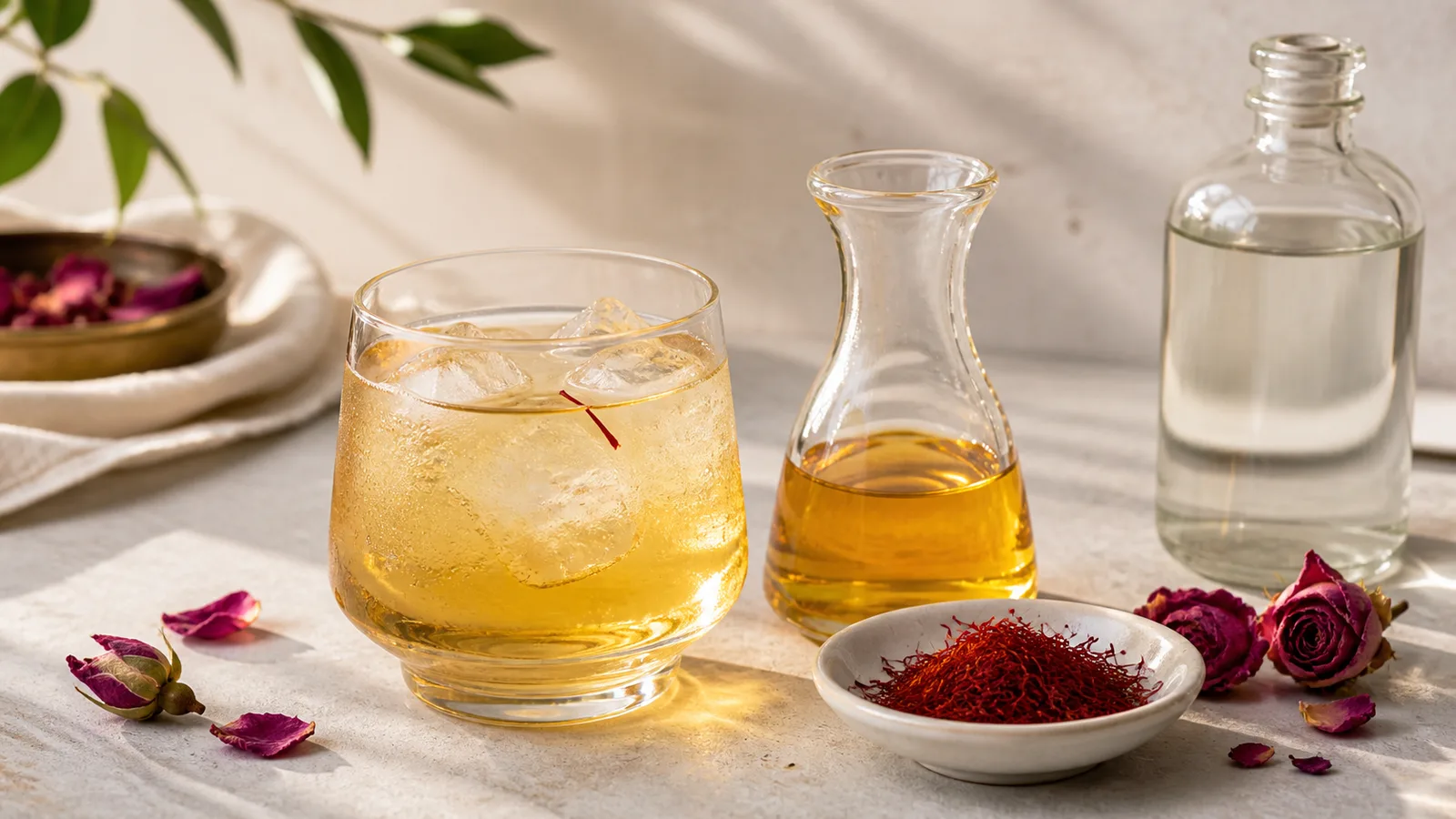
For a drink rather than a remedy, grind a modest pinch of saffron and steep it, covered, in about 60 ml hot water for 15 minutes. Dilute with 500–750 ml cold water. Add a small amount of rosewater and sweeten to taste with sugar or honey, remembering that both add free sugar. Chill and serve in small glasses.
Prepare it hygienically, refrigerate it promptly and use it within three to four days. Do not leave a sweetened herbal drink at room temperature for extended periods. Our separate guide explains how to brew saffron for culinary colour and aroma.
When caution matters most
A 2026 systematic review of saffron adverse events found that medicinal preparations were generally tolerated, but gastrointestinal complaints were the most commonly reported adverse effects and higher-dose or prolonged use could merit clinical monitoring.
- Do not use saffron syrup to replace prescribed medicine or urgent care.
- Ask a clinician before concentrated use during pregnancy, before surgery or with several medicines.
- Keep saffron and extracts out of children’s reach.
- Choose products with an identified ingredient, lot and quality-control record.
- Stop if an unexpected reaction occurs and seek appropriate advice.
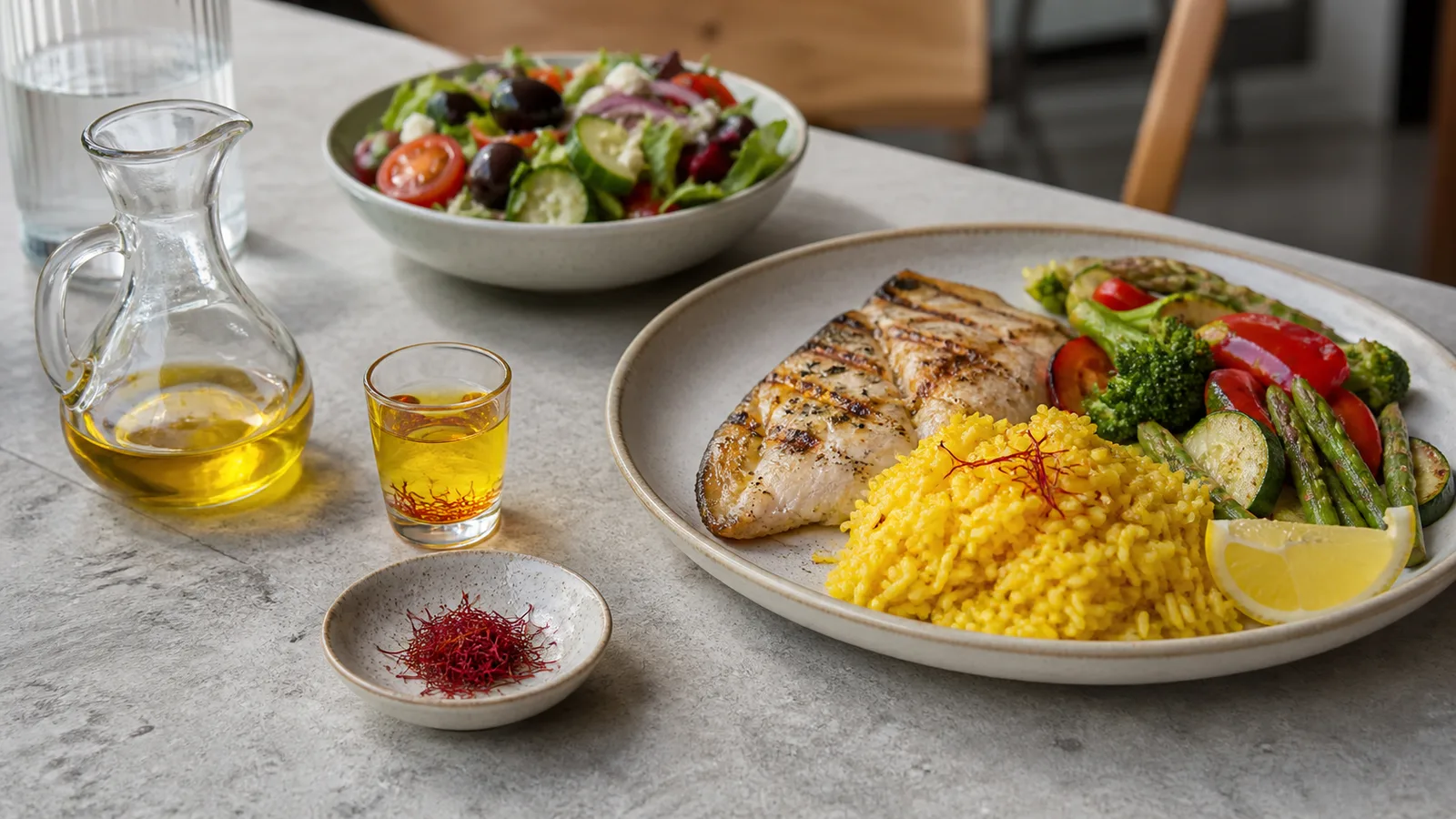
Haji Heidari’s final caution remains the strongest part of the original interview: excessive use of medicinal plants, including saffron and cinnamon, is not advisable. Enjoy red gold for what a saffron syrup reliably provides—colour, aroma, flavour and refreshment—while keeping medical claims proportional to the evidence.