


Harvesting saffron from 6,300 hectares of Rashtkhar farms was reported with an average yield of 2.3 kilograms per hectare. The figures belong to the season covered by the original report, not to the county’s current crop. They still show the scale of the harvest and the concentration of work required during a few autumn weeks.
What the Rashtkhar harvest report recorded
Seyed Mahmoud Azami, then director of Rashtkhar Agricultural Jihad, said saffron harvesting had begun across more than 6,300 hectares of the county’s farms. The reported average was 2.3 kilograms of dried saffron per hectare.
Multiplying those two numbers gives a simple indicative total of about 14.5 tonnes. It is not a confirmed final harvest. Area figures describe land under cultivation, while realised output depends on how much flowers, the age and health of each field, weather, water and losses during picking and drying.
The old translation also contains an unexplained reference to 1,650 hectares. It does not identify whether that number was new planting, a district subset or something else, so it cannot be added to the 6,300-hectare figure or presented as a separate fact without the original record.
Why 6,300 hectares is a significant working area
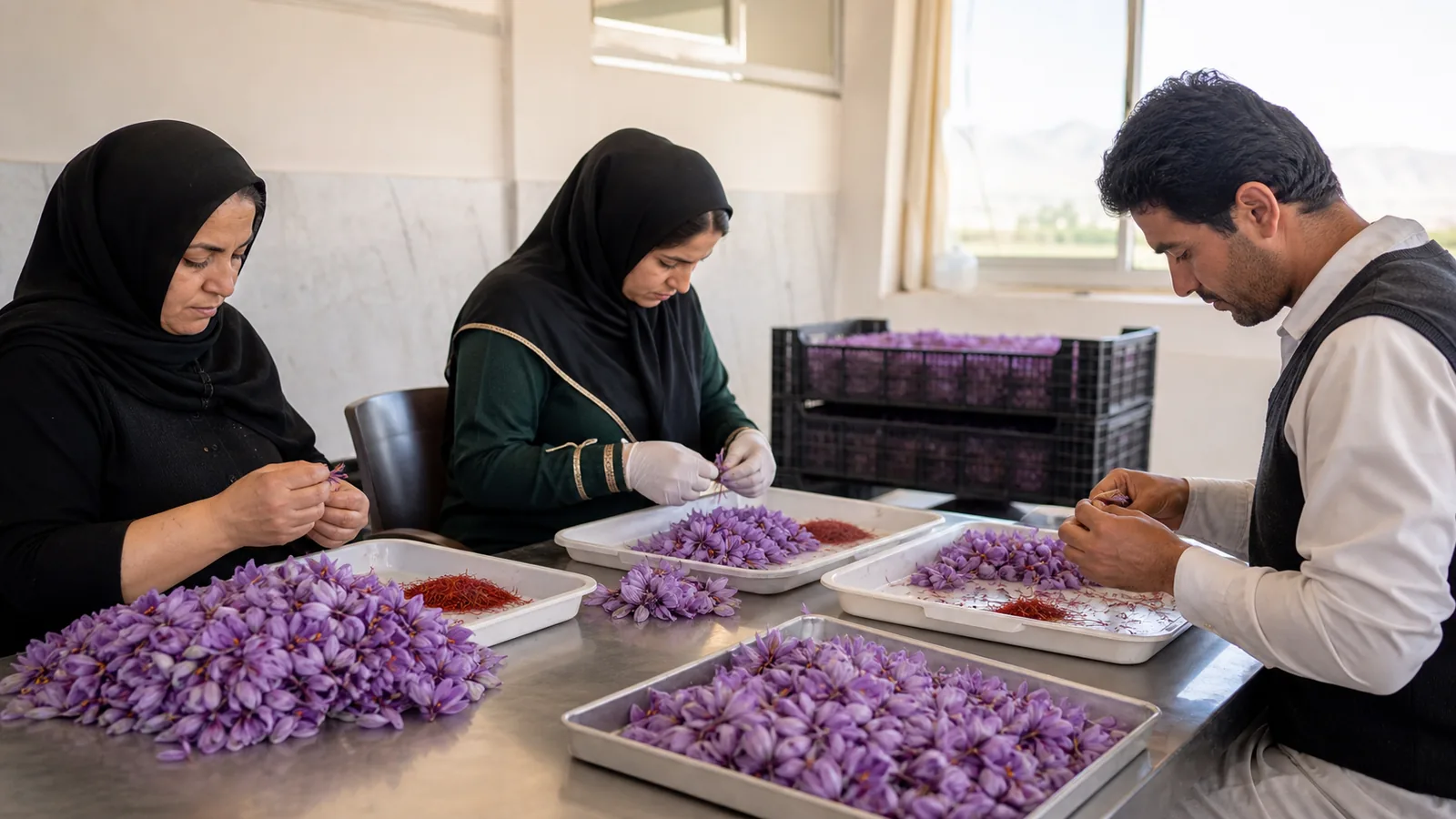
Saffron occupies little space once it is dried, but the crop is labour-intensive in the field. Flowers must be collected repeatedly as they emerge, then opened so the three red stigmas can be separated and dried. A large cultivated area therefore creates a sharp demand for people, clean workspaces and drying capacity.
Azami estimated that every hectare supported about five direct and indirect workers. This should be read as a seasonal employment estimate, not five permanent full-time positions for every hectare. Field preparation, irrigation, picking, transport, stigma separation, drying, grading and packaging all contribute different kinds and lengths of work.
A historic UNIDO assessment of saffron villages in Rashtkhar described thousands of small farms, more than 7,500 active growers and production concentrated around places such as Brakooh and Fath Abad. Its area and yield figures were from an earlier period, which is useful evidence that these measures change by year rather than permanent statistics.
When the saffron harvest runs in Rashtkhar
The report placed the season from mid-October to the end of December. Flower picking itself is usually concentrated in a much shorter window within that period. The broader dates may include staggered flowering across the county, preparation, stigma separation, drying and packaging.
Fields are normally visited early in the morning, before flowers fully open. Closed or newly opened blooms are easier to handle, and timely collection reduces exposure to sun, wind and contamination. Flowers should be carried in clean, shallow containers rather than compressed into deep piles.
Once a day’s flowers arrive indoors, the stigmas need prompt separation. A review of saffron collection and quality describes a 15-to-25-day flowering period in Khorasan and explains why same-day opening, clean handling and suitable drying matter.
From farm yield to finished saffron
The 2.3-kilogram yield figure refers to dried saffron, not the weight of fresh flowers. Most of the flower becomes petal and other plant material; the spice is made from the dried red stigmas. That is why a modest-looking dry yield can represent a large volume of flowers and many hours of hand work.
Yield per hectare also varies within a county. Corm size and density, field age, soil drainage, irrigation timing, disease and frost can change flower numbers. The way stigmas are separated and dried then affects how much clean, saleable saffron remains.
Comparisons should therefore use the same definition. Gross flower weight, fresh stigma weight and dried graded saffron are not interchangeable. A forecast made at the start of flowering is also different from a final weighed harvest.
The pandemic-era health warning in the original report
The original announcement was made during the coronavirus pandemic. It warned that preparation, drying and packaging bring many workers together, often in enclosed rooms, at exactly the point when the harvest is busiest. Agricultural officials said they were presenting hygienic harvesting methods to growers and called for the health protocols then in force to be followed.
That passage is part of the report’s historical context; it is not current medical guidance. Its lasting lesson is narrower and still relevant: a processing room should be clean, ventilated and organised so flowers move through without crowding, delay or cross-contamination. Current public-health requirements should always come from the responsible local authority.
Why the season’s final result can differ from the forecast
An opening-area announcement tells readers where harvest has started, but not how the season will finish. Drought, cold weather and the number of flowers per corm can all change the final total. Prices and access to labour also affect how quickly flowers can be collected and processed.
Another Rashtkhar report described production of more than 14 tonnes of dried saffron during a different season, using a different cultivated area and measured total. The figures do not cancel one another; they describe different reporting periods and show why every acreage or yield number needs a date and source.
The durable meaning of the 6,300-hectare report is the scale of Rashtkhar’s saffron economy. A short flowering period mobilises growers, pickers, processors and packers across the county. Careful collection and processing determine how much of the field’s potential becomes clean, valuable dried saffron.

![Exporting Saffron to Turkey + Price Guide [Complete 0 to 100]](https://img.rowhanisaffron.com/20260827003933/saffron-export-turkey-quality-inspection.webp)



