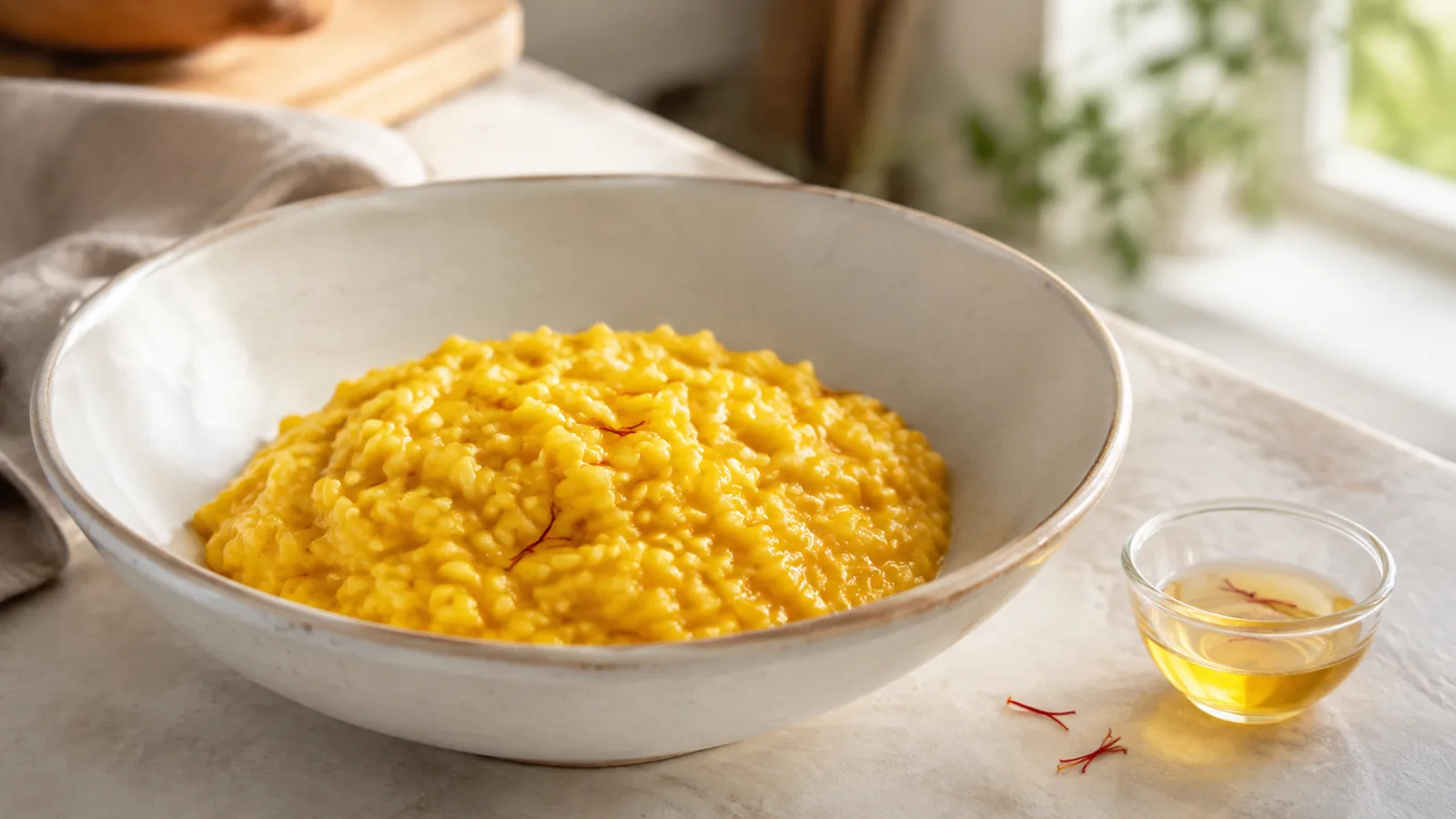
This Halvah yolk Saffron of Hamedan Recipe makes halva zardeh, a soft egg-yolk dessert from Hamedan scented with rosewater and saffron. Its yellow-orange texture resembles a thick porridge or custard, and it is served chilled rather than cut into firm pieces.
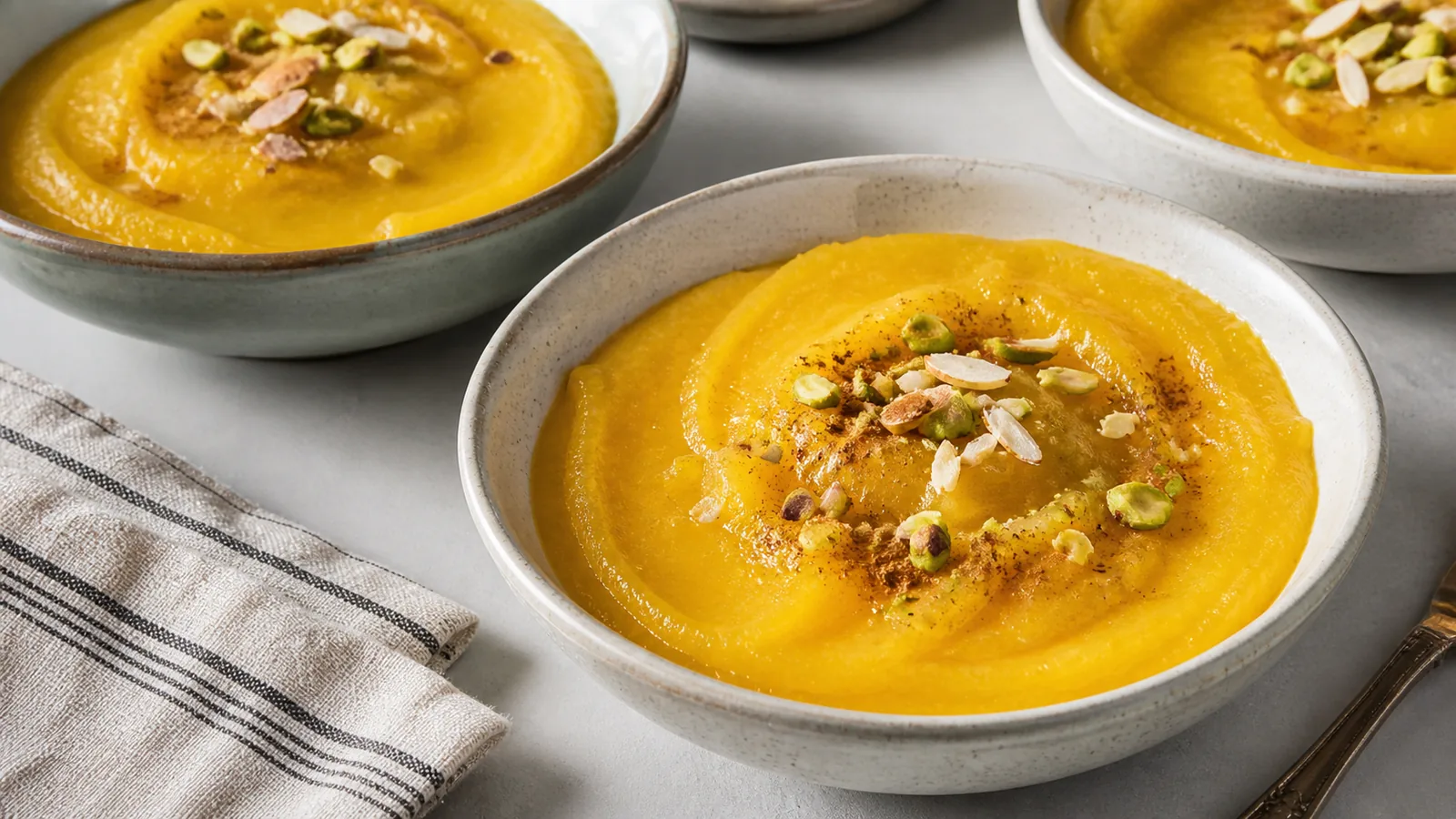
In Hamedan, yolk halva is known as a local sweet and is also served at iftar. The name comes directly from the egg yolks that give it its colour, richness and distinctive consistency.
Ingredients
- 10 large egg yolks
- 1/2 cup icing sugar, sifted
- 1/4 cup rosewater
- 3 tablespoons butter, melted
- 3 tablespoons concentrated saffron infusion
- Chopped pistachios or almonds and ground cinnamon, optional, for serving
The old wording “grilled sugar” means finely powdered or icing sugar, while “butter juice” refers to melted butter. Fine sugar is important because coarse crystals do not dissolve as smoothly into the yolks.
Prepare the saffron and equipment
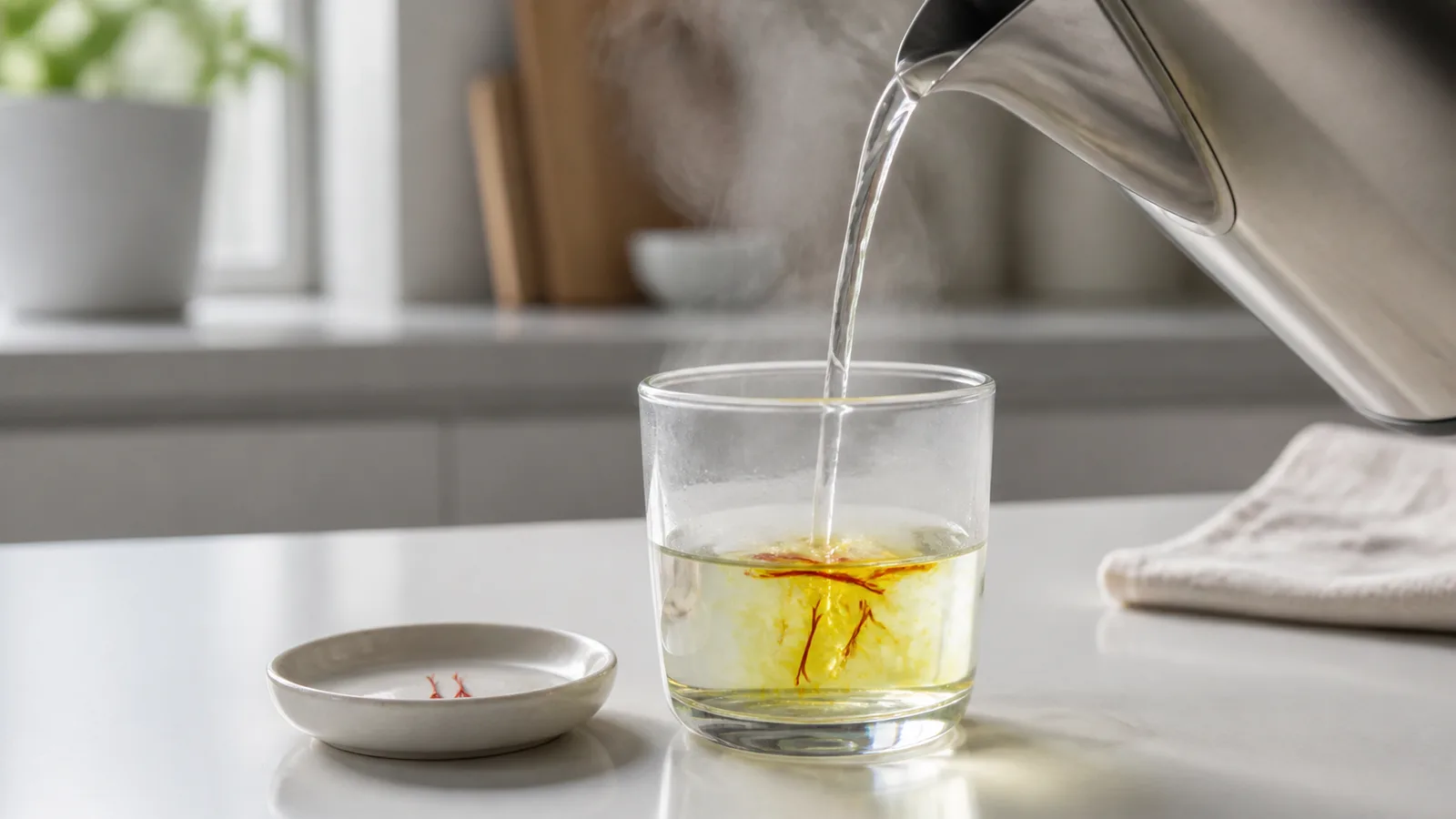
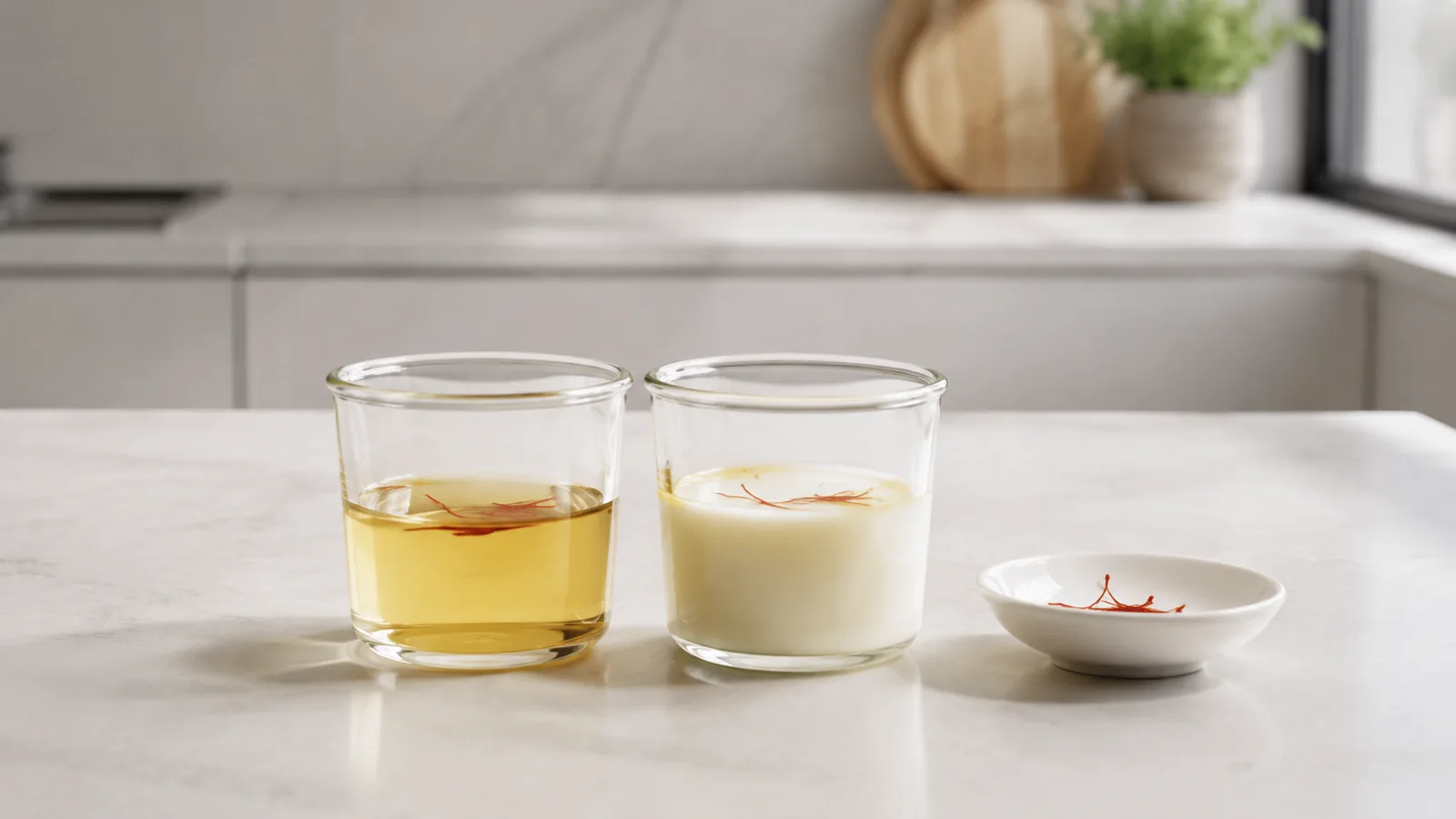
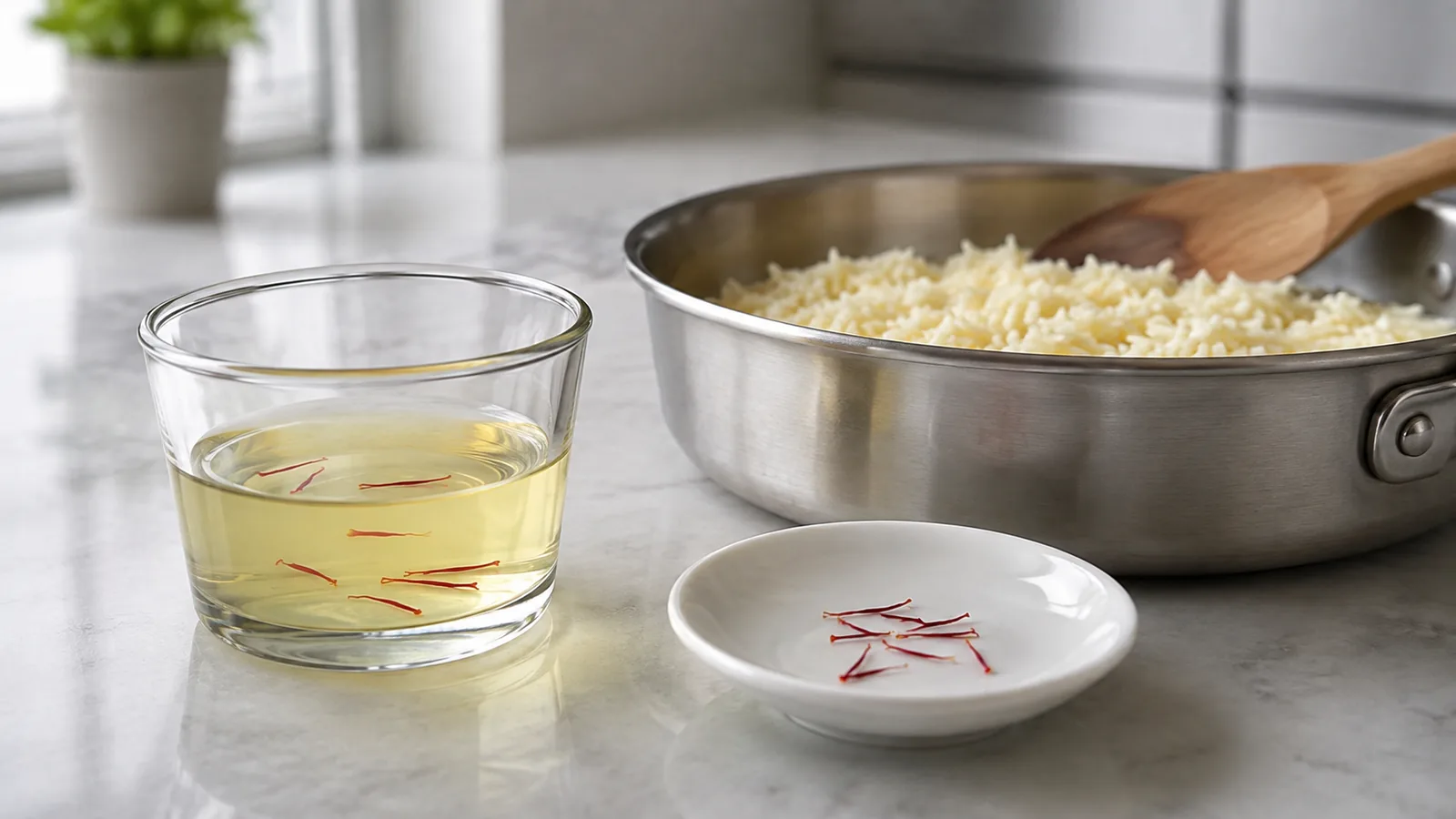
Have the rosewater and saffron measured before you begin. Our guide to brewing saffron explains how to make a concentrated infusion without adding excess water.
Use a heavy, light-coloured saucepan and a flexible spatula. A dark pan makes the colour difficult to judge, while a thin base creates hot spots that can scramble the yolks.
Whisk yolks and sugar until pale
Put the egg yolks in a bowl and whisk for 1 minute to loosen them. Add the sifted icing sugar in three portions, whisking well after each addition.
Continue for 4 to 5 minutes, until the mixture is pale, creamy and slightly increased in volume. Scrape the sides once or twice so no dry sugar remains.
Cook the yolks gently with butter
Put the melted butter in the saucepan over the lowest heat. Add the yolk mixture and stir continuously, reaching across the entire base.
Cook slowly until it thickens enough to leave a brief track behind the spatula. Do not let the mixture boil or sit still. If small cooked flecks appear, take the pan off the heat immediately and whisk firmly before continuing.
Add rosewater and saffron
Mix the rosewater and saffron infusion together. Pour this into the thickened yolks in a thin stream while stirring.
Return the pan to very low heat and cook for about 8 to 10 minutes, stirring without interruption. The halva should become glossy and fall from the spatula in a thick ribbon.
Because this is an egg-yolk dessert, make sure it reaches 71°C/160°F. That is the safe minimum temperature given for egg dishes in the U.S. government temperature chart.
Judge the traditional texture
Halva zardeh should be firmer than porridge but softer than ordinary flour halva. A spoonful placed on a cool plate should mound gently, then settle at the edges.
Stop cooking at that stage. The dessert becomes noticeably thicker in the refrigerator, so a firm mass in the pan will be too dense once cold.
Chill and serve
Spoon the warm halva into one shallow serving dish or several small bowls. Press reusable wrap directly onto the surface if you want to prevent a skin.
Cool briefly, then refrigerate for at least 2 hours. Decorate just before serving with pistachios, almonds and a light pinch of cinnamon.
Common problems
- Yolks form lumps: the pan was too hot; work over the lowest heat and stir continuously.
- Sugar feels grainy: use sifted icing sugar and whisk until the mixture is pale before cooking.
- Halva is runny after chilling: return it to a clean pan and cook gently to the thick-ribbon stage.
- Texture is too firm: shorten the final cooking time; the dessert sets further while cold.
Storage
Keep Hamedan yolk halva covered in the refrigerator and use it within 2 days. Do not leave it at room temperature for more than 2 hours. This recipe contains eggs, milk and optional tree nuts.