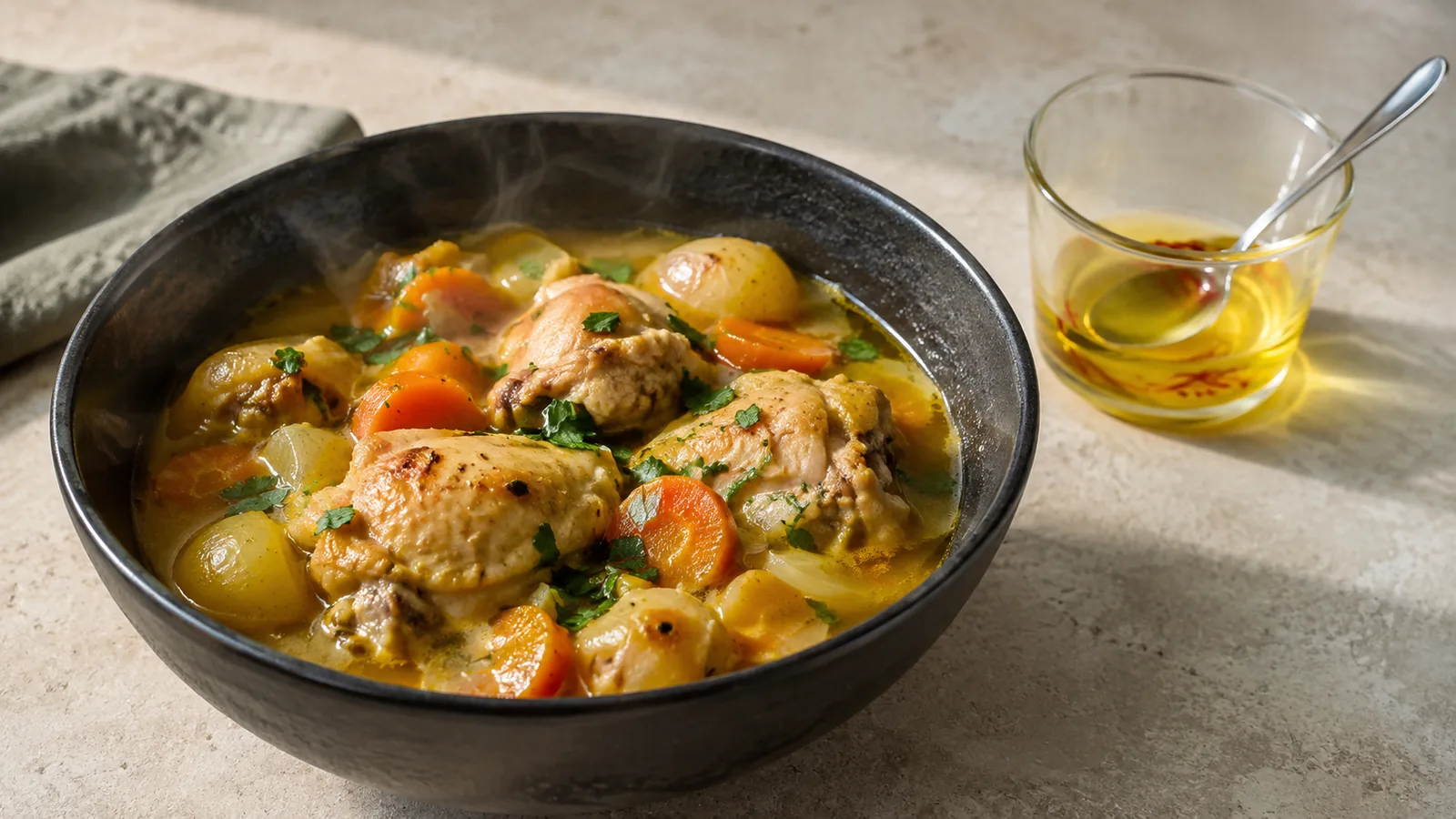
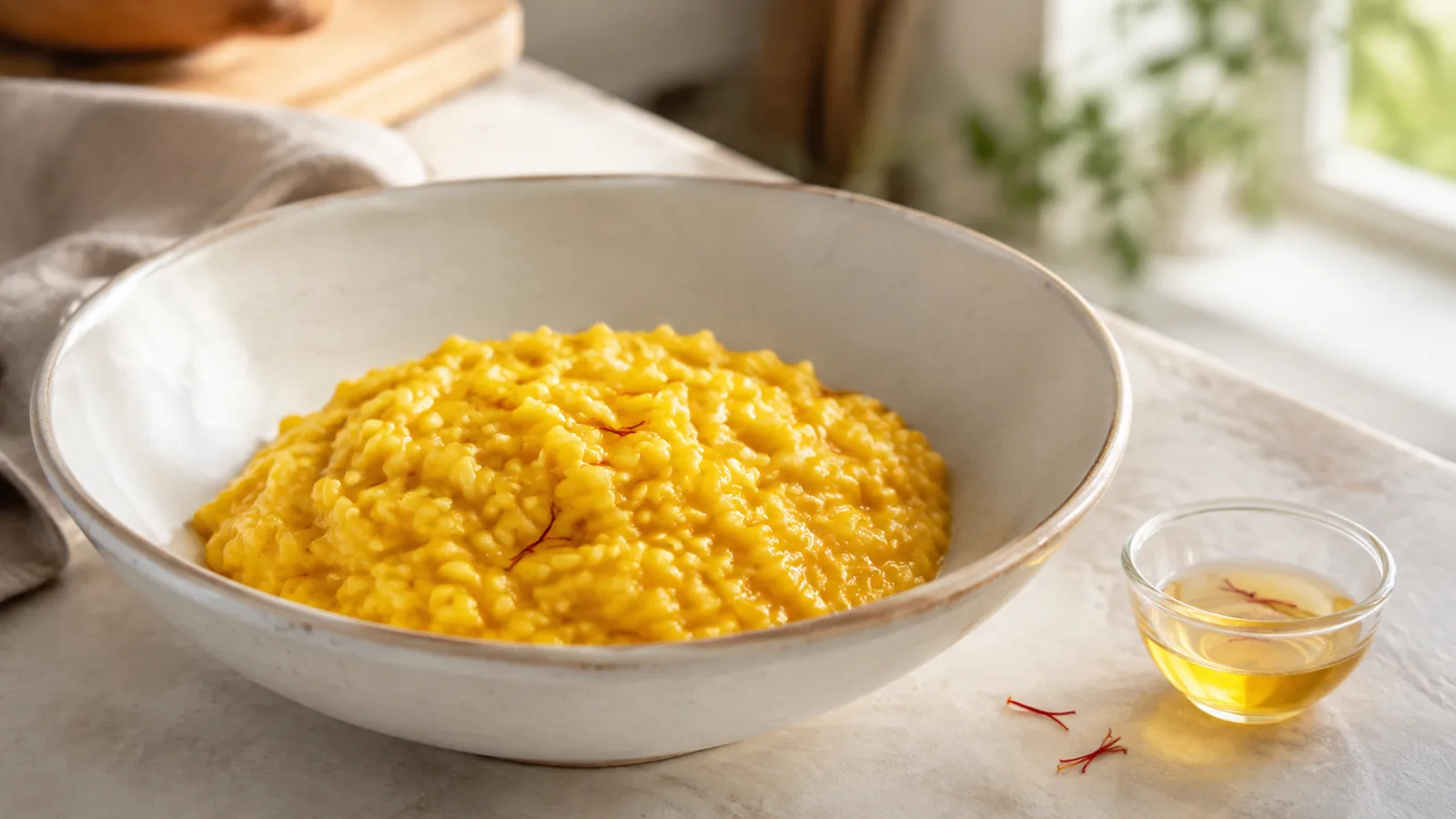
Halva roulette is a Persian saffron halva spread over thin wafer sheets, rolled while pliable and sliced into neat spirals. It has the familiar rosewater-and-saffron flavour of Iranian flour halva, but the crisp wafer gives each piece a lighter shape that is easy to serve.
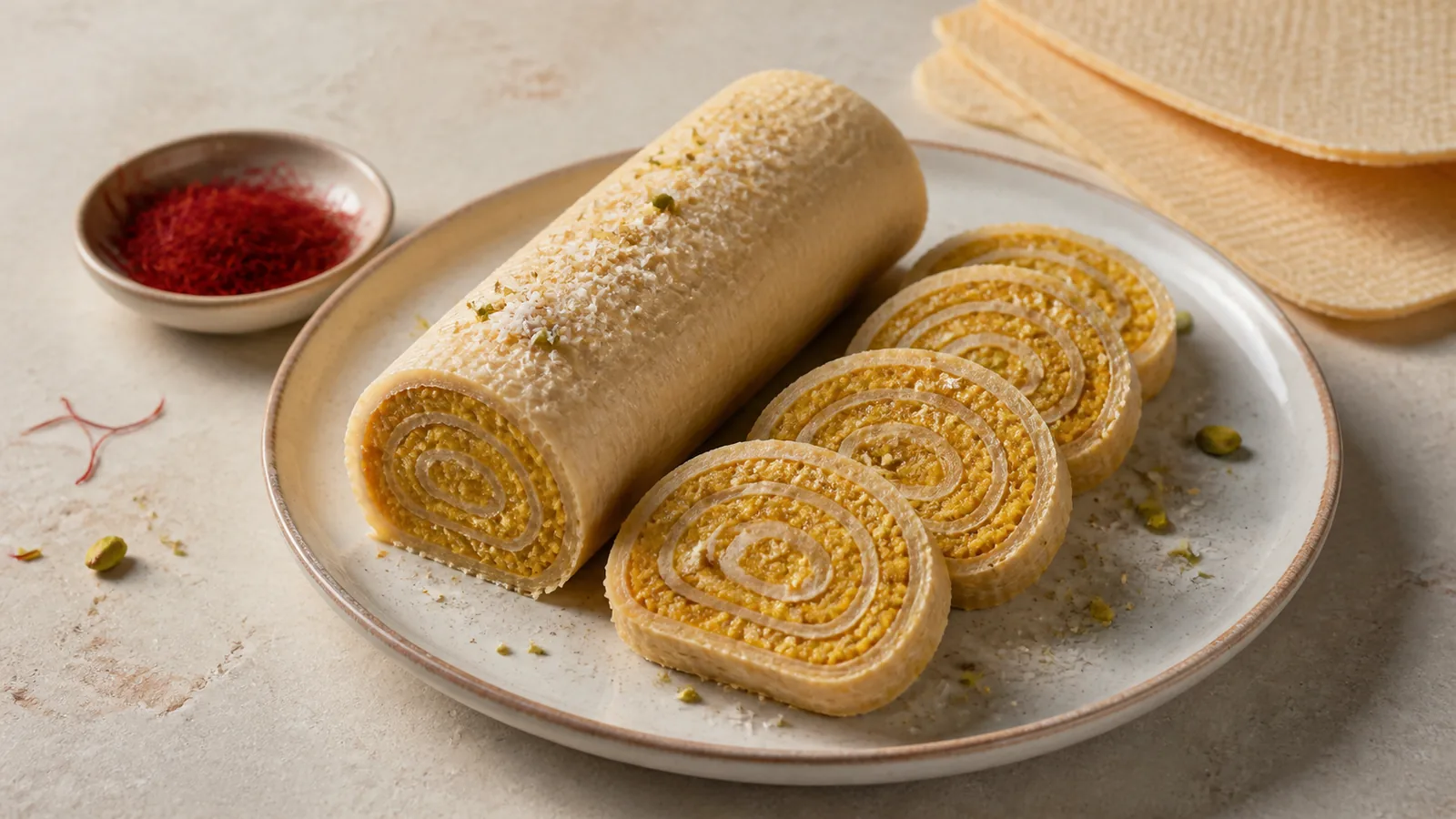
Halva roulette ingredients
- 2 cups plain flour
- 2 cups sugar
- 2 cups water
- 1 cup neutral liquid oil
- 50 g butter
- ¼ cup rosewater
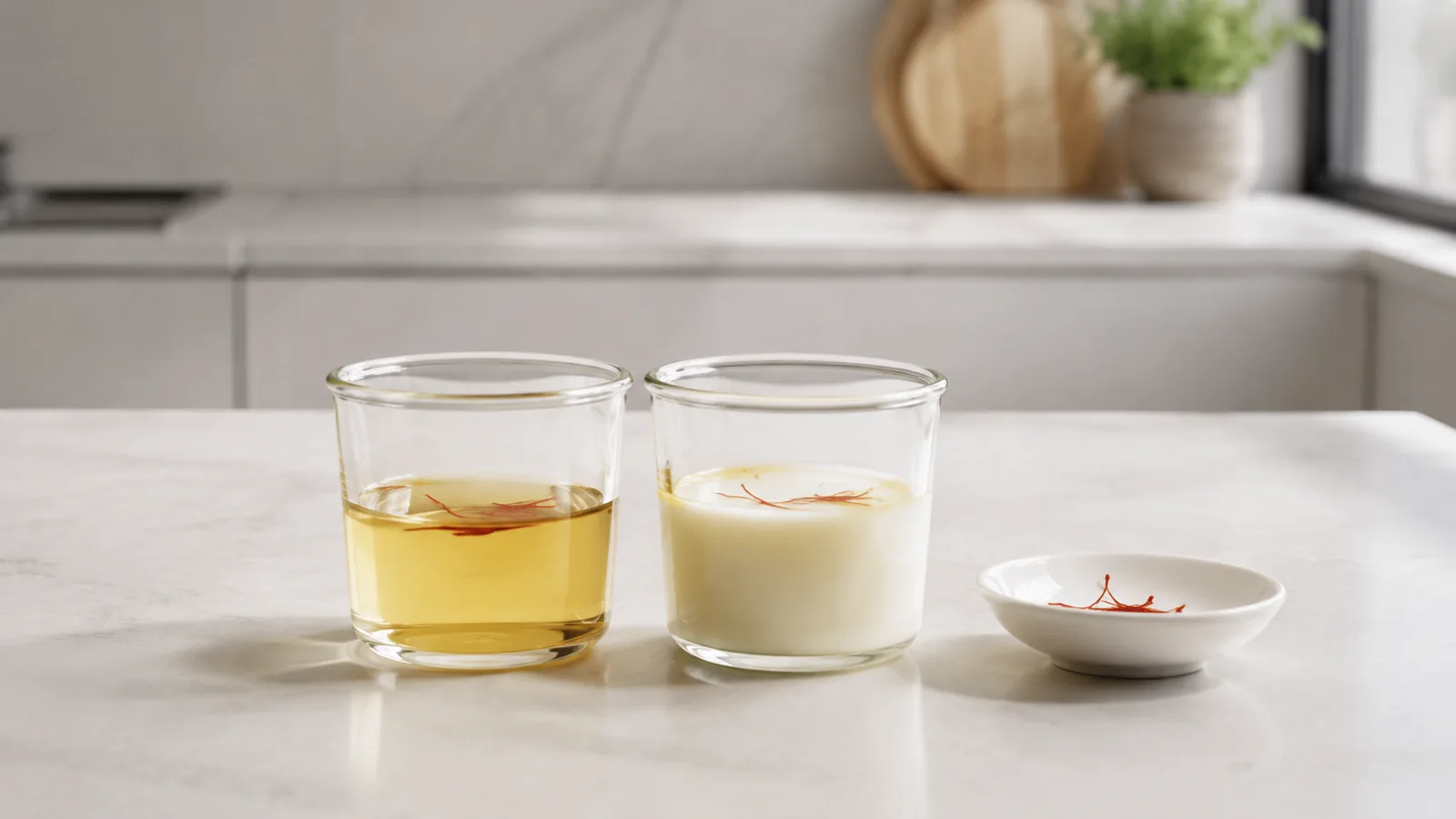
- 4 tablespoons brewed saffron
- Thin Mikado wafer sheets, as needed
- Ground pistachios or desiccated coconut, optional, for decoration
- Melted chocolate, optional, for coating
“Mikado bread” in the inherited recipe means the large, thin wafer sheets used for layered sweets. They must be fresh and flexible enough to roll without shattering.
Make the saffron syrup
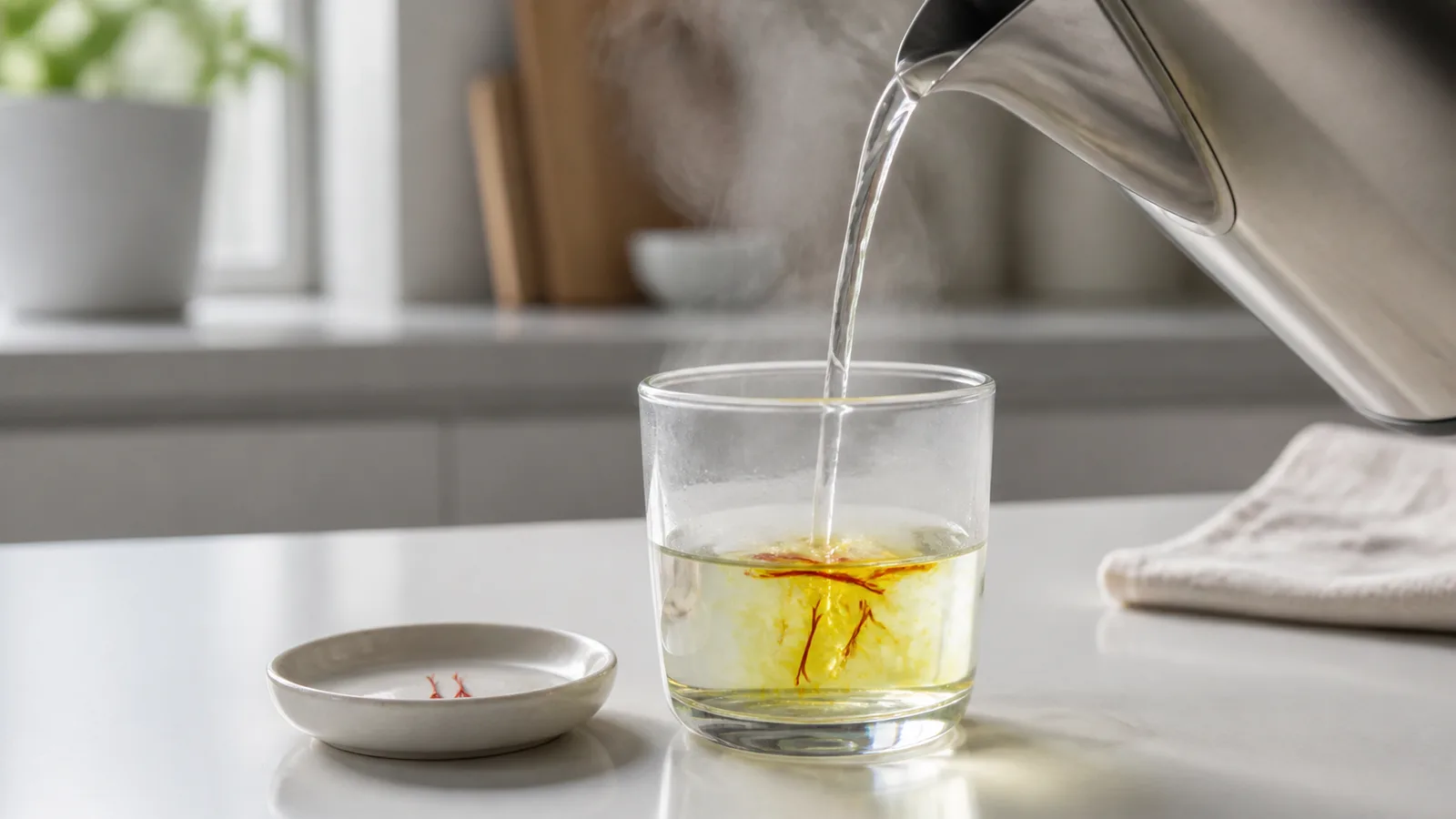
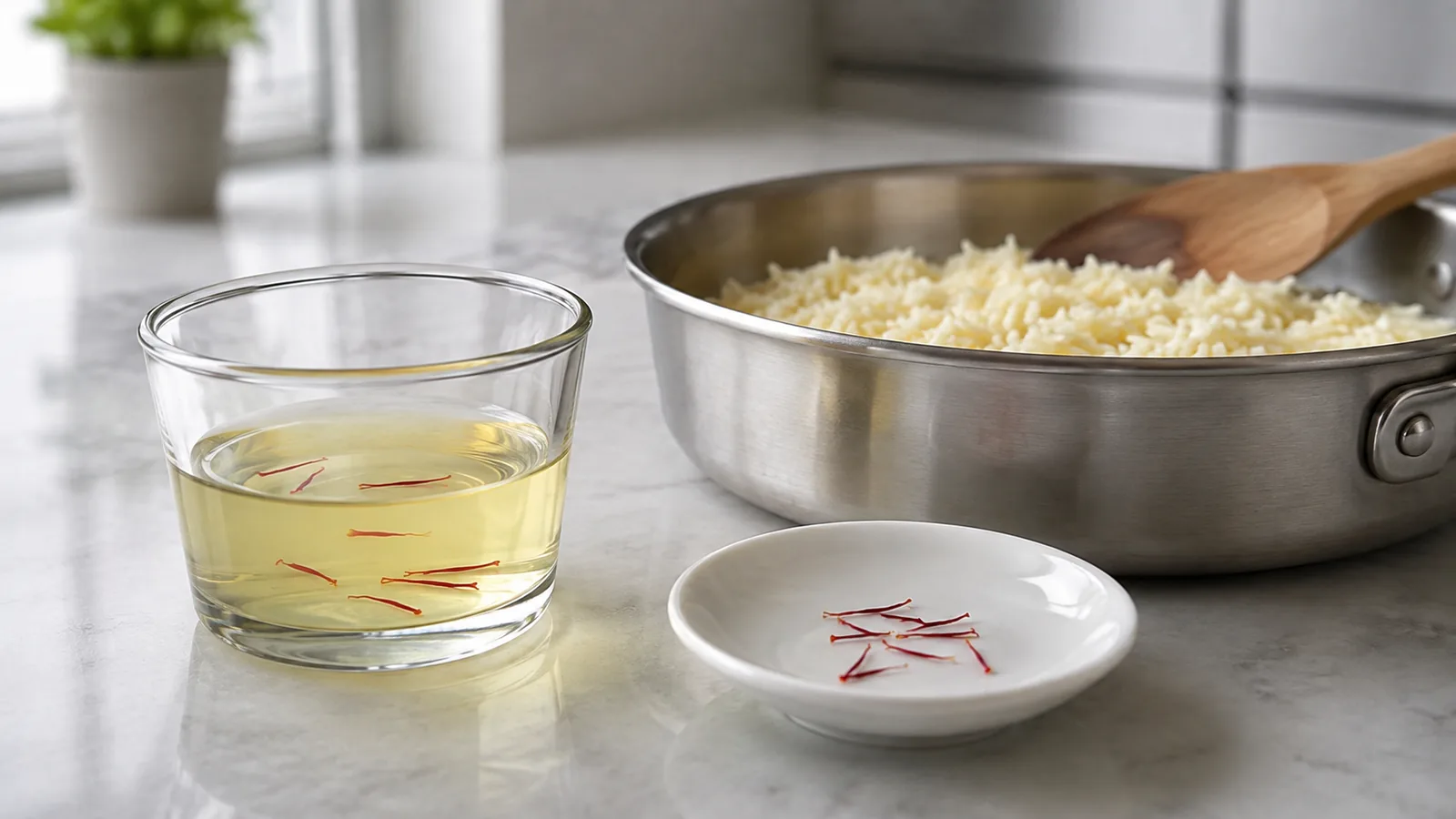
Combine the sugar and water in a saucepan and warm them over medium heat, stirring only until the sugar dissolves. Add the brewed saffron and bring the mixture just to a simmer. Remove it from the heat, then stir in the rosewater so its aroma is not boiled away. Keep the syrup hot while you toast the flour.
Prepare the Iranian flour halva
Place the flour in a wide, heavy pan over medium-low heat. Stir continuously with a wooden spoon or silicone spatula until the raw flour smell disappears and the colour turns evenly beige. This can take time; high heat darkens patches before the rest is properly toasted.
Add the oil and butter. Stir until the fat is fully absorbed and the mixture becomes smooth and golden. Take the pan off the heat before adding the syrup. Pour it in gradually, standing back because the mixture may steam and spit, and stir after each addition.
Return the pan to low heat only if needed. Keep folding until the halva pulls together, leaves the sides of the pan and looks glossy without a pool of oil around it. It should be soft enough to spread. If it becomes dry and crumbly, rolling will be difficult.
How to roll the halva
- Lay a Mikado wafer sheet on a clean piece of baking parchment or food-safe reusable wrap.
- Let the halva stand only until it is safe to handle but still very warm. Spread a thin, even layer to the edges of the wafer. The warmth softens the sheet enough to bend.
- Wait briefly for the wafer to become flexible, then use the parchment to help roll it into a firm cylinder. Do not roll so tightly that the filling squeezes out.
- Wrap the cylinder and refrigerate for about one hour, until it is firm enough to cut cleanly.
- Use a sharp knife to slice the halva roll into rounds. Wipe the blade between cuts if the filling sticks.
If a wafer feels unusually thick or brittle, mist its plain side very lightly and wait a few seconds before spreading. Too much water turns it gummy, so this is a last resort rather than a routine step.
Chocolate and layered variations
For chocolate-covered halva roulette, chill the shaped roll briefly, coat it with melted chocolate and return it to the refrigerator until set. A thin coating is easier to slice than a heavy shell.
The same mixture can be assembled as a layered dessert. Spread a thin layer of warm halva on one wafer, place another sheet on top and repeat. Chill under a light, flat weight, then cut into small squares.
About substituting juice for sugar
The old recipe suggested replacing the sugar with “one glass of juice,” but it did not identify the fruit or its concentration. Ordinary fruit juice is not a dependable one-for-one replacement: it adds water and far less sugar, so the halva may not bind. A concentrated grape or date syrup would also change the flavour, colour and liquid balance. Use the tested sugar syrup above unless you have a separate formula designed for that sweetener.
Serving and storage
Finish the slices with pistachio or coconut just before serving. Halva roulette is rich, so narrow rounds usually work better than thick portions. Keep it covered in the refrigerator, where the wafer will gradually soften; for the cleanest contrast between filling and wafer, serve it the day it is made or the next day.
This is both a roulette dessert and an Iranian halva roll, but the technique is straightforward: toast the flour evenly, add the hot saffron syrup with care, stop cooking while the halva is spreadable and shape it before the wafer loses its flexibility.