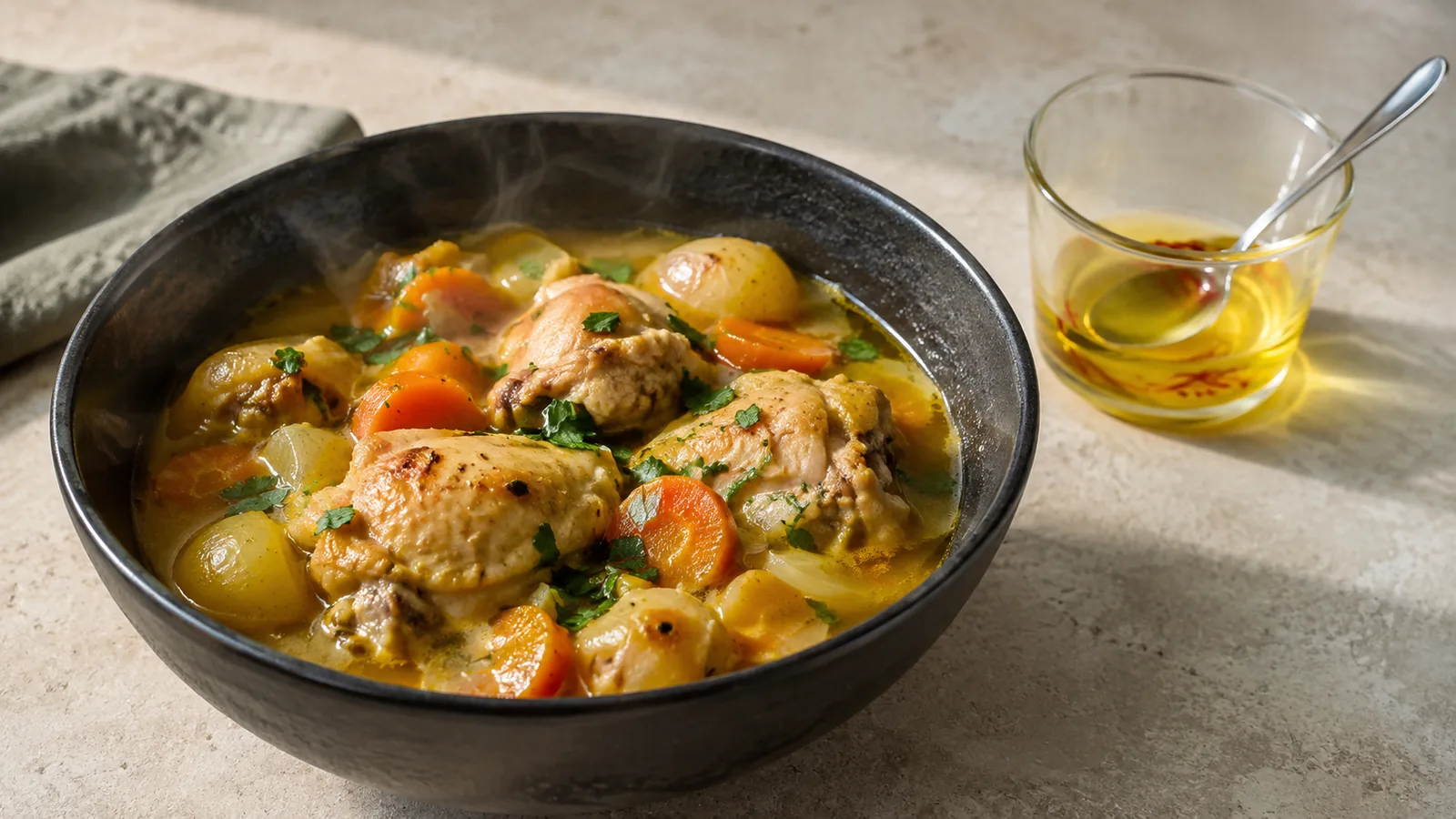
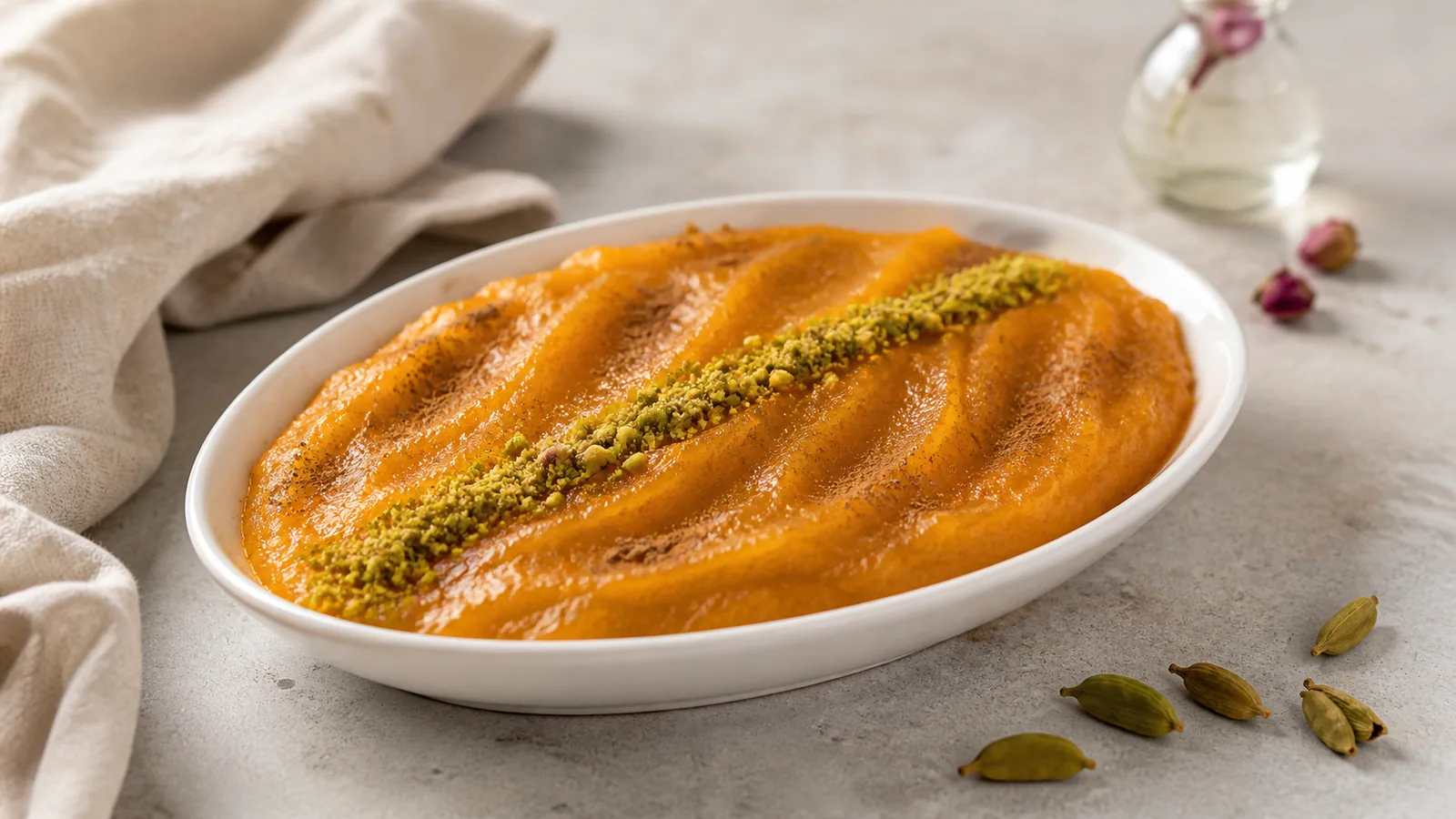
This Hamadan carrot halva combines cooked carrot, rice flour, saffron, rose water and cardamom in a soft, spoonable Persian sweet. Hamadan is also written Hamedan in English, and the halva is often prepared for an iftar table, though it also makes a fragrant dessert for family gatherings.
Ingredients
- 500 g carrots, peeled and coarsely grated
- 1 cup sugar
- 1/2 cup concentrated saffron infusion
- 1 cup rose water
- 1/2 cup neutral cooking oil
- 1 cup rice flour, sifted
- Seeds from 3 cardamom pods, finely ground
- Ground cinnamon, for decorating
- Desiccated coconut or ground pistachio, for decorating (optional)
The amount of liquid a rice flour absorbs varies. Keep 1/4 cup of the rose water aside at first and add it only if the halva needs loosening.
Cook and purée the carrots
Put the grated carrots in a saucepan with 1/2 cup water. Cover and cook over low heat until very soft, stirring once or twice. If the pan dries before the carrots are tender, add another spoonful of water.
Drain any liquid that remains, then press the carrots through a fine sieve or wrap them in a clean cloth and squeeze gently. Purée until smooth. Removing excess water now gives the finished halva a silkier texture and shortens the final cooking time.
Prepare the saffron mixture
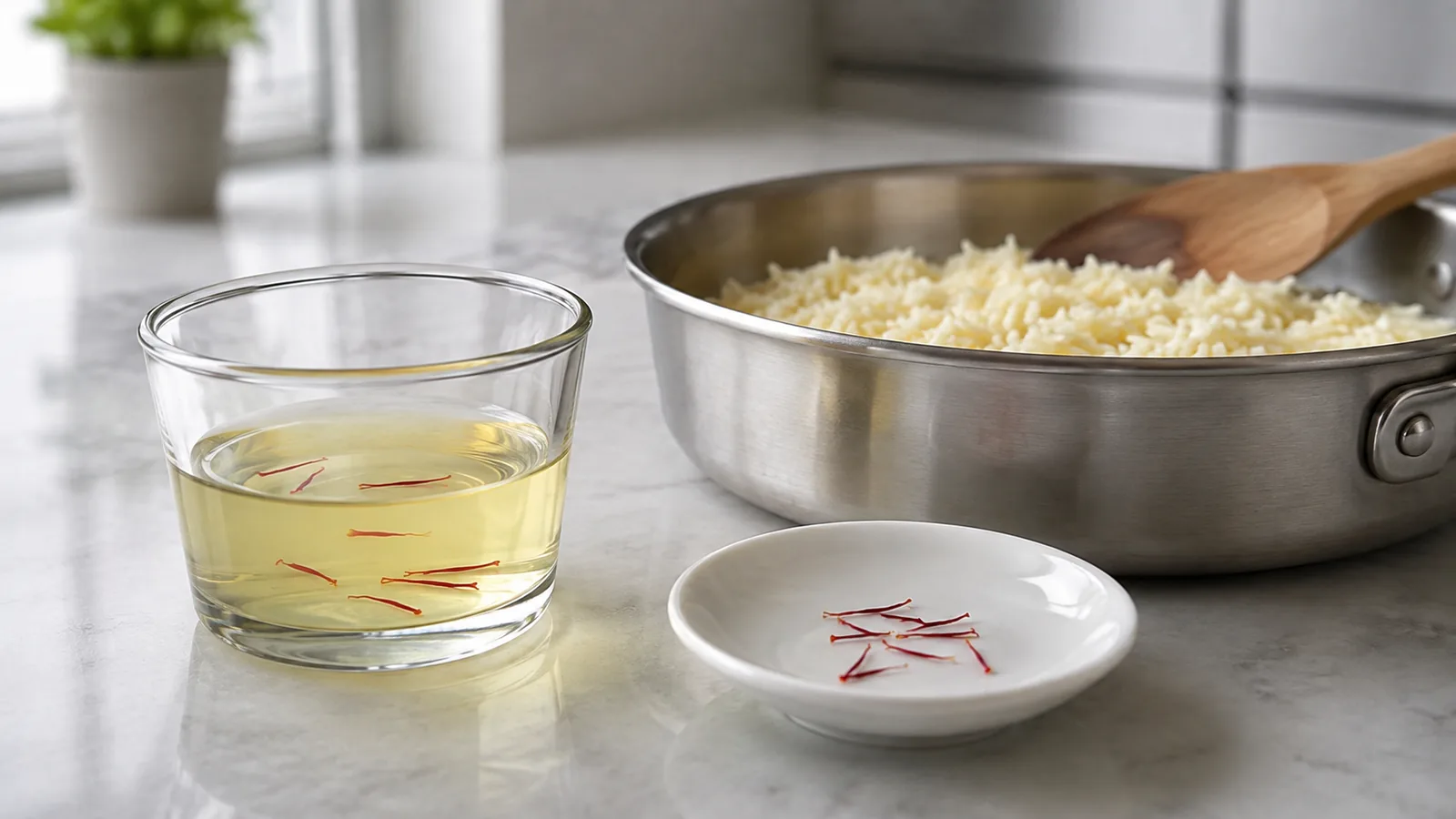
Combine the sugar, saffron infusion, 3/4 cup rose water and ground cardamom in a small pan. Warm the mixture gently, stirring just until the sugar dissolves. It does not need a long boil.
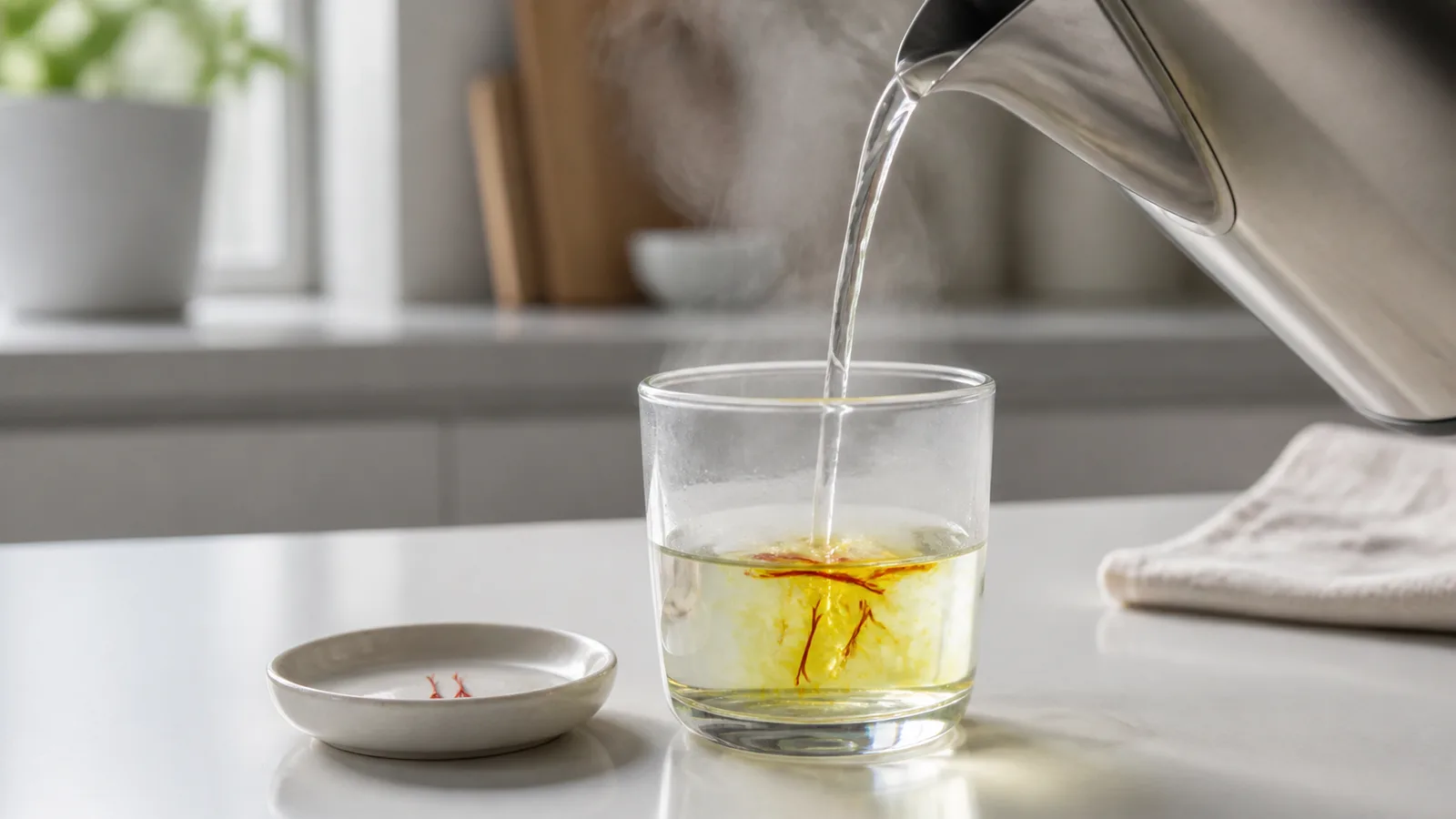
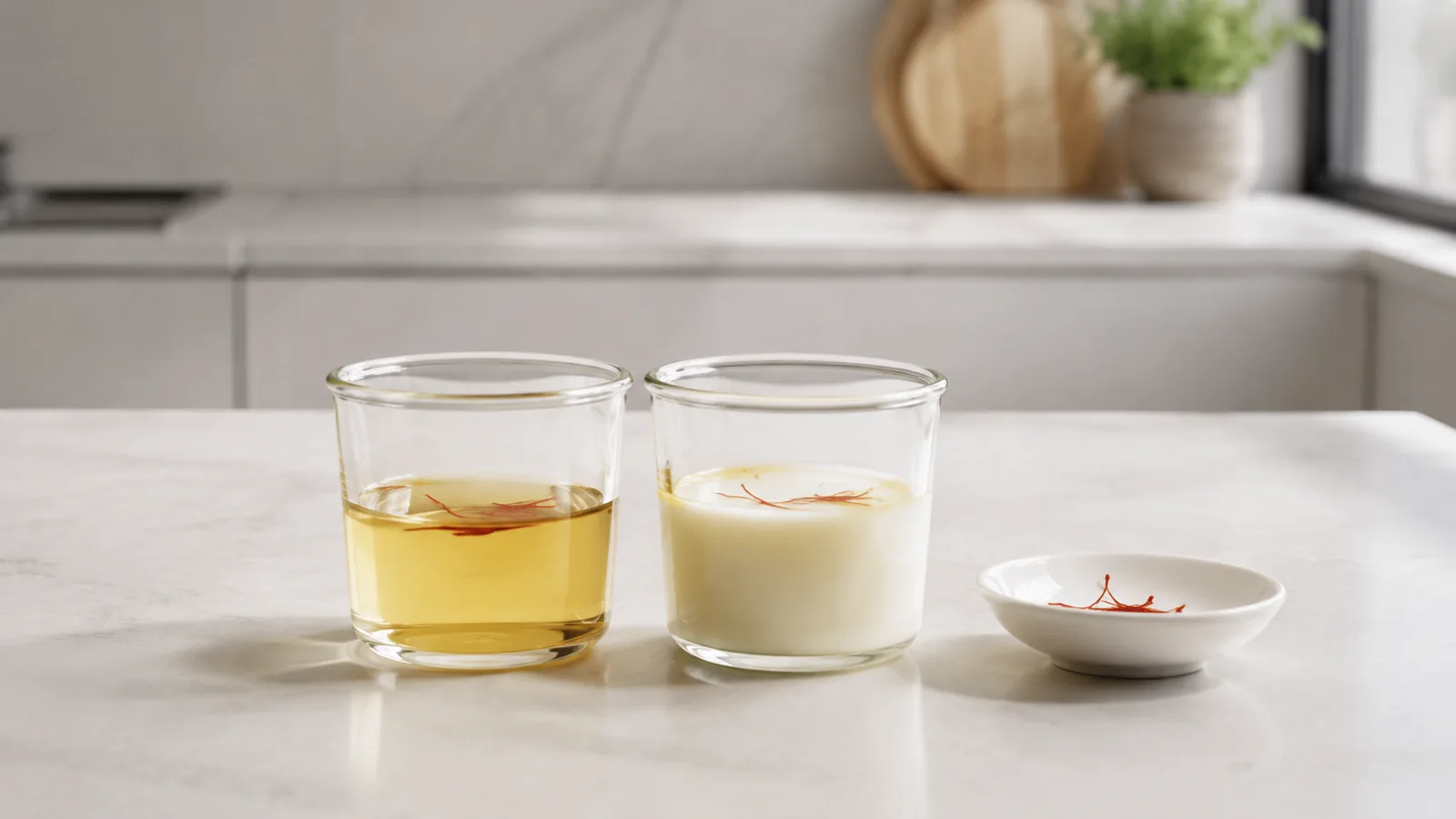
A concentrated infusion carries the saffron through the carrot and rice flour without adding dry threads to the texture. Our guide to brewing saffron explains a controlled method.
Toast the rice flour
Set a wide, heavy-based pan over low heat. Add the sifted rice flour and toast it for 4 to 6 minutes, stirring constantly, until its raw smell fades. Keep it pale; dark flour will dull the carrot’s orange colour.
Pour in the oil gradually and stir until the mixture is smooth, with no dry pockets. Continue cooking for 2 to 3 minutes over low heat.
Bring the halva together
Add the carrot purée to the rice-flour mixture and stir until evenly combined. Take the pan off the heat for a moment, then pour in the warm saffron syrup in three additions, mixing well after each one. Adding it gradually is the easiest way to prevent lumps and splashes.
Return the pan to low heat. Stir with a wooden spoon or flexible spatula until the halva thickens, becomes glossy and begins to pull away from the sides. This usually takes 8 to 12 minutes. If it becomes stiff before it is smooth, add some of the reserved rose water a tablespoon at a time.
Stop cooking once the mixture gathers as one soft mass. Prolonged stirring after that point can make the oil separate.
Shape and decorate
Let the halva cool for a few minutes, then spoon it into a shallow serving dish. Smooth the top with the back of an oiled spoon, or draw a simple wave pattern while it is still warm.
Finish with a light dusting of cinnamon. Because the old recipe’s translated “powdered nougat” is ambiguous, choose a dry garnish that suits the dish: desiccated coconut or ground pistachio both work.
Serving and storage
Serve the carrot halva warm or at room temperature. Small portions are best because the combination of sugar, rice flour and oil is rich. A glass of unsweetened tea balances the floral rose water and saffron.
Cover leftovers once cool and refrigerate for up to three days. Bring the halva closer to room temperature before serving again so its texture softens.
Texture checks
- Lumpy halva: sift the rice flour and add the warm syrup gradually, off the heat.
- Loose halva: keep stirring over low heat; avoid adding more flour late in the process.
- Oily surface: the halva may have cooked or been stirred too long after it gathered.
- Dull colour: toast the rice flour only until the raw aroma disappears.
Use rose water made for culinary use. If decorating with pistachio or coconut, identify those ingredients for guests with food allergies.