


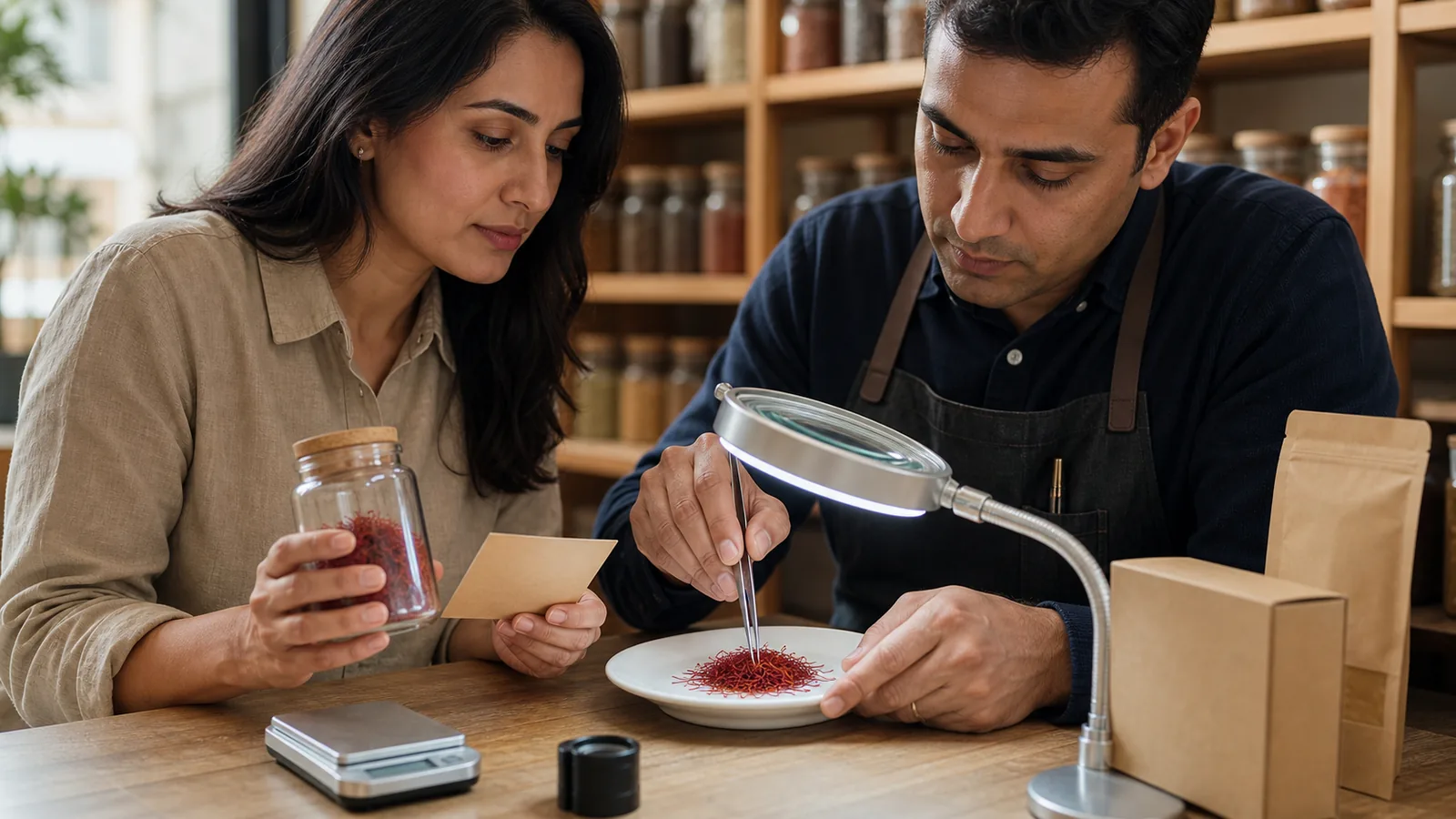
Saffron fraud can involve another plant sold as saffron, genuine stigmas mixed with cheaper material, added weight, artificial colour or a false origin claim. That is why the old warning “Fraud at the Saffron (Be careful to buy)” still has a useful purpose. The safest response, however, is not to trust one home trick. Buy a traceable lot from a responsible supplier and use laboratory evidence when authenticity really matters.
Whole threads give a buyer more visual information than powder, but appearance, smell and a cup of water cannot certify a product. Sophisticated adulteration is designed to pass a quick glance.
Common forms of saffron fraud
The US Food and Drug Administration gives a simple example of economically motivated spice adulteration: an expensive spice such as saffron may be bulked out with cheaper plant stems. Modern reviews describe a wider range of practices.
- Substitution: safflower, calendula, dyed corn silk, turmeric or another plant material is presented as or mixed with saffron.
- Self-adulteration: yellow styles, stamens or other parts of Crocus sativus are added to the red stigmas.
- Added weight: sugar, salt, starch, minerals, glycerine, oil, syrup or excess moisture increases mass without adding saffron.
- Added colour: natural or synthetic dyes make pale, spent or unrelated fibres look more convincing.
- False description: the seller misstates geographic origin, harvest, grade, certification or purity.
Safflower is especially familiar in old buyer advice because its narrow orange-red petals can resemble saffron at a distance. It is a legitimate plant with its own uses; the fraud is selling or mixing it as Crocus sativus without disclosure.
What genuine saffron threads look like
A genuine saffron thread is a dried stigma, not a flat petal. It commonly has a narrower lower section and a wider, flared or trumpet-like end. Threads vary in length and can curl, fold or break during picking, drying, packing and transport.
Colour ranges through deep red, with some lighter orange-red shading. A little yellow style may be present in some commercial grades. Completely identical threads, bright dye collected in creases, obvious paper-like strips or a mixture of unrelated shapes deserve closer inspection, but visual variation alone does not prove fraud.
The original article called bunched saffron more desirable and suggested fragmentation reduces quality and economic value. Intact threads can help identification and may command a premium. Broken genuine stigmas are still saffron, though, and breakage during transport does not automatically reduce their aroma, colour or safety.
Why powdered saffron is harder to judge
Grinding removes the thread shape that helps a buyer recognise plant material. Powder can also distribute added colour, starch, turmeric, sugar or other ingredients evenly, making casual inspection less useful.
ISO’s guidance notes that fraud is more difficult to see in powdered saffron and that added material or excess moisture can increase weight. Powder is not inherently fake, but it creates a greater need for supplier controls, sealed packaging, lot identity and appropriate testing.
If powder suits a recipe or production line, buy it in a traceable pack rather than from an open, anonymous container. Keep the lot and invoice information until the product has been used.
Does the water test identify fake saffron?
Genuine saffron releases a golden-yellow to orange colour into warm water, and the threads normally remain visible. A material that floods cold water immediately with an unnaturally intense dye or loses a surface colour can be suspicious.
That observation is only a screen. Extraction speed changes with water temperature, thread size, previous handling and agitation. Some adulterants also release yellow-orange colour, while genuine saffron may colour water quickly when crushed.
The old article says a fake thread remains while the coloured material dissolves. Both genuine and false plant fibres can remain in the cup. Water does not identify the plant species or reveal every added dye.
Does genuine saffron dissolve completely?
No. Saffron’s soluble pigments and flavour compounds move into hot water, but the physical stigma is plant tissue and does not vanish completely. The old claim that saffron powder should dissolve entirely is therefore not a reliable authenticity rule.
Fine particles may disperse and become difficult to see. Insoluble material by itself does not prove that the powder contains sand or foreign fibres; a controlled laboratory method is needed to identify what remains.
The paper or oil-spot test is unreliable
The 2013 article advises pressing threads between paper, straw or newspaper and treating the absence of an oil mark as a sign of quality. This is not a dependable pass/fail test. Paper type, pressure, moisture, added oil and storage all affect the result.
A visible greasy mark may justify investigation because saffron can be weighted with oil or glycerine. No mark does not prove purity, and using printed newspaper adds ink and contamination to the sample.
Aroma and taste can raise questions, not certify a lot
Saffron has a distinctive aroma shaped by several volatile compounds, including safranal, and a characteristically bitter taste. The original buyer note described the fresh scent as a sharp aroma that could seem piercing. Low aroma can result from age, poor storage, weak grade or dilution. A strong smell can also be imitated with added flavour.
Do not taste a product that looks mouldy, dirty, insect-damaged or deliberately dyed. Never use household chemicals, flame tests or solvents on food you plan to consume.
For a visual comparison of thread forms and the limits of home checks, see our detailed guide to real and fake saffron.
Warning signs when buying saffron
Pause before buying when the pack has no responsible business name, no lot information, a broken seal or a price that makes little sense for genuine hand-harvested saffron. Also look for unexplained moisture, salt or sugar crystals, sand, insects, webbing, mould, musty odour or fibres unlike saffron stigmas.
A short net weight is a quantity problem rather than proof of adulteration, but it still indicates poor control. Check the declared net weight on an accurate scale if the purchase is material to your business.
Words such as “premium,” “super,” or “best” are not test results. Ask what grade or specification they refer to and whether the evidence applies to the same lot being offered.
What reputable sourcing should include
The old article recommends buying from a reputable company operating under health and hygiene requirements. That is sensible, but a licence is not a guarantee that every lot is authentic. A stronger purchasing file includes:
- the supplier’s verifiable legal identity and contact details;
- a lot or batch number and traceable invoice;
- declared origin, product form, net weight and grade or specification;
- food-business, export or health documentation required for the route;
- a certificate of analysis tied to the lot when risk or value warrants it; and
- a clear process for rejection, complaint and recall.
For a wholesale order, consider retaining a sealed reference sample from the accepted lot. If a later dispute arises, both sides can refer to the same material.
How laboratories authenticate saffron
ISO 3632 provides specifications and test methods for dried saffron. Laboratories can assess characteristics connected with colour, taste, aroma, moisture and foreign matter. More targeted methods may be needed when the question is the identity of a particular adulterant.
Research has used microscopy, chromatography, spectroscopy, imaging and DNA-based methods to distinguish saffron from safflower, calendula, turmeric, dyed fibres and other additions. No single method answers every question. For example, one study found that the general ISO UV-visible classification method could miss some additions at lower proportions, while HPLC mass spectrometry identified marker compounds for the tested adulterants.
The test plan should match the risk: species substitution, artificial dye, moisture, added mineral matter and false geographic origin are different analytical problems.
When not to use the product
Do not consume or sell saffron with visible mould, insects, unexplained debris, chemical odour, damaged packaging or credible evidence of an unauthorised dye. Isolate the lot, keep the packaging and purchase records, and contact the supplier or relevant food authority.
Suspected fraud is not solved by washing the threads. That may remove surface material while leaving the identity and safety questions unanswered.
Source and review note
We reviewed this article on 28 August 2026. Its safflower, paper, water, aroma, thread-shape, powder, debris and reputable-supplier advice remains traceable to the original 2013 warning, with unreliable tests corrected. Current context comes from the FDA’s explanation of economically motivated adulteration, ISO’s official guide to recognising quality saffron, peer-reviewed reviews of saffron quality control and adulteration and analytical methods, and a PubMed-indexed chromatography study of common adulterants.

![Exporting Saffron to Turkey + Price Guide [Complete 0 to 100]](https://img.rowhanisaffron.com/20260827003933/saffron-export-turkey-quality-inspection.webp)



