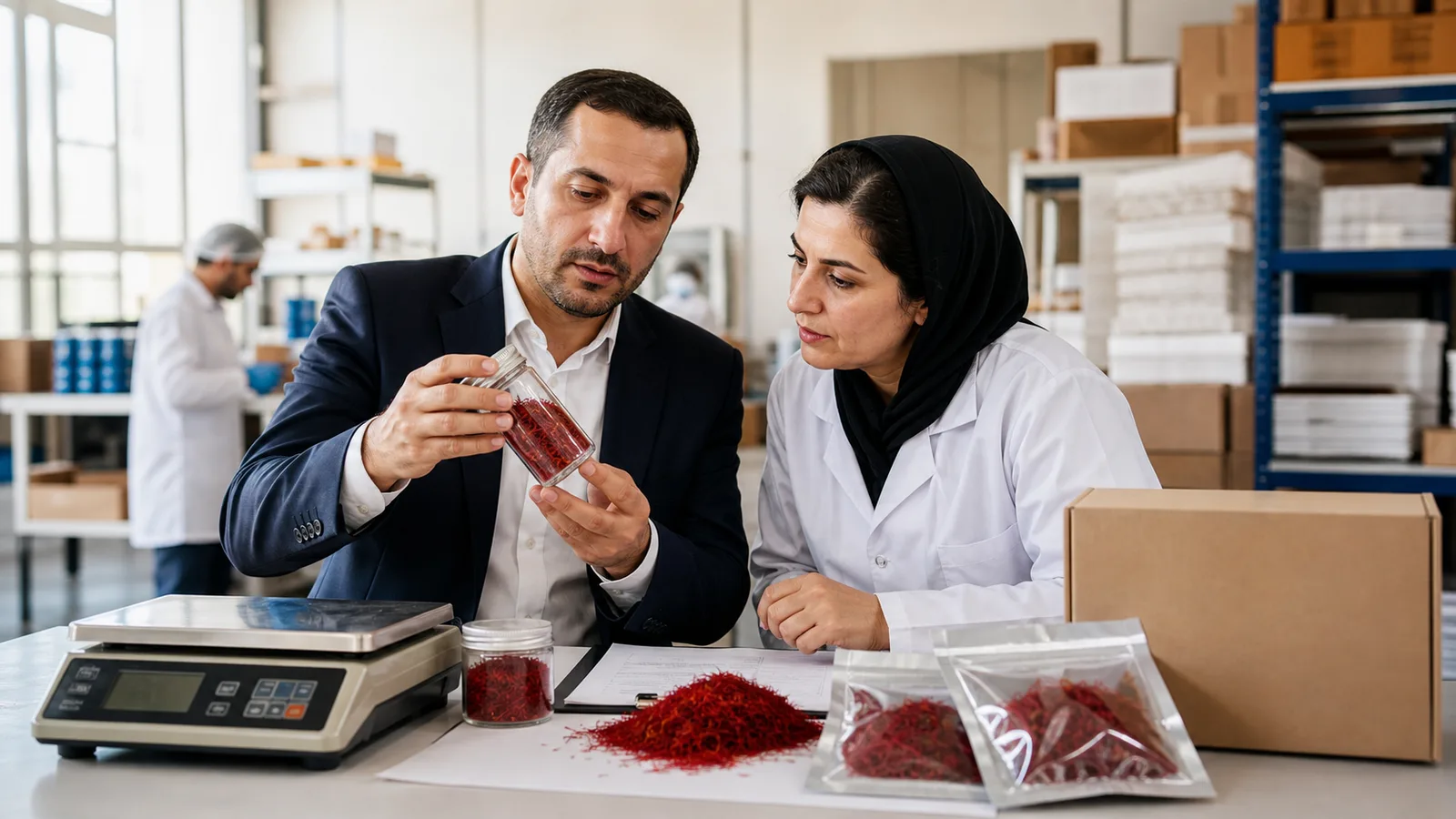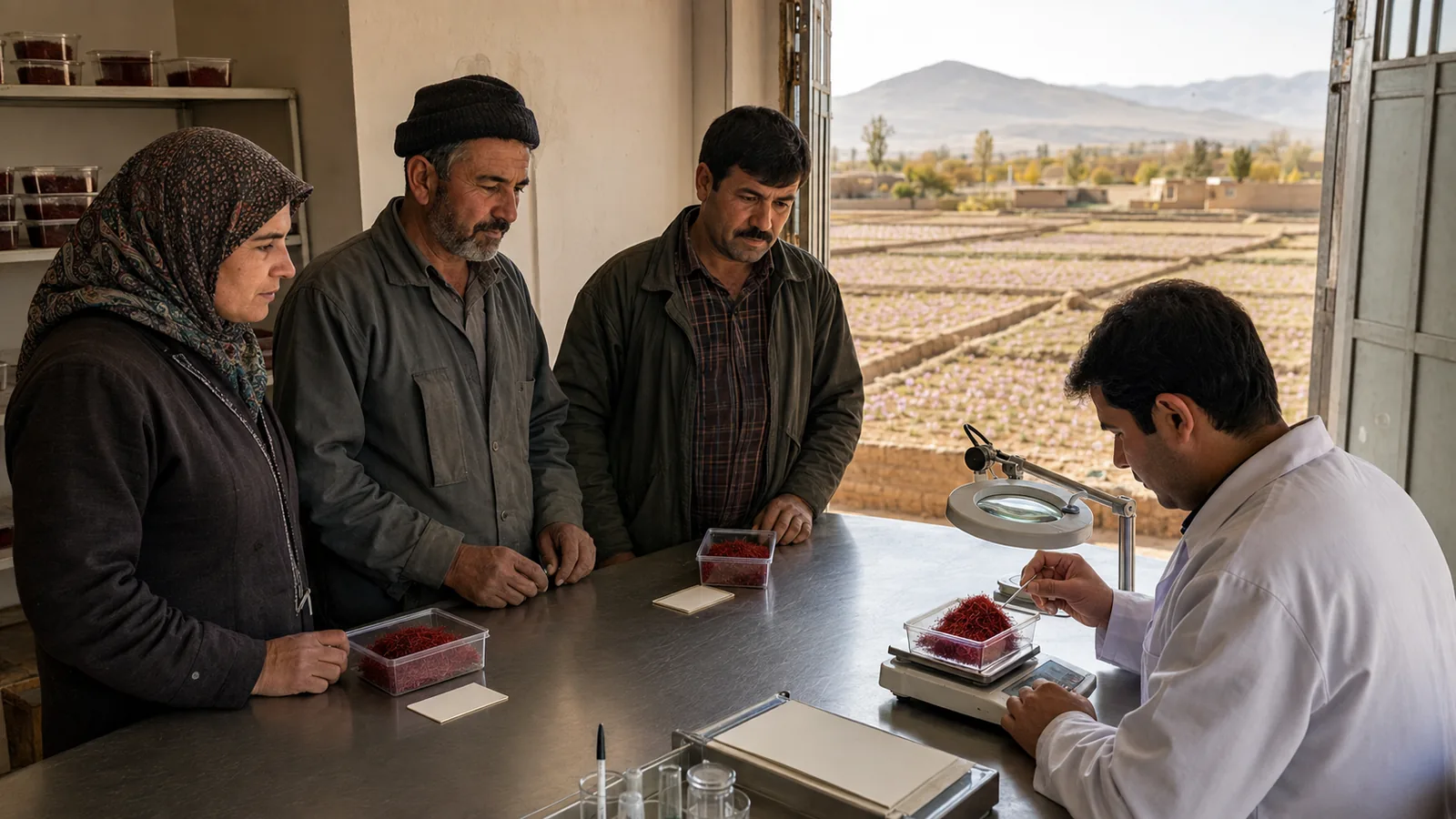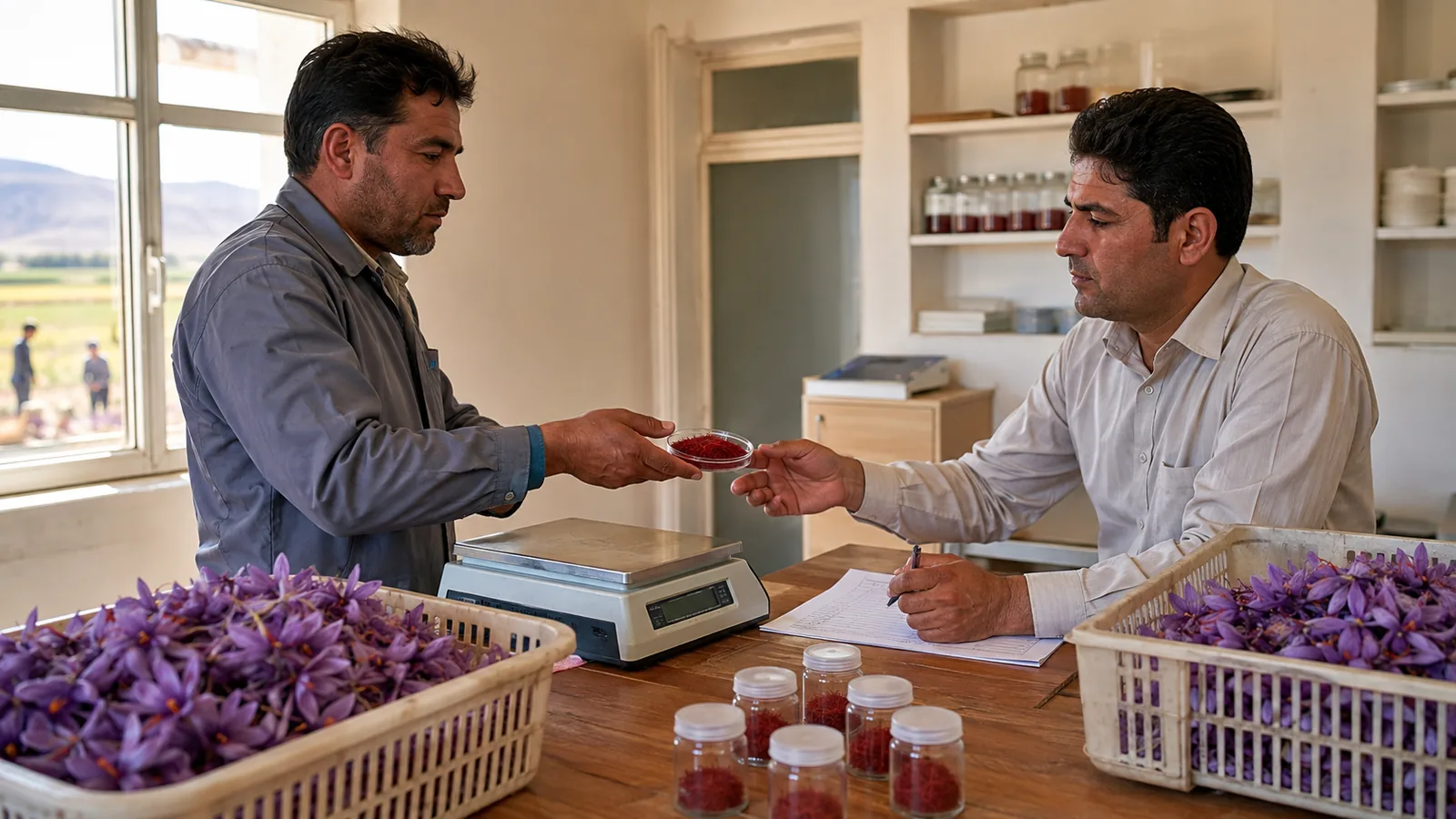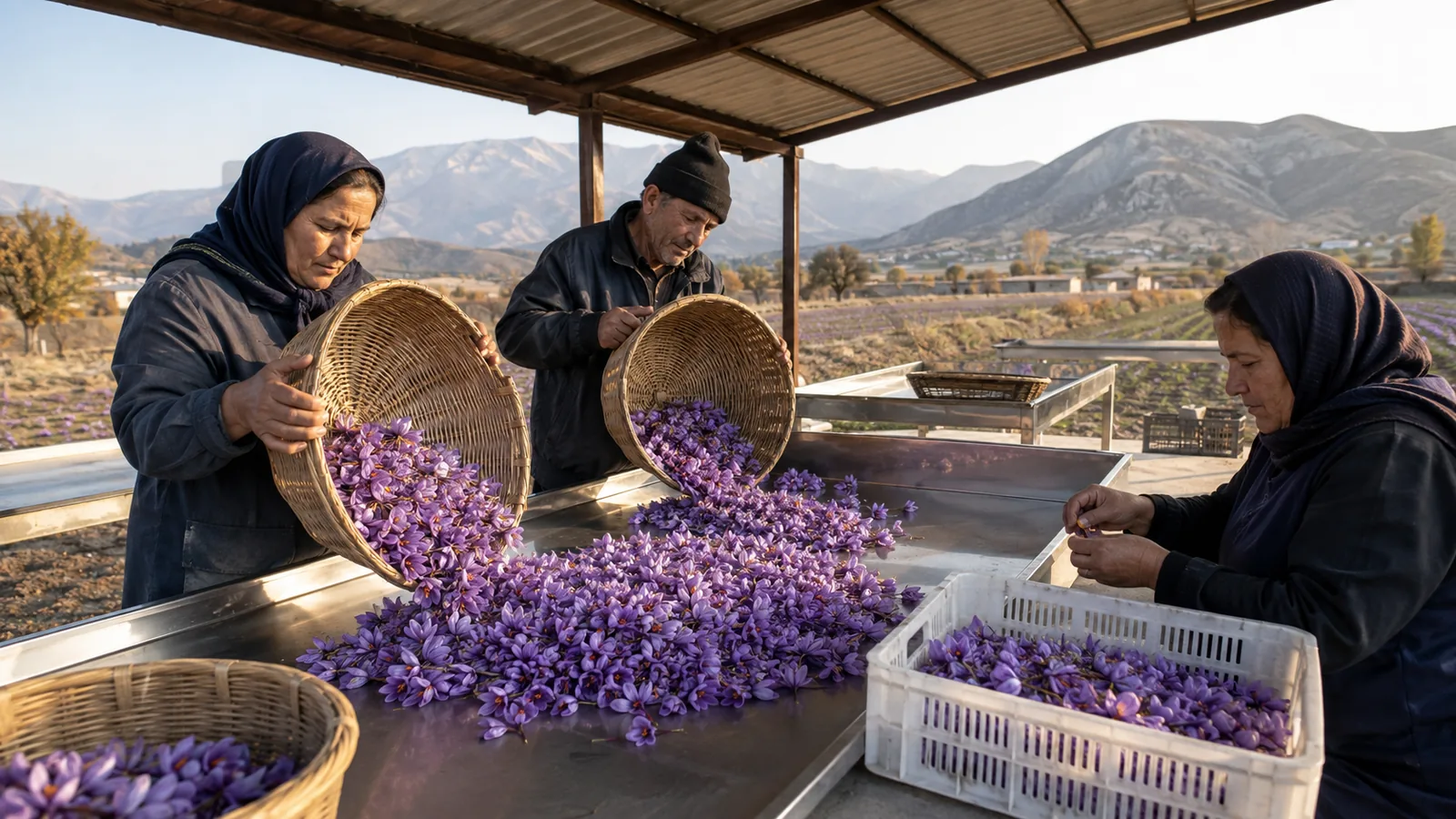

Saffron’s artificial color problem is a form of food fraud: a seller may dye plant material that is not saffron, or add color to low-quality material so it resembles a stronger spice. The safest response is not to rely on one dramatic home test. Examine the threads, aroma, color release, seller and packaging together, and use accredited laboratory testing when identity or food safety matters.
This article revisits a translated Iranian report that quoted Dr Hussein Rastegar, then described as director general of food-and-drug control reference laboratories. The report raised a legitimate warning about added colors, but it also mixed that warning with unclear grade names, unsupported health claims and a phrase translated as “girl of sleep.” Those points need to be separated before they can help a buyer.
What artificial color in saffron means
Authentic saffron consists of dried stigmas from Crocus sativus. Its natural crocin pigments color an infusion yellow to golden-orange. Fraud can take several forms: coloring safflower, calendula or other plant material; adding dyed fibers to real saffron; or treating poor material so it appears uniformly red.
Researchers have identified synthetic dyes in commercial saffron. A study of 104 samples from 16 countries used chromatography and mass spectrometry to identify magenta III and rhodamine B in dyed samples. Other analytical work has screened for tartrazine, Sunset Yellow, Sudan dyes and additional colorants. That evidence confirms the problem; it does not mean every intensely colored sample contains one of those compounds.
The old report called one artificial color “girl of sleep.” The translated text does not identify a chemical, regulatory name or test result behind that expression, so it should not be repeated as the name of a known additive. It may also have been confused with Dokhtar-pich, an Iranian trade name for a legitimate bunch-style saffron grade. A grade and an added dye are not the same thing.
Can water reveal dyed or fake saffron?
A suspicious sample may release an immediate red cloud when it touches water, while genuine threads normally release their color progressively and leave a yellow-gold infusion. Dyed material may also stain the water before the thread has had time to infuse. The old report described rapid dissolution, a red-to-yellow color and little or no characteristic aroma as warning signs.
Those observations are useful only as screening clues. Water temperature, grinding, thread damage, storage age and the amount used all change the speed and intensity of an infusion. Some adulterants are designed to imitate natural color release. In other words, fast color release deserves attention, but it does not by itself identify a prohibited dye.
Aroma gives another clue. Real saffron has a distinctive dry, hay-like and honeyed aroma associated in part with safranal. A missing or perfume-like smell deserves caution, but aroma varies with age and storage. A home test cannot establish chemical safety.
Thread shape matters
Look at several threads under bright light. Genuine saffron stigmas are not perfectly straight, identical fibers. A thread is usually broader and trumpet-like at one end, narrower toward the other, and irregular in a botanical way. Very uniform strands, fuzzy textile fibers or colored shreds with no stigma structure can indicate substitution.
Powder is harder to judge because grinding removes the visible anatomy. Buy whole threads when authenticity is important, and choose packaging that identifies the producer, batch and net weight. Our detailed guide to real and fake saffron explains how the clues work together.
Do not confuse Iranian grade names with fraud
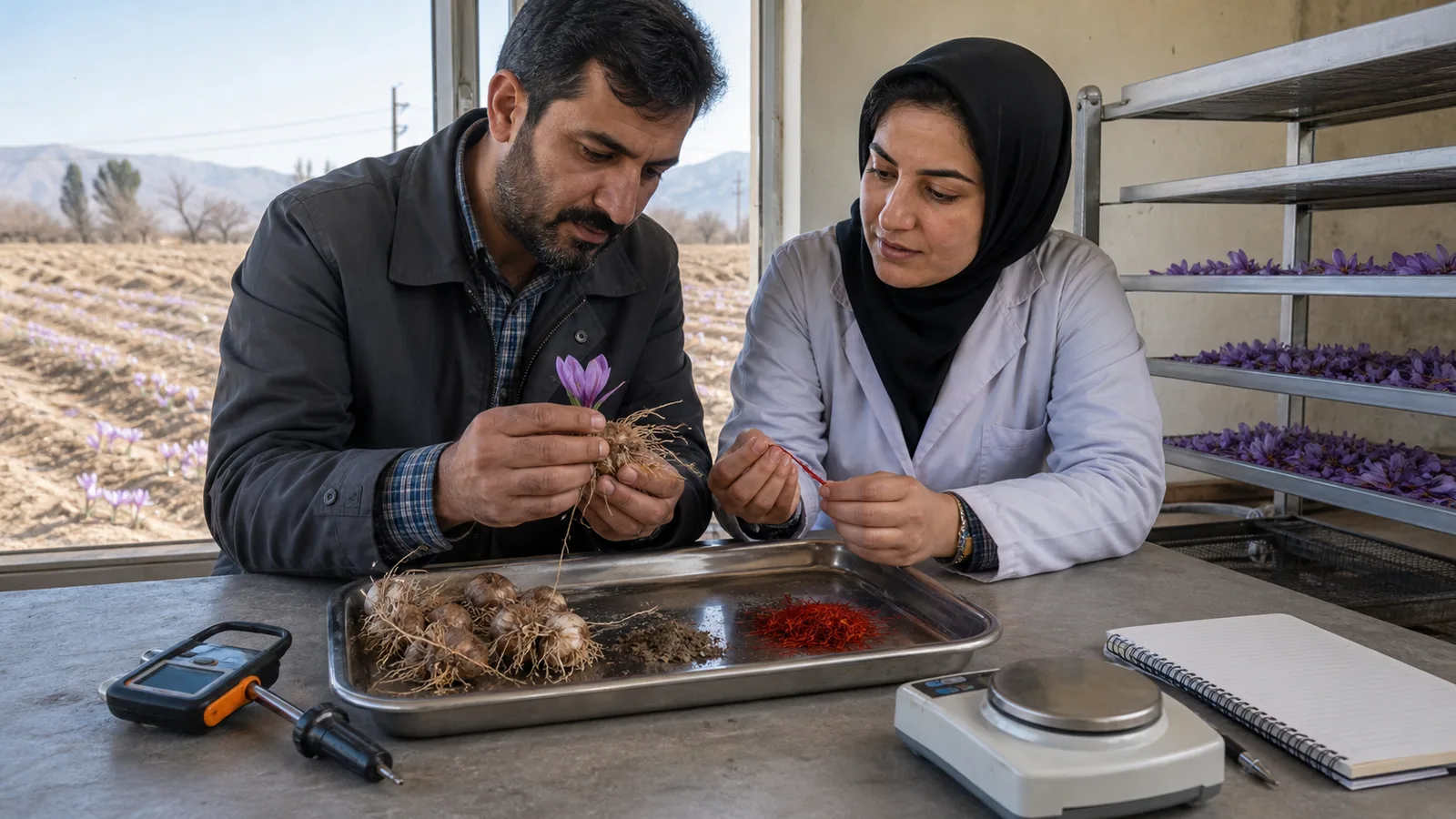
The original text described red stigmas attached to roughly 3–5 cm of pale style and tied into bundles. That describes the traditional Dasteh, Dokhtar-pich or bunch presentation. It was historically tied by hand, sometimes by girls or women in producing households, which helps explain the trade name.
The pale style naturally has less coloring strength than the red stigma. Styles left attached therefore reduce the measured color strength per gram compared with all-red grades such as Sargol or Negin. That does not make bunch saffron counterfeit. It is a different presentation and should be sold honestly under the correct grade.
The translated report also used “parsley,” “shrubbery,” “safflower” and “nougat” where Iranian saffron grade names were apparently intended. Those English words are unreliable translations. Safflower, for example, is a separate plant and can be an adulterant, while Negin is a recognized all-red commercial saffron style. Buyers should compare documented product specifications, not mistranslated labels.
What color-strength numbers can and cannot prove
The old article assigned bunch saffron a coloring power of 120–150. Color strength is measured from crocin absorbance under standardized conditions, and the result varies by grade, crop, drying, storage and laboratory method. A historic range can describe a category in a particular report; it is not a universal guarantee for every bundle.
The current Codex standard for dried saffron sets identity, quality, hygiene, contaminant and labelling provisions. ISO 3632 provides a specification and test methods used to assess saffron. Spectrophotometric color strength is useful, but research shows that a combination of chemical, microscopic and sometimes DNA methods may be needed to distinguish botanical substitution from synthetic coloring.
Why added color needs proper testing
Added color is an authenticity problem even before toxicity is considered: the customer is not receiving the product described. Food-safety risk depends on the actual compound and exposure. Because the old report did not identify its alleged dye, it cannot support a precise claim about carcinogenicity or a safe amount.
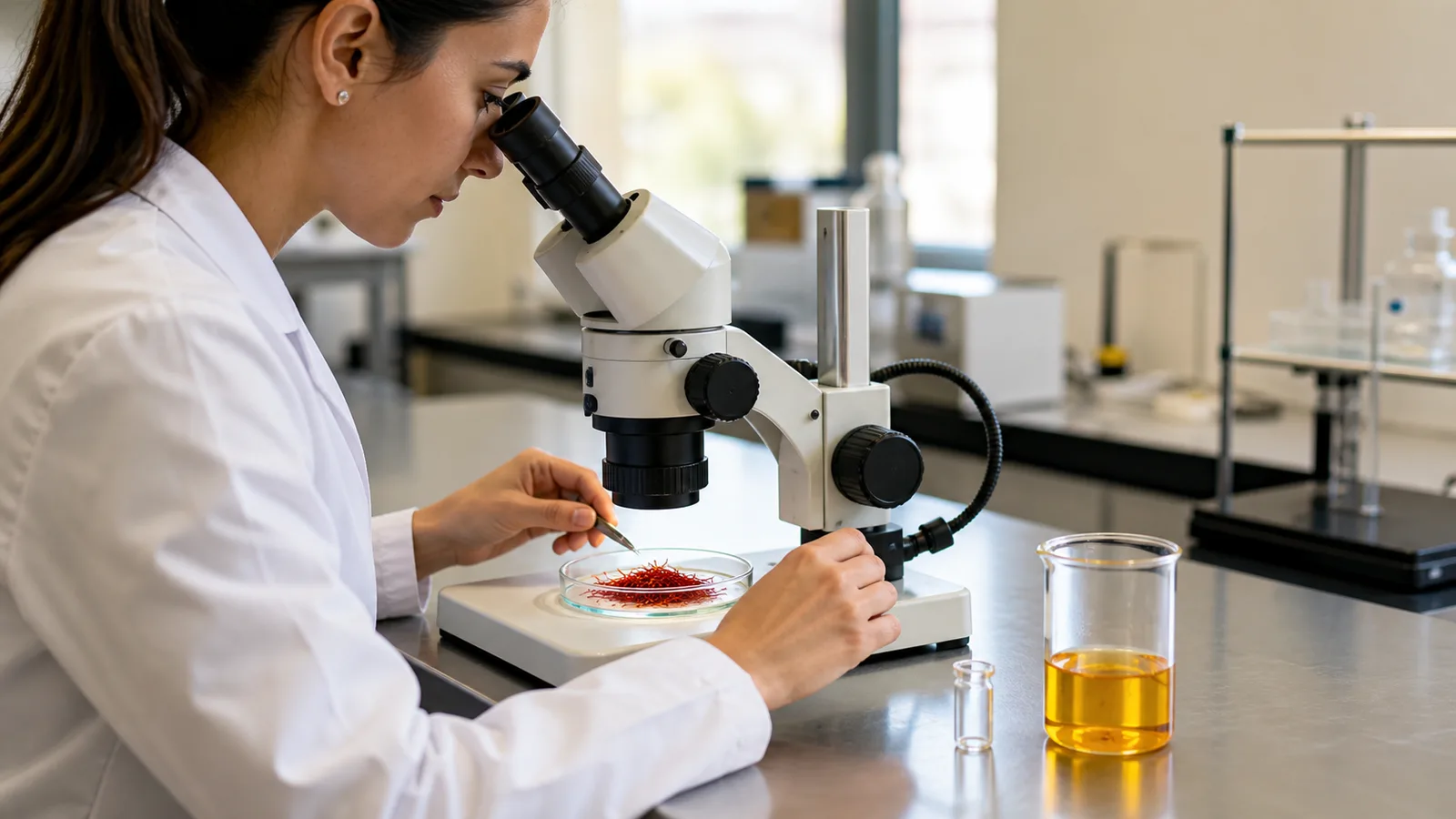
Laboratories can use thin-layer chromatography, HPLC, mass spectrometry, NMR or spectroscopic methods, depending on the suspected adulterant. The commercial-sample study identifying magenta III and rhodamine B illustrates why a chemical result is stronger than judging color by eye. Food businesses should use validated methods and applicable local rules rather than a kitchen test as a release decision.
Health claims and dose warnings in the old report
The source called saffron an antidepressant and said it strengthened the nervous and digestive systems. Human studies have investigated standardized saffron preparations for mood and other outcomes, but ordinary culinary use should not be presented as a treatment. “Sucrose” in the translation appears to be an error, not a supported health effect.
It also warned about consuming three grams in a month and more than five grams in one meal, then listed dizziness, altered heart rate and nausea, with a special warning about pregnancy and abortion. These quantities are far beyond the small pinch normally used in food, yet they should not be treated as universal safety thresholds. Product form, body size, medicines, pregnancy and health conditions matter. Pregnant people and anyone considering concentrated or medicinal use should ask a clinician or pharmacist; severe symptoms or suspected poisoning require urgent medical advice.
How to buy and store saffron more safely
- Prefer identifiable whole threads over anonymous powder.
- Check the producer, batch, weight, origin and tamper-evident packaging.
- Treat an unnaturally low price or uniformly dyed-looking fibers as a warning, not proof.
- Use appearance, aroma and gradual infusion together; do not trust a single viral test.
- For commercial purchasing, request a current certificate of analysis and laboratory method.
- Keep saffron tightly closed in food-safe glass or metal, away from light, heat and moisture.
Restaurants and other food businesses carry a greater responsibility because one purchase can affect many customers. They should buy through traceable suppliers and investigate any batch that behaves unexpectedly.
The practical conclusion
Artificial color in saffron is real, but a red plume in water is not a complete diagnosis. Thread anatomy, aroma, release pattern, traceability and grade information can help a customer decide whether to stop using a suspicious sample. Only suitable analysis can identify an added dye and distinguish it from botanical adulteration or a legitimate saffron grade.
That distinction protects both the customer and honest producers: genuine bunch saffron should not be mislabeled as fake, and dyed counterfeit material should not pass merely because it resembles an expensive all-red grade.
Historical source: Hamshahri Online and the Food and Drug Administration public-relations item cited in the original post.