

This article explains an Iranian government market programme reported in 2017. Its production shares, legal references and launch dates belong to that report and are not a statement of current exchange rules.
The government’s decision to protect saffron was described as a package of market measures rather than a physical protection scheme. Iran’s Ministry of Economic Affairs and Finance highlighted exchange trading for saffron and pistachios, standard warehouses and commodity deposit certificates as ways to improve liquidity, reduce unnecessary handling and make prices more transparent.
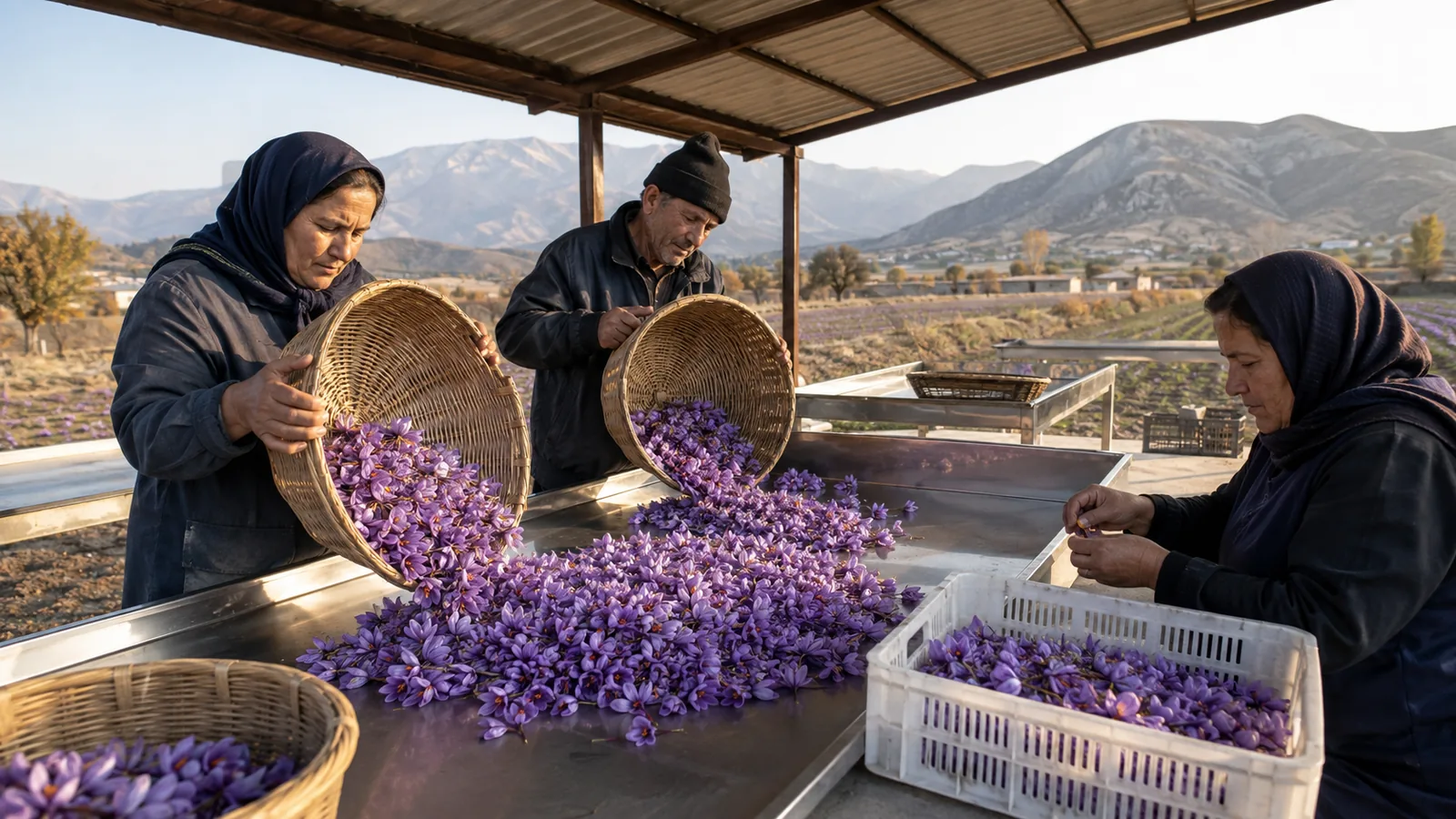
The programme aimed to organise two valuable agricultural markets that involved many growers but needed consistent grading, storage and access to buyers. It also sought to strengthen Iran’s position in international trade by improving product standards and the information available to market participants.
Why saffron and pistachios were treated together
The ministry report presented Iran as a major producer of both crops. It claimed the country then produced more than 96 percent of the world’s saffron and about 40 percent of its pistachios. In the same discussion, it cited Kerman with a 38-percent share of national pistachio production and Khorasan Razavi and Yazd at about 18 percent each.
Those figures are preserved as historical ministry claims. They need a stated year, crop definition and statistical source before being used as current production shares.
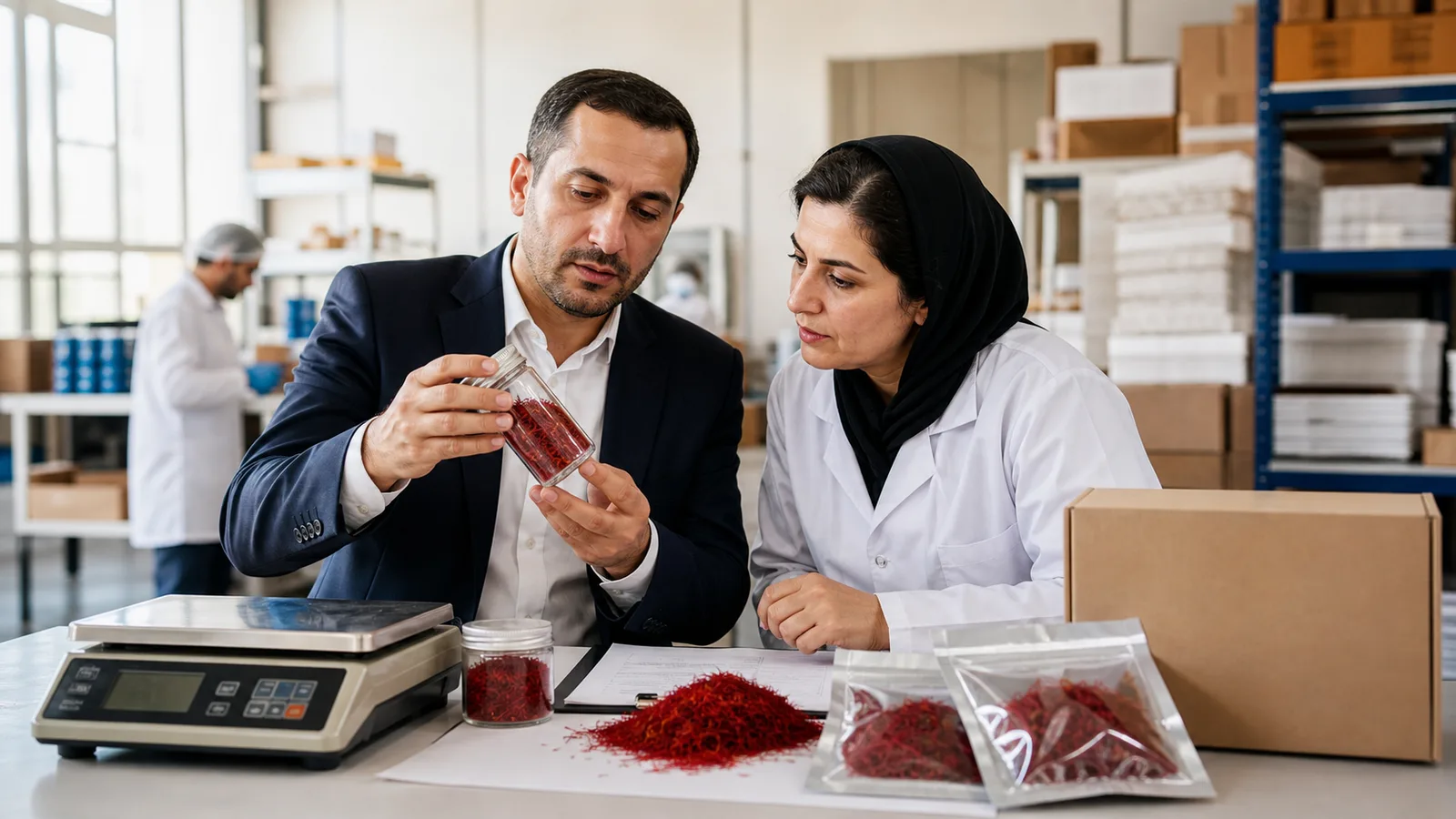
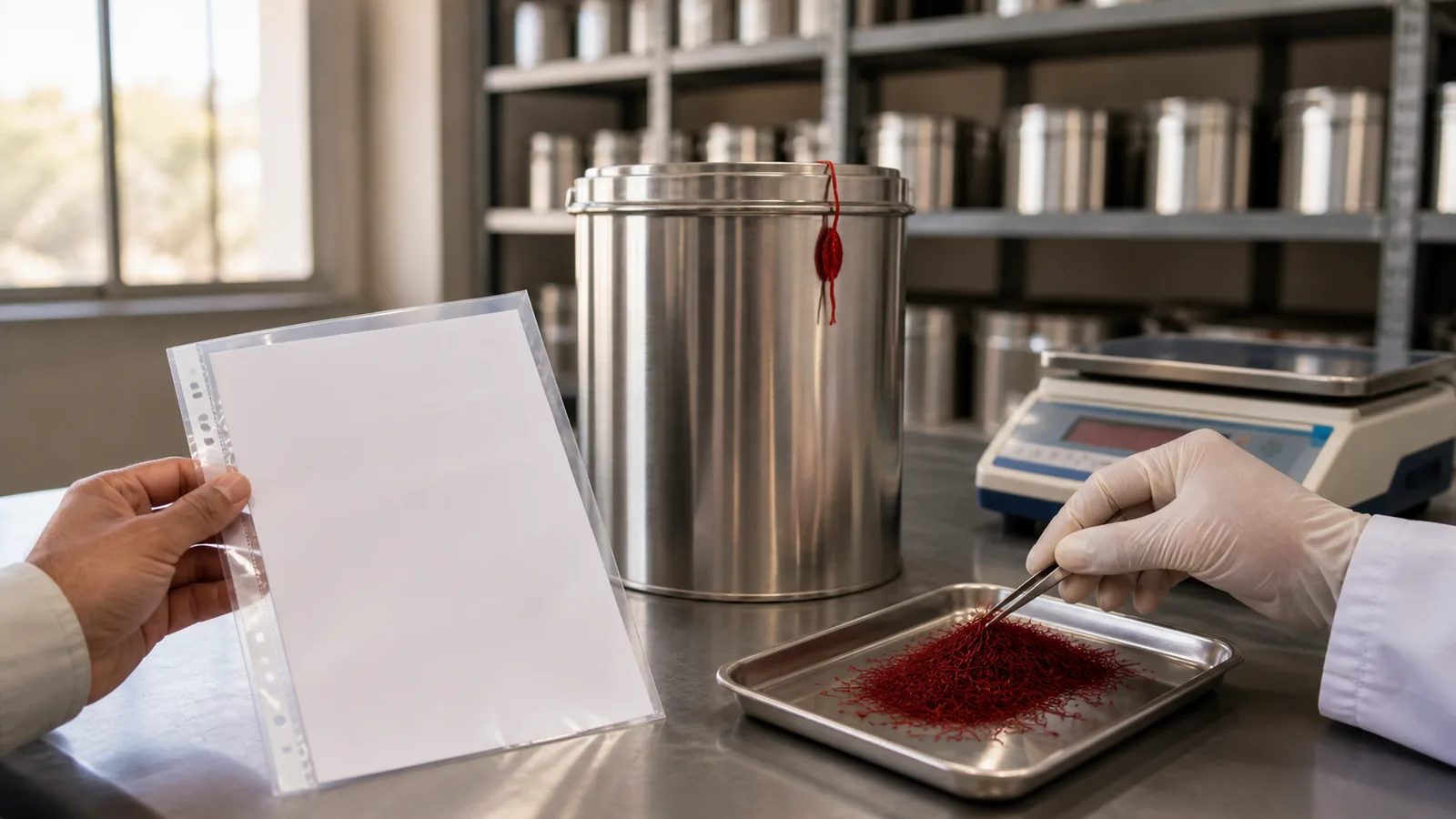
Saffron and pistachios nevertheless share several market characteristics. Both can be graded, stored for a period and traded in defined lots. Their value depends on quality as well as weight, and both may pass through several hands between a farm and an export customer. These features made them candidates for physical exchange transactions and warehouse-backed certificates.
What a commodity deposit certificate represents
A commodity deposit certificate records ownership of a specified quantity of goods held in an approved warehouse. The 2017 report traced recognition of this financial instrument to a decision by Iran’s Supreme Council of Securities and Exchange dated May 12, 2014, citing provisions of the country’s securities-market law.
Under the described process, a saffron or pistachio owner would:
- deliver an eligible lot to a warehouse approved for the exchange system;
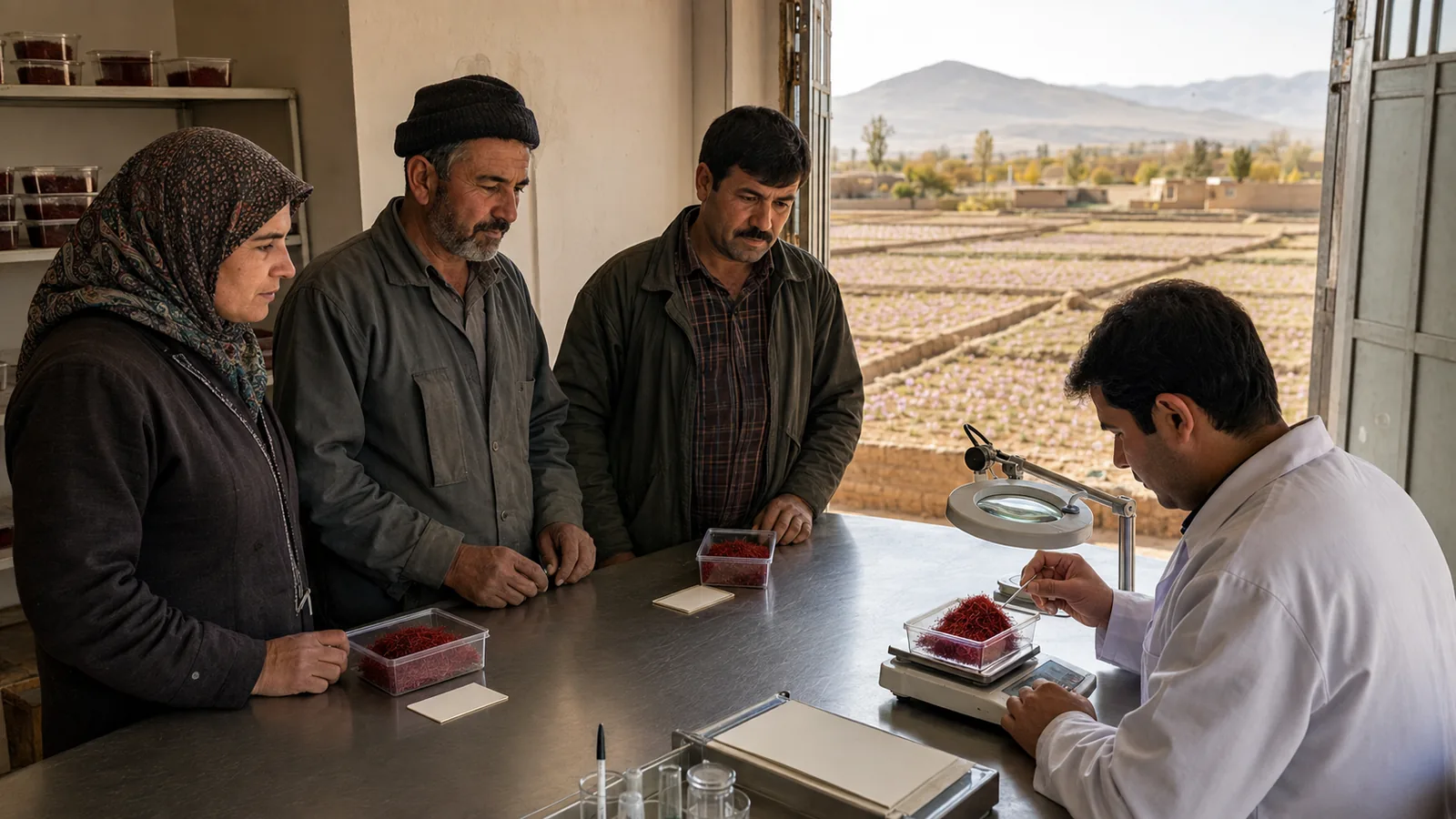
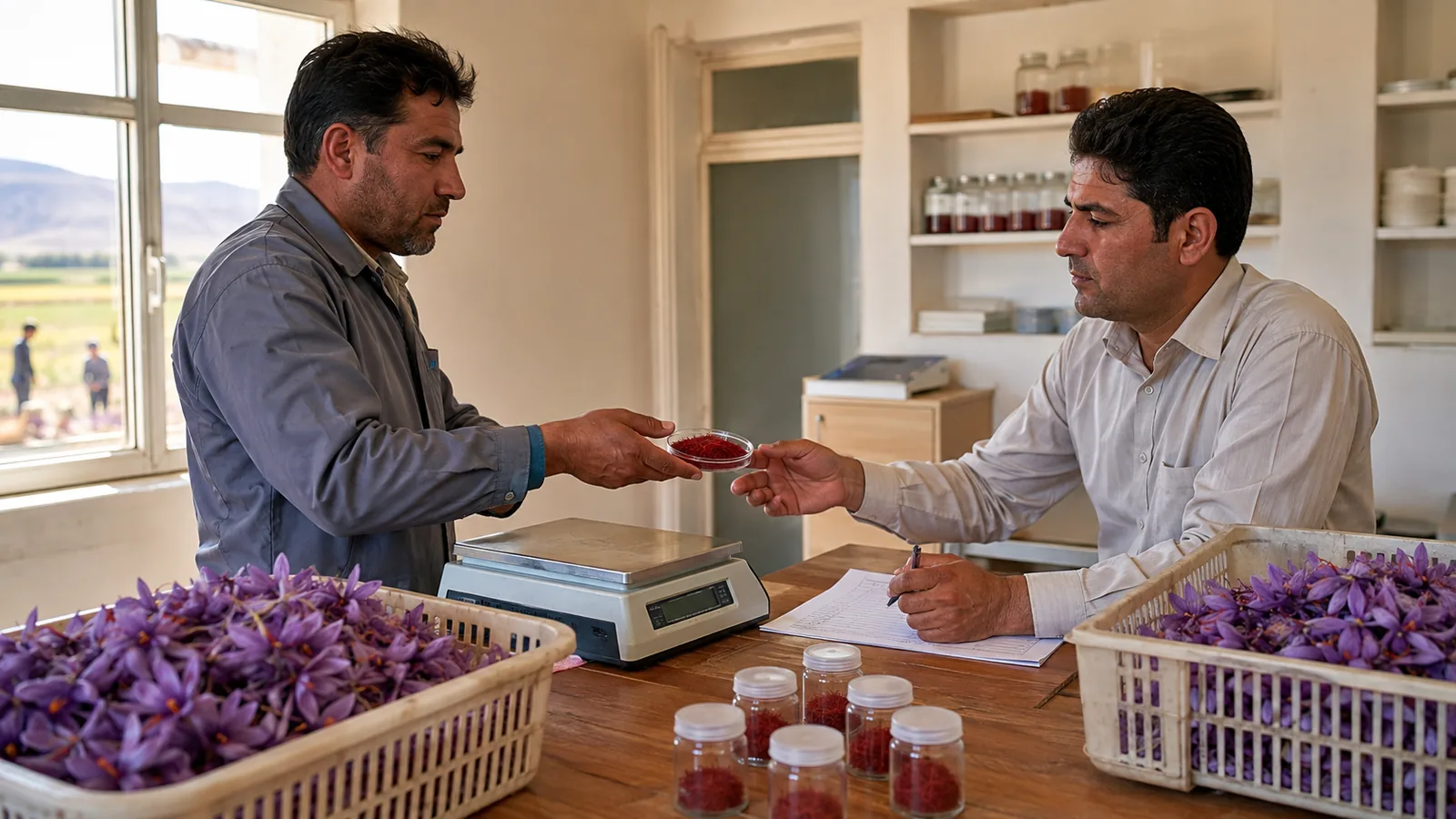
- have the product checked against the declared standard;
- receive the warehouse documentation and required exchange code;
- retain the product for an allowed period or submit a sale request through a broker; and
- transfer the certificate when a transaction was completed.
The certificate was backed by the stored product. It was not a general guarantee that every lot would be accepted, sold quickly or achieve a particular price.
How the system was intended to protect value
Moving a certificate can be simpler than moving the physical crop for every sale. The report identified lower repeated handling, standard storage, confidence in documented quality and the possibility of multiple transactions without relocating the goods as practical advantages.
It also argued that a larger number of sellers and buyers could support more competitive price discovery. Publishing exchange information could make the market easier for domestic and international buyers to follow. Standardisation and reliable warehousing, in turn, could support the reputation of Iranian saffron.
These are potential benefits, not automatic outcomes. Warehouse fees, grading disputes, access to brokers, minimum lot requirements and uneven participation can all affect whether a small farmer gains from the system.
Historical launch dates in the ministry report
The article said saffron and pistachio exchange activity was launched on February 24, 1395 and March 16, 1395. The wording mixes Gregorian month names with a Persian calendar year, so it should be quoted as recorded rather than silently converted into a new date.
The broader aims were stated clearly: improve liquidity for agricultural goods, form a coherent market, manage price fluctuations, reduce avoidable intermediation, regulate the market and increase economic transparency.
What the programme expected to develop next
The ministry looked toward derivatives such as futures and options, more advanced warehouses and stronger export trading. For pistachios, the report mentioned cooperation with the Kerman Chamber of Commerce, the Rafsanjan Pistachio Cooperative and trading stations at two brokerage firms in Kerman province.
It also predicted expanded pistachio exports through the commodity exchange. These were plans and expectations in the historical report. They should not be read as a current list of active products, warehouses or brokerage services.
Protection requires more than an exchange listing
An organised trading route can help saffron growers only when the underlying system works. Accepted grades must be clear, testing must be consistent, warehouses must protect the crop and farmers need realistic access to the market. Price transparency is useful, but it does not remove production risk or guarantee a profitable sale.
The lasting significance of the government’s decision is its attempt to link physical quality with transparent documentation. Protecting saffron’s value means keeping the product in suitable conditions, describing it accurately and giving growers and buyers a credible record of what is being traded.
Historical source: ISNA report on Iran’s Ministry of Economic Affairs and Finance programme, cited by the archived post.