


Bardaskan was reported to have 2,500 hectares of saffron cultivation when this local account was written. That figure explains the crop’s importance to the county, but it is a historical measurement rather than a reliable statement of the area under saffron today.
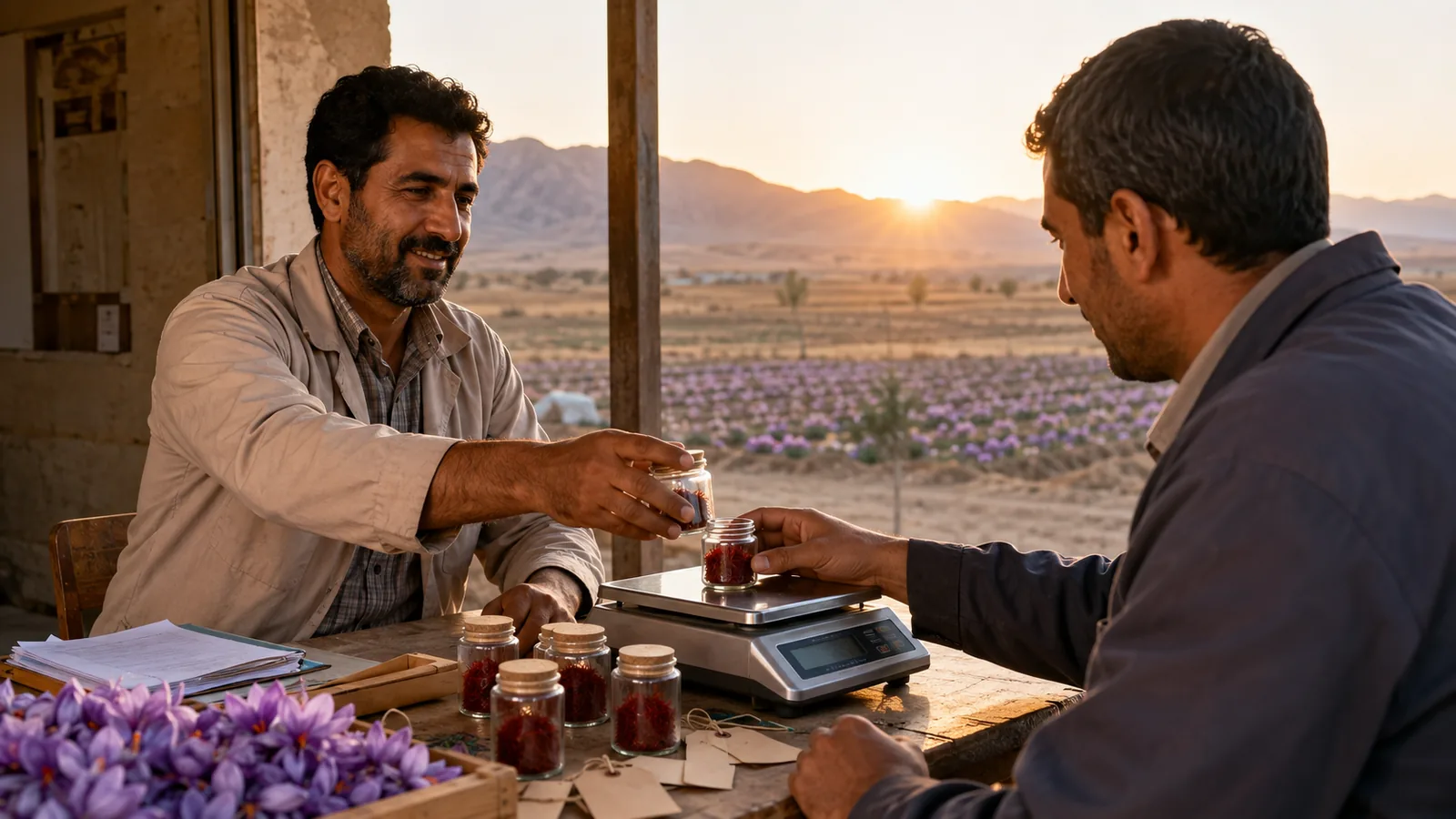
What the 2,500-hectare figure described
Alireza Mahmiz, identified in the original report as director of Bardaskan Agricultural Jihad, described saffron as one of the county’s strategic products. He placed the cultivated area at 2,500 hectares and named saffron and pistachio as two products associated with Bardaskan’s name.
The date matters. A December 2024 report quoting the county’s agricultural director said Bardaskan’s saffron area had fallen sharply, from about 2,500 hectares a decade earlier to roughly 750 hectares. The two figures should therefore be read as snapshots from different periods, not as competing measurements of the same season.
Why saffron matters in Bardaskan
Bardaskan lies in the southwest of Razavi Khorasan Province. The original account gives the county an area of 7,126 square kilometres, or 6.1% of the province, and describes its climate as hot and dry because it sits along Iran’s desert belt and is influenced by the desert to the west.
In that setting, a high-value crop with a concentrated autumn harvest can be important to rural income. Yet cultivated area alone says little about what farmers earn. Dry yield, grade, harvest labour, drying practice, buyer access and the timing of a sale all affect the final return.
Keeping brokers from setting an unfair price
Mahmiz said timely information was shared through online channels—described in the translated report as “cyberspace”—as well as banners, members of the Islamic Council and village representatives. The aim was to prevent intermediaries and brokers from making unfair purchases before growers knew the available buying arrangements.
That communication has practical value. A farmer who knows the receiving location, eligible grades, documents, price method and payment schedule can compare an institutional offer with a private buyer’s offer. It does not mean every intermediary is unnecessary; transport, grading and aggregation are real services. The concern is whether a seller has enough information and choice to negotiate fairly.
More than 150 kilograms went through the rural cooperative
The report advised saffron growers to approach the Rural Cooperative Organization for what the English copy called a “guaranteed sale.” It said more than 150 kilograms had been sold to the organization at that point.
In official reporting for Razavi Khorasan, the programme is described more precisely as supportive purchasing. Its purpose was market management and protection against an excessive price fall. Terms could include quality testing, limits per grower, staged payment or warehouse arrangements. A grower should check the rules for the relevant season rather than assume the historical terms still apply.
The output sentence needs a careful reading
The surviving English text is damaged around its production figures. It says “three kilograms” and then gives total saffron production of 7.5 to 8 tons, while also referring confusingly to straw and flowers.
The most coherent interpretation is an average dry-saffron yield of about three kilograms per hectare: 2,500 hectares multiplied by three kilograms equals 7,500 kilograms, or 7.5 tons. That arithmetic explains the lower end of the stated total, but the original Persian wording and whether all 2,500 hectares were bearing are unavailable. The figures should remain attributed estimates, not be converted into a precise farm benchmark.
More than 4,000 people depended on the local chain
The report refers to more than 4,000 farmers and people or businesses involved in saffron packing in Bardaskan. Its translated wording does not separate growers from packers, so it cannot support an exact employment count.
It does show that the crop’s value extended beyond the field. Harvesting, stigma separation, drying, grading, packing, storage and sales all create work. The quality of those steps also determines whether the value of a careful harvest is preserved or lost.
Processing was the missing part of the chain
Mahmiz identified a lack of saffron processing industries in Bardaskan and invited investors to use the county’s facilities and arrangements. This was more than a call for additional packaging. Local processing can shorten the interval between harvest and controlled drying, improve separation and grading, keep lots traceable, and give producers more options than selling an undifferentiated crop.
A useful facility still needs enough seasonal supply, trained staff, hygienic handling, quality control and dependable buyers. Machinery on its own does not guarantee a premium. Investment should begin with the bottleneck growers actually face and the volume the facility can realistically receive.
The county’s settlements shaped how support reached growers
The original profile divided Bardaskan into Central, Anabed and Shahrabad districts and counted 107 settlements. It cited the 1390 Iranian census: 72,626 residents in total, including 34,101 urban and 38,525 rural residents.
Those are dated census figures, but they help explain the emphasis on village representatives and local councils. When growers are spread across many settlements, information about purchase terms and collection points has to travel through more than one channel.
How to use the Bardaskan figures responsibly
The 2,500-hectare area, 7.5-to-8-ton output, 150-kilogram cooperative purchase and 4,000-person livelihood figure belong to the period described by the original report. They preserve an important picture of saffron cultivation in Bardaskan, especially the effort to improve price information and develop processing.
For a current decision, the useful next questions are straightforward: how many hectares are planted and bearing now, what dry yield was actually measured, how much crop local facilities can process, and what purchase terms are open this season? Answering those questions keeps the historical account valuable without mistaking it for a live market notice.

![Exporting Saffron to Turkey + Price Guide [Complete 0 to 100]](https://img.rowhanisaffron.com/20260827003933/saffron-export-turkey-quality-inspection.webp)



