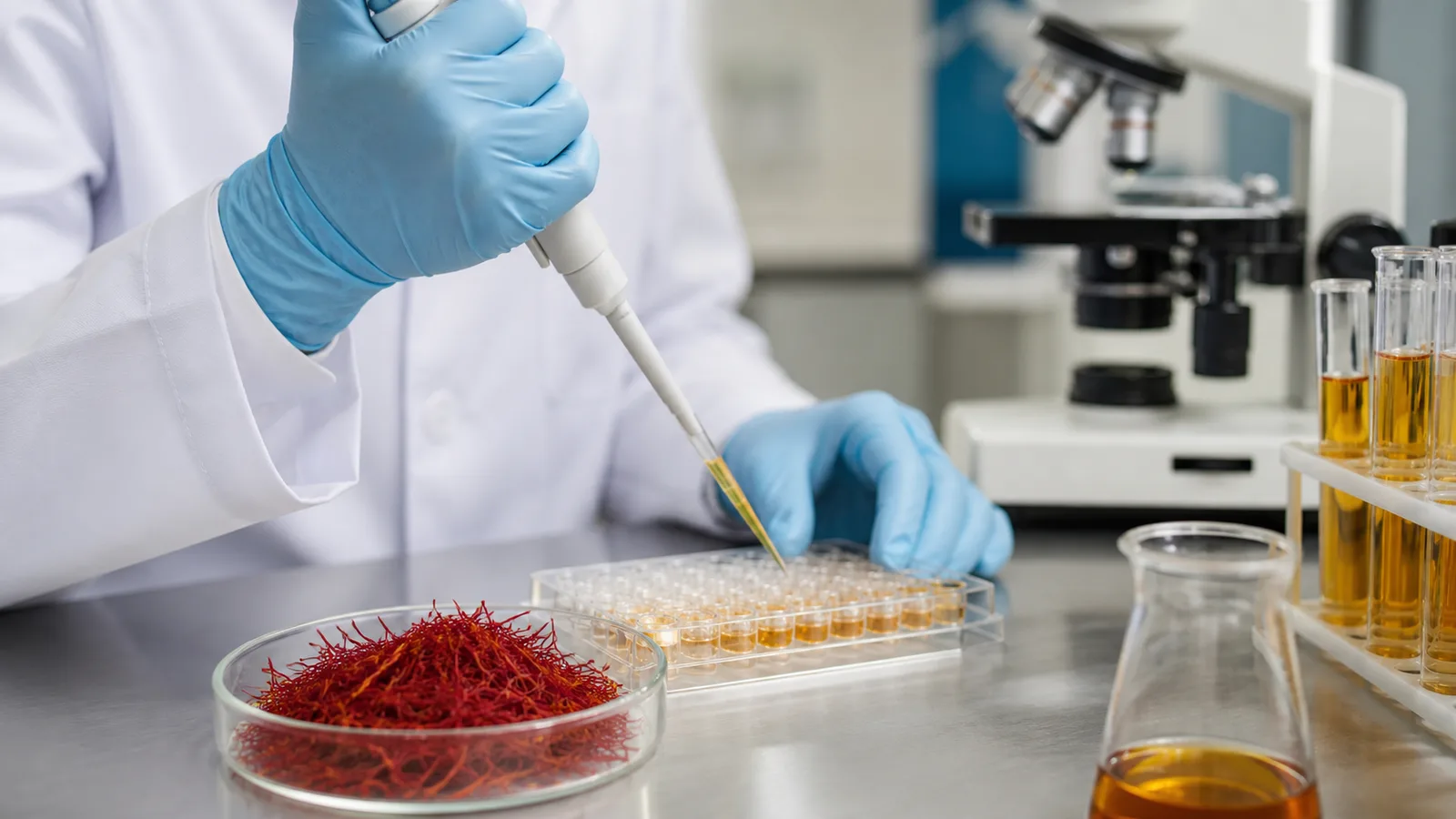
The reported effect of saffron on myocardial infarction came from a preclinical experiment in Wistar rats. Saffron extract and safranal reduced several markers of chemically induced heart injury in that model. The study did not show that eating saffron, smelling it or taking a supplement prevents or treats a heart attack in people.
That distinction is the central fact. Animal studies can identify possible mechanisms and justify further research, but they cannot establish a safe human dose, clinical benefit or substitute for proven cardiovascular care.
The study behind the original report
The archived article was based on comments by Dr Hossein Hosseinzadeh of the Faculty of Pharmacy at Mashhad University of Medical Sciences and was attributed to the Journalists’ Club/YJC. The underlying paper, published in 2013, was titled “Cardioprotective effect of saffron extract and safranal in isoproterenol-induced myocardial infarction in Wistar rats.”
Researchers used isoproterenol to create myocardial injury in laboratory rats. Groups received an aqueous saffron extract or safranal before the chemical challenge. The saffron preparations were injected in measured experimental doses; this was not a trial of culinary saffron, an aroma in a room or an over-the-counter capsule.
The old translation repeatedly called the model a “stroke.” Myocardial infarction means injury to heart muscle associated with loss of blood supply; stroke affects the brain. The study used a chemical model that produces heart changes resembling aspects of human myocardial infarction, but it did not reproduce every cause, stage or treatment decision involved in a human heart attack.
What the researchers measured
The team used biochemical and pathological methods, as the original article said. Specifically, it measured serum lactate dehydrogenase (LDH) and creatine kinase-MB (CK-MB), malondialdehyde in heart tissue as an indicator of lipid peroxidation, and microscopic changes in stained heart sections.
Isoproterenol increased the biochemical injury markers and tissue damage. Pretreatment with saffron extract or safranal was associated with lower LDH and CK-MB, lower lipid peroxidation and heart tissue that appeared closer to normal than in the isoproterenol-control group. The authors concluded that reduced oxidative stress may have contributed to the effect.
This was a genuine experimental result. Its limits are equally genuine:
- the subjects were rats, not people;
- the injury was induced with isoproterenol, not observed in patients with spontaneous coronary-artery blockage;
- the substances were given before injury rather than as emergency treatment after symptoms began;
- the routes and amounts do not translate directly into food or supplement use; and
- the experiment measured short-term markers and tissue changes, not survival, recurrent events or long-term human outcomes.
What safranal and crocin are
The old article called safranal saffron’s “aroma” or “perfume.” Safranal is an important volatile compound contributing to saffron aroma, but a measured chemical preparation is not the same as smelling a spice jar. The study administered safranal directly; it did not test aromatherapy.
It also referred to colour as crocin. Crocin is a saffron carotenoid associated with colour, and it is studied alongside related compounds such as crocetin. Dr Hosseinzadeh’s broader research programme included pharmacology and toxicology work on these constituents. That publication record provides scientific context, but the press article’s claims that he had twice been named among the top one percent of scientists, had more than 35 ISI papers and ranked first worldwide by article count are time-bound biographical claims. They do not change the study design or raise animal evidence to human proof.
Does saffron prevent a heart attack?
There is no basis from this rat experiment for saying that saffron prevents a human heart attack. Later laboratory studies have continued to investigate saffron and safranal in isoproterenol models, while small human trials have examined selected cardiovascular risk markers or symptoms in particular patient groups. Those are separate questions from preventing myocardial infarction.
The original article also listed antihypertensive, blood-lipid-lowering, anti-atherosclerosis and sedative effects. Evidence reviews and individual trials suggest that saffron preparations may influence some blood-pressure or lipid measurements, but results vary by population, preparation, dose and study quality. A small change in a risk marker is not evidence that a supplement prevents heart attacks, dissolves plaque or replaces prescribed medicine.
The researcher’s careful conclusion was that saffron could be considered a candidate for study in humans for prevention or follow-up after myocardial infarction. “Candidate for study” means the next step should be controlled clinical research. It does not mean people should start self-treatment.
What actually protects cardiovascular health
For someone with coronary disease or a previous heart attack, prevention is built around an individual treatment plan. That may include stopping tobacco, appropriate physical activity, blood-pressure and cholesterol control, diabetes care, cardiac rehabilitation and medicines prescribed for a documented reason.
The American Heart Association’s patient guidance for chronic coronary disease says supplements are not currently recommended for heart health and advises discussing any over-the-counter supplement with the care team. Saffron is relevant to that warning because culinary exposure and concentrated supplemental exposure are not equivalent. A supplement can also interact with a person’s condition or medication.
A suspected heart attack is an emergency
Do not take saffron or wait for a food or supplement to work if a heart attack may be happening. Warning signs can include pressure, heaviness, tightness or squeezing in the chest; pain spreading to an arm, the jaw, neck, back or stomach; shortness of breath; sweating; nausea; dizziness or collapse. Symptoms vary, and some people have less typical presentations.
Call the local emergency service immediately. Emergency clinicians need to restore blood flow and manage complications as quickly as possible. A laboratory antioxidant mechanism is not an emergency treatment.
The accurate conclusion
Dr Hosseinzadeh and colleagues found that saffron extract and safranal reduced biochemical and microscopic signs of injury in an isoproterenol rat model. Earlier work had also examined ischemia-related effects in kidney, muscle and brain tissues, which helped motivate the heart study. Those findings are valuable preclinical evidence.
They do not show that saffron aroma reduces heart-attack risk, that culinary saffron prevents myocardial infarction or that saffron should be taken after an event. The responsible reading is narrower: the results supported more research, especially well-designed human studies, while evidence-based prevention and emergency care remain unchanged.
Sources reviewed: the full preclinical paper on saffron extract and safranal in isoproterenol-induced myocardial infarction; a separate rat study of saffron and biochemical/histopathological heart indices; a later preclinical study of safranal, oxidative stress and calcium homeostasis; and the American Heart Association’s patient messages for chronic coronary disease. All accessed 25 August 2026.