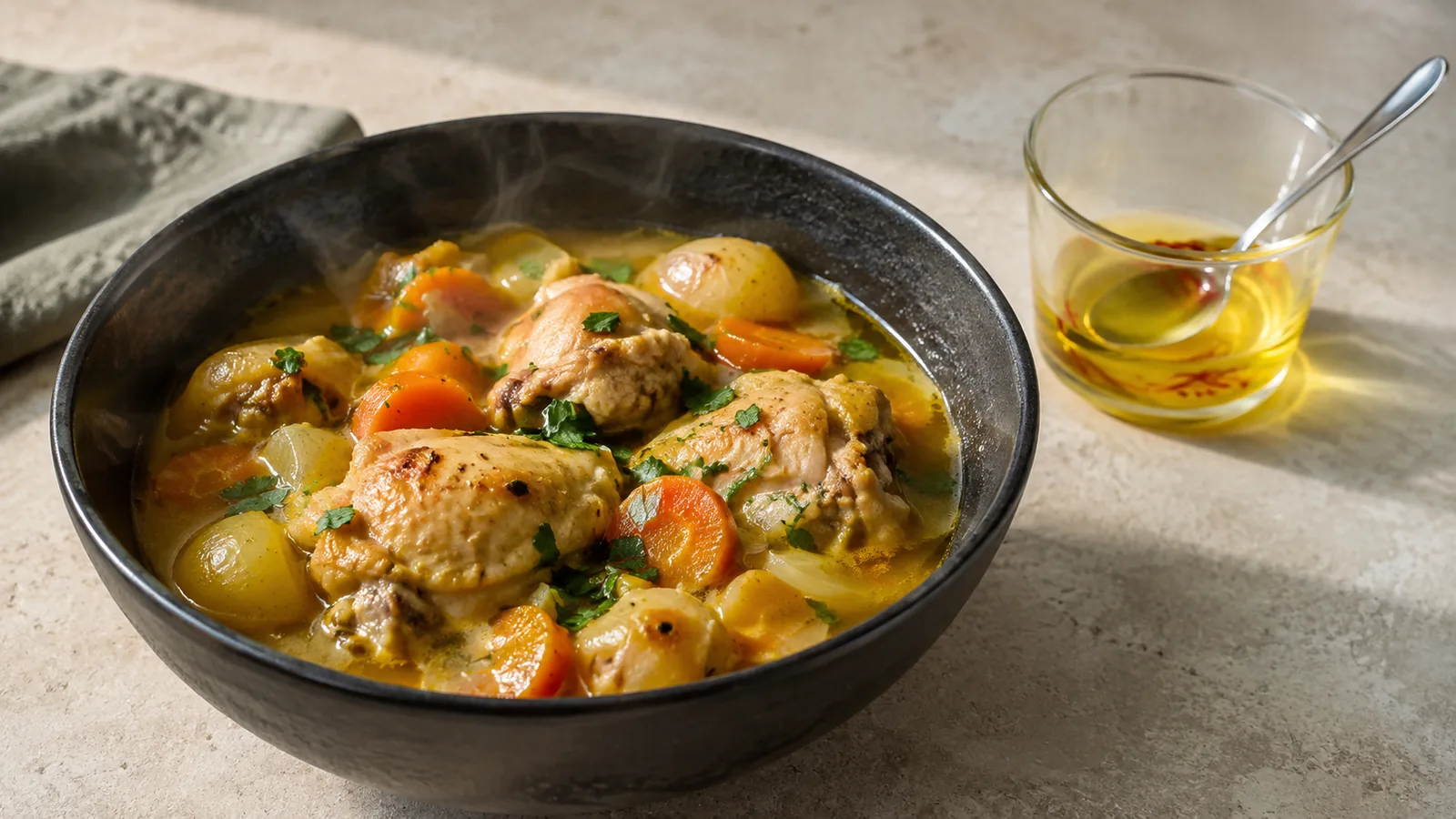
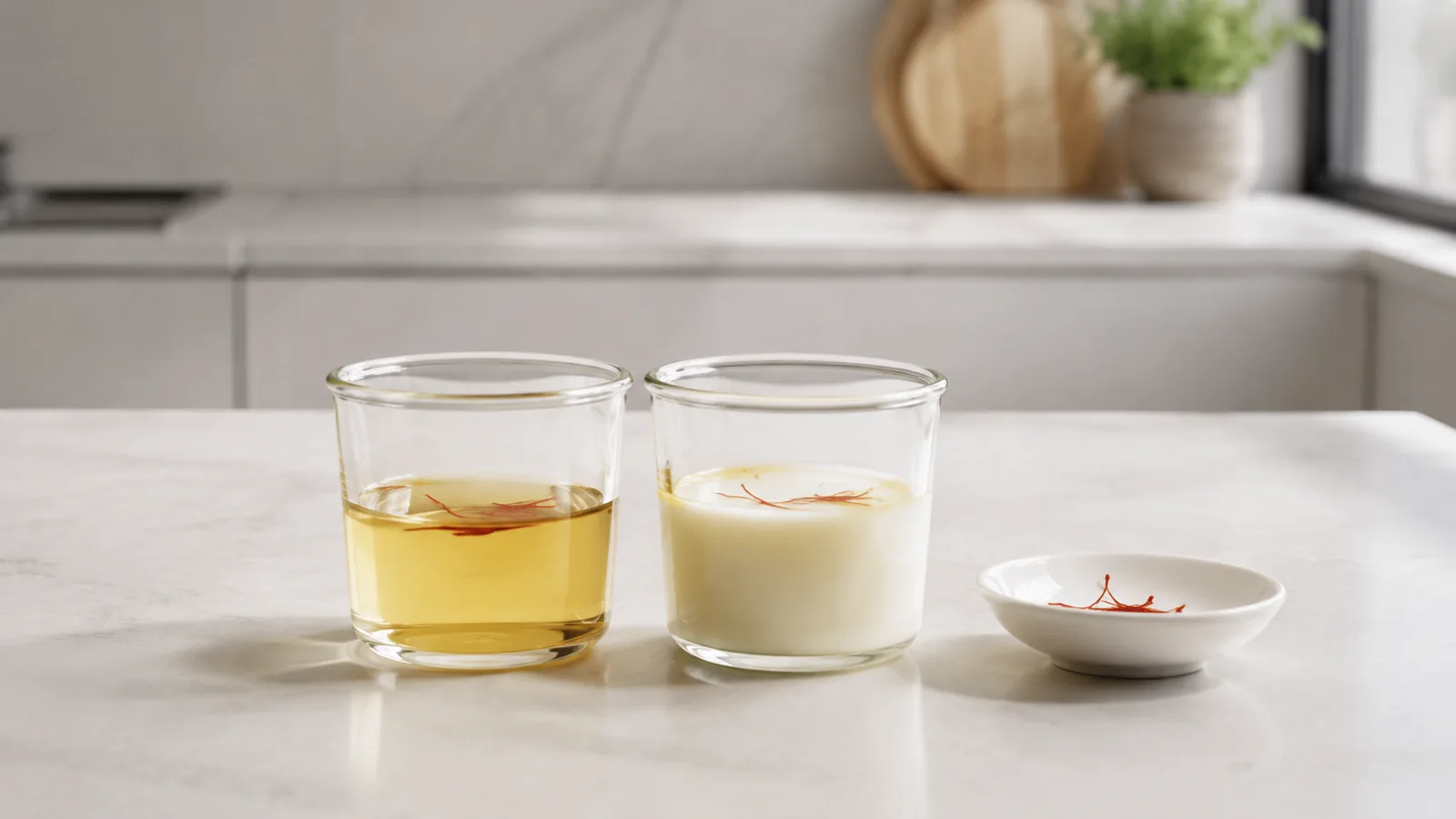
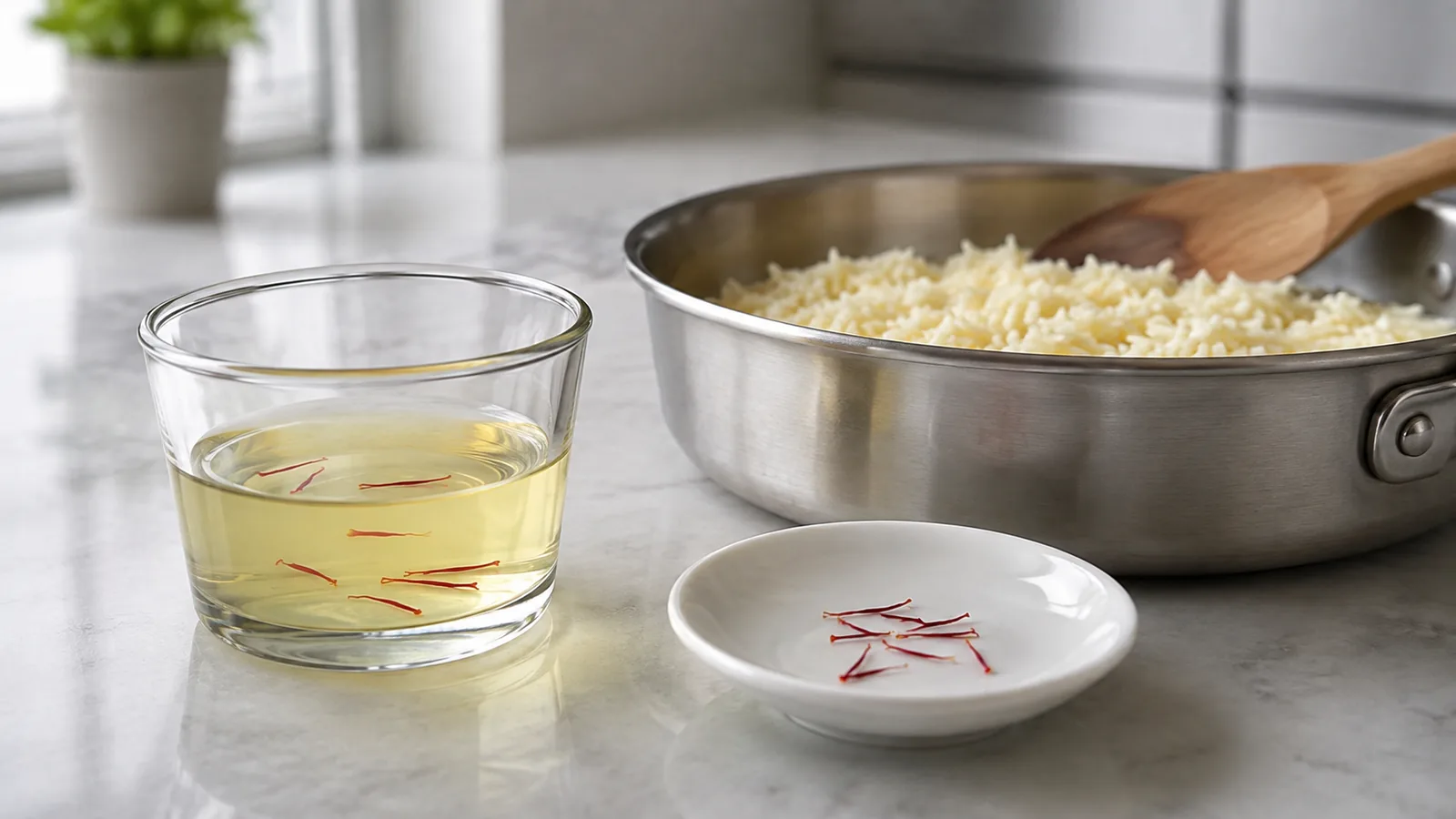
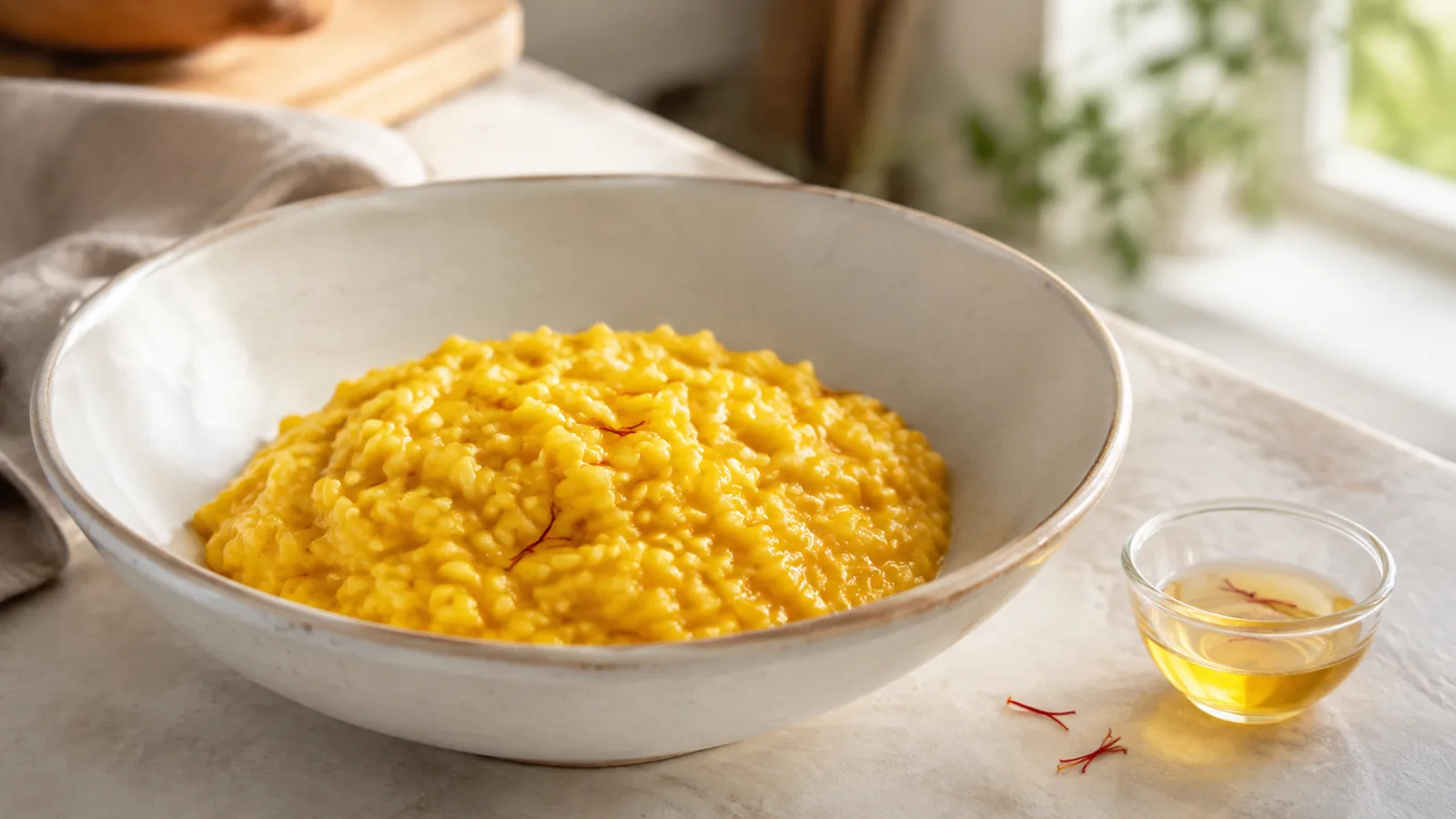
Kuku chickpea is a quick Iranian pan-fried patty made with minced meat, chickpea flour, egg, onion and saffron. It has the browned edges and round shape of a small potato kuku, but its savoury flavour is closer to a softly spiced kebab.
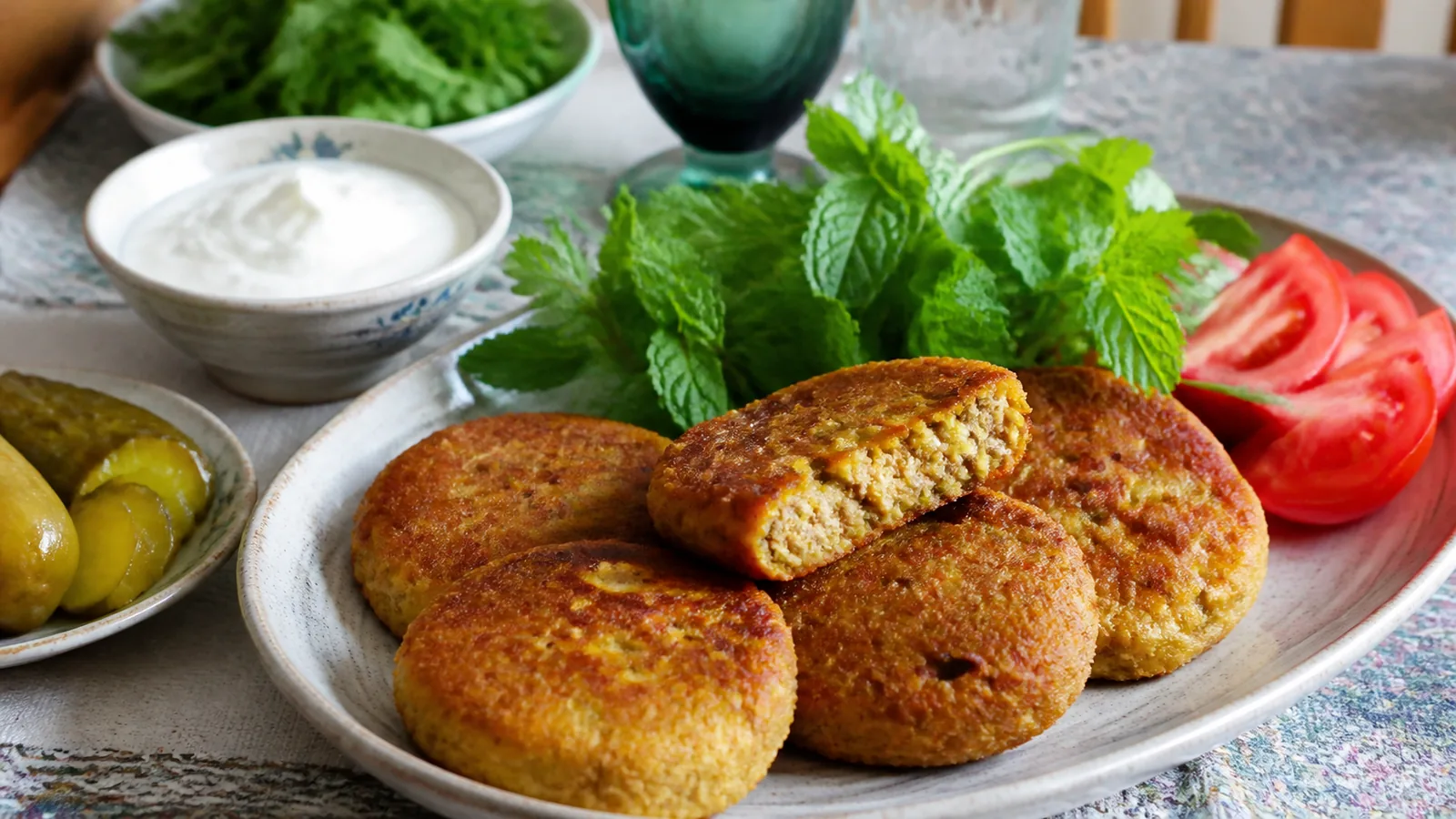
The original formula is generous for two people and can make a lunch, dinner or shared appetizer. Keep the patties small and fairly thin so the meat cooks safely before the outside becomes too dark.
Kuku chickpea ingredients
- 400 g minced beef, lamb or a mixture
- 300 g chickpea flour
- 1 medium onion
- 3 large eggs
- 1/2 teaspoon ground saffron
- Salt, black pepper and turmeric, to taste
- Cool water, as needed
- Neutral oil, for shallow frying
Use chickpea flour, sometimes sold as gram flour or besan, not coarsely crushed chickpeas. It absorbs moisture as the batter rests, which is why the water cannot be given as one exact amount.
Make the chickpea kuku mixture
Finely grate the onion into a large bowl. If it releases a great deal of liquid, squeeze out only the excess; a little onion moisture helps hydrate the chickpea flour.
Add the minced meat, eggs, chickpea flour, saffron, 1 teaspoon salt, 1/2 teaspoon black pepper and 1/2 teaspoon turmeric. Mix with a spoon or clean hand until no dry pockets remain.
Add cool water one tablespoon at a time. The mixture should become soft enough to drop from a spoon, but not pour like pancake batter. Start with 4 tablespoons and wait 10 minutes before deciding whether it needs more.
That rest matters. Chickpea flour continues to absorb water, and a mixture that seems slightly soft at first often becomes easy to shape. If it remains runny, add chickpea flour one tablespoon at a time.
How to fry kuku chickpea
1. Heat the pan gently
Pour enough oil into a heavy frying pan to cover the base by 3–4 mm. Warm it over medium heat. A small drop of batter should sizzle steadily rather than blacken at once.
2. Shape small patties
Drop heaped tablespoons of mixture into the pan, leaving room between them. Flatten each patty to about 1 cm thick with the back of an oiled spoon.
Do not crowd the pan. Crowding lowers the oil temperature, causing the kuku to absorb more oil and making the cooking time harder to judge.
3. Brown both sides
Fry the first side for about 3–4 minutes, until the edges look set and the underside is deep golden. Turn carefully and cook the second side for another 3–4 minutes. Adjust the heat if the surface colours before the centre firms.
Because this kuku contains minced meat, colour alone is not a safe doneness test. Check the centre of a thick patty with a thermometer; ground beef or lamb should reach 71°C/160°F according to the US government’s minimum-temperature chart.
Transfer cooked patties to a rack or paper-lined plate. Let the oil return to temperature before frying the next batch.
How to fix the texture
If the kuku breaks in the pan
The mixture may be too wet, the oil may be too cool or the first side may have been turned before it set. Stir in a spoonful of chickpea flour, wait 5 minutes and make the next patty slightly smaller.
If the centre is dry
Too much flour, very lean meat or extended frying can make the centre crumbly. Add a spoonful of water to the remaining mixture and keep the pan at medium heat. Thin patties cook through faster and retain more moisture.
If the outside browns too quickly
Lower the heat and give the oil a minute to cool before continuing. Saffron and chickpea flour both deepen in colour during frying, so a dark surface can arrive before a thick centre is ready.
Serving and storage
The hands-on preparation takes about 10 minutes, followed by roughly 10–20 minutes of frying depending on pan size and batch count. Serve kuku chickpea hot with bread, tomatoes, herbs, pickles or plain yogurt. Smaller patties work well as an appetizer or for iftar during Ramadan.
Refrigerate leftovers within two hours and use within three days. Reheat until steaming throughout. The ideal kuku chickpea is crisp and golden outside, tender in the middle and aromatic with onion, turmeric and a quiet trace of saffron.