


Cultivation of red gold in the city of Galogah in Iran began on a small reported scale when two hectares in upland villages were planted with saffron. “Red gold” means saffron here. Gholamreza Ghanbari, then director of Agriculture Jihad in the county, named Oward, Wazir, Niala and Aghrdar as the participating villages.
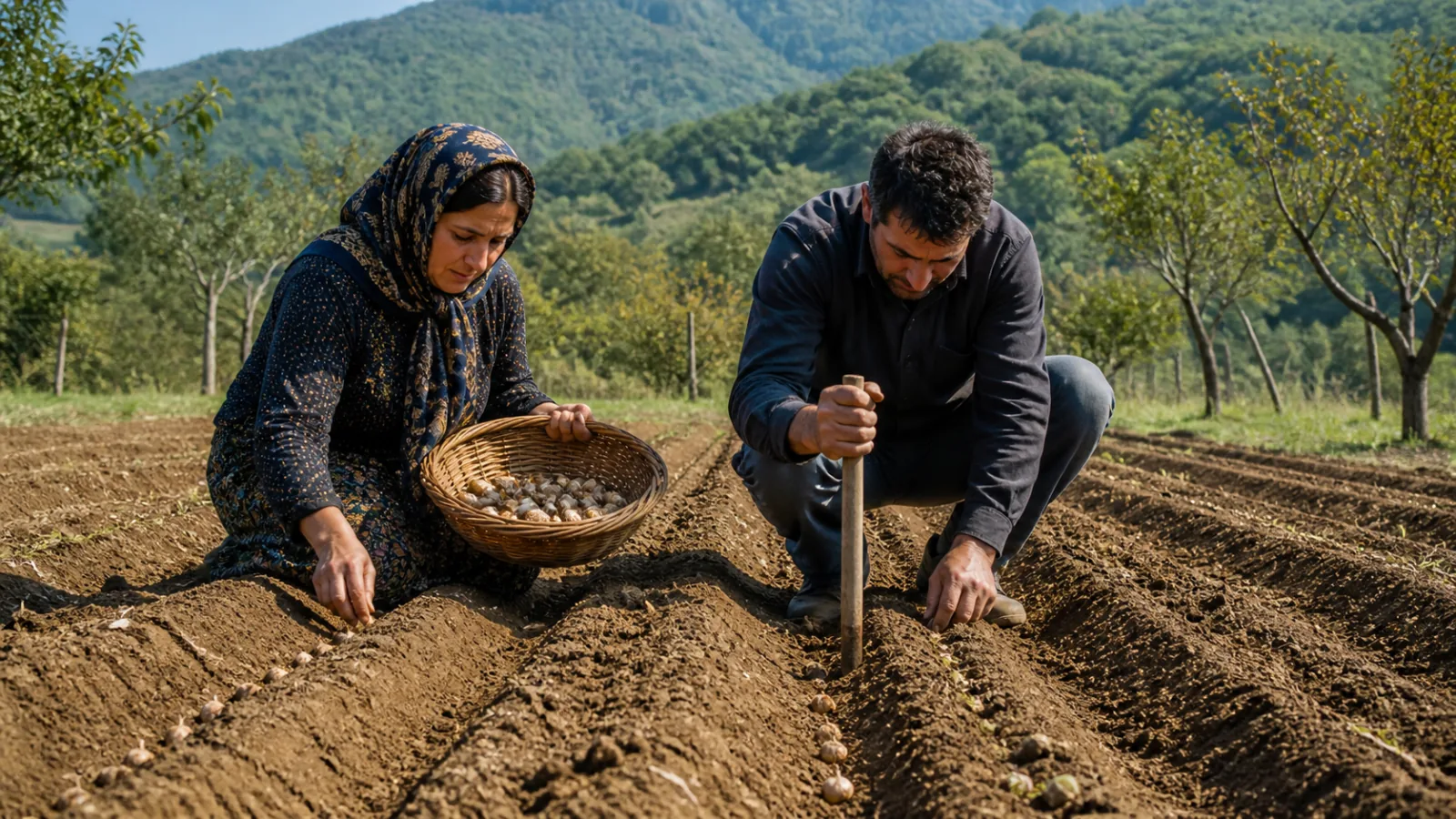
The historical announcement gave a planting window, a corm rate and an expected harvest season, but no harvest result. It therefore shows that cultivation was attempted in northern Iran; it does not establish the yield, quality or profitability of those two hectares.
The Galogah planting plan
Ghanbari said the two hectares were in upstream villages, an important detail for a crop more commonly associated with drier eastern provinces. The title uses “Galogah,” while English spellings for the Mazandaran county also vary. This article retains the published spelling rather than changing the page’s identity.
He placed saffron corm planting from early August through September and said harvesting could run from early November to early December. Those dates describe the local plan reported at the time. Actual field timing depends on corm dormancy, soil temperature, autumn rain, elevation and whether the soil can be prepared without compaction.
How many corms were required?
The report specified 2,500 to 3,000 kilograms of saffron “onions” per hectare. The correct crop term is corms. Applied to two hectares, the statement implies a total of 5,000 to 6,000 kilograms of planting material.
Weight alone does not define a planting population. Large, healthy corms produce fewer units per kilogram than small corms, and planting density changes spacing, cost and future multiplication. A peer-reviewed saffron cropping-system experiment found that irrigation, corm size, planting depth and density all influenced flowering and yield. Its results support recording those variables rather than treating tonnes per hectare as a complete recipe.
Before planting, a grower should reject damaged, soft or visibly diseased corms and keep lots traceable to their source. Introducing a perennial corm crop also means thinking beyond the first flower season: daughter-corm health affects later performance.
What is different about saffron in northern Iran?
Galogah’s northern setting can bring different rainfall and humidity from Iran’s main saffron districts. A hillside or upland position does not automatically guarantee drainage. Saffron corms need an aerated root zone, so standing water and prolonged saturation are avoidable risks.
A practical site check should cover:
- soil texture, depth and the speed at which water drains after rain;
- field slope and erosion risk;
- previous crops and signs of soil-borne corm disease;
- autumn rainfall and whether supplemental irrigation is genuinely needed;
- access to labour during the short flower-picking period;
- a clean, sheltered place for prompt stigma separation and drying.
In a wetter season, adding irrigation by calendar can be harmful. Decisions should follow root-zone moisture and field condition rather than the assumption that every saffron plot needs the same number of waterings.
Planting in August and September
The announced window allowed corms to be placed before autumn flowering. Fields need to be prepared so corms sit at a consistent depth in soil that is firm enough to maintain contact but not compacted or waterlogged. Row and path layout should also allow workers to pick flowers without repeatedly stepping on the planted zone.
A local trial is safer than expanding immediately. Separate strips can compare corm size, spacing, planting depth and moisture management while keeping all other decisions recorded. The result should be assessed over more than one season because a saffron field changes as its corm population multiplies.
Harvest from November into early December
Ghanbari expected harvest from early November to early December. Flowers should be collected promptly and handled gently. Stigmas then need to be separated and dried under controlled, hygienic conditions; delay and uneven heating can change the finished spice.
The ISO 3632-1 saffron specification provides recognised categories and requirements for whole and ground saffron. A district name or attractive colour is not a substitute for representative sampling and testing of the dried lot.
How success on the two hectares should be judged
The original report explicitly did not state how much saffron the two hectares produced. A later assessment should not fill that gap with a provincial average. At minimum, it would record emergence, flowers, dry stigma yield, test results, labour time, corm survival and multiplication, water applied, rejected material and net return.
Those measures would show whether saffron is a useful diversification crop for the named villages and whether the planting schedule and corm rate suited local conditions. Our guide to saffron cultivation explains the field cycle in more detail.
Galogah’s two-hectare project was a beginning, not proof of a mature local industry. Its value lies in the questions a careful trial can answer before more land, corms and labour are committed.

![Exporting Saffron to Turkey + Price Guide [Complete 0 to 100]](https://img.rowhanisaffron.com/20260827003933/saffron-export-turkey-quality-inspection.webp)



