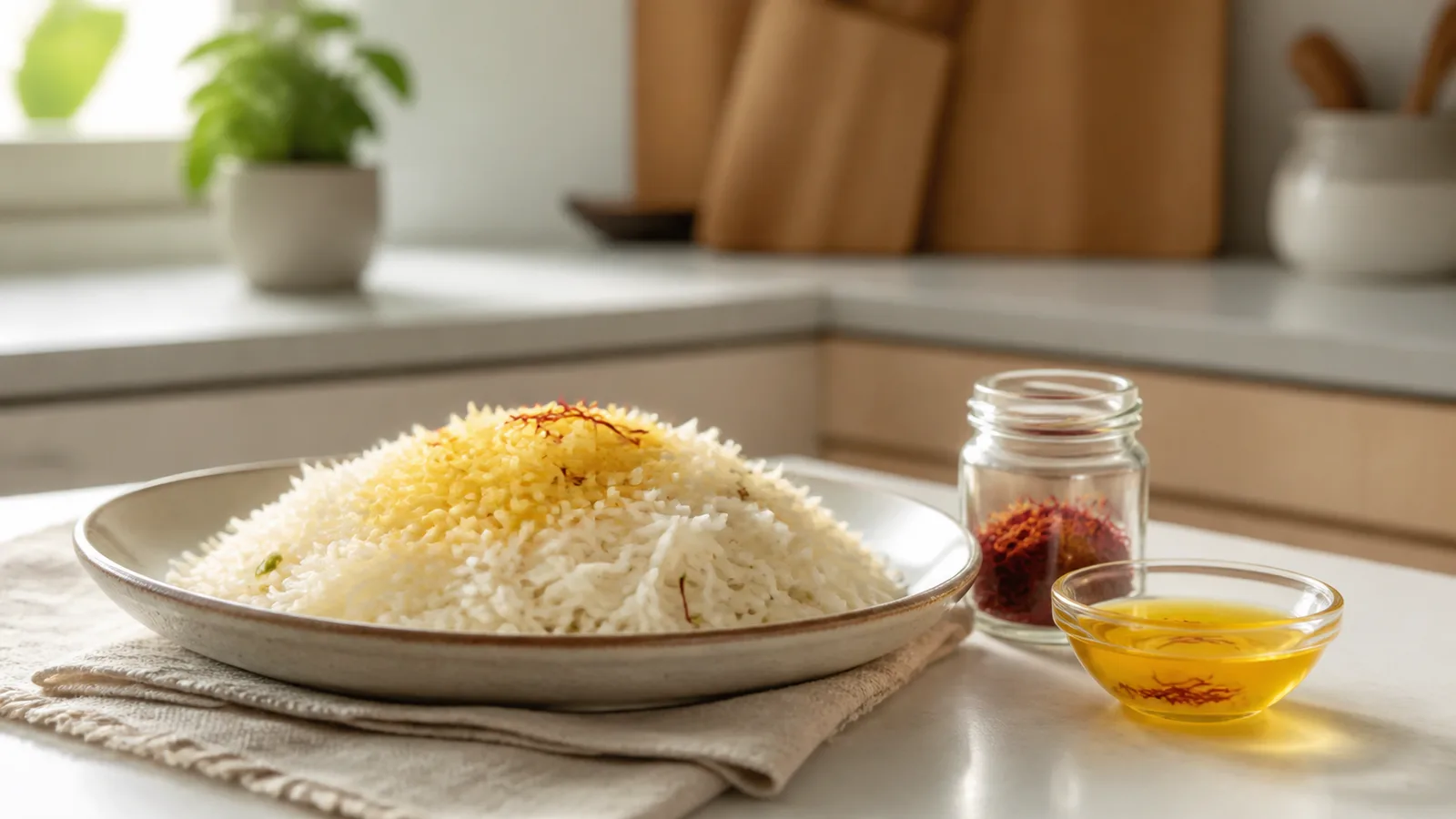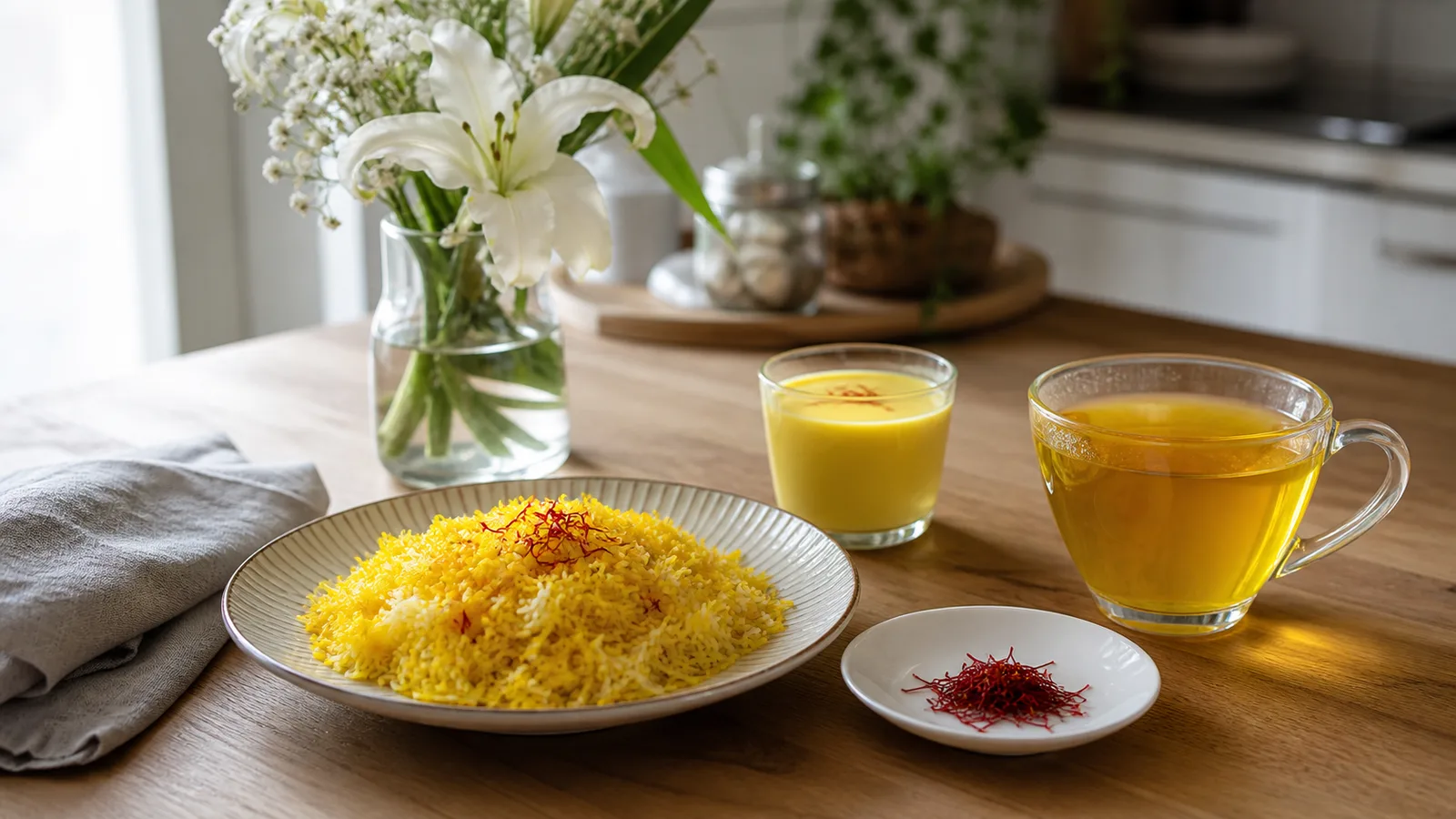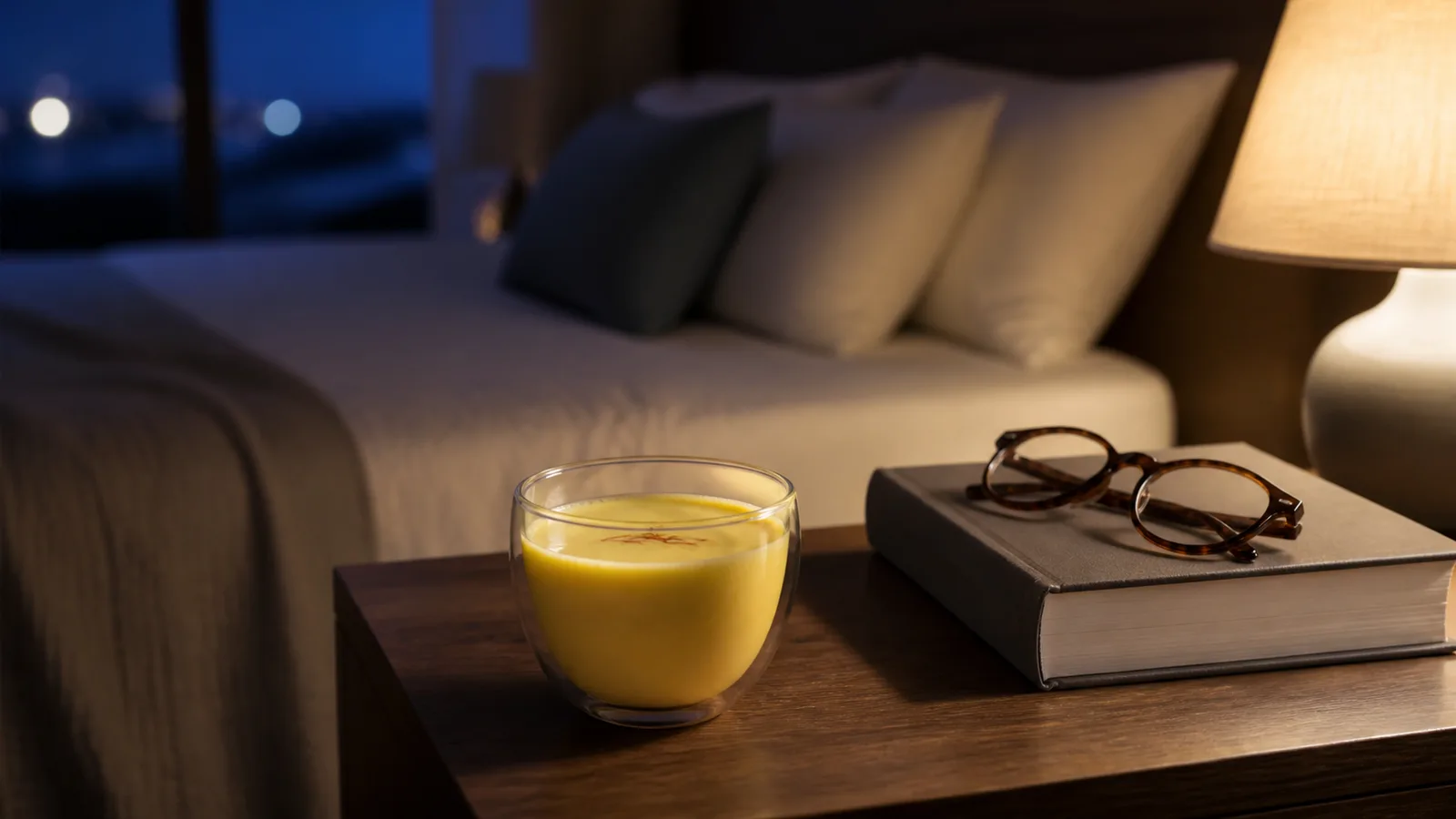
Saffron may help some adults sleep a little better, but the evidence is still limited and applies mainly to standardized extracts studied for a few weeks. Small randomized trials have reported improvements in sleep-quality or insomnia questionnaires. They do not show that saffron is a cure for insomnia, and their results cannot be transferred automatically to a cup of saffron milk or to every supplement on the market.
That makes “saffron sleep aid” a reasonable description of an area being researched, not a guarantee. If sleep problems are persistent, severe or accompanied by loud snoring, gasping, restless legs or marked daytime sleepiness, the useful next step is a health assessment rather than adding more remedies.
What the studies on saffron for sleep found
A 2022 meta-analysis of randomized trials found better average scores for sleep quality, insomnia severity and restorative sleep with saffron than with placebo. The authors also said that more research was needed to confirm efficacy and long-term safety at different doses.
More recently, a 2025 randomized, double-blind trial enrolled 165 adults who reported moderate insomnia. After four weeks, groups receiving 20 or 30 mg of one standardized saffron extract had a slightly larger improvement on the Athens Insomnia Scale than the placebo group. The adjusted difference was 0.95 point. Self-reported sleep quality improved, but daytime sleepiness did not differ significantly.
Another six-week trial in 66 adults used 15.5 mg of an extract each day. Participants reported improvements in ease of getting to sleep, sleep latency, duration and overall sleep-quality scores. Its objective wrist-actigraphy result was more modest: time in bed increased. A separate 28-day trial published in the Journal of Clinical Sleep Medicine found better self-reported sleep outcomes, although participants still had borderline insomnia on average at the end.
How strong is that evidence?
The results are promising, but the research base is not yet broad. Many studies are small, short, use a particular commercial extract and rely heavily on questionnaires. Participants with poor sleep or mild to moderate insomnia are not the same as every person with a diagnosed sleep disorder, and exclusion criteria differ from one trial to another. A result from a defined extract does not establish that whole saffron threads, a different extract or an unverified product will produce the same effect.
Researchers have proposed that crocin, safranal and related compounds may influence pathways involved in mood, stress and sleep, including serotonin and other signalling systems. Those mechanisms are still hypotheses in this context. They do not prove that saffron “regulates serotonin” in a way that treats an individual’s sleep problem.
Can saffron cause insomnia instead?
The published sleep trials do not establish saffron as a common cause of insomnia. That does not mean a person cannot feel more alert, restless or otherwise worse after taking a product. Insomnia has appeared among adverse events in some saffron clinical literature, and reactions can also involve the product’s dose, other ingredients, timing or an interaction rather than saffron alone.
If a new saffron supplement coincides with worse sleep, stop treating the change as something to push through. Record the product, dose and timing, and discuss it with a pharmacist or clinician—particularly if you take prescription medicine. Do not stop a prescribed medicine abruptly in order to keep using a supplement.
Saffron tea or milk is not the same as an extract
A few saffron threads steeped in warm milk, water or a caffeine-free herbal tea can make a pleasant evening drink with saffron’s distinctive, slightly sweet aroma and flavor. The warm drink and a consistent wind-down routine may feel relaxing. That experience is different from evidence that the culinary amount itself will make someone fall asleep faster or stay asleep longer.
If you enjoy saffron before bed, keep the preparation simple:
- Crush two or three threads lightly and steep them in warm milk or water for several minutes.
- Avoid adding caffeinated tea or a large amount of sugar late in the evening.
- Try it early enough to notice how you respond instead of combining several new sleep products at once.
- Use normal culinary quantities; more saffron is not automatically more calming.
This is a flavor and routine suggestion, not the extract dose used in a clinical trial. Supplements concentrate the material and deserve a separate safety decision.
Before using a saffron supplement for sleep
Read the full label, including other active ingredients. Avoid assuming that “natural,” “standardized” or a high milligram number guarantees quality, and avoid excessive consumption. Ask a healthcare provider or pharmacist before regular use if you are pregnant or breastfeeding, have low blood pressure, have had a saffron allergy, take an anticoagulant or antiplatelet medicine, use psychiatric or other prescription medication, or are preparing for surgery. Our separate guide explains when to avoid saffron or seek individual advice.
Short studies generally reported no serious adverse events, but that cannot establish long-term safety for every product or population. In the 2025 trial, gastrointestinal discomfort was the most frequent reported adverse event. Stop and seek appropriate advice if a product causes persistent digestive symptoms, rash, swelling, dizziness or a clear worsening of sleep.
Do not let a supplement delay proper insomnia care
Sleep difficulty can come from stress or habits, but it can also relate to sleep apnea, pain, medication, depression, anxiety, menopause, shift work or another health condition. A sleep diary can help show when the problem occurs and what changed around it.
The US National Heart, Lung, and Blood Institute describes cognitive behavioral therapy for insomnia (CBT-I) as the usual first treatment option for long-term insomnia. Its components include sleep education, a regular sleep-wake cycle, relaxation, stimulus control and work on anxiety about sleep. Basic habits—consistent wake time, limiting late caffeine and alcohol, and keeping the room cool, dark and quiet—also give any sleep plan a sound base.
So, can saffron help with sleep? It may offer a modest benefit for some adults, especially in the form of the standardized extracts tested so far. The honest answer is not “sleep better with saffron” for everyone. Use the evidence as a reason for measured interest, and use ongoing insomnia as a reason to understand the cause.