Heart Health Benefits of Saffron: Can Saffron Affect the Heart?
Saffron can affect measurements related to heart health, but the changes seen in trials have generally been small. Research has looked at blood pressure, cholesterol and inflammation. It has not shown that saffron prevents a heart attack, clears blocked arteries or treats heart disease.
That distinction matters when discussing the benefits of saffron for heart health. A spice can be part of an enjoyable meal. A concentrated supplement is a different exposure, and neither should replace prescribed medicine or a cardiovascular treatment plan.
What does “affect the heart” mean?
Heart health is not one number. Clinicians consider blood pressure, LDL and HDL cholesterol, triglycerides, blood sugar, smoking, activity, family history and other factors. Trials of saffron usually measure one or more of these risk markers over several weeks. They rarely measure outcomes such as heart attacks, strokes or survival.
A slight change in a laboratory result can be statistically detectable without being large enough to change a person’s health. It also does not prove that the heart itself is working better. This is why claims about saffron and cardiovascular health need both the size of the change and the limits of the study.
What studies found about cholesterol
A 2022 systematic review of 32 randomised trials reported small average reductions in total cholesterol, LDL cholesterol and triglycerides with saffron supplementation. The pooled LDL difference was about 6.7 mg/dL. The review did not establish that these changes prevent cardiovascular events.
The evidence is not fully consistent. An earlier review of 10 studies found no significant overall change in the lipid profile. Another analysis reported modest reductions in total cholesterol and triglycerides but no significant LDL reduction. Different participants, extracts, doses and study lengths help explain why the results cannot be reduced to “saffron lowers bad cholesterol and raises good cholesterol.”
If your cholesterol is high, use a blood test and a clinician’s risk assessment to guide treatment. Saffron is not an alternative to a statin or another medicine that has been prescribed to reduce cardiovascular risk.
Can saffron lower blood pressure?
Some pooled trials have found a small decrease in blood pressure. A 2021 meta-analysis of eight randomised trials calculated average reductions of 0.65 mmHg in systolic pressure and 1.23 mmHg in diastolic pressure. Its authors explicitly noted that the effect might not be clinically important.
That evidence does not mean saffron reliably lowers pressure by relaxing blood vessels or improves circulation for every person. Blood pressure changes from hour to hour and can be influenced by medicines, hydration, stress, physical activity and how it is measured. Do not reduce or stop blood-pressure medicine because you have started drinking saffron tea.
Antioxidants, inflammation and heart function
Saffron contains crocin and safranal, compounds studied for antioxidant and anti-inflammatory activity. Laboratory experiments explore how they interact with oxidative stress and free radicals. Trials have also measured markers such as C-reactive protein and TNF-alpha, with mixed results.
These findings can help researchers decide what to study next, but they do not show that culinary saffron protects heart muscle, removes arterial plaque or keeps the heart “in good condition.” Chronic inflammation is involved in atherosclerosis, yet changing one inflammatory marker is not the same as lowering the risk of atherosclerosis or heart attacks.
Food use and supplements are not interchangeable
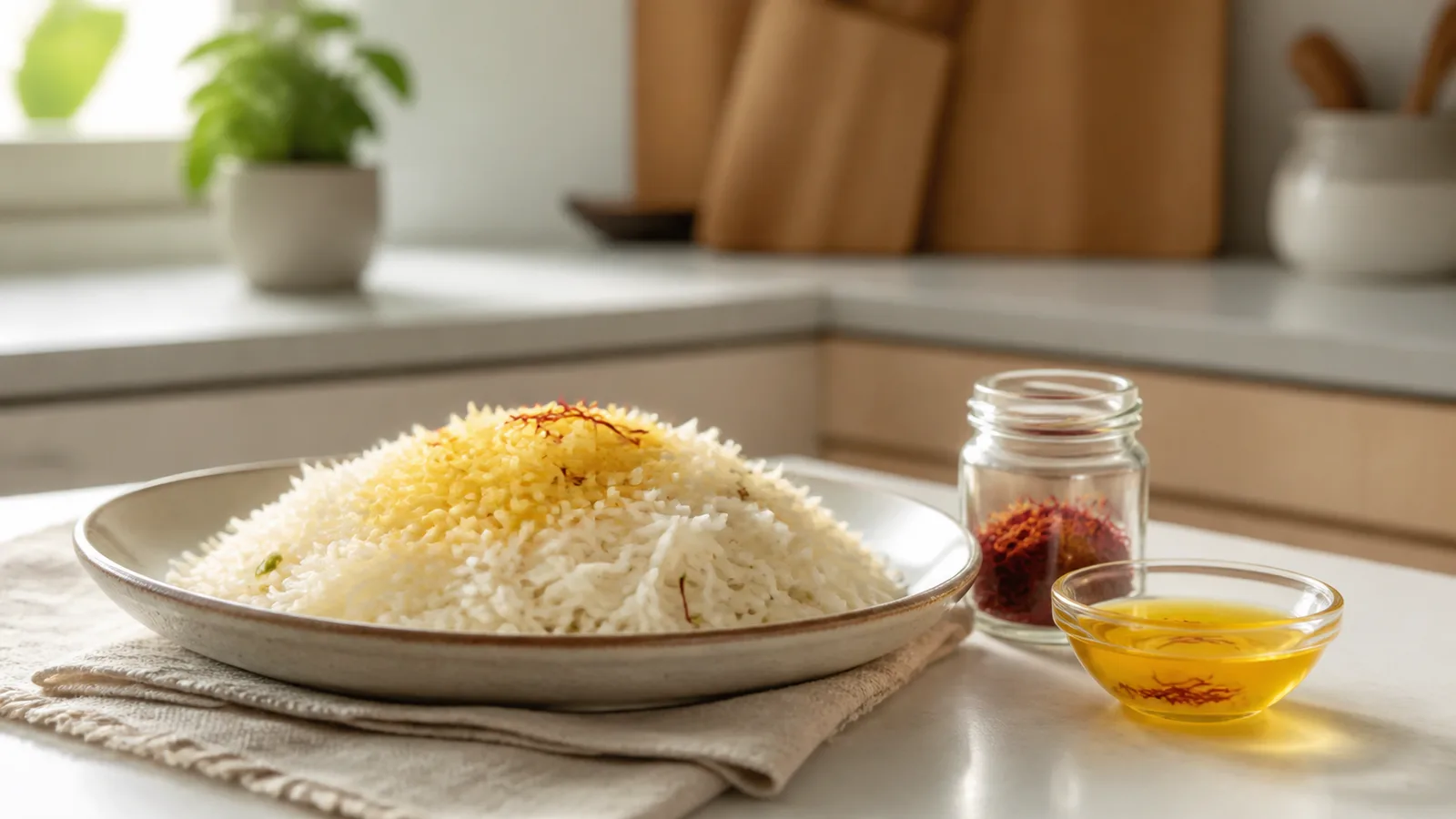
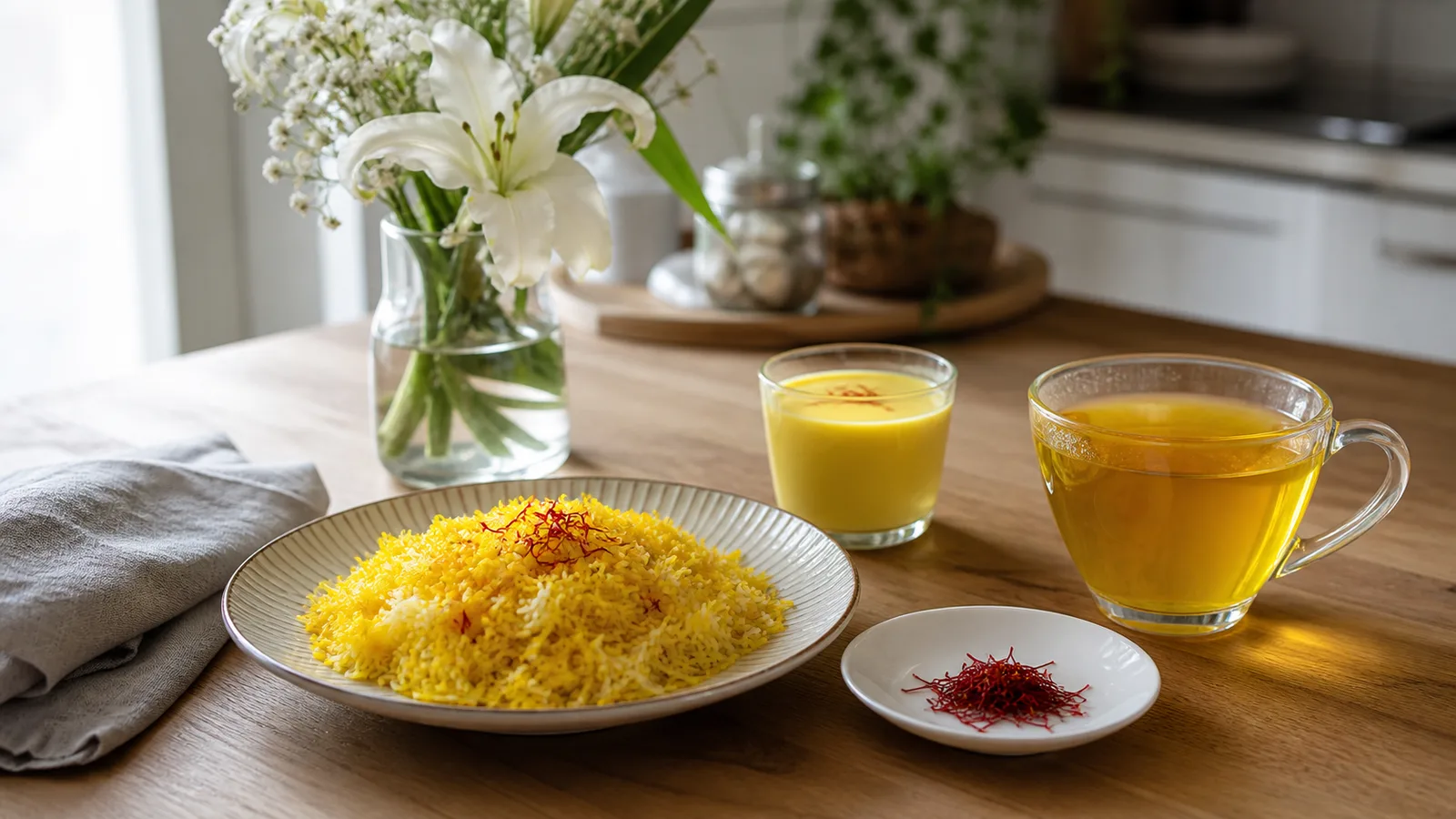
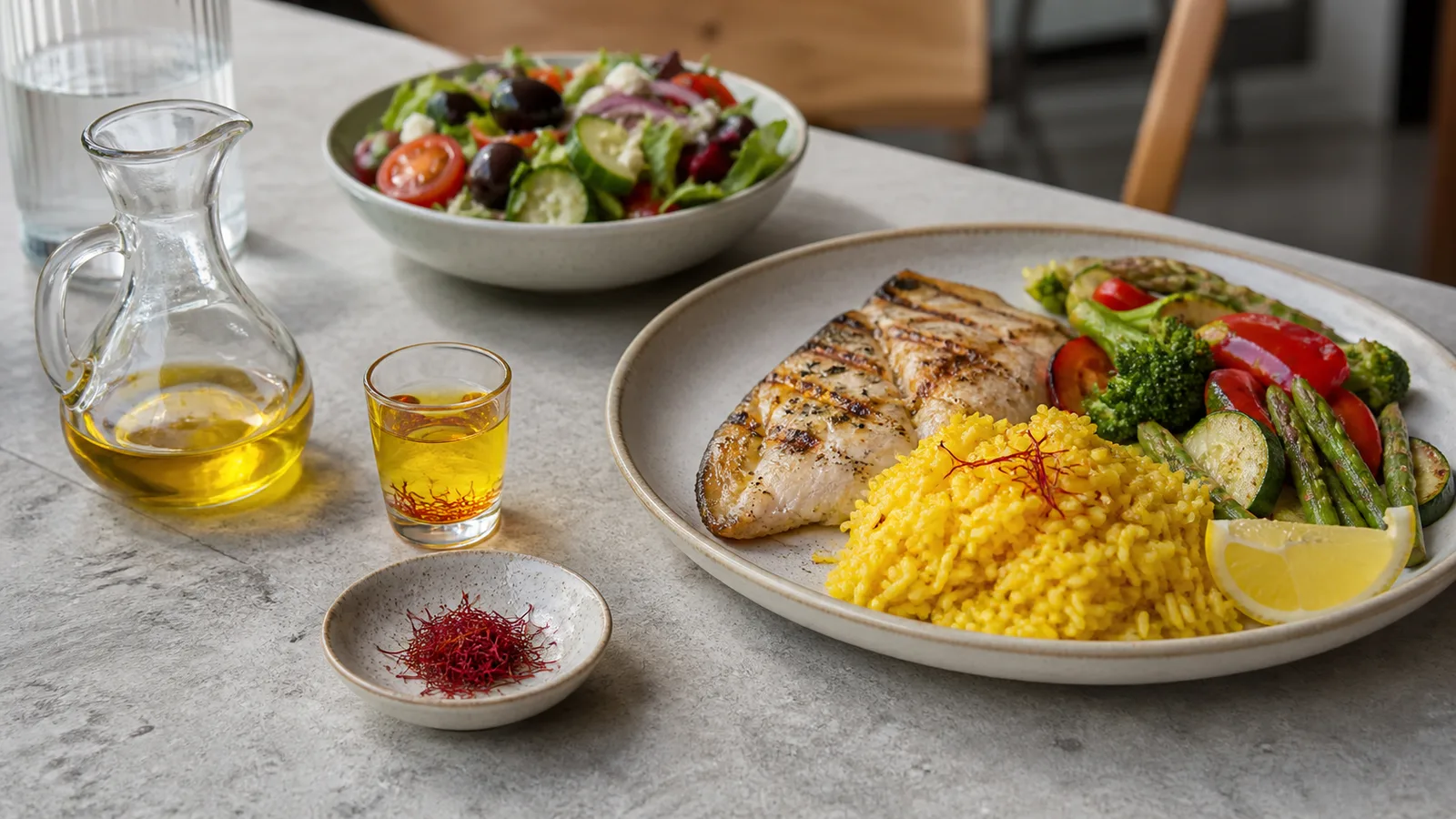
A modest culinary amount of saffron can add aroma and colour to vegetables, whole grains, fish, soups and other meals. You can also enjoy a light saffron tea or saffron-infused milk. Whether the result supports heart health depends far more on the whole eating pattern than on the spice alone; a sweet drink does not become heart-healthy simply because it contains saffron.
Clinical trials generally use measured capsules or standardised extracts, not an ordinary serving of food. You cannot reproduce a study by estimating extra threads, and more is not necessarily better. Supplements can vary in strength and purity.
Ask a pharmacist or clinician before using a concentrated saffron product if you have heart disease, low blood pressure, take heart or blood-pressure medicine, use several medicines, or are preparing for surgery. If a supplement makes you dizzy, faint or unwell, stop taking it and seek advice.
What reliably supports heart health?
The US National Heart, Lung, and Blood Institute recommends understanding your individual risk rather than relying on a single food. Practical priorities include:
- checking blood pressure, cholesterol and blood sugar as advised;
- not smoking and avoiding second-hand smoke;
- being physically active at a level appropriate for your health;
- building meals around vegetables, fruit, whole grains and suitable protein sources;
- managing sleep, weight and alcohol where relevant; and
- taking prescribed medicines consistently.
Saffron can provide flavour within that pattern, particularly if it helps make a nourishing meal enjoyable. Its role is culinary and supportive, not a substitute for the parts of care that are proven to reduce risk.
When heart symptoms need urgent care
Call emergency services for chest pressure or pain, sudden shortness of breath, fainting, unexplained sweating, or discomfort spreading to the arm, shoulder, back, neck or jaw. Do not wait to see whether saffron milk, tea or a supplement changes the symptoms.
The practical answer
Can saffron affect the heart? Supplement trials suggest modest effects on a few cardiovascular risk markers, including blood pressure and some cholesterol measures. The results are inconsistent, and there is no evidence that saffron prevents heart attacks or replaces treatment. Enjoy a small amount in food if you like it; make medical decisions from your measured risk and your clinician’s advice.