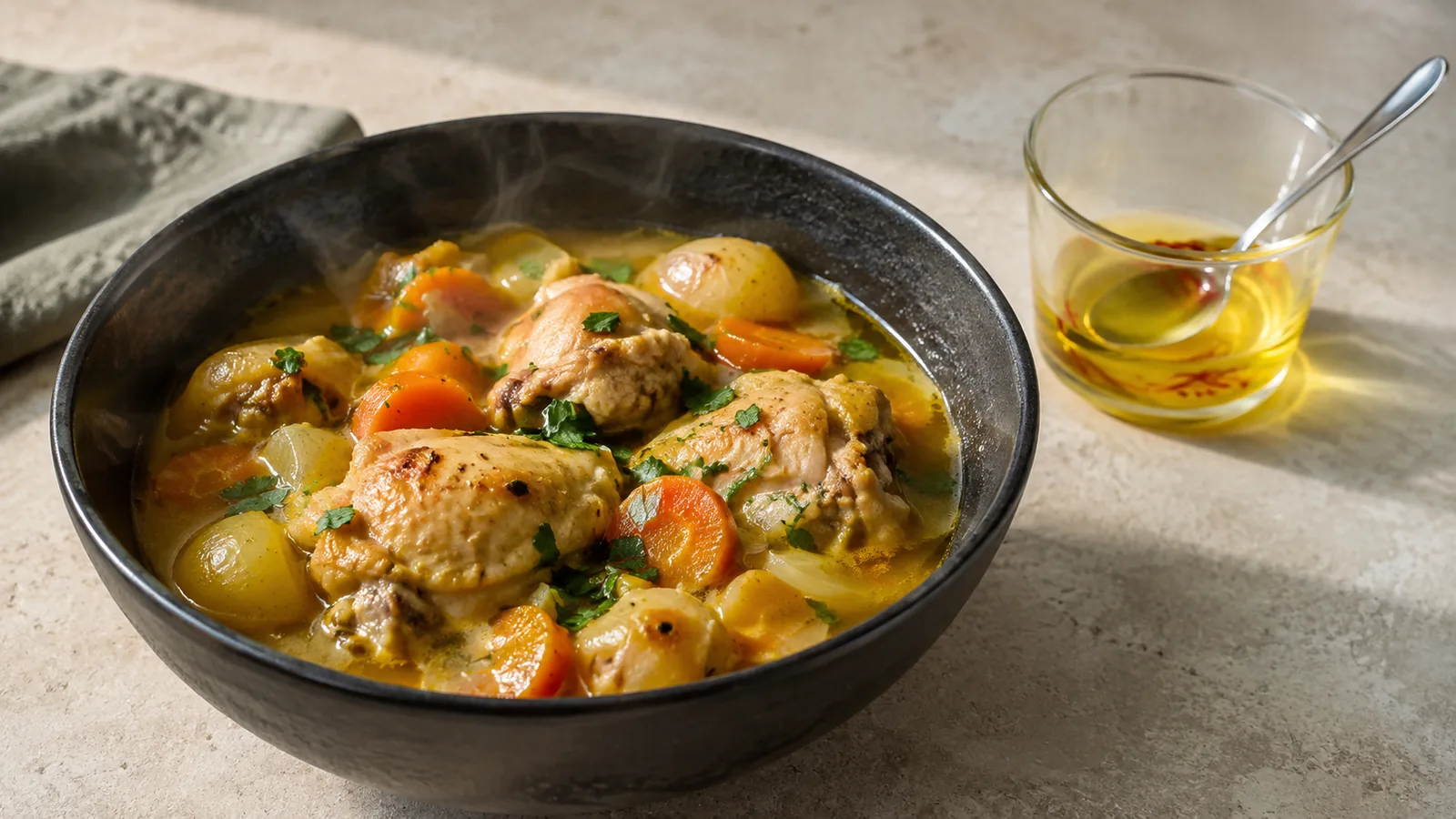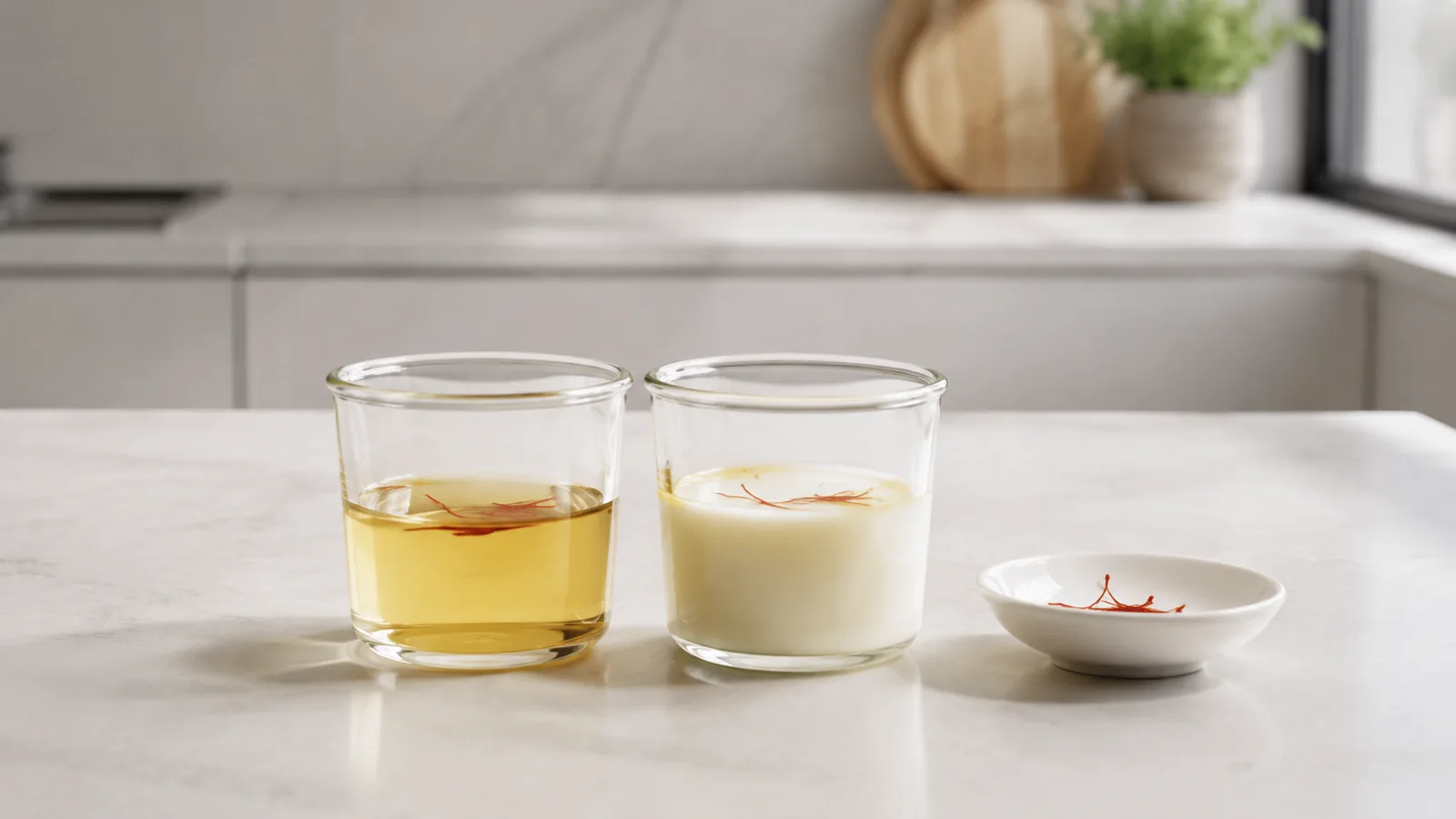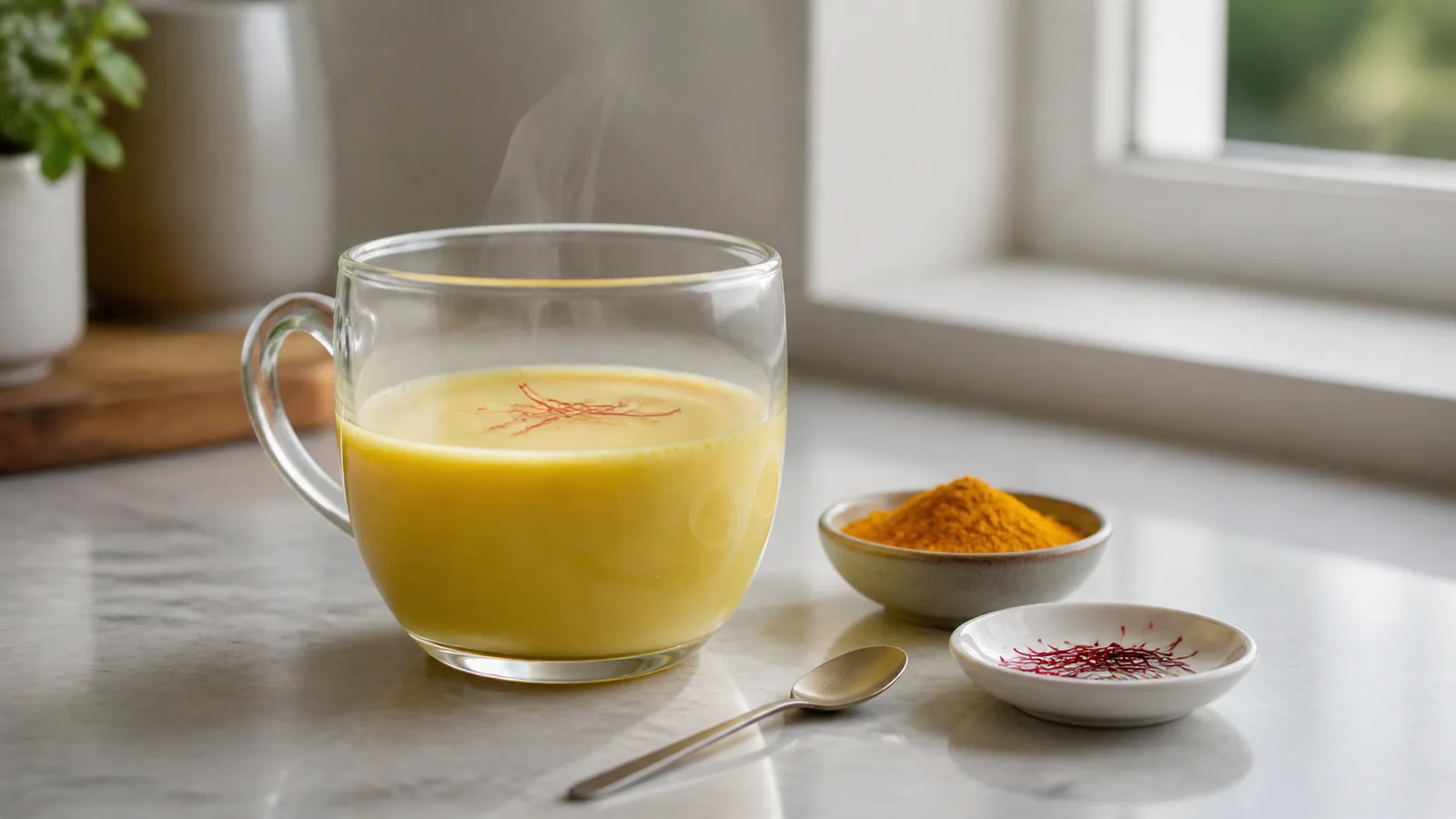
Yes, you can mix turmeric and saffron in milk. Turmeric gives the drink an earthy, peppery base and opaque yellow color; saffron adds a floral, hay-like aroma and gentle bitterness. The key is restraint. Turmeric can overpower saffron quickly, so use far less powder than many “golden milk” recipes suggest when you want to taste both.
Mixing turmeric and saffron also requires two slightly different techniques: bloom the saffron first, then whisk the turmeric into the milk. That keeps the threads fragrant and prevents pockets of dry powder.
Turmeric and saffron milk recipe
Ingredients for one cup
- 1 cup (240 ml) dairy milk or unsweetened plant-based milk
- 8 to 10 saffron threads
- ⅛ teaspoon ground turmeric
- A small pinch of ground cardamom, optional
- Honey, sugar, or a chopped date to taste, optional
- A tiny pinch of black pepper, optional
Method
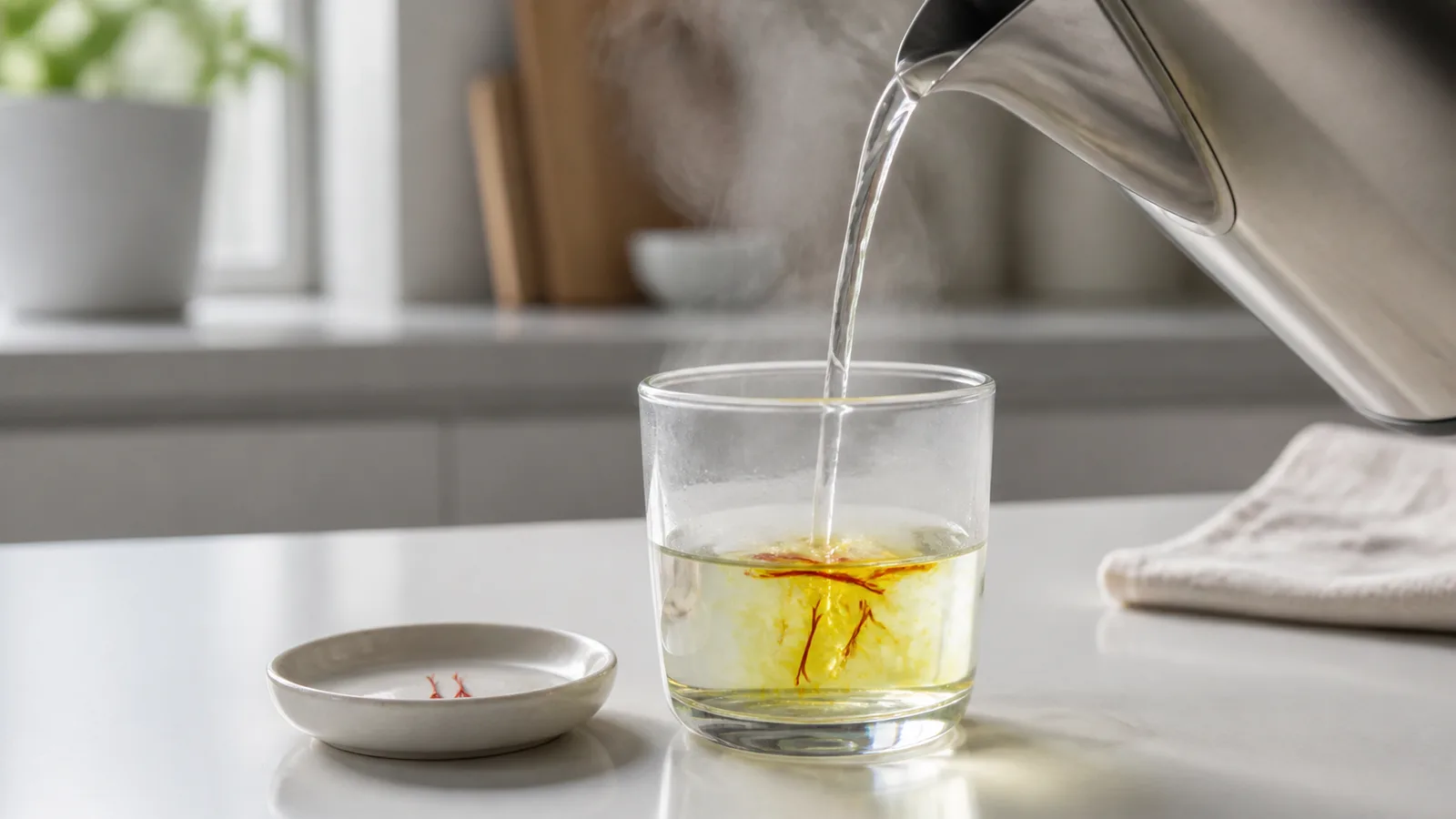
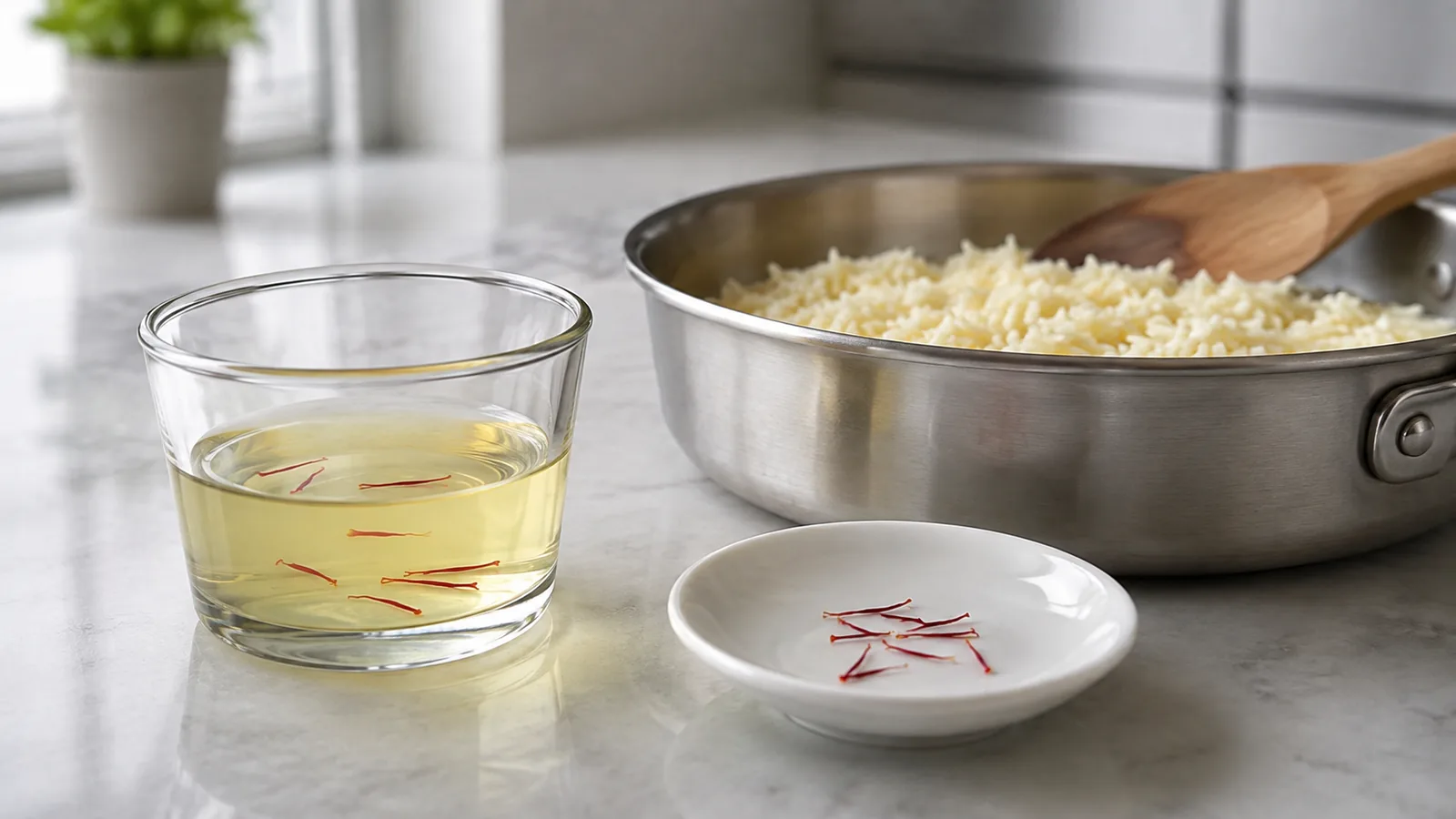
- Bloom the saffron. Lightly crush two or three threads. Put all the saffron in a small cup with 1 tablespoon of warm milk, cover, and leave for 10 to 15 minutes.
- Warm the milk. Heat the remaining milk in a small saucepan over low to medium-low heat until it begins to steam.
- Add the turmeric. Whisk in ⅛ teaspoon of turmeric until no dry clumps remain.
- Add the saffron infusion. Pour in the golden milk and threads, then heat gently for another two to three minutes without a hard boil.
- Finish to taste. Remove the pan from the heat. Add cardamom, pepper, or sweetener only if you enjoy them, then pour the drink through a fine strainer if you prefer a smooth texture.
Start with ⅛ teaspoon of turmeric. You can increase it next time, but once the powder dominates the cup it is difficult to recover saffron’s more delicate aroma. Fresh grated turmeric also works, though it needs straining and has a brighter, more vegetal taste.
Can you mix saffron and turmeric together?
Yes, because the two spices perform different jobs. Turmeric supplies the broad earthy base, while saffron sits above it as a more aromatic note. They share the ability to color milk but come from different plants: turmeric is a rhizome, and saffron is the dried stigma of a crocus flower.
If you are also wondering, “Is turmeric and saffron the same thing?”, no: their similar color is only a surface resemblance.
They are not interchangeable. If you leave saffron out, you still have turmeric milk. If you leave turmeric out, you have a paler, more floral saffron milk. Combining them should create a third balanced drink, not simply a stronger yellow one.
How to balance the flavor
Milk softens bitterness and provides a neutral background, but every optional ingredient changes the result. Cardamom reinforces the warm aroma. Honey rounds the edges. Black pepper brings noticeable heat and can easily distract from saffron, so use only a tiny pinch if flavor—not a supplement claim—is your reason for adding it.
Cinnamon, ginger, and vanilla can work, but adding all of them at once turns the drink into a general spice blend. Begin with turmeric and saffron alone, taste, and choose one supporting flavor.
Why the spices can settle
Turmeric powder does not dissolve completely in milk. Some sediment at the bottom of the cup is normal, especially after the drink stands. Whisk while heating and stir before the last few sips. Saffron’s color moves into the milk, while the softened threads may remain visible.
If the drink feels gritty, use a finer turmeric powder, simmer gently for another minute, or strain it. Do not keep boiling in an attempt to dissolve every particle.
Can it be served cold?
Yes. Prepare the drink warm so the saffron blooms and the turmeric disperses, then cool it promptly and refrigerate it in a covered container. Whisk or shake before serving over ice. Plant-based milks may separate more visibly, but stirring usually restores the texture.
What are kesar haldi milk benefits?
The dependable benefits are culinary: warmth, color, aroma, and a way to enjoy two spices in one drink. Searches for “kesar haldi milk benefits” often move from traditional use to claims about inflammation, immunity, mood, sleep, or disease. A home recipe does not establish those outcomes.
The US National Center for Complementary and Integrative Health says evidence is not sufficient to reach definitive conclusions about turmeric or curcumin for health purposes and notes safety concerns with some highly bioavailable products. See the NCCIH turmeric fact sheet. A systematic review of saffron adverse events found saffron preparations generally well tolerated but recorded adverse events and advised monitoring for higher-dose or prolonged medicinal use.
Neither source establishes that turmeric-and-saffron milk treats a condition, and concentrated supplements are not equivalent to the kitchen quantities above. If you are pregnant or breastfeeding, take medicines, have a medical condition, or want to use either spice medicinally, ask a qualified clinician or pharmacist about the exact product and amount.
Common mistakes
- Adding too much turmeric: it hides the saffron and can taste chalky or bitter.
- Skipping the saffron bloom: the aroma and color distribute less evenly.
- Boiling hard: milk can scorch and delicate aroma can fade.
- Expecting powder to dissolve: turmeric naturally leaves some sediment.
- Treating a drink as a supplement: a pleasant recipe is not a medical dose.
Use dry, fragrant saffron threads and store both spices closed, away from heat, moisture, and light. If you need saffron for the drink, browse our products page.
Turmeric saffron milk is at its best when neither spice overwhelms the other: bloom a few saffron threads, whisk in a restrained amount of turmeric, and adjust the supporting flavors only after tasting.